
Voyageurs Wildlife: What to See and Where to Look
Voyageurs National Park sits among Minnesota's lakes along the Canadian border and is home to abundant wildlife that isn't used to crowds. Five species capture the park's character: the gray wolf, moose, black bear, beaver, and common loon. You may see them from a canoe at dawn, when the water is still waking up. This guide tells you where to look, when to head out, and how to avoid making the wrong kind of impression.
Voyageurs' Iconic Animals
Gray Wolf
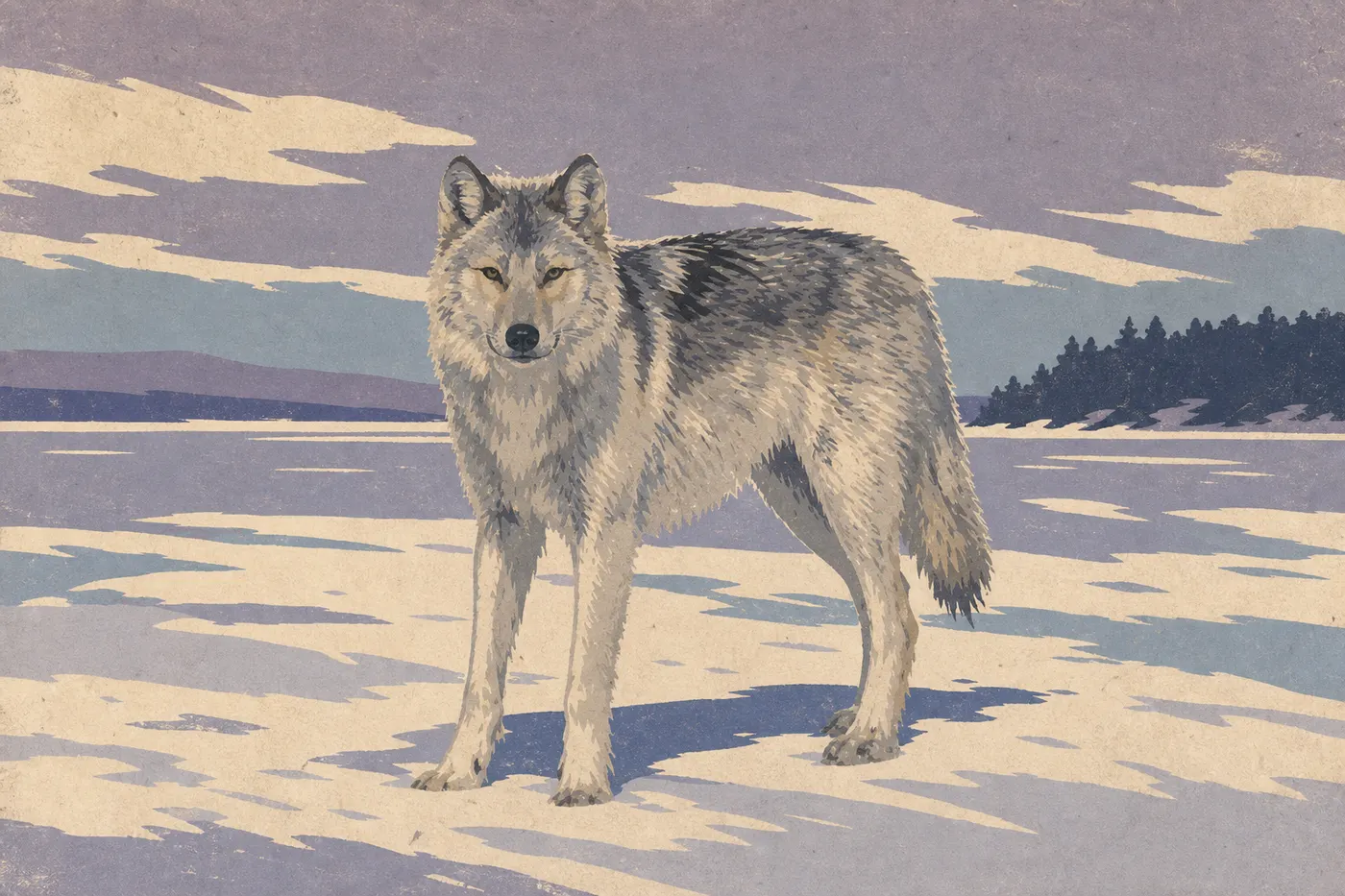
The gray wolf (Canis lupus) is Voyageurs' wild symbol. Several packs roam the shores in summer and use the frozen lakes as highways in winter. You're more likely to hear them than see them. Howls at dusk, especially around Rainy Lake and Kabetogama Lake, are among the park's most memorable sounds.
To identify a gray wolf, look for a lean body, long legs, a broad muzzle, and pointed ears. Its coat ranges from beige-gray to almost black. The bushy tail hangs horizontally, never curling upward like a domestic dog's. It stands about 31 to 35 inches at the shoulder.
The best time is dawn or sunset, from September through May. Wolves keep a lower profile in midsummer, but fresh tracks along sandy shores give them away.
Moose
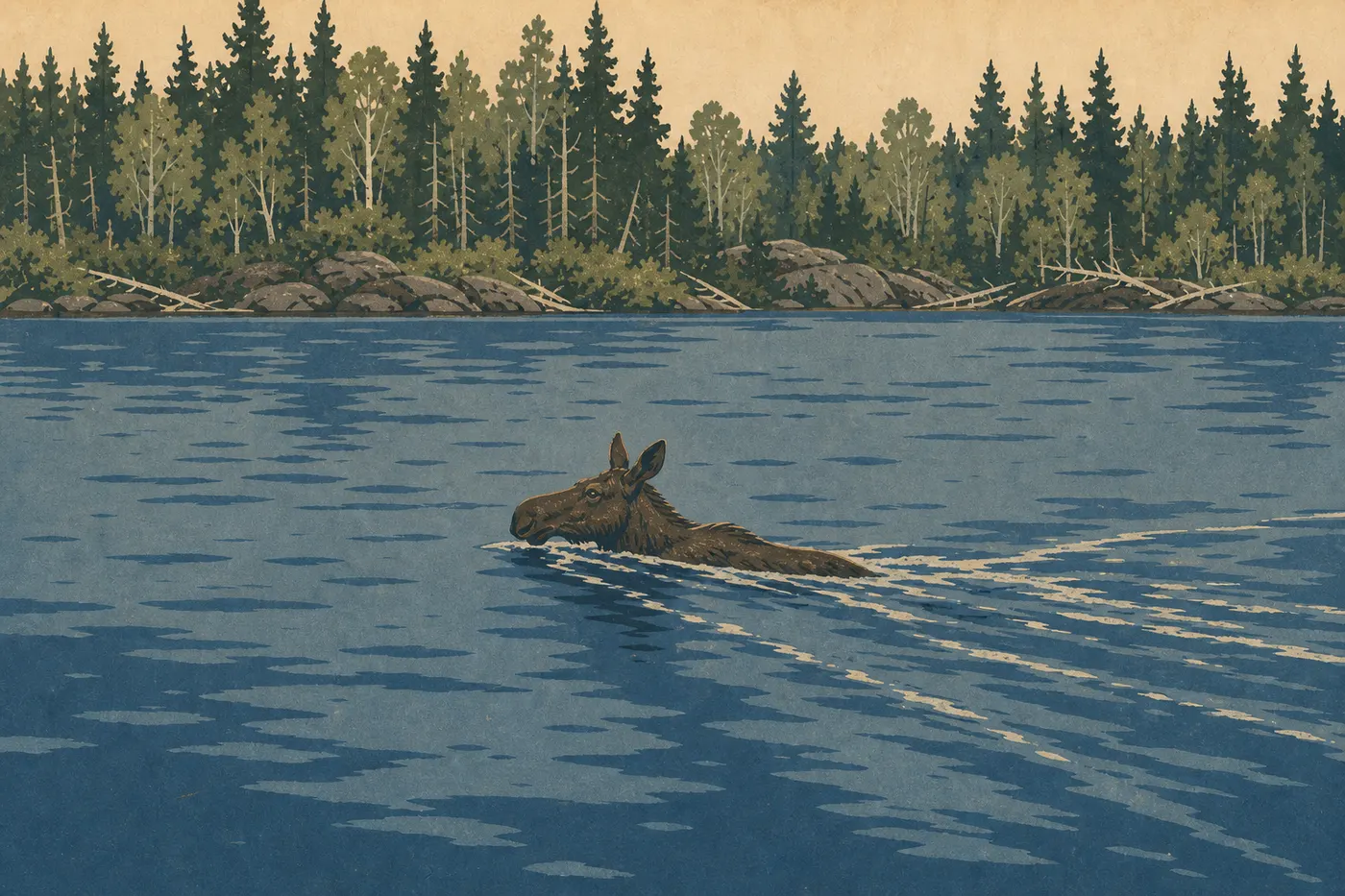
The moose (Alces alces) is North America's largest deer. An adult male can easily top 1,100 pounds and stand nearly 6.5 feet at the shoulder. In Voyageurs, moose frequent marshy shorelines and shallow lake inlets. They feed on aquatic plants in summer, keeping their heads underwater for several minutes at a time.
Look for them where boreal forest meets open water. The Ash River area and the shallow bays of Kabetogama Lake are reliable spots, especially by canoe at dawn. Bulls grow broad, palmate antlers from July through November, making them hard to miss.
Black Bear
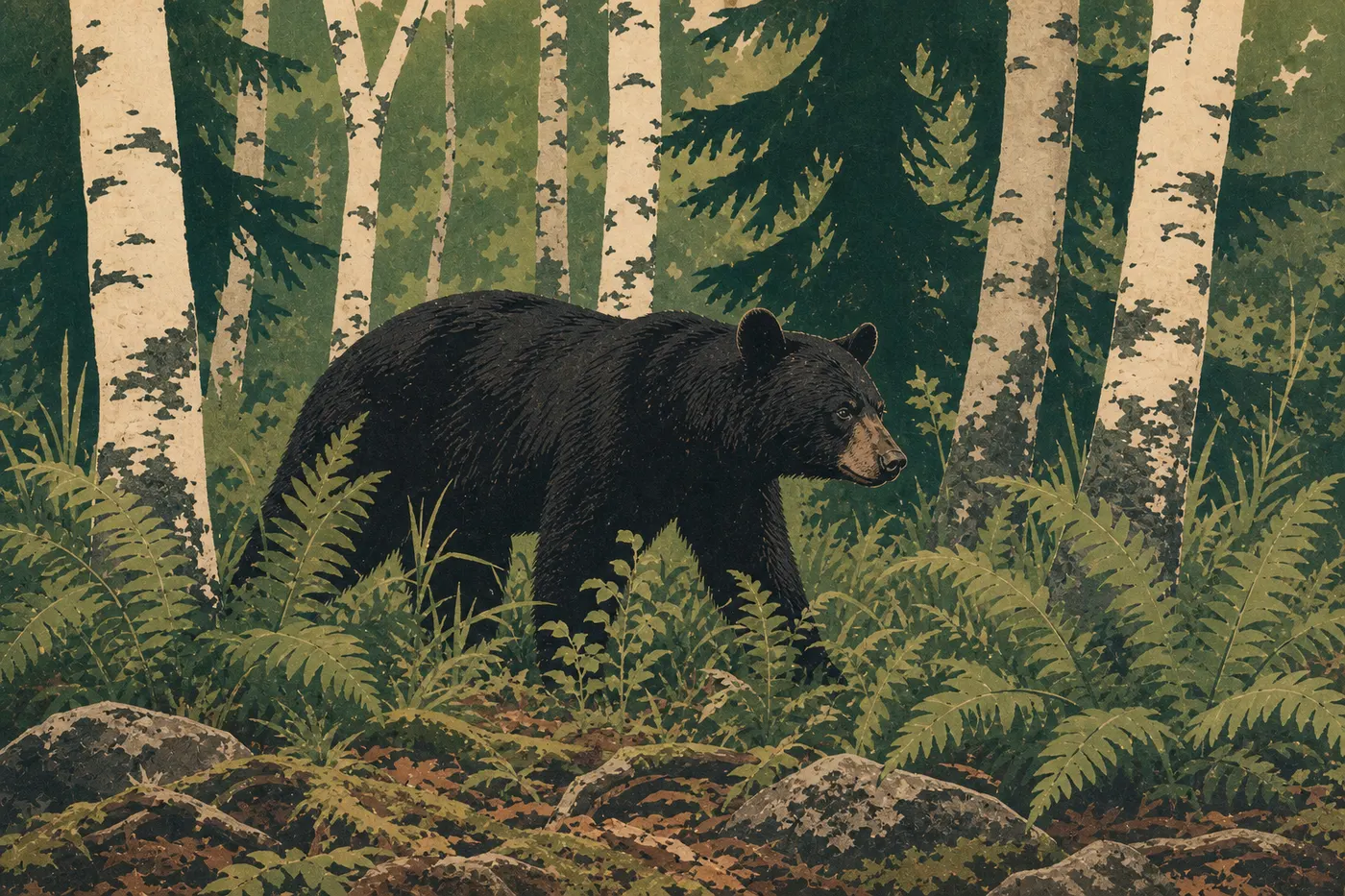
The black bear (Ursus americanus) lives throughout the park, but it keeps to itself. Unlike the grizzly, which doesn't live in this region, it generally goes out of its way to avoid people. Its coat is usually black, though cinnamon-brown individuals sometimes appear in northern Minnesota. An adult weighs between 200 and 595 pounds.
In fall, bears load up on berries and nuts before hibernation. You're most likely to see one along a forest edge or near wild blueberry patches, early in the morning or late in the afternoon.
Beaver
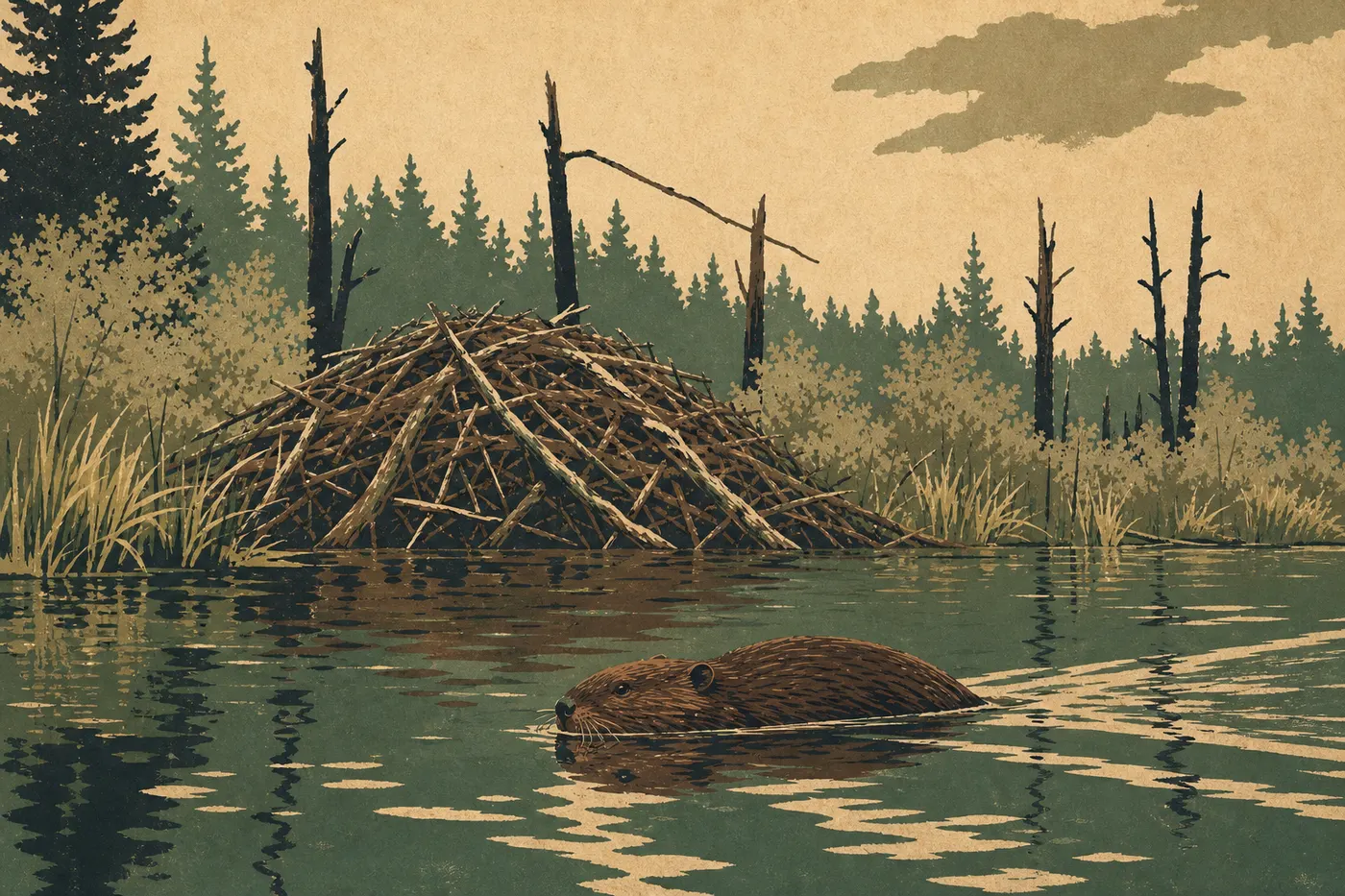
The beaver (Castor canadensis) helped shape this area's history. Its pelts drew French-Canadian voyageurs here in the 17th and 18th centuries, and the park owes its name to them indirectly. Today, beavers continue to reshape the landscape by building dams on smaller waterways.
You can easily spot their lodges, made of branches and mud, from a canoe. Look as well for tree trunks sharpened like pencils just a few inches above the water. Beavers themselves are more likely to emerge at dusk. A sharp slap on the water is a beaver letting you know it has noticed you.
Common Loon
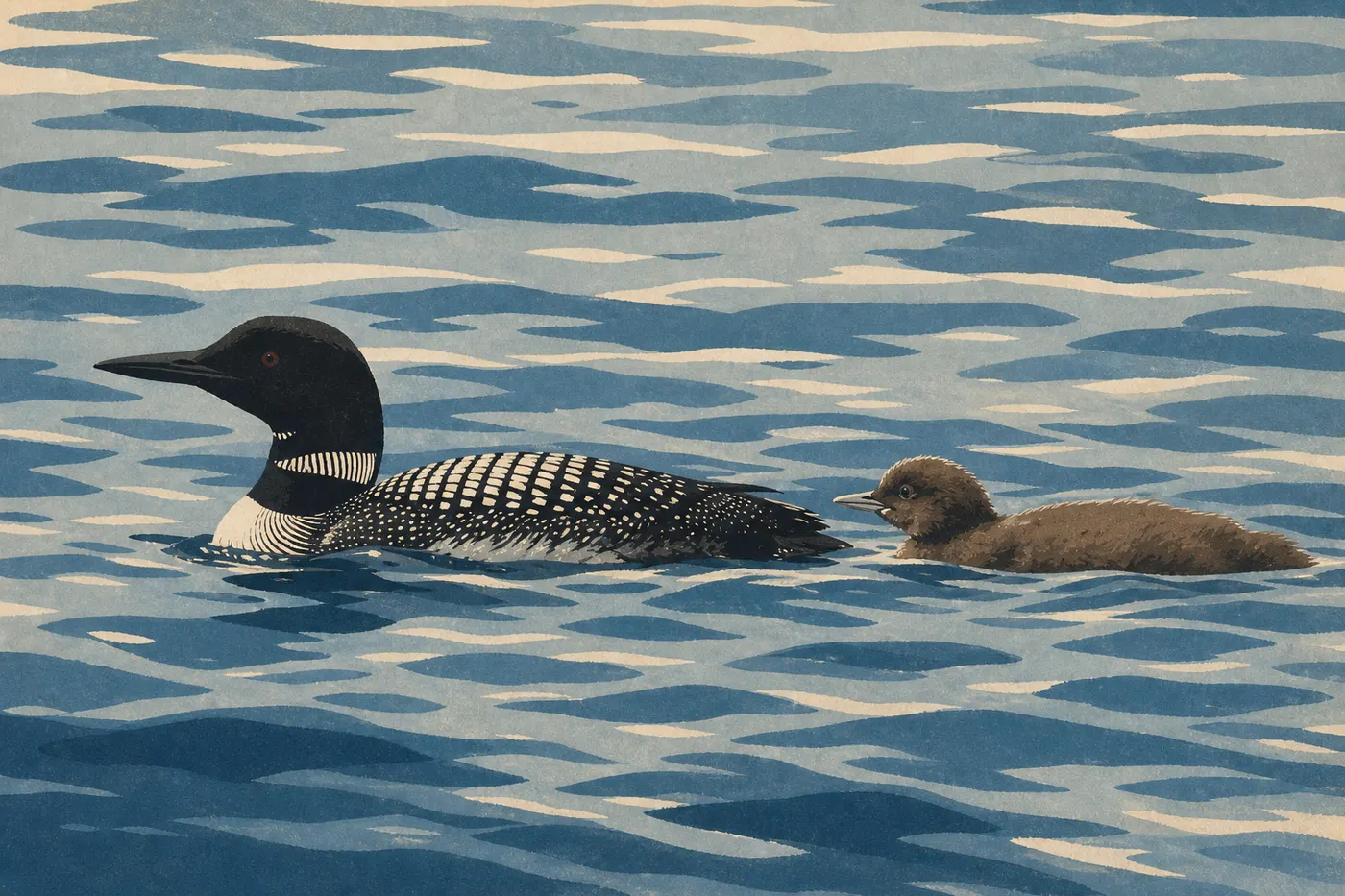
The common loon (Gavia immer) is Voyageurs' signature lake bird. Its wavering call carrying across calm water at dawn is one of the most unmistakably Minnesota sounds there is. Loons nest right along the shoreline, just inches above the water, and dive as deep as 200 feet for fish. Their summer plumage is striking, with a black-and-white checkered back, a striped collar, and bright red eyes.
To watch without disturbing them, choose small interior lakes you can reach by canoe instead of busy motorboat routes. Loons are territorial and especially sensitive to intrusions during nesting season, from May through July.
Telling a Gray Wolf from a Coyote
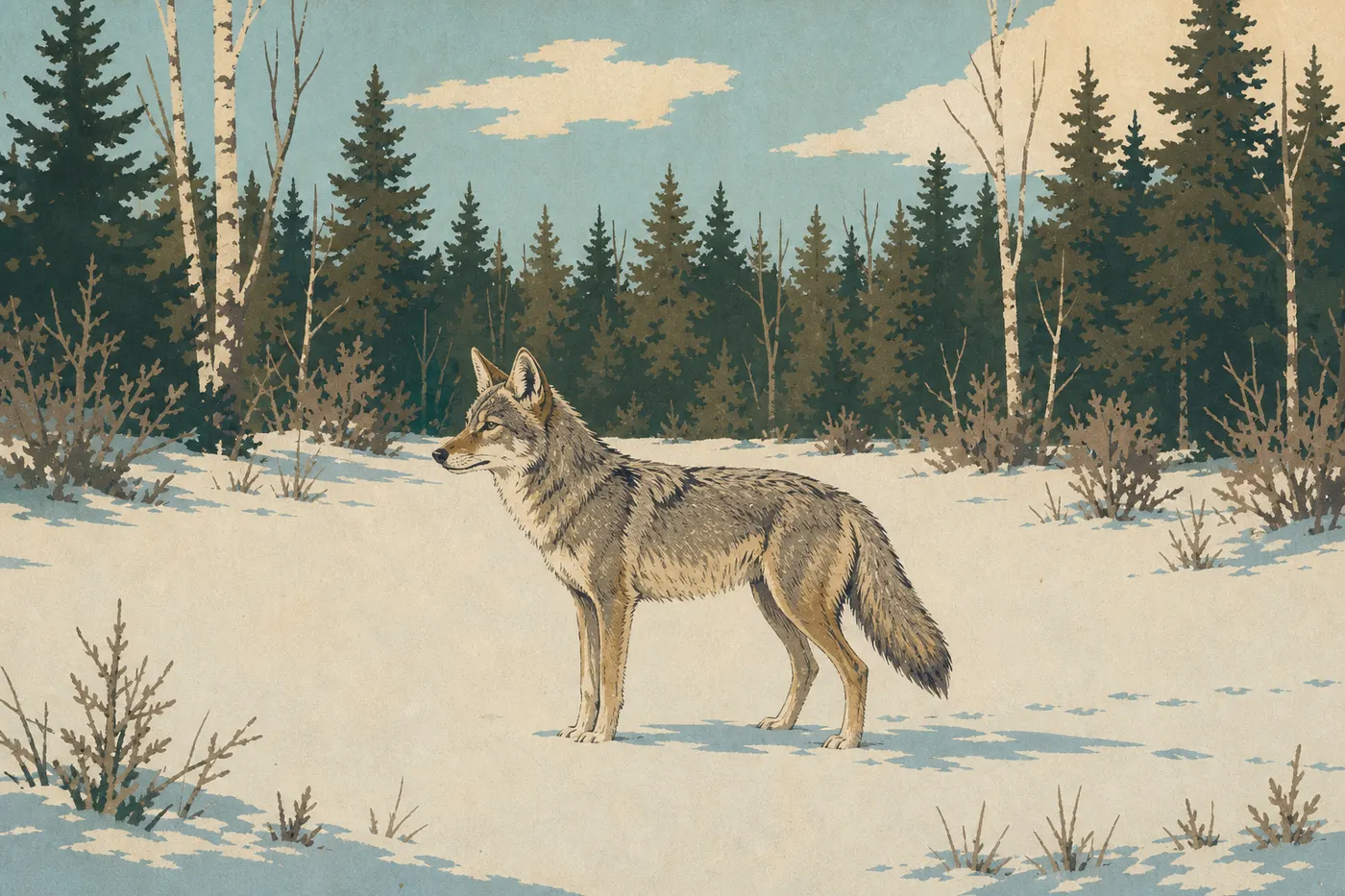
Both species live around Voyageurs, and it's easy to confuse them at a distance. The gray wolf is much larger, with longer legs, a broader head, and a thick muzzle. A coyote resembles a slender German shepherd, with a pointed muzzle, very upright ears, and a low-hanging tail. At Voyageurs, a large canid traveling in a pack is almost certainly a wolf.
Where to See Wildlife in Voyageurs
Voyageurs is a water-based park. Nearly 40 percent of its area is covered by water, and most wildlife-viewing spots are reached by boat, canoe, or kayak rather than on foot. That's what makes the park so distinctive for wildlife watching. Animals stay much calmer around a quiet boat than around hikers along the shore.
Rainy Lake: The park's largest lake is ideal for bald eagles (Haliaeetus leucocephalus) and ospreys, which plunge from midair to catch fish. River otters frequent sheltered coves and are often visible early in the morning.
Kabetogama Lake: Shallow bays in the north draw moose in summer. Take a canoe instead of a motorboat. Animals stay visible much longer when there's no engine noise.
Ash River and Crane Lake: These park entrances include wetlands that are accessible by paddle. Beavers and great blue herons (Ardea herodias) are almost guaranteed at dawn.
Land trails: The park's handful of trails, including Cruiser Lake Trail, accessible from Kabetogama Lake, pass through forest habitat that's good for white-tailed deer, Canada jays, and woodpeckers. Snowshoe hares are everywhere. They are the Canada lynx's main prey, and the elusive lynx is present in the densest wooded areas.
The observation areas at the Rainy Lake Visitor Center and Kabetogama Visitor Center provide open views across the water, so you can look for birds of prey without getting in a boat.
When to Watch Wildlife in Voyageurs
Dawn and dusk are the times to prioritize year-round. That's when moose approach the shore, wolves move between territories, and loons call.
June through August: This is peak season for nesting birds, including loons, great blue herons, and ospreys. Black bears are active from first light. Moose feed at the surface in shallow bays and are often easy to watch from a canoe.
September through November: Moose enter the rut in September and October. Bulls show themselves more often, and their behavior becomes unpredictable. Bears build their fat reserves through late October. Wolves become easier to spot as vegetation thins out.
December through March: The park changes completely. Frozen lakes become corridors for wolf packs, which leave clear tracks in fresh snow. This is the best season for tracking wildlife and hearing nighttime howls. Be careful with ice conditions at the beginning and end of the season, though. Check with a ranger station before venturing onto a lake.
At night: Great horned owls, American mink along the shores, and beavers leaving their lodges. A red-light headlamp disturbs wildlife far less than white light. For a season-by-season breakdown, our guide to the best times to visit Voyageurs covers the best wildlife-viewing windows.
Predators and Large Animals of Voyageurs
The gray wolf is Voyageurs' top predator. It regulates moose and deer populations, helping maintain the balance of shoreline vegetation. Without wolves, moose would browse young shoots until they stripped the shores bare.
The black bear is an opportunistic omnivore. It eats berries, insects, fish, and carrion, but it isn't an active predator of healthy large hoofed animals.
The Canada lynx (Lynx canadensis) lives in the park's boreal forests. Sightings are rare, but its broad, round tracks in the snow reveal its presence in winter. Its oversized paws act like natural snowshoes.
Moose are still the park's largest animals. A bull in full display with velvet-covered antlers in late August is hard to forget. Among the raptors, bald eagles nest in the park, so check the crowns of large dead pines along the lakeshore. Ospreys are common from May through September.
Watching Wildlife Safely
Voyageurs is wild country. No animal here is trained or accustomed to people in a domestic sense. The following rules apply every time.
Keep your distance:
- Black bears, wolves, and moose: stay at least 300 feet away, about the length of an American football field. If an animal changes its behavior when you approach, you're already too close.
- Nesting birds, especially loons: stay at least 200 feet from the nest and turn back if an adult shows alarm behavior, such as choppy calls or agitated swimming toward you.
Never feed wildlife. An animal that associates people with food becomes dangerous to other visitors and may force the park to intervene. Always store food in waterproof bags hung high off the ground or in the metal lockers available at campgrounds.
By canoe or kayak: Approach head-on and slowly if you see a moose or bear along the shore. Avoid sudden movements and camera flashes. If a moose enters the water and swims straight toward your boat, move away. A swimming moose is unpredictable and may weigh more than your canoe.
If you encounter a bear: Speak calmly in a low voice. Don't run. Make yourself look larger and back away slowly without taking your eyes off the bear. Carry bear spray where you can reach it, not buried in your pack, whenever you're traveling through the woods. Black bear attacks are rare, but they do happen, especially when a bear is surprised or defending its cubs.
In Short: Must-See Species and Where to Find Them
| Species | Best area | Best time |
|---|---|---|
| Gray wolf | Rainy Lake, Kabetogama Lake | Dawn/dusk, fall-winter |
| Moose | Ash River bays, north Kabetogama Lake | Dawn, June-October |
| Black bear | Forest edges, blueberry patches | Morning, summer-fall |
| Beaver | Smaller waterways, portages | Dusk, year-round |
| Common loon | Small interior lakes by canoe | Dawn, June-August |
| Bald eagle | Rainy Lake shore | Daytime, spring-summer |
To plan wildlife-viewing routes on land, our hiking guide lists the most useful trails. Our complete guide to Voyageurs gives you the big picture, from getting there to finding a place to stay.
Frequently Asked Questions
What are Voyageurs' iconic animals?
Voyageurs' five iconic animals are the gray wolf, moose, black bear, beaver, and common loon. Together, these species represent the park's boreal lake ecosystem, and you can see them throughout the park, mainly from the water.
What is the most common animal in Voyageurs?
The most common and easiest animal to spot in Voyageurs is the beaver. You can see its lodges and dams from a canoe on nearly every smaller waterway in the park, in any season.
What is the largest animal in Voyageurs?
The moose is Voyageurs' largest animal. An adult male can top 1,100 pounds and stand nearly 6.5 feet at the shoulder, making it by far the park's largest land mammal.
What predators live in Voyageurs?
Voyageurs' predators include the gray wolf, the dominant predator that regulates hoofed-animal populations; the black bear, an opportunistic omnivore; and the Canada lynx, which lives in dense forests and mainly hunts snowshoe hares.
What animals are out at night in Voyageurs?
At night in Voyageurs, beavers leave their lodges to work, American mink patrol the shores, and great horned owls hunt silently in the forest. Wolves are active day and night. Their howls carry far through Minnesota's quiet nights and can sometimes be heard from the middle of the lakes.
Where can I see wildlife in Voyageurs?
Most wildlife-viewing spots are reached by boat or canoe. The shallow bays of Kabetogama Lake and the wetlands around Ash River are the best areas for moose and beavers. Rainy Lake is ideal for bald eagles and ospreys.