
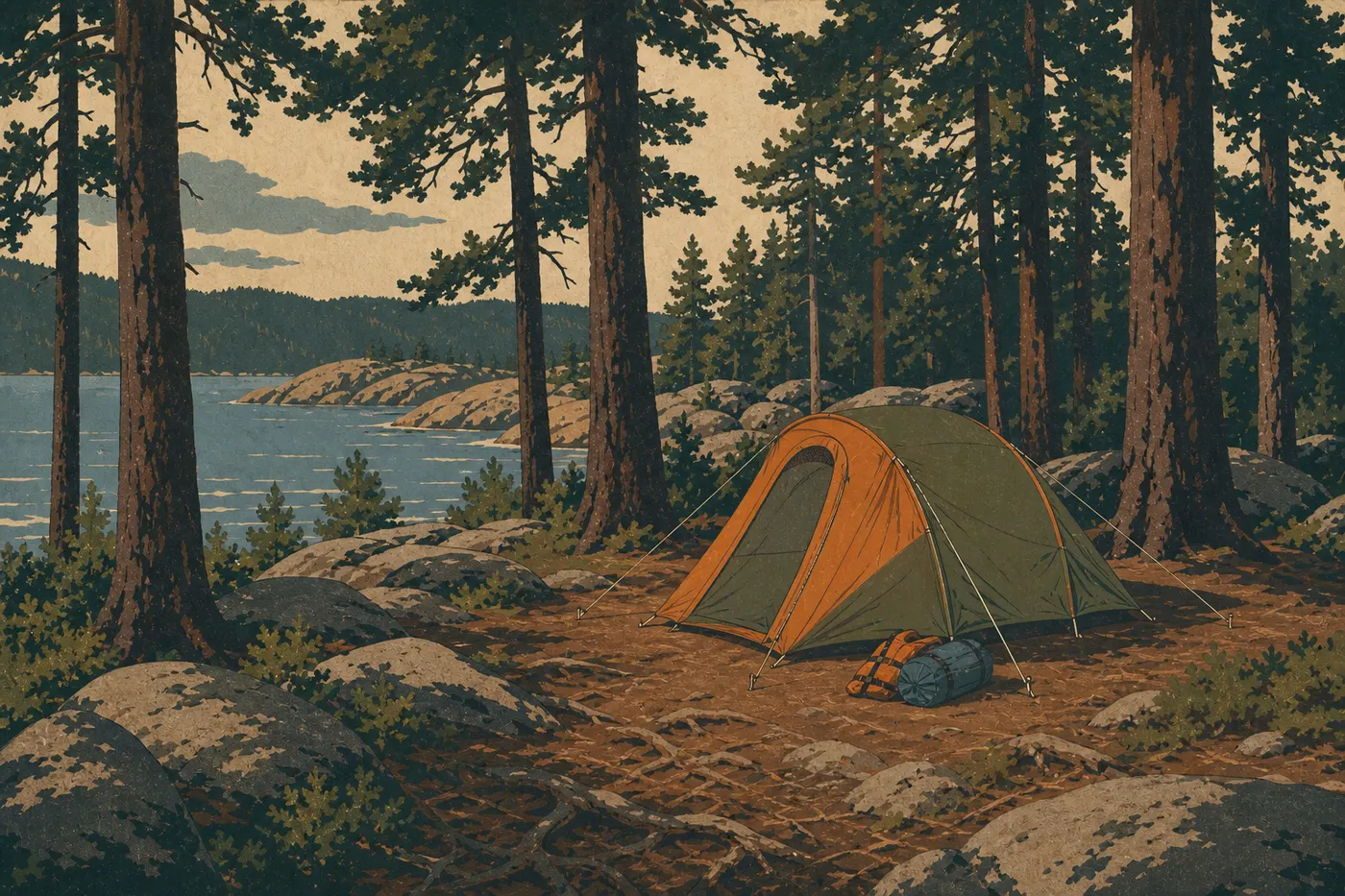
Camping in Voyageurs: Boat-in Sites, Reservations, and Fees
Voyageurs is one of the few American national parks where camping almost always means taking a boat. Nearly all designated sites sit on islands or peninsulas that you can reach only by paddling or using a motorboat. That is exactly why you need to sort out the logistics before you arrive.
In short: The NPS API (as of September 10, 2026) lists no NPS-managed campground inside the park. The table above reflects this directly: the facilities listed there sit outside the park boundaries or are managed by other organizations. Camping in Voyageurs means using designated sites scattered across its four lakes, with reservations available through Recreation.gov. No road leads to them.
Campgrounds in the park (0)
 Base map © OpenStreetMap · © CARTO
 Can you camp inside Voyageurs?
The NPS API lists no NPS-managed campground inside the park (as of September 10, 2026). That result reflects the nature of Voyageurs itself: it has no traditional campground with permanent infrastructure, unlike Yellowstone or Acadia. The park instead offers designated backcountry sites scattered across its four major lakes: Rainy Lake, Kabetogama Lake, Namakan Lake, and Sand Point Lake. These sites don't appear in the NPS campground database, but you can reserve them through Recreation.gov.
Camping outside a designated site isn't allowed inside the park. Every night must be spent in an official area, accessible almost exclusively by motorboat, canoe, or kayak.
Campgrounds in the park
The NPS campground database lists no campground inside the park (as of September 10, 2026). The facilities listed in the table above therefore sit outside the park boundaries or are managed by other organizations. Inside the park's four districts, you'll find designated backcountry sites without heavy infrastructure: a bear-resistant food locker, picnic table, and vault toilet are the standard amenities.
Rainy Lake District
The park's east entrance, near the Rainy Lake Visitor Center, is the starting point for many designated sites on the islands of Rainy Lake. This is the busiest district in summer. It's convenient for a first trip, but lively in July and August. Sites here generally have a bear-resistant food locker, a table, and a vault toilet. You can reach them only by boat.
Kabetogama Lake District
The Kabetogama Visitor Center provides access to the islands of Kabetogama Lake in the western part of the park. The atmosphere is quieter than at Rainy Lake, with dense boreal forest, sunsets over the water, and fewer visitors even during the peak season. This is the district to choose for stays of several nights.
Ash River and Crane Lake Districts
The Ash River and Crane Lake entrances provide access to Namakan Lake and Sand Point Lake. These two lakes draw fewer visitors than Rainy Lake or Kabetogama Lake, so designated sites are generally more available, even in July and August. It's a good option if you're looking for solitude.
Drive-in Sites
The NPS manages no drive-in camping site inside the park. The land-based facilities near the visitor centers are private campgrounds or concession operations outside the park boundaries. Contact these local facilities directly. Availability is limited, so plan your lodging several months in advance.
RV vs. tent camping: Which site should you choose?
RV campers have no place on the park's designated backcountry sites, which are accessible only by water. There are no electrical hookups or dump stations inside the park boundaries. All campgrounds with hookups are outside the park, in the surrounding communities.
If you're traveling by RV, the Voyageurs RV camping guide covers parking options and available amenities around the park. Boat rental operators work near every entrance if you'd like to combine the two.
Camping nearby: Private campgrounds outside the park
Small communities ring the park in northern Minnesota: International Falls, Kabetogama, Crane Lake, and Orr. They have private campgrounds with electrical hookups, showers, and sometimes Wi-Fi. These are also the only facilities with drive-in sites near the park. They're convenient for nights in transit or when the park's designated sites are full. Our Voyageurs lodging guide lists accommodations around the park, including private campgrounds and hotels.
Wilderness and backcountry camping: Camping with a permit
Voyageurs backcountry camping takes place on the water. You navigate its four lakes independently and sleep at the most remote designated sites. There are no high-mountain trails here. Your route takes shape on the lake. The solitude is real: no roads, no cell service, just boreal forest and silence. A Recreation.gov reservation is required for designated sites. Prepare your Leave No Trace practices, recommended boating routes, and necessary gear before leaving shore.
How and when to reserve a campsite in Voyageurs
Reserve designated sites through Recreation.gov. The booking window generally opens six months before your stay. In practice, the most popular island sites fill quickly for July and August, so reserve as soon as the window opens.
The shoulder season, especially September, remains an excellent option. Sites are more available, nights are pleasantly cooler, and the maples start turning red. Before mid-May, melting ice can make boating dangerous. After mid-October, the first freezes and unstable thin ice call for extra caution. Check park alerts before every departure.
To choose the best time, consult the best time to visit Voyageurs guide and the park weather forecast.
Fees: How much does a night of camping cost in Voyageurs?
Voyageurs National Park doesn't charge an entrance fee. Designated backcountry sites do require a fee. Recreation.gov displays the exact rates when you make your reservation. The NPS API publishes no fee for this park because its database lists no campground here. Check Recreation.gov for current rates when you plan your stay. For annual passes, including the America the Beautiful pass, see the National Parks Fees & Passes page.
Safety and best practices
Food Storage
Voyageurs is home to black bears. The rule is simple: store all food, drinks, and scented products such as toothpaste, deodorant, and repellent in the bear-resistant food locker provided at the site. Don't leave anything in your boat overnight, and don't store anything in your tent.
Water Safety
The park's four major lakes can become dangerous within minutes when the wind picks up. Northern Minnesota is known for rapid weather changes. Always wear an approved life jacket, check the marine forecast before every departure, and tell someone your route and expected return time.
Drinking Water
Lake water isn't safe to drink untreated. Bring a quality filter, such as Sawyer or Katadyn, water-purification tablets, or boil the water before drinking it.
Which camping option fits your trip?
- Family with a rented boat: Choose the Kabetogama Lake District for its quiet setting, and reserve a designated island site through Recreation.gov.
- First trip without a boat: Stay at a private campground near one of the visitor centers, since no NPS site inside the park is accessible by car.
- RV camping: Choose a private campground in International Falls or around the Kabetogama community, then visit the park on a day trip with a boat rented locally.
- Self-sufficient adventure: Spend several days navigating Namakan Lake or Sand Point Lake, away from the busiest districts.
For the trip's overall budget, our complete Voyageurs guide provides an overview.
Frequently asked questions
Can you camp inside Voyageurs?
The NPS API lists no NPS-managed campground inside the park (as of September 10, 2026). Camping takes place at designated backcountry sites on the park's four lakes, which you can reserve through Recreation.gov. The NPS manages no drive-in site inside the park boundaries.
Which camping option should you choose in Voyageurs?
If you have a boat, the designated island sites on Kabetogama Lake offer quiet surroundings and an immersive boreal forest experience. Rainy Lake is the busiest district, with a larger number of available sites. Without a boat, private campgrounds near the visitor centers are the only option because there is no NPS campground inside the park.
When should you reserve a campsite in Voyageurs?
Designated sites on Recreation.gov become available about six months before your stay. The most sought-after sites for July and August fill quickly when reservations open. The shoulder season, especially September, is easier to book and often more enjoyable for boating.
How do you camp in Voyageurs?
Reserve a designated site through Recreation.gov, bring a boat (rented locally or your own), and navigate to the site. Most designated backcountry sites provide a bear-resistant food locker and a vault toilet.
How much does a night at a Voyageurs campground cost?
The park doesn't charge an entrance fee. The NPS campground database doesn't publish rates for designated sites in this park, so check Recreation.gov for the exact rate when you reserve.
Can you encounter bears while camping in Voyageurs?
Yes, black bears live in the park. You must use the bear-resistant food lockers provided at each designated site for all food and scented products. Don't leave anything in your boat overnight, and don't store anything in your tent.