
Getting Around Voyageurs National Park: Access, Entrances, Boats, and Parking
Voyageurs is the only American national park where your car takes you to the gate and then stops for good. Inside, 80% of the park is water, so you'll get around by boat or canoe, or by snowmobile on the frozen lakes in winter. If you were thinking of simply driving through the park, take note before you leave.
How to Get to Voyageurs
Distances from Minneapolis and Duluth, airport options, and car rentals: the Voyageurs access guide has everything you need to plan your trip to the park.
The Park's Four Entrances and Which One to Choose
Voyageurs doesn't work like a park with a single entrance. It opens onto four distinct areas, each with a visitor center, parking lot, and boat launch. Your choice of entrance determines your entire on-the-water logistics.
Rainy Lake is the easiest entrance to reach, 7.5 miles east of International Falls via Highway 11. Its visitor center has the most complete services, including boat rentals, a gift shop, and exhibits. It's the natural starting point for exploring the islands of Rainy Lake.
Kabetogama Lake is about 37 miles east of International Falls via Highway 53 and then a secondary road. This area serves Kabetogama Lake and is especially well suited to families.
Ash River is about 12 miles beyond Kabetogama on the same Highway 53. This area opens onto Namakan Lake and draws kayakers as well as visitors looking for backcountry camping in the less crowded areas.
Crane Lake is the easternmost and most remote area. Plan on about 1 hr 15 min of driving from International Falls. It provides access to Sand Point Lake and the park's most remote islands.
No entrance is objectively better than the others. It all depends on what you want to do. To choose an area based on your interests, see things to do in Voyageurs.
Getting Around the Park
This is where Voyageurs breaks from the classic national park model: no drivable road connects the areas inside the park. You'll get around entirely by water, or over the ice in winter.
By Motorboat
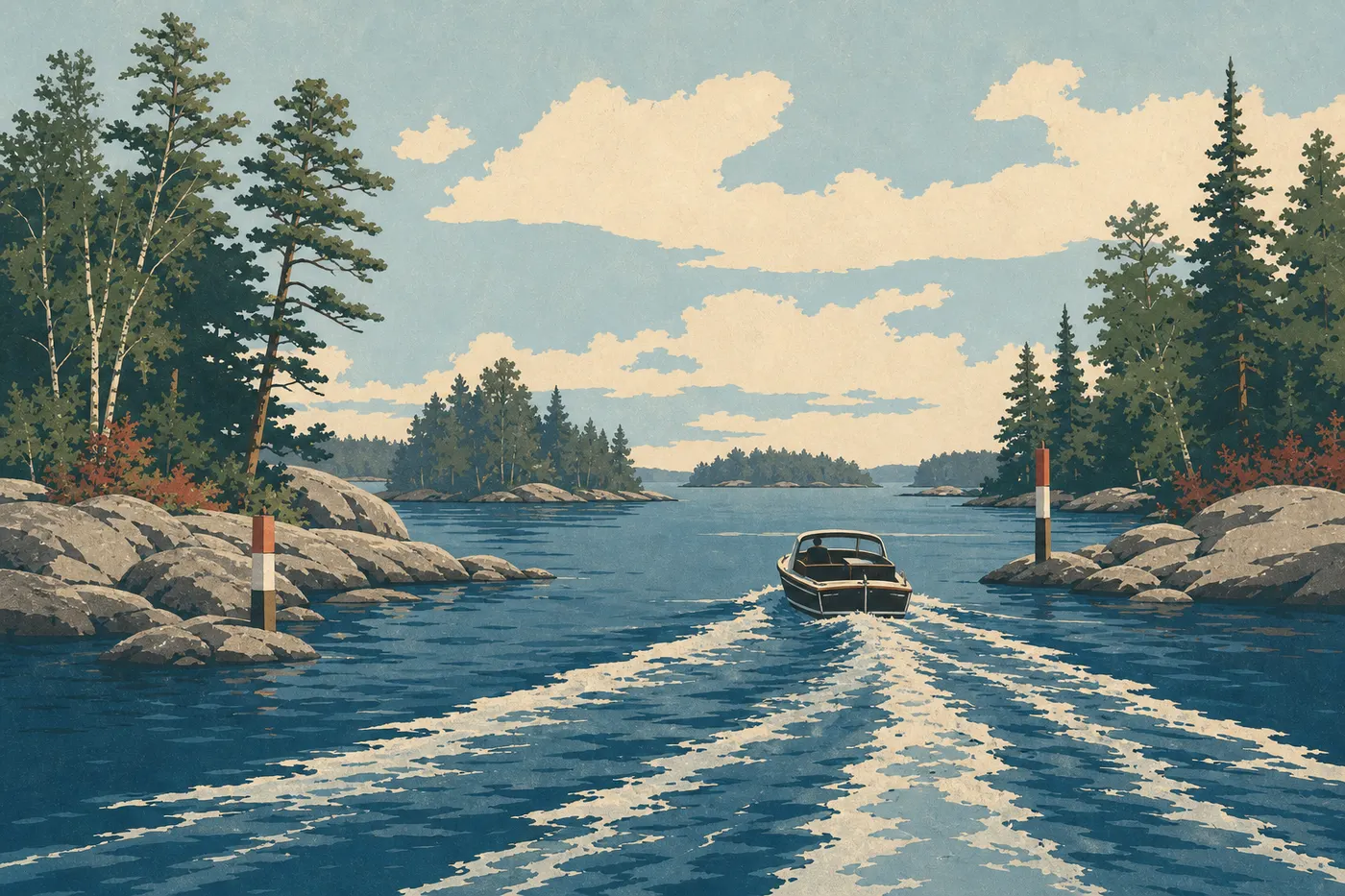
Motorboats are the standard way to get around. Rental companies operate at all four entrances and in the lakeside communities of International Falls, Kabetogama, and Crane Lake. Book ahead as early as spring, since boats often sell out in July and August. Speed limits vary by area. Always follow the navigation buoys, especially near rocky outcrops that are hard to see below the surface.
By Canoe or Kayak
Canoes and kayaks are ideal for the more sheltered, less crowded Namakan area. Crossings on the large lakes, including Rainy and Kabetogama, can be dangerous, however. Winds can come up without warning, and waves sometimes reach 3 feet. Set out early, and stay along the shore rather than cutting across wide-open water. Portages between lakes are marked, but you'll need to carry your boat for several hundred yards.
In Winter: Snowmobiles and Ice
When the lakes freeze, usually from December through March, the park transforms. A network of snowmobile trails is maintained on the ice, and some sections serve as informal winter roads. The recommended minimum ice thickness is 12 inches for a person on foot, with more needed for motorized vehicles. The park publishes daily ice-condition reports. Check them before every outing. Voyageurs weather provides the full seasonal context for planning a winter visit.
On Foot
The park's hiking trails are few and concentrated on the Kabetogama Peninsula, which is accessible only by boat. From the road entrances, you'll find a few trails near the visitor centers. Voyageurs hikes covers the available routes in each area.
Where to Park: Lots at the Entrances
Each visitor center has free parking and a boat launch:
- Rainy Lake: Large lot suitable for vehicles towing a boat trailer.
- Kabetogama Lake: Smaller capacity. In midsummer, arrive before 9 a.m. to make sure you get a trailer space.
- Ash River: Limited capacity. An arrival before 8:30 a.m. in July and August is recommended.
- Crane Lake: Less crowded parking, except on fishing weekends.
Beyond the visitor centers, there is no parking inside the park. You'll leave your car at the entrance and head out by boat, so make sure your vehicle and trailer are properly secured before you push off.
Distances and Travel Times Between Areas
On the water, straight-line distances don't tell the whole story. Wind, lake conditions, and navigable channels can significantly change travel times. As a general guide:
- From the Rainy Lake Visitor Center to the first campgrounds on Rainy Lake: 20 to 45 minutes by motorboat, depending on your destination.
- From Kabetogama to the Namakan area through Namakan Narrows: 30 to 50 minutes.
- From one entrance to another by road: Rainy Lake to Crane Lake takes about 1 hr 15 min. Highway 53 loops around to the south, and there is no internal shortcut.
To build a day-by-day plan and divide the areas across your stay, the Voyageurs itineraries offer visit plans for different paces.
Special Cases: RVs, Vans, Visitors with Disabilities, and Pets
RVs and vans: The lots at all four entrances can accommodate large vehicles, as long as the vehicle-and-trailer combination meets current size limits. Inside the park, every campground is accessible only by boat.
Visitors with disabilities: The Rainy Lake Visitor Center has the best accessibility features, including an accessible dock and restrooms. Call the park before your visit to confirm that the facilities are available, since some are undergoing seasonal maintenance.
Pets: Dogs are allowed in parking lots and on docks. Access to boats and water taxis depends on each private operator, so check the policy when you book. At backcountry campgrounds, dogs must remain leashed.
Practical Transportation Information: Fuel, Cell Service, and Apps
Fuel: Fill up in International Falls or one of the lakeside communities before entering the park. There are no gas stations inside. Boat fuel is available at the marinas by the entrances, but supplies can run low during the busy season. Never set out with less than two-thirds of your fuel capacity remaining.
Cell service: Coverage is very limited in the park and may be nonexistent across most lakes and islands. Reception is concentrated around the visitor centers. Download offline maps, using the official NPS app or Gaia GPS, and share your planned route with someone you trust before every trip on the water.
Useful apps: The free NPS app brings together park-condition reports, visitor center hours, and area closures. Gaia GPS and OnX Maps support offline navigation on the water and on the trails.
The park is open 24 hours a day, year-round. For water-safety guidance and fire and camping regulations, see the complete park guide.
Frequently Asked Questions
How do you get around Voyageurs National Park?
Getting around Voyageurs means traveling mainly by motorboat or canoe. No drivable road connects the park's areas. In winter, snowmobiles take over on the frozen lakes.
Can you visit Voyageurs by car?
You can drive to the four park entrances, but that's as far as you can go by car. Inside, 80% of the park is water, so you'll explore by boat, canoe, or kayak.
Where can you park in Voyageurs?
You can park in the free lots at the four visitor centers, Rainy Lake, Kabetogama, Ash River, and Crane Lake. All have boat launches. At Kabetogama and Ash River, arrive before 9 a.m. in summer to avoid crowded lots.
What's the best entrance for Voyageurs?
The best entrance depends on what you want to do. Rainy Lake is the easiest to reach and the best equipped. Ash River and Crane Lake appeal to visitors seeking quiet and backcountry camping, while Kabetogama works well for families with kids.
Is there cell service in Voyageurs National Park?
Cell service in Voyageurs is very limited and often unavailable on the lakes and islands. Download offline maps before entering the park, and let your family or friends know your route before every outing.
How much does it cost to enter Voyageurs?
Voyageurs does not charge a traditional entrance fee because its lake-based layout makes toll stations impractical. For entrance fees and annual passes, see the National Parks Fees & Passes page.
How long do you need to visit Voyageurs?
Plan on at least two days to explore one or two areas. A four- to five-night stay lets you combine several lakes with nights of backcountry camping. Our Itinerary & Length of Stay page offers sample plans for different paces and trip lengths.