
Voyageurs by RV: Campgrounds, Rules, and Practical Tips
The short answer: Yes, you can visit Voyageurs National Park by RV, but this Minnesota park has one distinctive feature that few guides mention up front. More than 80% of Voyageurs is water. Roads accessible by vehicle end at the parking lots for the four entry points. Beyond them, boats rule the day. Your RV will be your base on land, while exploring the park means getting out on the water. For general background before diving into the logistics, start with our complete Voyageurs guide.
Can you drive and camp at Voyageurs National Park in an RV?
Voyageurs National Park sits along the Minnesota-Canada border, between Rainy Lake and Namakan Lake. Unlike Yellowstone or Grand Teton, there are no scenic roads to tour by car here. The road network ends at the four visitor centers: Rainy Lake, on the International Falls side, Kabetogama Lake, Ash River, and Crane Lake. Beyond these visitor centers, only boats and seaplanes can go farther.
For RV travelers, that changes the whole setup. You park your vehicle at a private campground near your chosen entrance, launch your boat, either rented locally or brought on a trailer, and explore the park from the water. The RV is your logistical base. The boat is your real way to see the park.
The park is open 24/7, 365 days a year. Activities and services stop outside visitor center hours. At the beginning and end of the season, thin ice on the lakes poses a real danger, so use extreme caution. The average ice-out date is around May 3. The first significant snow usually arrives in late October. The ideal window for an RV trip runs from June through mid-September, with a frost-free season of about 120 days.
RV access restrictions and special considerations
There are no low-clearance tunnels or narrow one-way roads. The state and county roads leading to the four entrances have no particular height or length restrictions for standard recreational vehicles.
What you do need to understand is that the visitor center parking lots are for daytime visits. They offer no services, such as a dump station or fresh-water fill, and they aren't intended for overnight stays. You'll need a private campground a few miles away.
If you're towing a boat trailer behind your RV, check the dimensions of the launch parking lot at your chosen entrance ahead of time, along with your rig's total length. All four entrances have launch ramps, but maneuvering room varies by site.
The park's campgrounds and how to reach them
The vast majority of Voyageurs National Park's campsites are accessible only by boat or seaplane. These are primitive sites in a natural setting, with no running water, electricity, or dump station. They're ideal if you want to combine an RV base on land with a night or two of island camping, and most can be reserved through Recreation.gov.
To sleep in your RV, use one of the private campgrounds near the four entrances. Several properties around Rainy Lake, Kabetogama Lake, and Crane Lake offer RV sites with electric hookups, water, and, in some cases, an on-site launch ramp. Together, they make up the area's real RV-friendly network.
For tent camping and backcountry options inside the park, our Camping page covers the boat-access campsites and reservation procedures.
Boondocking and options around Voyageurs
Northern Minnesota offers a few boondocking options on public land outside the park, particularly in parts of Superior National Forest to the east. Rules vary by district, so check with the relevant national forest office before setting up.
Be careful out there. Northern Minnesota is heavily wooded and often marshy. Forest roads rarely accommodate large vehicles. Do your homework ahead of time with apps such as Freecampsites or iOverlander before taking your RV onto an unmarked road.
If you prefer certainty, the area's private campgrounds remain the most reliable option. Our Where to Stay guide lists the main options around the park.
Dump stations, water, and services
The park's visitor centers offer no RV services. For dumping wastewater and filling your fresh-water tank, use private campgrounds in one of the four entrance areas or services in International Falls, the closest town to the Rainy Lake entrance, about 9 miles away.
Practical advice: dump your tanks and fill your water before every multi-day lake outing. Some boat trips last two or three nights, and returning to the dock just to handle logistics can interrupt the rhythm of a great week on the water.
Which campground should you choose?
You're coming for fishing and early-morning outings on Rainy Lake. The Rainy Lake entrance, on the International Falls side, has the most developed facilities. Private campgrounds near the visitor center are well organized and have launch ramps. It's the go-to entrance for large RVs towing boat trailers.
You prefer peace and a cabin-country atmosphere. The Kabetogama Lake area is a little less busy. Several small, family-run campgrounds are located there, with open views of the lake. It's a good starting point for the Kabetogama islands.
You're looking for solitude and less-visited areas. The Crane Lake entrance provides access to the eastern part of the park and Namakan Lake. There are fewer services nearby, but the change of scenery is much greater outside the peak season.
For an overview of lodging, see our Where to Stay guide.
Renting an RV to visit Voyageurs
If you don't have your own vehicle, Minneapolis and Duluth are the two most logical starting points. Plan on about 5 hours from Minneapolis and 3 hours from Duluth to the park entrances. Platforms such as Outdoorsy and RVshare list peer-to-peer rentals in both cities, and major national rental companies operate there as well.
Plan on at least 3 nights in the area to make the drive worthwhile. A week is ideal: a few boat outings, a night at a primitive island campsite, and time to relax by the lake.
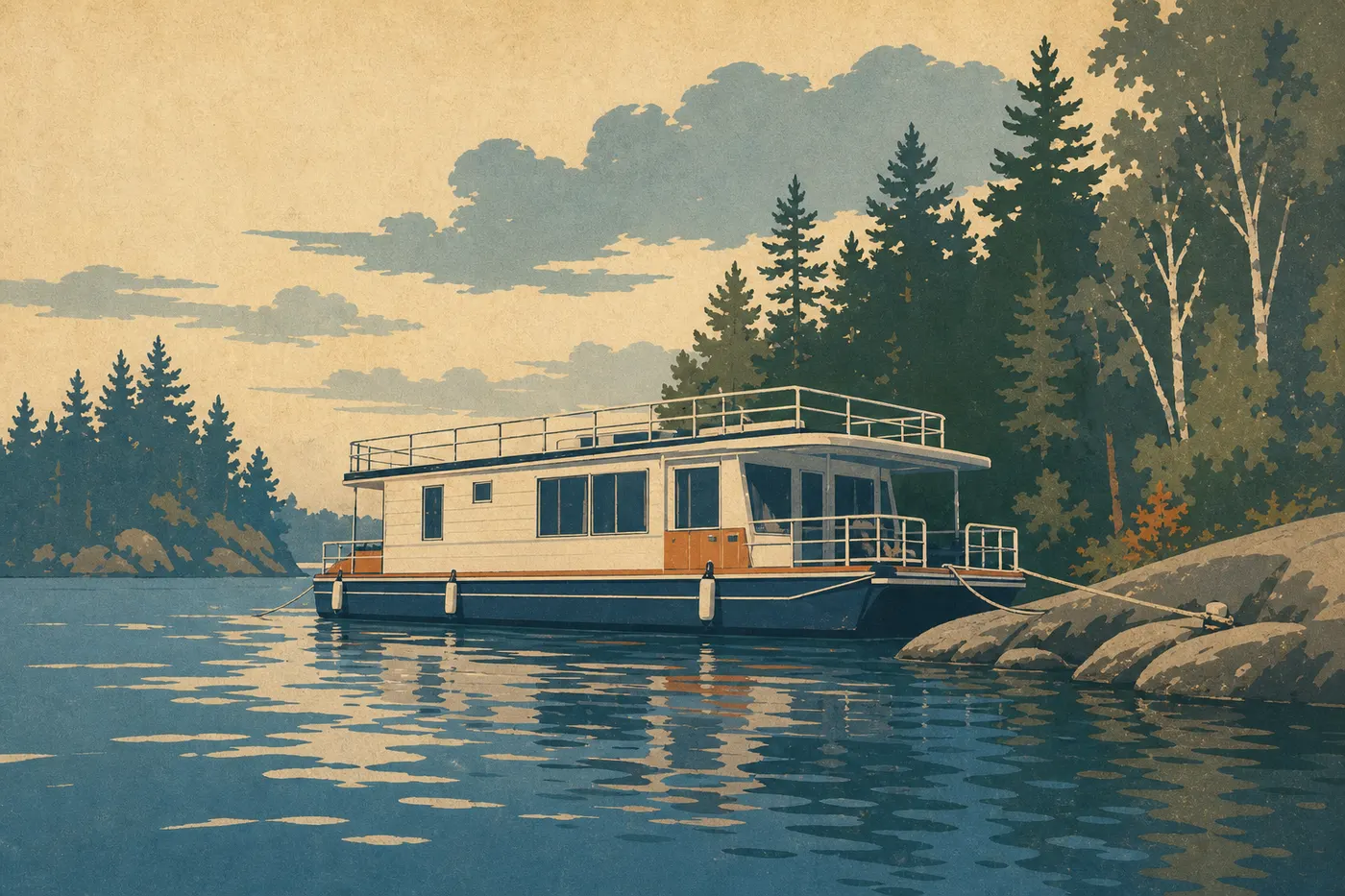
Another good option for Voyageurs is a houseboat. Local operators, mainly around Rainy Lake and Kabetogama Lake, rent fully equipped floating homes, with a kitchen, sleeping quarters, and a deck over the water, by the week. This is the only U.S. national park where this option is so well developed. Our Getting Around page lists boat and houseboat rental providers departing from each entrance.
Pets, budget, and reservations: what you need to know
Pets. Dogs are allowed in areas accessible by car and in parking lots, as long as they're leashed. Leashed dogs are generally also allowed on the park's few official trails. Rental boats, however, don't all allow pets, so check when you book.
Budget and fees. Entry to Voyageurs National Park is free. There is no entrance fee or vehicle sticker. Private campgrounds near the entrances charge varying rates depending on the season and amenities. During the peak season in July and August, reserve your site several weeks ahead if your vehicle needs a longer site. Our Fees & Passes page explains entrance fees and passes.
Reservations for sites inside the park. Boat-access campsites in the park can be reserved through Recreation.gov. Some sites are available on a first-come, first-served basis depending on the area and time of year.
In summary: our RV plan for Voyageurs
Voyageurs isn't a park you tour by car. It's a park where you park your RV beside a lake, launch your boat, and spend your days on the water among wild islands and wooded bays. The vehicle is your home base. The water is your playground.
The practical plan is simple. Choose a private campground with a launch ramp at Kabetogama or Rainy Lake, rent a boat if needed, and reserve primitive campsites through Recreation.gov for a night or two of total immersion. If you'd rather spend your entire trip on the water, a houseboat remains the experience that captures Voyageurs better than anything else.
Frequently asked questions
Can you camp in an RV at Voyageurs National Park?
RV camping at Voyageurs National Park is possible, as long as you know that all vehicle-accessible campgrounds are outside the park boundaries. Inside the park, campsites are accessible only by boat.
Can you visit Voyageurs National Park by RV?
You can visit Voyageurs National Park by RV by parking at the lots for the four visitor centers, Rainy Lake, Kabetogama Lake, Ash River, and Crane Lake, then exploring the park by boat from those entry points. There are no roads open to vehicles inside the park.
Can you park an RV anywhere at Voyageurs?
No. Extended parking is limited to designated campgrounds. Visitor center parking lots are for daytime visits, with no overnight stays allowed. There is no practical boondocking immediately around the park.
Can you bring a boat trailer behind your RV?
Yes, all four park entrances have launch ramps. Check your rig's total length and the dimensions of the launch parking lot at your chosen entrance before you arrive.
What's the best time to visit Voyageurs by RV?
The best time runs from June through mid-September, with a frost-free season of about 120 days. On average, the lakes are ice-free starting in early May. July and August offer the best weather conditions. Our When to Go page breaks down the seasons month by month.
How much does an RV site near Voyageurs cost?
The price of a site varies by private campground and season. Park entry is free. For a complete estimate of your trip budget, see our Fees & Passes page.