
Sequoia & Kings Canyon by RV: Campgrounds, Rules, and Tips
The quick answer: yes, you can explore both parks by RV, but there's one constraint you shouldn't underestimate. The 22-foot limit, including the tow vehicle, applies on several roads inside the parks, including the tightest sections of Generals Highway. Confirm your vehicle's total length before booking, and you won't end up making an awkward U-turn in the middle of a giant sequoia forest.
Sequoia and Kings Canyon are two separate national parks managed together by the NPS under one entrance fee: $35 per vehicle, valid for 7 days in both parks. The America the Beautiful pass, at $70, also covers hundreds of other federal sites. It starts to pay off as soon as you're visiting several parks on the same road trip.
Can you drive and camp in an RV at Sequoia & Kings Canyon?
Getting there from outside the parks isn't a problem. Two main routes lead to the parks: Highway 198 from Visalia, at the Sequoia entrance, and Highway 180 from Fresno, at the Kings Canyon entrance. Neither route imposes vehicle-size restrictions on the approach.
Inside the parks, Generals Highway connects the two parks through tight switchbacks and cliffs without guardrails. Vehicles longer than 22 feet can technically get through, but the NPS officially advises against taking the section between Potwisha and Giant Forest Museum in larger rigs. The road is too narrow for vehicles to pass comfortably. Plan accordingly.
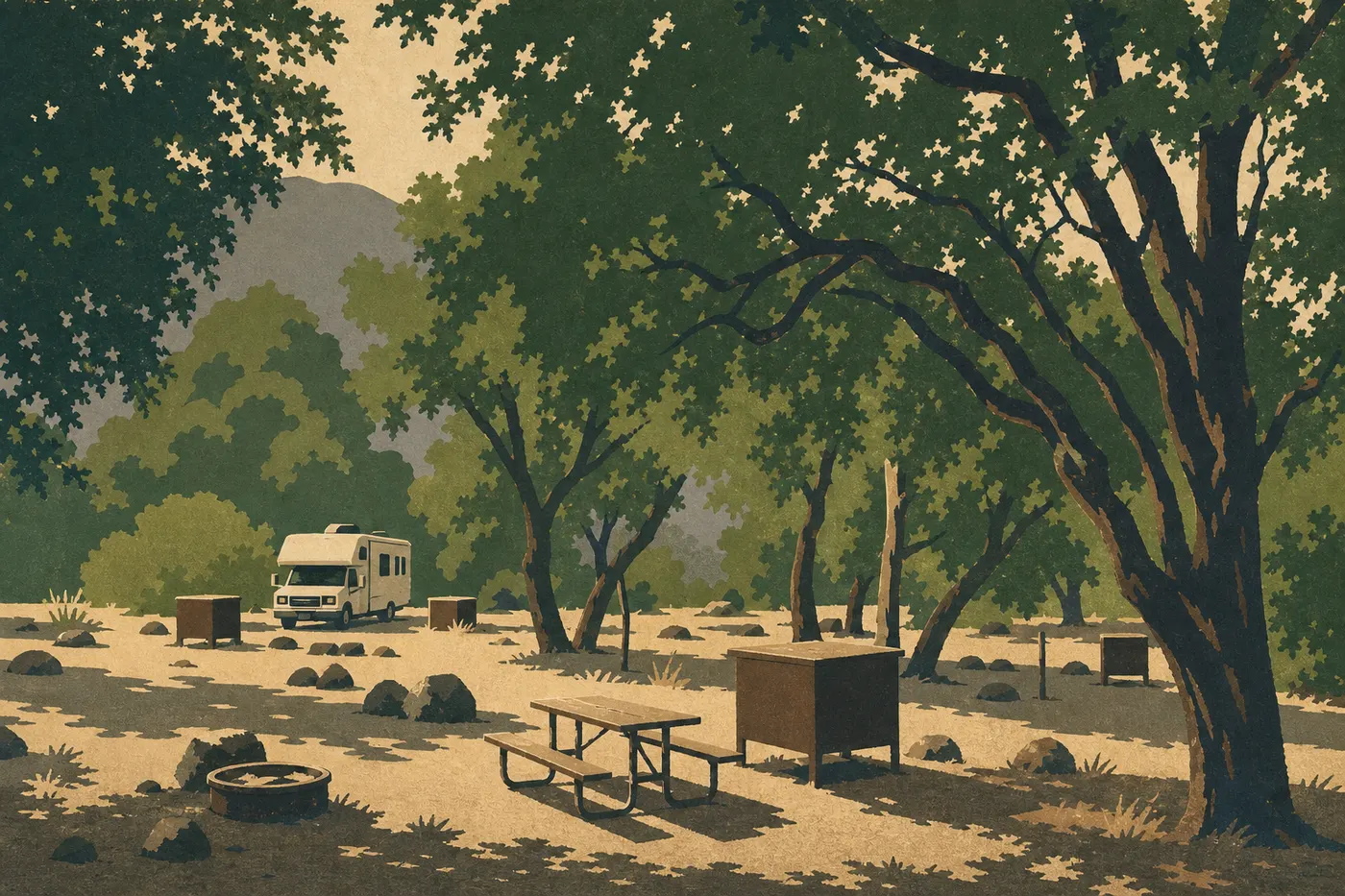
None of the park's campgrounds offer electric, water, or sewer hookups. In terms of services, this is primitive NPS camping, although the basic facilities, including restrooms, tables, and fire rings, are there.
RV restrictions and regulated roads
Before you get behind the wheel, keep these firm restrictions in mind.
Mineral King Road. This 25-mile mountain road is narrow, partly unpaved, and packed with hairpin turns. RVs and trailers longer than 22 feet are officially prohibited. It's a rule, not a recommendation.
Moro Rock Road and Crescent Meadow Road. These side roads lead to two of Sequoia's most photographed sites. Vehicles longer than 22 feet are prohibited. During the busy season, a free shuttle leaves from Giant Forest Museum and serves these areas. That's the obvious solution if your RV exceeds the limit.
Cedar Grove in Kings Canyon. Kings Canyon Scenic Byway, or Highway 180, is suitable for standard-size RVs all the way to Cedar Grove. Check NPS alerts before you leave. Temporary restrictions vary by season and road conditions.
In winter, tire chains may be required on Generals Highway and the mountain roads. Check the official NPS website the day before any trip into the park.
The park's official campgrounds
Sequoia National Park
Potwisha Campground in the foothills, at about 1,500 feet, is open year-round. It's the only low-elevation option available when snow closes the higher roads. RV sites are available. It's ideal for your first night while you adjust to the elevation, or for an off-season stay in the warmer part of the park. The Kaweah River flows nearby.
Lodgepole Campground in Giant Forest, at about 6,700 feet, is the most fully equipped campground in the system. It has an on-site dump station, along with a market, showers, and laundry in the adjacent village. It's open from spring through fall. Reservations are required in July and August, and the campground usually fills up weeks in advance.
Dorst Creek Campground, at about 7,200 feet, is open only in summer and sees lighter traffic than Lodgepole. It's a good base for exploring northern Sequoia. RV sites are available.
Buckeye Flat. Tents only. No RVs.
Kings Canyon National Park
Azalea Campground in Grant Grove, at about 6,500 feet, is one of the few campgrounds open year-round in the two parks. RV sites are available, with a mixed forest atmosphere and plenty of sequoias. It's convenient for an arrival or departure early or late in the season.
Sunset and Crystal Springs in Grant Grove are open in spring and fall, with RV sites available. Sunset is the larger of the two. All three Grant Grove campgrounds are a short walk from the giant sequoias in Grant Grove.
Sentinel and Sheep Creek in Cedar Grove, at about 4,600 feet, sit at the bottom of the Kings River canyon, surrounded by granite cliffs. Sentinel stays open longer, into the fall, while Sheep Creek closes earlier. The setting feels completely different from the rest of the park. It's wilder, more enclosed, and beautiful.
All reservations go through recreation.gov. In July and August, sites disappear months in advance. The opening seasons by elevation zone at Sequoia & Kings Canyon vary significantly by area.
Dispersed camping and areas around the parks (boondocking)
Dispersed camping is prohibited within both national parks. The national forests surrounding them, including Sierra National Forest on the Kings Canyon side and Sequoia National Forest to the south, do offer dispersed camping on federal land, subject to the applicable BLM rules.
Dump stations, water, and services
The Lodgepole dump station is the main option inside the park. It's open seasonally and charges a fee for use. Potwisha also has a dump station, which is convenient if you're staying in the foothills.
For drinking water, every campground open for the season has water spigots. Outside the season, some water points are turned off, so check before you leave.
Outside the parks, the town of Three Rivers, on Highway 198 just before Sequoia's south entrance, offers useful services, including gas stations, grocery stores, and several RV-friendly providers.
Which campground should you choose?
For families with kids. Lodgepole, without hesitation. Its proximity to Giant Forest, the seasonal shuttles, and the village amenities, including showers and a market, make it the ideal base camp for a full stay.
For views and immersion. Cedar Grove, at either Sentinel or Sheep Creek. The Kings River canyon, enclosed by 4,900-foot granite walls, is an experience all its own. Few campgrounds in the United States offer this kind of setting right from the campsite.
In the off-season. Potwisha or Azalea, both open year-round. Temperatures stay mild at low-elevation Potwisha, and visitation drops sharply after October.
For a quick stopover. Sunset or Crystal Springs in Grant Grove, just steps from the sequoias. It's convenient for a single night before continuing on to Highway 99.
The complete Sequoia & Kings Canyon campground comparison, including tent sites, is available separately.
Renting an RV to visit Sequoia & Kings Canyon
If you're flying in, the airports in Fresno, Los Angeles, and San Francisco serve RV rental agencies, including Cruise America, Outdoorsy, and RVshare.
Our recommended size is a vehicle under 22 feet long so you can access all of the park's roads. A Class B camper van or a small Class C offers the best compromise in this kind of mountain park. A 30-foot Class A will put several roads out of reach and make maneuvering in the campgrounds seriously difficult.
Budget, pets, and reservations: what to know
Entrance fee. $35 per vehicle, valid for 7 days in both parks. The $70 America the Beautiful pass pays for itself as soon as you visit a second park during the year.
Campsite. Expect to pay about $22 to $32 per night, depending on the site and season. These are 2025 rates, so check recreation.gov. There are no electric hookups anywhere in the park.
Pets. Dogs are allowed in campgrounds when kept on a leash no longer than 6 feet. They're prohibited on trails and inside buildings. In practice, traveling with a dog significantly limits your hiking options.
Reservations. Book through recreation.gov, up to 6 months in advance. July and August fill up very quickly. June or September offer more availability, comfortable temperatures, and fewer people on the trails.
Sleeping in your vehicle. This is allowed only in a reserved campground site. Parking and sleeping in a lot or along a road inside the park is prohibited and subject to a citation.
In short: our RV plan for Sequoia & Kings Canyon
For a 4- to 5-day stay, we would plan the route this way. Spend the first night at Potwisha to get settled at low elevation. Stay two nights at Lodgepole for Giant Forest, the General Sherman Tree, and the shuttles to Moro Rock. Finish with one or two nights at Cedar Grove in the canyon. Use a vehicle under 22 feet, reserve through recreation.gov as soon as the booking window opens, and check NPS alerts the day before. The rest is forest, granite, and trees that are 2,000 years ahead of you. For the full stay, the complete Sequoia & Kings Canyon guide gives you the big picture.
Frequently asked questions
Can you camp in Kings Canyon?
You can camp in Kings Canyon at several official campgrounds: Azalea, which is open year-round; Sunset and Crystal Springs in the Grant Grove area; and Sentinel or Sheep Creek in Cedar Grove. Reservations are available through recreation.gov.
Are Kings Canyon and Sequoia the same park?
Kings Canyon and Sequoia are two separate national parks, but the NPS administers them together with one entrance fee, $35 per vehicle, valid for 7 days in both parks. They share the same campground infrastructure and naturally work well as one trip.
Can I sleep in my car in Sequoia National Park?
Sleeping in your car is allowed only at a campground site reserved for that purpose. You may not park and sleep in parking lots, picnic areas, or along roads inside the park.
Can you park an RV anywhere in Sequoia & Kings Canyon?
No. RVs may park only in designated sites at official campgrounds. Some parking lots have length restrictions. Overnight parking outside a designated site is prohibited and subject to a citation.
Where are RVs prohibited in the park?
Vehicles longer than 22 feet are prohibited on Mineral King Road, Moro Rock Road, and Crescent Meadow Road. The section of Generals Highway between Potwisha and Giant Forest Museum is officially discouraged for rigs over that length.