
Petrified Forest Wildlife: Animals to See and Where to Find Them
Petrified Forest surprises visitors twice: first with its 225-million-year-old petrified logs, then with the vitality of its wildlife. At 5,600 feet above sea level in the heart of Arizona, this semiarid grassland sees extreme temperature swings, from -4°F in winter to over 100°F in summer, and the animals that live here are built for those conditions. Five species tell you most of what you need to know: the pronghorn, coyote, greater roadrunner, prairie dog, and prairie rattlesnake. You'll almost certainly cross paths with them if you know where and when to look.
Petrified Forest's Iconic Animals
The Pronghorn, Runner of the Great Plains
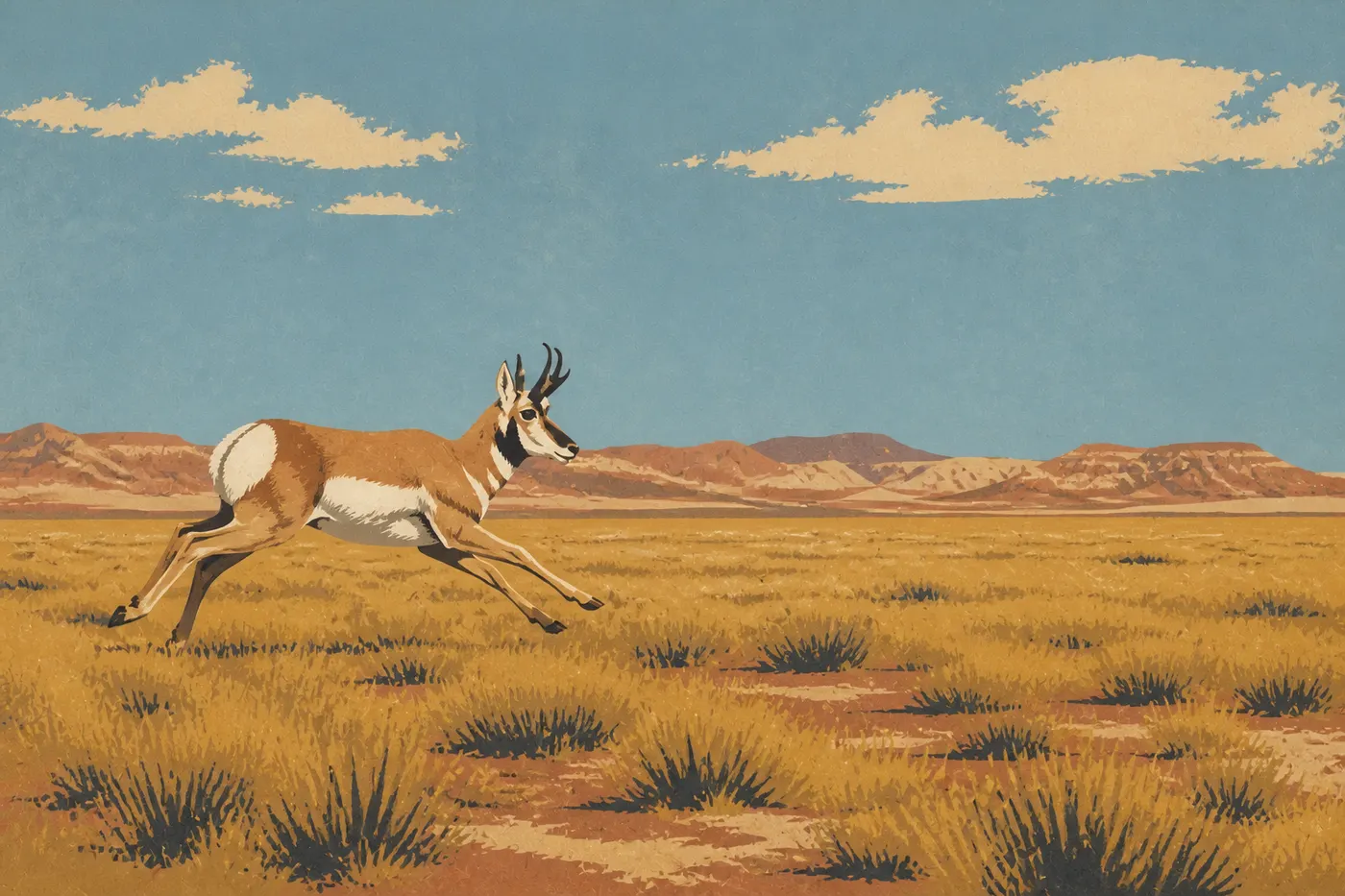
The American pronghorn (Antilocapra americana) is the park's largest land mammal. Its reddish flanks, white rump patch, and hollow, hook-shaped horns set it apart from any deer. It can reach 56 mph over short distances and maintain 37 mph for several miles, making it the fastest land animal in North America. You'll find them in groups of five to twenty in the northern part of the park, on the Painted Desert side, especially at sunrise when the grassland is still cool.
The Coyote, Desert Opportunist
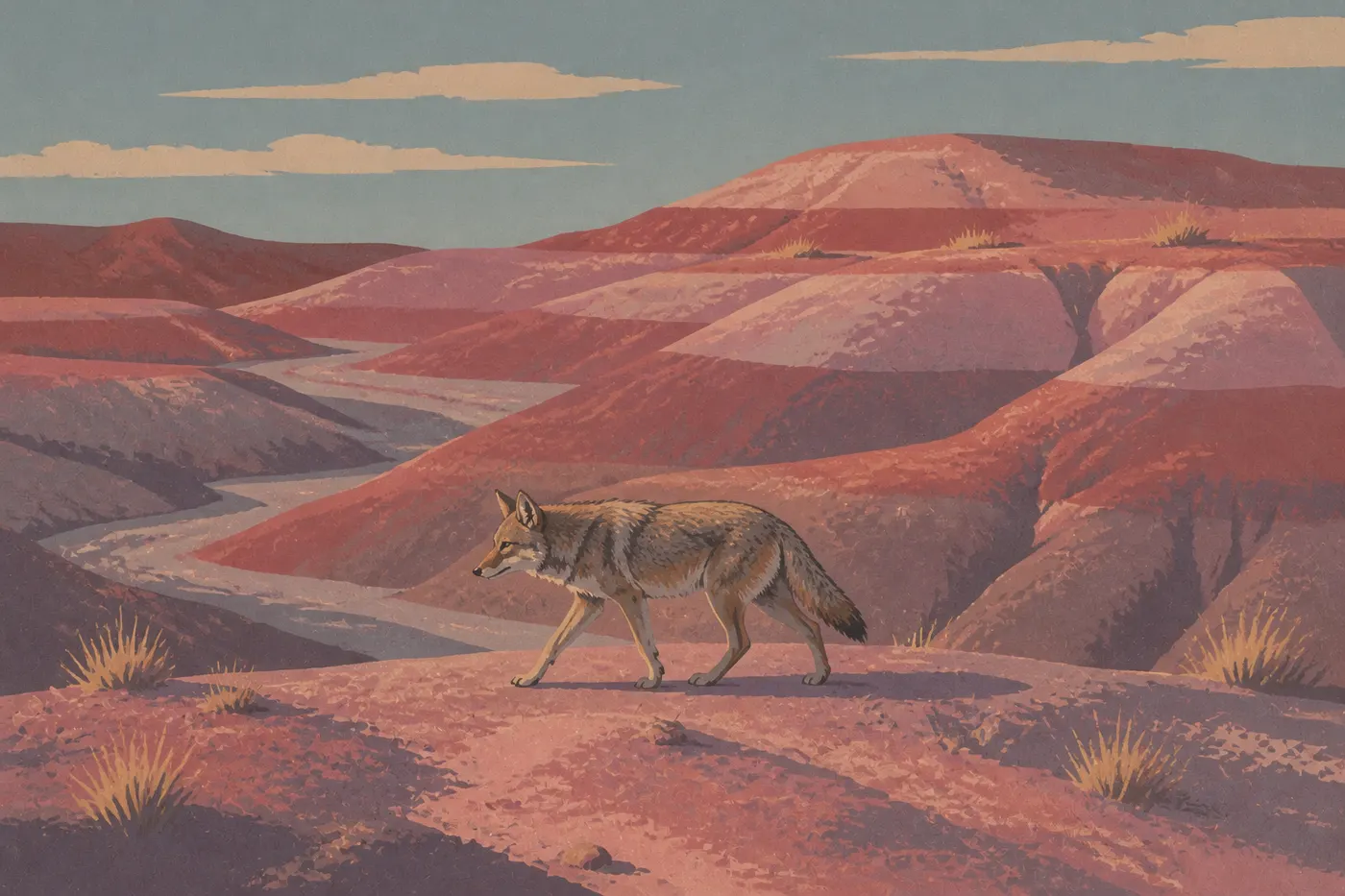
Coyotes (Canis latrans) live throughout the park. Their gray-brown coat, bushy tail held low, and pointed ears distinguish them from a stray domestic dog. Alone or in pairs, they hunt rodents and rabbits in the open grassland. They're active at dawn, dusk, and, in cool weather, in the middle of the day. When we visited in April, we saw one less than 165 feet from the main road, completely indifferent to passing cars. Don't feed it. A coyote that gets used to people loses its wariness and eventually becomes a problem for itself and other visitors.
The Greater Roadrunner, Feathered Sprinter
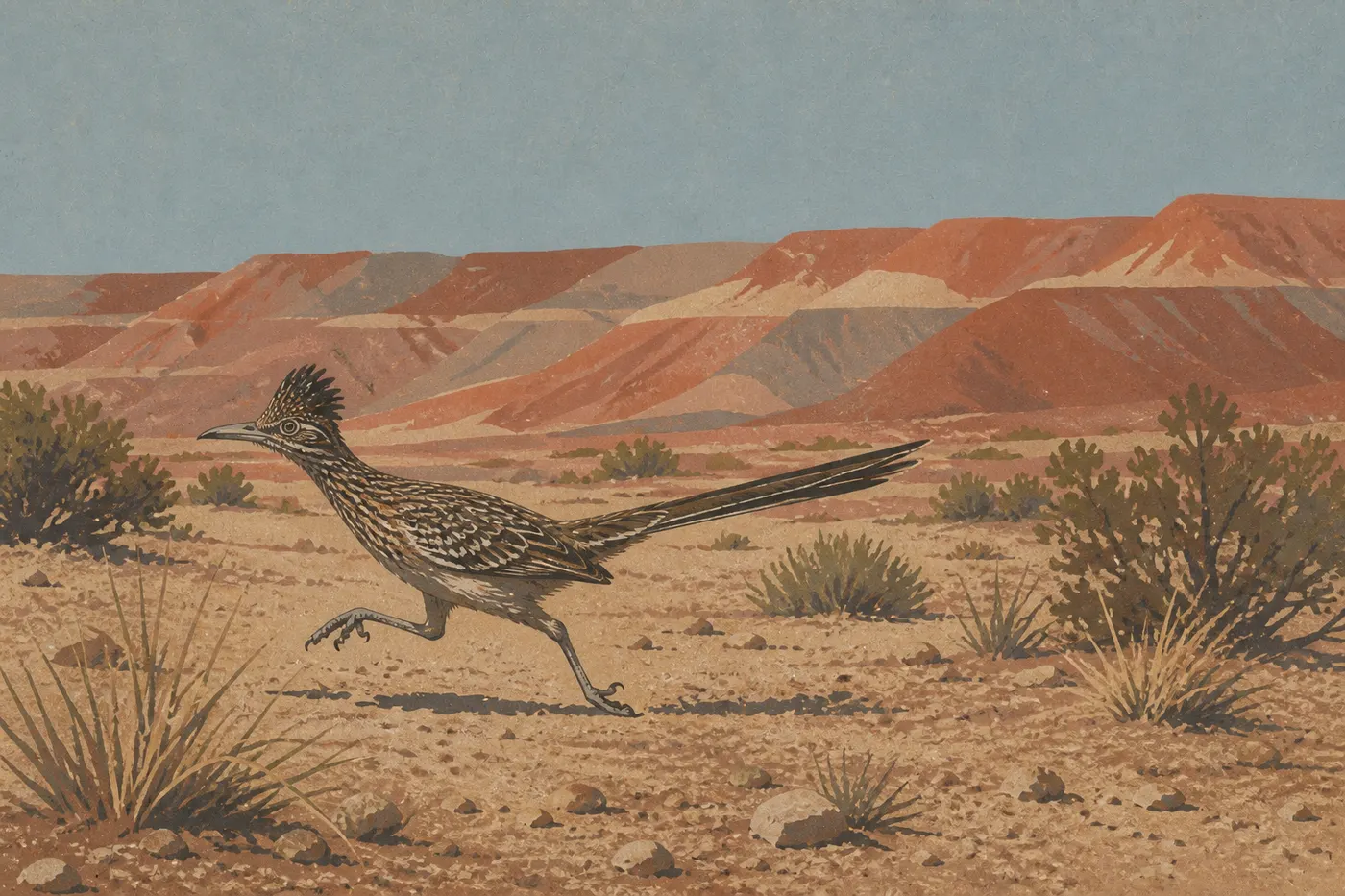
The greater roadrunner (Geococcyx californianus) is the signature bird of the American Southwest. This ground-dwelling cuckoo can run up to 19 mph and rarely flies. You can't miss its features: brown feathers streaked with white, a long tail, a bright red brow, and a jerky gait. It eats lizards, insects, and occasionally young snakes. You'll most often see it along trail edges in Rainbow Forest in the southern part of the park, and sometimes in the Visitor Center parking lot, where it seems to have understood long ago that humans are poor hunters.
The Black-Tailed Prairie Dog
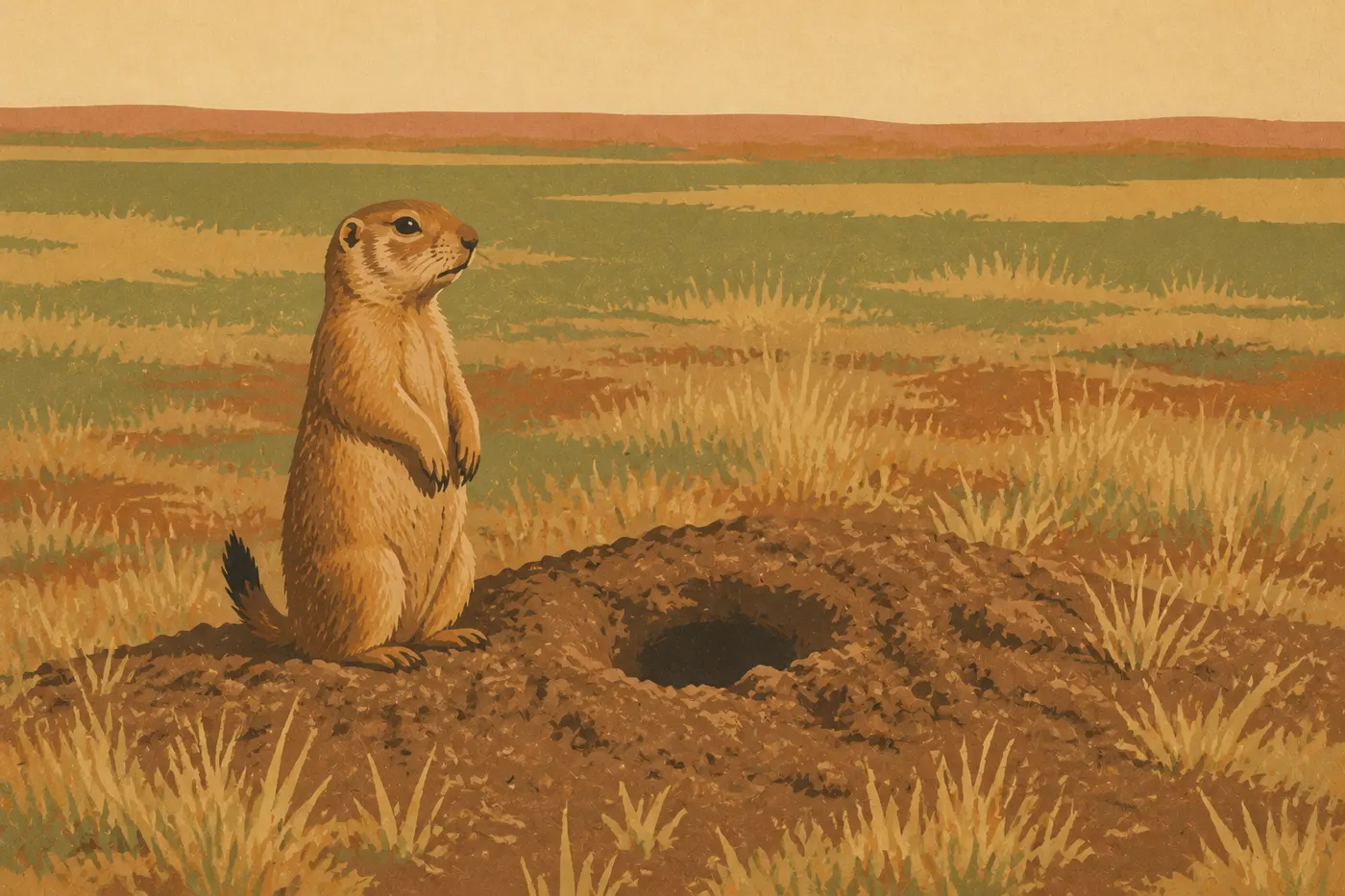
Black-tailed prairie dogs (Cynomys ludovicianus) form noisy colonies that are easy to spot from the road. These social rodents stand on their hind legs to watch their surroundings and communicate with modulated calls. Their burrows create microhabitats used by many other species, including gray foxes, gopher snakes, and burrowing owls. You'll find them mostly in the northern half of the park, on the open-grassland side.
Lizards, the Ground's Main Players
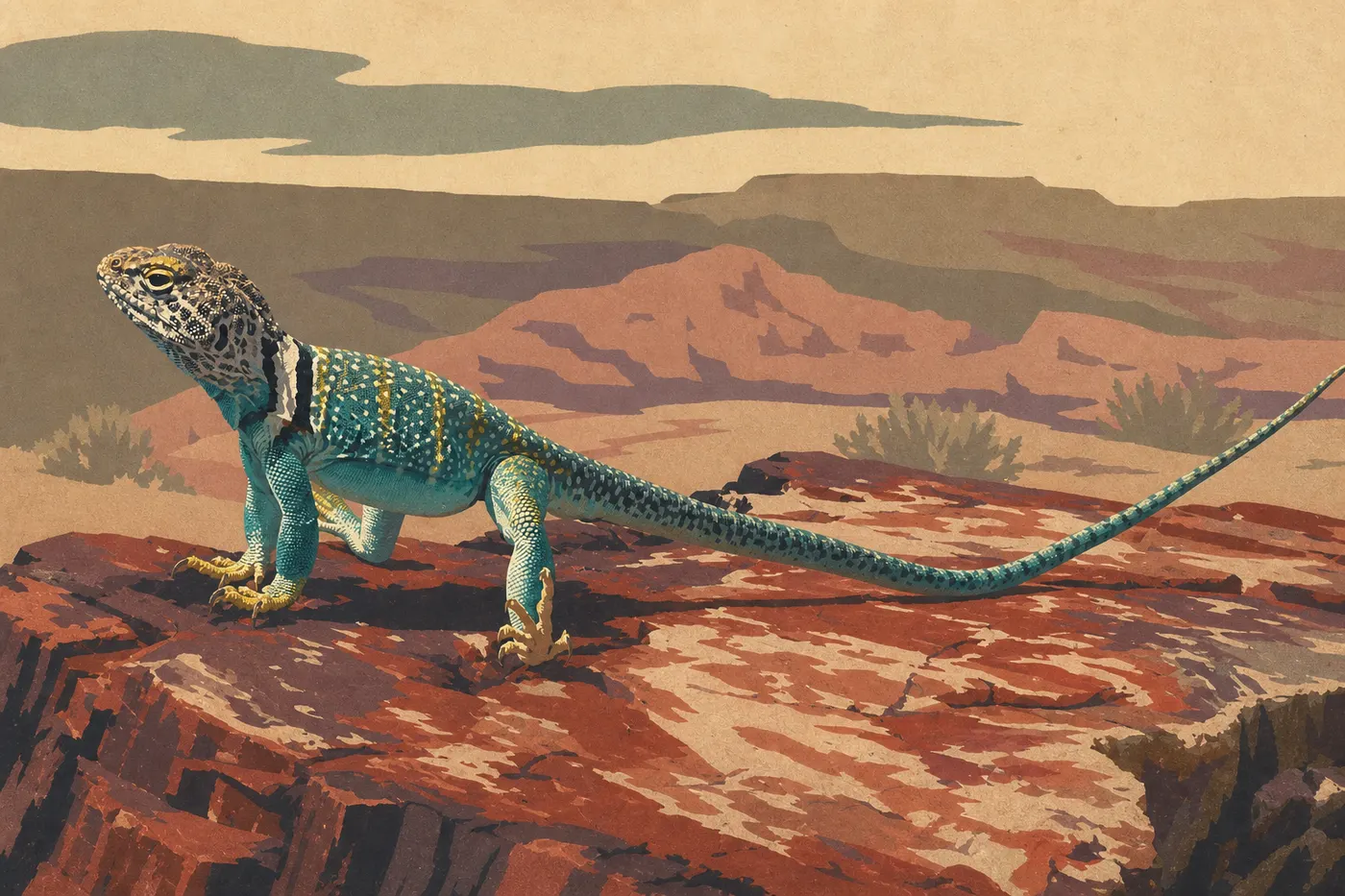
Lizards are Petrified Forest's most abundant vertebrates as soon as the sun warms the ground. Three species draw most of the attention. The eastern collared lizard (Crotaphytus collaris), recognizable by the double black band on its throat and bright colors, with males turning a brilliant yellow-green, runs on its hind legs when it is in a hurry. The greater short-horned lizard (Phrynosoma hernandesi) takes the opposite approach. Flattened against the rocks, it stays perfectly still to blend into the ground. The striped whiptail (Aspidoscelis sp.) darts in quick zigzags between grass clumps and pieces of petrified wood.
Snakes at Petrified Forest: What You Need to Know
Yes, there are snakes in the petrified forest. People ask about it often, and a direct answer is more reassuring than alarming. The park is home to several species, only one of which is truly venomous to visitors: the prairie rattlesnake (Crotalus viridis). Naturally discreet, it avoids contact and gives itself away with its rattle, triangular head, and vertical pupils.
The harmless gopher snake (Pituophis catenifer) is seen much more often. Its spotted back regularly causes people to mistake it for a rattlesnake. The key differences are simple: no rattle, an oval rather than triangular head, and a distinctly evasive manner. If you're unsure, keep your distance and let the animal move on.
The rule for any snake you encounter is simple: never reach under a rock or log, and watch where you step off marked trails.
Where to See Wildlife in the Park
The park is organized around Park Road, a 28-mile road connecting the north entrance near I-40 with the south entrance near Highway 180. Four areas account for most wildlife sightings.
Painted Desert Rim, in the north. The overlooks at Tawa Point and Kachina Point offer sweeping views of the grassland. Pronghorns and coyotes are visible early in the morning, before the heat drives them into the shade.
Puerco Pueblo and its surroundings. The prairie dog colony is active all day. The burrows attract snakes and hawks looking for an easy meal.
Rainbow Forest, in the south. This is where roadrunners are seen most regularly, along Long Logs Trail and around Agate House. Collared lizards favor the blocks of petrified wood warmed by the sun.
Park Road, the central stretch. Drive slowly. Coyotes and pronghorns cross the road at any time, especially late in the day.
Our hiking guide covers the trails leading to these areas, with distances and difficulty levels.
When to Watch Wildlife
Dawn and dusk remain the golden hours in every season.
Spring, April through May. Peak activity: lizards and snakes emerge from dormancy, migratory birds pass through, and temperatures make for comfortable hiking. This is the window we recommend.
Summer, June through August. Midday temperatures often top 95°F; most mammals take shelter between 10 a.m. and 5 p.m. Plan your outings for dawn and the two hours before sunset.
Fall, September through October. Mild temperatures, golden light, and fewer visitors. Excellent conditions for watching raptors migrate over the Painted Desert.
Winter, November through March. Pronghorns remain visible year-round. Reptiles hibernate. Occasional snowfall gives the park an unusual atmosphere.
For month-by-month temperatures and the timing of summer thunderstorms, see our guide to the best times to visit Petrified Forest.
Nocturnal animals deserve a separate mention. Coyotes, black-tailed jackrabbits, and great horned owls (Bubo virginianus) become active after sunset. Park Road closes at night, with hours posted at both entrances, but a few minutes near the park entrance before the gates close are enough to hear their calls in the desert silence.
Petrified Forest's Predators and Raptors
The coyote is the park's main land predator. The American badger (Taxidea taxus) deserves special mention. An excellent digger, it digs prairie dogs and rodents out of their burrows. The gray fox (Urocyon cinereoargenteus) is present but rarely seen during the day.
In the air, peregrine falcons (Falco peregrinus) nest on the cliffs of the Painted Desert. Swainson's hawks (Buteo swainsoni) and ferruginous hawks (Buteo regalis) soar over the grassland during the warmer months. Common ravens (Corvus corax) are everywhere and practically tame at picnic areas. Don't leave your sandwich unattended.
Watching Wildlife Safely
Minimum distance: 100 feet from all wild mammals, no matter how calm they appear. A panicked pronghorn can run 56 mph. You won't have time to get out of the way.
Never feed an animal, under any circumstances. A coyote or prairie dog that gets used to receiving food from visitors loses its wariness. What follows is either a bite or an official decision to euthanize the animal. Both outcomes are preventable.
If you encounter a snake on the trail: step back 6 feet and wait. The snake is trying to escape, not attack. Don't try to move it with a stick.
Closed-toe shoes are recommended whenever you leave marked trails. Walking through tall grass or over rocks in sandals is an unnecessary risk.
For the park's general safety rules, including emergency numbers and what to do during a sudden storm, ask at the park entrances or speak with rangers in the visitor centers.
In Short: Species Not to Miss and Where to Find Them
| Species | Best spot | Best time |
|---|---|---|
| Pronghorn | Painted Desert Rim, north | Sunrise |
| Coyote | Park Road, central stretch | Dawn and dusk |
| Greater roadrunner | Rainbow Forest, south | Sunny morning |
| Prairie dog | Puerco Pueblo | All day |
| Collared lizard | Petrified wood blocks | Morning, when the ground is warm |
| Peregrine falcon | Painted Desert cliffs | Spring and fall |
The park is compact, and Park Road crosses its two main biomes in a single day. Start at dawn in the north and reach Rainbow Forest in the early afternoon to maximize your chances of seeing wildlife without pushing the pace. Our Petrified Forest itinerary guide lays out plans for one or two days.
Frequently Asked Questions
Are there snakes in the petrified forest?
Yes, Petrified Forest is home to several snake species, including the prairie rattlesnake (Crotalus viridis), which is venomous but discreet. The harmless gopher snake is seen much more often. On marked trails, the chance of an encounter is very low. Off-trail, wear closed-toe shoes and watch where you step.
What are Petrified Forest's iconic animals?
The five species not to miss are the American pronghorn, coyote, greater roadrunner, black-tailed prairie dog, and eastern collared lizard. You can see all of them from Park Road or on the main trails.
What is the most common animal in the park?
Lizards are the most numerous vertebrates you'll see, becoming active as soon as the ground warms up. Among mammals, prairie dogs are the most numerous in colonies, while coyotes are the mammals visitors see most regularly on the move.
What is the largest animal in Petrified Forest?
The American pronghorn is the park's largest year-round land mammal. An adult weighs between 88 and 143 pounds and stands about 35 inches at the shoulder. Elk and mule deer occasionally appear around the edges of the park, but they aren't regular residents.
What predators live in Petrified Forest?
The coyote is the main land predator, followed by the American badger. In the air, peregrine falcons and ferruginous hawks hunt rodents and small birds. The prairie rattlesnake is the only venomous predator to watch for when you leave the trail.
What animals are out at night in Petrified Forest?
Coyotes, black-tailed jackrabbits, and American great horned owls are active after sunset. Park Road closes at night, but a few minutes at the entrance before the gates close are enough to hear their calls. For exact closing times, ask at the park entrances or check the official NPS website.