
What to Do in Petrified Forest: Must-See Sights and Activities
Petrified Forest National Park brings together three experiences you won't find anywhere else in one place along 43 miles of scenic road: fossilized tree trunks 225 million years old scattered across the ground like sculptures of purple and red quartz, the Painted Desert with its colorful strata visible from the very first overlook, and a prehistoric village of about a hundred rooms that has watched over the plain since the 11th century. You can cover the essentials in one day. Two days give you time to add hikes and linger for sunset without feeling rushed.
Petrified Forest at a Glance: Areas, Access, and Getting Around
The park stretches north to south between Interstate 40 and Highway 180 in northeastern Arizona, along the route of the old Route 66. A 43-mile scenic road crosses the entire park and connects the two entrances. From the north, you enter from Exit 311 off I-40. This is the Painted Desert entrance. From the south, the entrance is on Highway 180, 28 miles east of Holbrook. This is the petrified forest area.
No public transportation serves the park. You need a car. You can drive the entire road in an hour without stopping. With the overlooks and other stops, plan on much longer.
Two visitor centers bookend the park. The Painted Desert Visitor Center is in the north, with orientation information and an introductory film. The Rainbow Forest Museum is in the south, with geology and archaeology exhibits. Both serve as entry points where you can buy your pass.
The entrance fee is $25 per vehicle, valid for 7 days. If you're visiting several parks on the same trip, the America the Beautiful pass ($80) covers all federal sites for one year. To plan your drive, our Petrified Forest access guide covers routes from Phoenix, Flagstaff, and Albuquerque.
Here's a practical tip: enter through the entrance opposite your direction of travel. If you're coming from the west, enter in the south at Highway 180 and drive north. If you're coming from the east, enter in the north at I-40 and drive south. You'll leave without having to turn around.
How Much Time Do You Need to Visit Petrified Forest?
One well-organized day is enough to drive the scenic road, stop at the Painted Desert overlooks, explore the petrified wood sites, and have a picnic in the park. That's the itinerary nearly all visitors follow, often while passing through on I-40.
Two days open up other possibilities. You can hike off-trail, watch the sunrise over the Painted Desert from Kachina Point, and visit Holbrook in the evening, with its mineral galleries and Route 66 museum. Our Itinerary and Timing page offers detailed plans based on how much time you have.
Must-See Stops by Area
The park naturally divides into three areas. Here are the stops you shouldn't miss in each one, from north to south.
The Painted Desert and Its Overlooks (North Area)
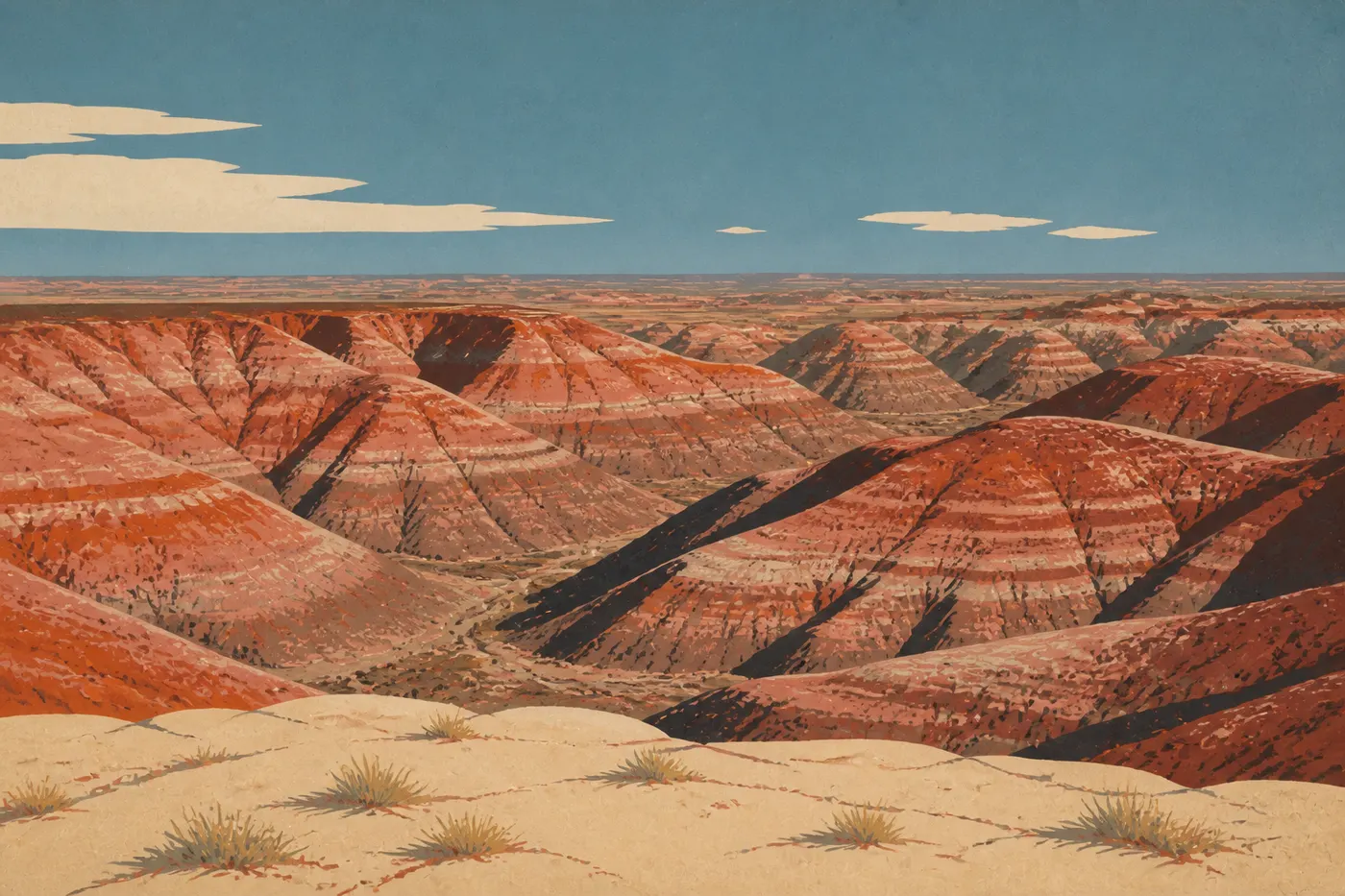
The park's first section, immediately after the north entrance, is devoted entirely to the Painted Desert. A series of overlooks lines the road for about 9 miles, each offering a slightly different angle on the same purple, pink, ocher, and reddish-brown badlands.
Kachina Point is our favorite stop in this area. The view takes in a vast stretch of badlands with not a road in sight. This is also where the only trail into the northern wilderness area begins. When we visited in the late afternoon, the low-angle light shifted the clay from blue-purple to deep pink in an hour.
Tawa Point and Chinde Point work well as a pair. Less than 0.3 miles of the Painted Desert Rim Trail connects them, and both offer dizzying views down onto the layers of colorful geology.
The Painted Desert Inn deserves a stop of its own. This historic adobe building from the 1920s, listed and restored, houses a free museum about the park's history and Route 66. The murals painted by Hopi artists in the 1940s are remarkable. Admission is free. Allow about half an hour.
One thing to note: you won't find visible petrified wood on the ground in this area. The Painted Desert is above all an experience of color and space.
The Central Area: Puerco Pueblo and Newspaper Rock
Heading south from the Painted Desert, the road drops into the Puerco River valley. This is the least visually dramatic area, but the richest archaeologically. Many visitors skip it because they don't know what they're missing. That's a mistake.
Puerco Pueblo is an ancestral pueblo village of about one hundred rooms, occupied between the 11th and 14th centuries. A 0.3-mile paved trail loops around the site in twenty minutes. The partially restored stone walls reveal the village layout. At each solstice and equinox, a ray of sunlight enters through a precisely oriented window and illuminates a spiral petroglyph carved into a slab. It's evidence that the people who lived here understood astronomical cycles with remarkable precision.
Newspaper Rock, a few miles away, is a rock panel covered with hundreds of petroglyphs carved into dark sandstone. You view them from an observation platform with binoculars, at the required distance. The protective barriers are there for good reason. Vandalism in the 20th century irreversibly damaged some panels. An on-site sign explains the most common symbols.
The Petrified Forests (South Area)
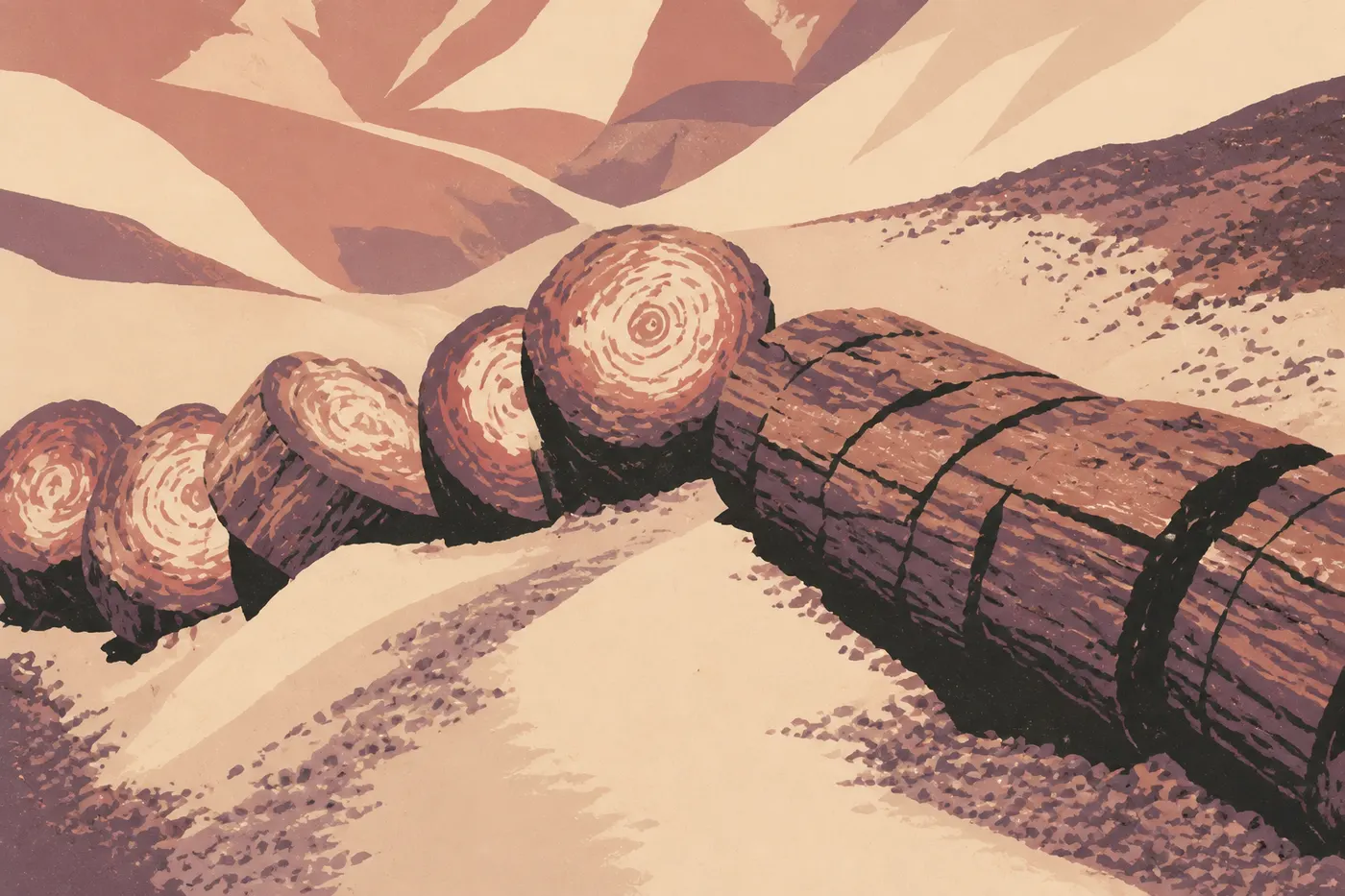
The heart of the park, and the reason it exists, begins at Blue Mesa and extends to the Rainbow Forest Museum. This is where the petrified wood is densest, largest, and best displayed.
Blue Mesa is where petrified wood and badlands exist side by side most dramatically. Bluish and gray clay forms sugarloaf hills, with wine-red and pale purple trunks lying at their base. The 1-mile marked trail descends into the scenery. It's one of the park's most photographed stops, and for good reason.
Jasper Forest is an overlook above a plain scattered with isolated trunks. The view from above makes the scene clear: the trees didn't grow here. Ancient waterways carried them here 225 million years ago, before sediments buried them, fossilized them, and slowly brought them back to the surface through erosion.
Crystal Forest packs an exceptional concentration of petrified wood onto a flat, paved 0.6-mile trail. The trunks are fractured into clean sections, revealing interiors of purple, white, and yellow quartz. It's the most accessible stop for visitors of all abilities.
Agate House is a small ancestral pueblo ruin built entirely from blocks of petrified wood. Builders in the 10th and 11th centuries used whatever lay at their feet as building material. The result is a partially restored structure unlike any other. You can reach it via the Long Logs Trail, a 2.7-mile round-trip hike from the Rainbow Forest Museum, or by taking the combined trail with a spur to Agate House.
Giant Logs and Long Logs, closest to the Rainbow Forest Museum, display the park's largest specimens. Some trunks reached about 200 feet tall when they were alive, before falling into Late Triassic rivers. Broken into regular sections by geological forces, they remain impressive at human scale.
The Best Hikes in Petrified Forest
Most of the park's trails are short and require no special equipment. Four of them hold most of the interest.
Blue Mesa Trail (1 mile, loop, moderate elevation gain): the most spectacular hike for the effort-to-scenery payoff. The trail descends between the badlands buttes. Interpretive signs along the way explain how the rock formed.
Crystal Forest Trail (0.6 miles, loop, flat): a must, even for visitors who aren't very active. The density of petrified wood on the ground is extremely high.
Giant Logs Trail (0.4 miles, loop, from the Rainbow Forest Museum): for seeing the largest trunks in twenty minutes flat.
Painted Desert Rim Trail (1 mile, point to point between Tawa Point and Kachina Point): the overlook walk, ideal at sunset. It offers a 200-degree view of the badlands.
If you want to leave the marked trails, you can access the backcountry in the northern and southern wilderness areas with a free permit issued at the visitor centers. Plan on at least one night to make the trip worthwhile. Our Hiking page lists every trail with distances, elevation gains, and difficulty levels.
Other Activities Based on Your Interests
Wildlife Watching
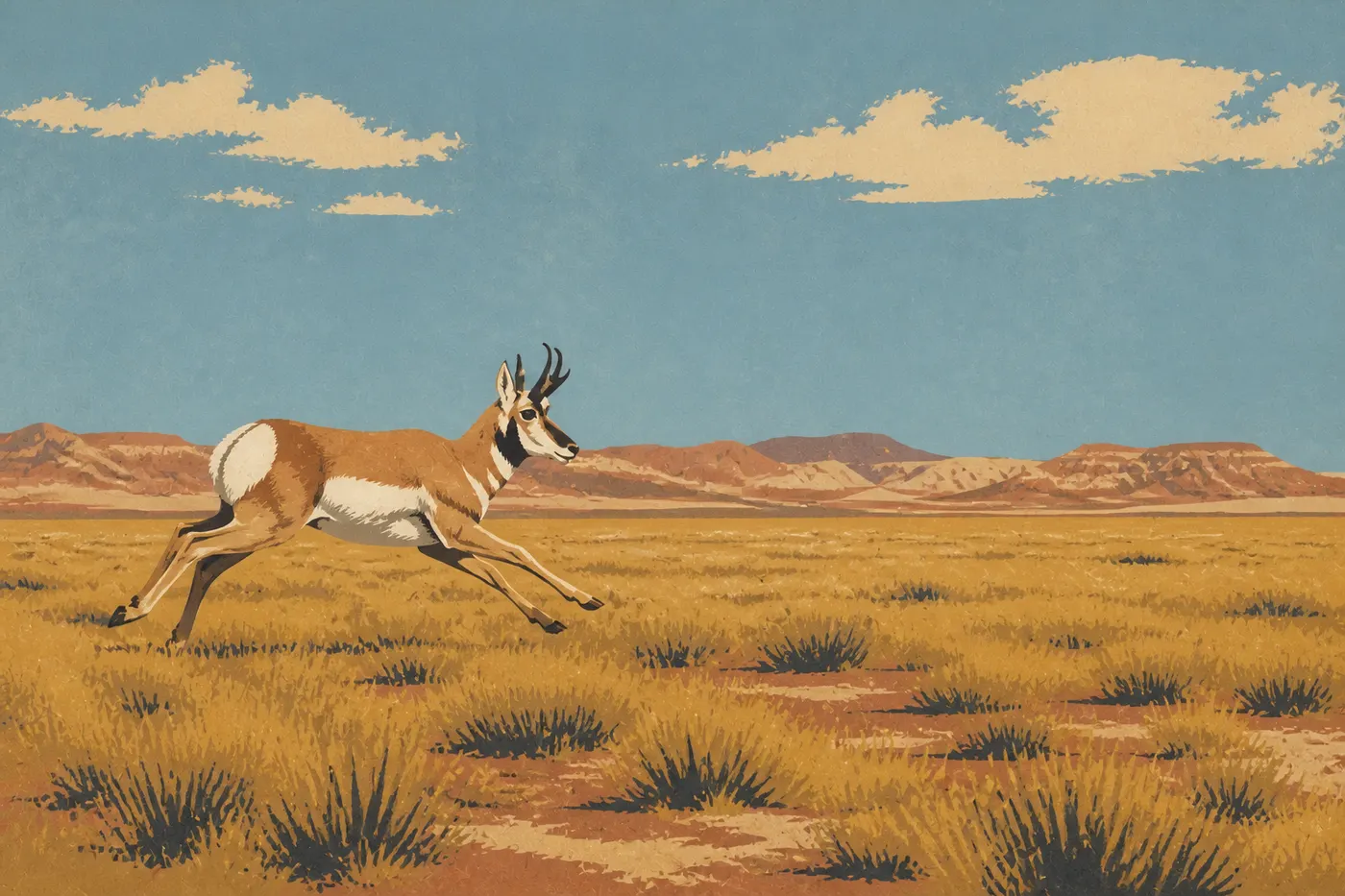
This isn't a safari destination, but wildlife is present and visible if you're patient. Pronghorns regularly cross the scenic road, especially in the morning. Prairie dogs have colonies around Puerco Pueblo and let you approach fairly closely. Coyotes prowl the edges of parking areas at the end of the day. Among the birds, ravens accompany nearly every stop. Raptors, including Swainson's hawks and bald eagles, often soar above the Painted Desert. Our Wildlife page explains the best viewing windows for each season.
Photography and Stargazing
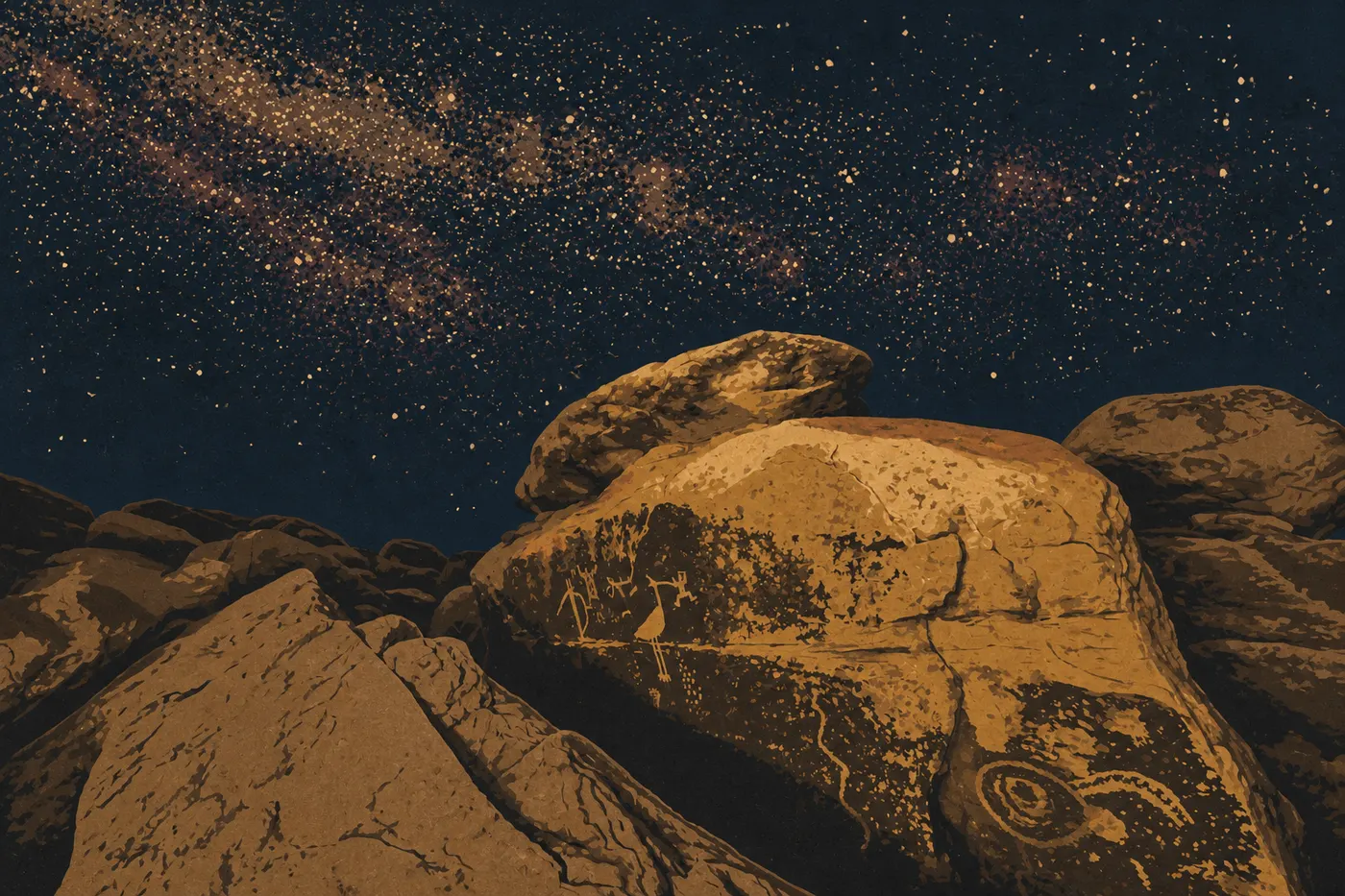
The quality of the light at Petrified Forest is reason enough to spend a night in Holbrook instead of making a quick half-day stop. At dawn, the petrified wood in the southern section sparkles with pearly reflections. At sunset, the Painted Desert turns deep purple. The window of good light is short, about thirty minutes on either side, but its quality is rare.
The park has been designated a Dark Sky Park. You can see the Milky Way with the naked eye on most clear nights from March through October. Nighttime ranger programs are held on some summer evenings, with telescopes available for visitors. Our Weather page identifies the least cloudy periods for planning a night of stargazing.
Family Visits
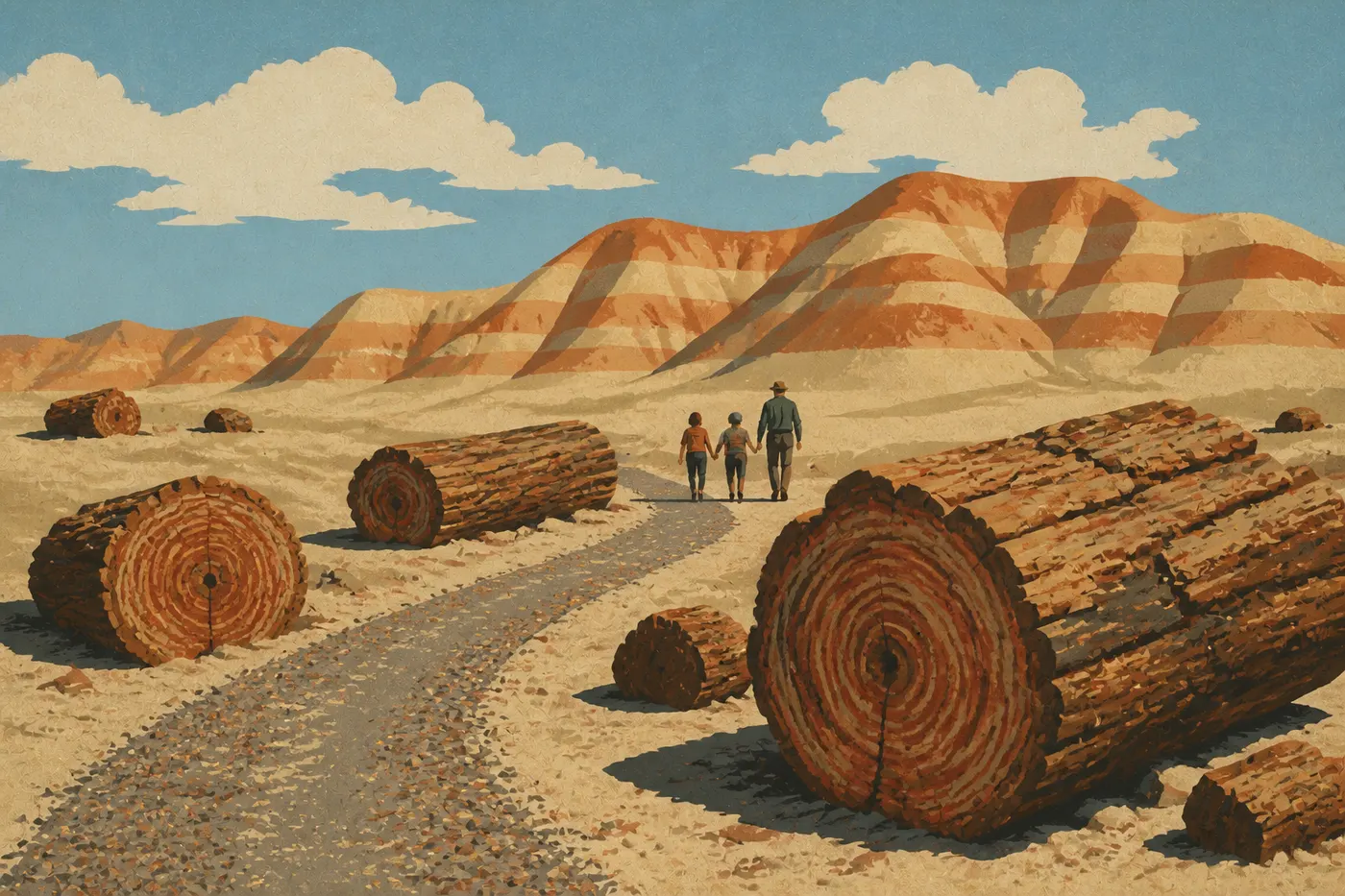
The Junior Ranger program is available at both visitor centers. Kids fill out an activity booklet during their visit and receive an official park badge. Starting around age 5 or 6, the idea of walking among ancient trees turned to stone is enough to hold their attention. The Crystal Forest and Giant Logs trails are paved, flat, and stroller-friendly. Our Family page offers detailed advice for young children, especially about water sources and shady areas.
One Rule to Know Before You Arrive
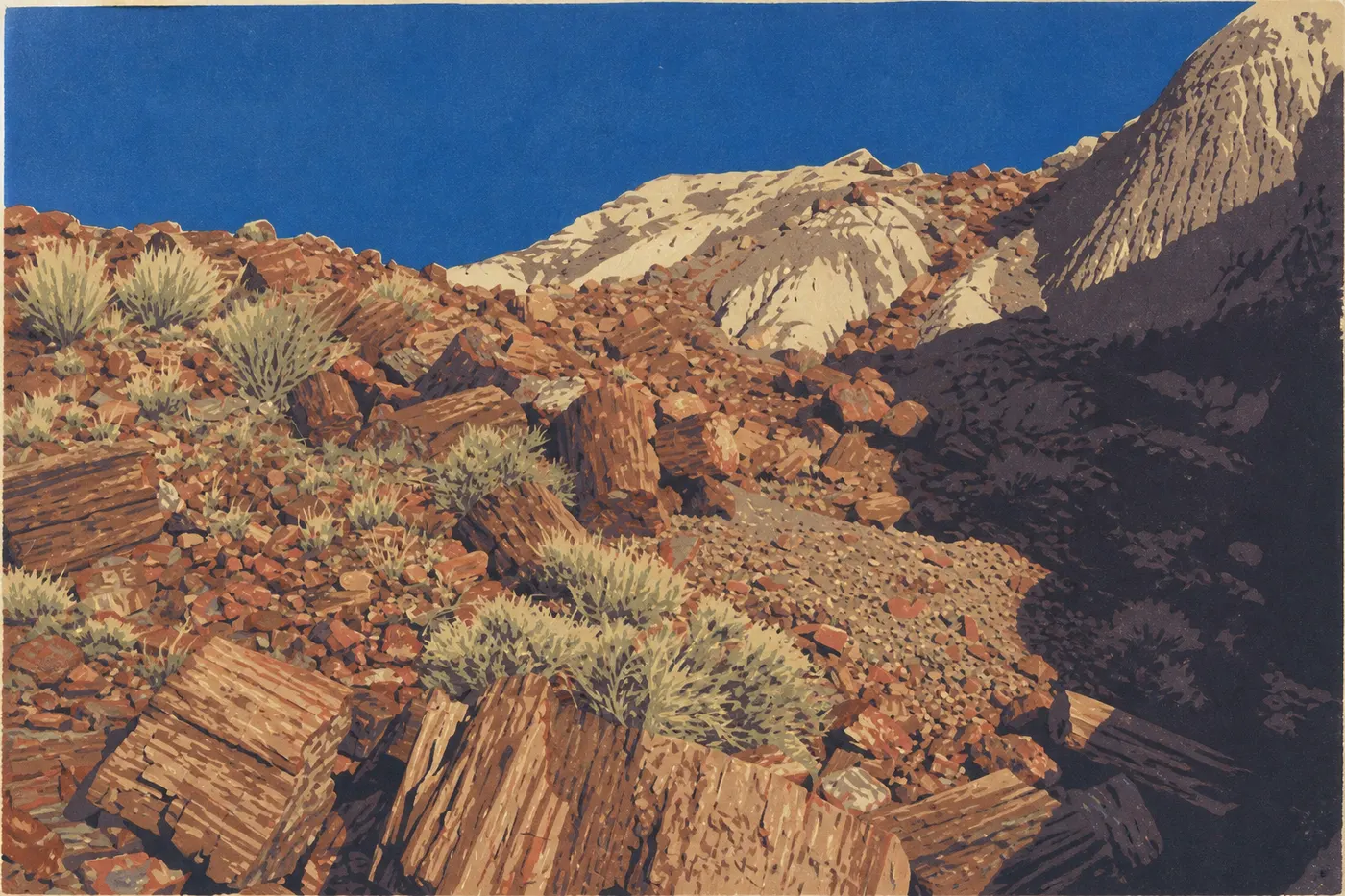
Here's one nonnegotiable rule: you may not remove petrified wood or any other rock from the park, even a chip the size of a coin. The ban is federal, and the fine is real. Every year, thousands of pounds of wood "returned by remorseful tourists" arrive at the park with apology letters. The park loses about one ton of fossils a month to illegal collecting. The legal shops in Holbrook sell petrified wood from private land. That's the only way to leave with a specimen.
Stay hydrated. The park is a semiarid steppe. Summer temperatures climb above 100°F. In winter, the dry air dehydrates you just as quickly as the heat does. Bring at least 2 liters of water per person for a half day.
What to Do Around Petrified Forest
The park fits naturally into a larger itinerary through the American Southwest.
Holbrook (28 miles west on I-40) is the nearest service town. The Route 66-listed Wigwam Motel is worth a photo stop. Mineral and fossil shops on Main Street let you legally buy petrified wood and agate.
Winslow (56 miles west) is known for the Eagles song and La Posada, a fully restored historic hotel from the 1930s. It's a good lunch or overnight stop if your budget allows.
Meteor Crater (81 miles west, Exit 233 off I-40) is a 0.7-mile-wide meteor impact crater formed 50,000 years ago. It's privately owned and admission costs about $25 for adults, but the sight is striking and the visit takes two hours.
For a longer stay in the region, Canyon de Chelly (2 hours north) and Monument Valley (3 hours south) fit naturally into the same road trip through Navajo Arizona. Northeastern Arizona brings these destinations together in a natural 3- to 7-day circuit.
The Essentials: What to See First in Petrified Forest
If time is tight, here's how to prioritize. Start at Kachina Point for the Painted Desert, preferably in the late afternoon. Stop at Puerco Pueblo for the archaeological context. Twenty minutes is enough. Spend the middle of the day at Crystal Forest, Blue Mesa, and Agate House in the south. Finish at the Rainbow Forest Museum to understand the geology before you leave.
Petrified Forest is worth the detour even if you only have four hours. The park is compact, easy to understand, and deeper than it looks from the highway. Find all the practical guides for planning your visit on the Petrified Forest home page.
Frequently Asked Questions
What is there to do in Petrified Forest?
In Petrified Forest, you can drive the 43-mile scenic road, see 225-million-year-old petrified wood at several sites including Crystal Forest, Blue Mesa, and Giant Logs, take in the Painted Desert from overlooks in the north, visit the Puerco Pueblo archaeological site and its petroglyphs, hike short and accessible trails, look for pronghorns and coyotes, and stargaze beneath one of the best night skies in Arizona.
How long does it take to visit Petrified Forest?
How much time to spend in Petrified Forest depends on your pace. One day comfortably covers the scenic road and the main stops. Two days are recommended if you want to hike off-trail or watch sunrise and sunset over the Painted Desert. Our Itinerary and Timing page offers detailed plans.
Is Petrified Forest worth visiting?
Petrified Forest is worth visiting even if you're just passing through on I-40. The park brings together three radically different experiences on a single route: petrified wood, colorful badlands, and prehistoric ruins. You can see the essentials in four hours. With a full day, you'll leave truly satisfied.
Can you pick up petrified wood in the park?
No. Removing petrified wood or any other rock from the park is strictly prohibited, even a tiny fragment. The violation carries a federal fine. Petrified wood from private land is legally sold in Holbrook shops, 28 miles west.
What are the must-do hikes in Petrified Forest?
Petrified Forest's must-do hikes are Blue Mesa Trail, 1 mile through the blue badlands; Crystal Forest Trail, 0.6 miles and extremely dense with fossils; Giant Logs Trail, 0.4 miles and home to the largest specimens; and Painted Desert Rim Trail, 1 mile between Tawa Point and Kachina Point. Our Hiking page gives the distance, elevation gain, and difficulty level for every trail.
Is there wildlife to see in Petrified Forest?
Yes, wildlife is present and regularly visible. You'll see pronghorns on the scenic road, especially in the morning, prairie dogs near Puerco Pueblo, and coyotes around parking areas at the end of the day. Raptors, including Swainson's hawks and bald eagles, frequently soar over the Painted Desert. Our Wildlife page explains the best viewing conditions for each season.