
Petrified Forest Weather: Forecasts, Climate, and Current Conditions
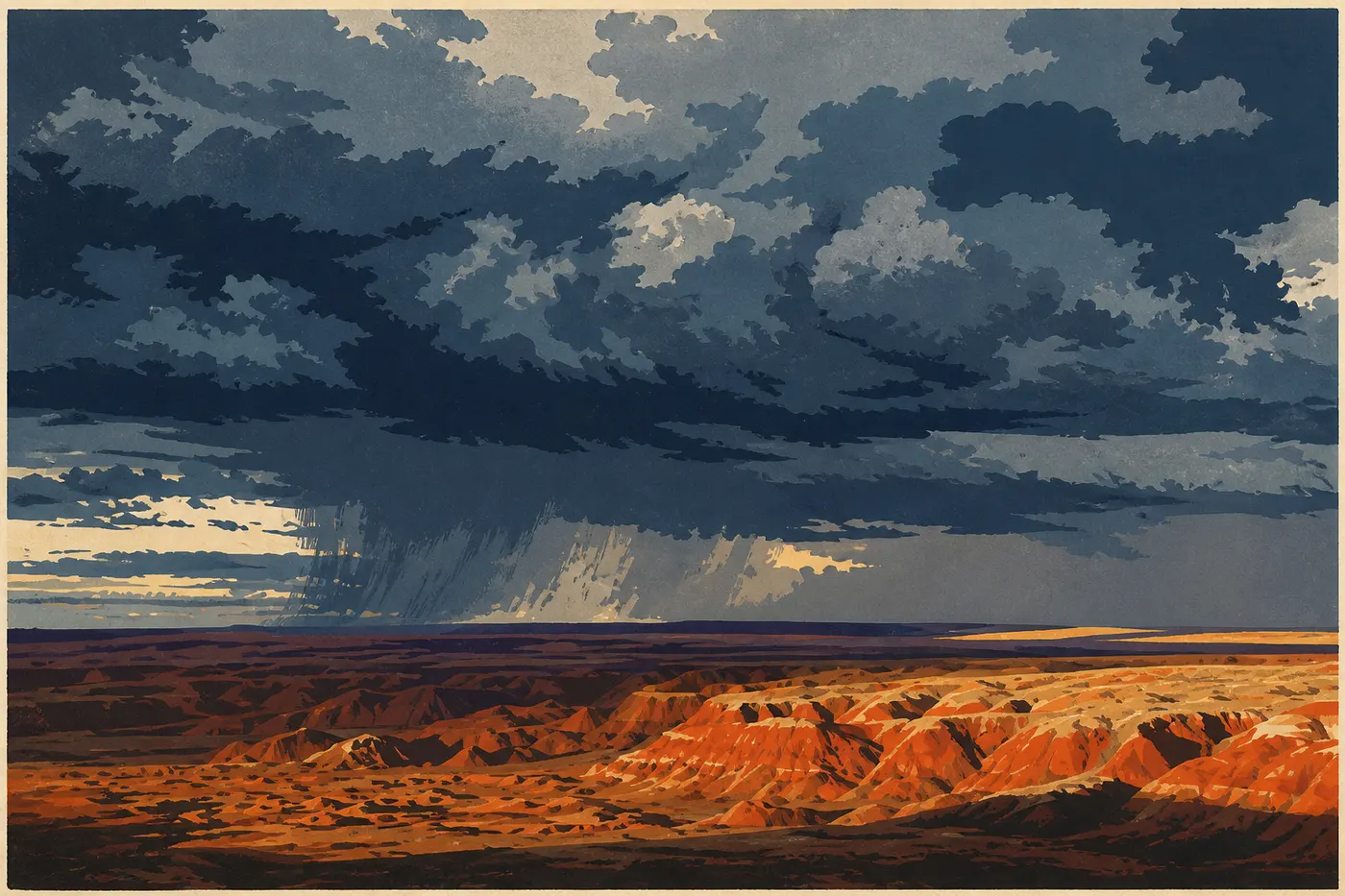
Petrified Forest isn't the postcard desert you might expect. Sitting between 5,400 and 6,200 feet above sea level in northeastern Arizona, this semi-arid plateau follows its own rules: afternoons above 95°F in June, nights dropping to 14°F in January, and just 10 inches of precipitation a year, split between winter snow and monsoon thunderstorms. Conditions can change quickly in any season. Here's what you need to know before you go.
Current readings are unavailable. See the seasonal averages farther down this page.
Open-Meteo readings · updating… · park time zone
Petrified Forest Climate Month by Month
The table below brings together typical climate normals for the park, based on regional readings from the Arizona plateau. Check the short-term forecast before you leave. Day-to-day swings can be significant.
| Month | Low °F | High °F | Precip. (in) | What to expect |
|---|---|---|---|---|
| January | 16 | 41 | 0.7 | Snow possible, icy roads |
| February | 19 | 46 | 0.7 | Clear skies between weather systems |
| March | 27 | 55 | 0.7 | Strong winds, early-morning frost |
| April | 36 | 64 | 0.4 | Gradual warming, wildflowers |
| May | 45 | 75 | 0.4 | Good conditions, cool nights |
| June | 55 | 88 | 0.2 | Dry and scorching, the hottest month of the year |
| July | 63 | 90 | 1.8 | Monsoon season, strong afternoon thunderstorms |
| August | 61 | 86 | 1.9 | Monsoon season, flash floods possible |
| September | 50 | 79 | 1.1 | Monsoon winding down, more stable skies |
| October | 37 | 66 | 0.7 | Mild days, cold nights |
| November | 25 | 52 | 0.6 | First freezes, cold weather returns |
| December | 19 | 41 | 0.7 | Snow possible, very few visitors |
Most precipitation falls during two windows: December through March, when snow and frontal systems move through, and July through September, during monsoon season. June stands out as the driest, most arid month in between.
Does It Get Cold at Petrified Forest? Records and Extremes
Yes, much colder than you might expect for Arizona. Regional cold-weather records hover around -4°F in the heart of winter. In summer, the thermometer can approach or exceed 104°F. The daily temperature swing regularly tops 36°F. A day at 86°F often ends with a night at 46°F.
Elevation explains a lot. At an average of nearly 5,900 feet, the park doesn't follow the climate patterns of Scottsdale or Phoenix. This is a very different Arizona.
What to Wear at Petrified Forest by Season
Winter: A warm coat, not just a windbreaker, plus gloves and a hat. Wear waterproof shoes if the forecast calls for ice or snow.
Spring: Three layers you can add or remove, such as a T-shirt, fleece, and light windbreaker. Add protective eyewear on especially windy days across the Painted Desert.
June: A wide-brimmed hat, SPF 50 sunscreen at a minimum, and 2 liters of water per person for any outing. Wear closed-toe shoes on the trails. Don't hike in the middle of the day.
July and August (monsoon season): The same gear as in June, plus a lightweight rain jacket in your pack. Check the sky before moving far from your vehicle. Monsoon clouds move quickly, and lightning strikes this completely exposed landscape.
Fall: Layer up. Bring a light fleece in October and a coat in November. Hiking shoes with ankle support are useful if you leave the maintained trails.
Alerts and Conditions to Watch
Park Road closures: The main road connecting the north entrance (I-40, Exit 311) with the south entrance (Highway 180) may close without warning because of ice, snow, or flooding. The park is also closed on Thanksgiving Day and Christmas Day. Check conditions before you set out, especially in winter.
Flash floods: Dry washes remain dangerous during monsoon season. Water can arrive from a storm several miles away, even when you can't see rain from where you are. Never drive or walk through a wash with water in it, even in a 4x4.
Lightning in open country: The overlooks and ridges of the Painted Desert are completely exposed. When a storm approaches, go down immediately, move away from isolated trees and poles, and wait in your vehicle if necessary.
Dehydration and heat exhaustion: In June, the combination of high elevation, intense sun, and very dry air creates a real risk. Drink before you're thirsty and limit strenuous activity between 11 a.m. and 3 p.m.
For real-time alerts, the Flagstaff office of the National Weather Service (NWS) issues forecasts covering the park area.
Frequently Asked Questions
What is the temperature at Petrified Forest?
Temperatures at Petrified Forest range from 16°F on winter nights to above 100°F on summer afternoons. The daily swing often exceeds 36°F, whatever the season.
What is the climate like at Petrified Forest?
Petrified Forest has a high-elevation semi-arid climate, ranging from 5,400 to 6,200 feet. Winters are cold with occasional snow, June is hot and dry, and monsoon thunderstorms arrive from July through September. Spring is windy and fall is mild. Annual precipitation is about 10 inches.
What will the temperature be at Petrified Forest tomorrow?
Tomorrow's temperature at Petrified Forest is available in the seven-day forecast shown at the top of this page.