
What to Do in Haleakalā: Essential Sights and Activities
Haleakalā packs its highlights into two radically different experiences. At the summit, 10,023 feet above sea level, you'll step into a lunar landscape of red ash and profound silence, colored violet and orange by the rising sun. Down below, on the Kīpahulu coast, you'll follow tropical ravines to a waterfall more than 400 feet high. If you only have one absolute priority, make it sunrise at the summit (reservations are essential weeks in advance), followed by a hike into the crater on the Keoneheʻeheʻe Trail and, the next day, the walk to Waimoku Falls via the Pīpīwai Trail in Kīpahulu. Add a night in the park for some of the clearest stargazing in the Pacific, and you'll have experienced the essence of this remarkable park.
Haleakalā at a Glance: Districts, Access, and Getting Around
Haleakalā National Park stretches from the volcano's summit, at 10,023 feet, to the tropical coast of Kīpahulu near Hana. It is divided into two separate districts with no internal road connecting them.
The Summit District is reached via Haleakalā Highway (Route 378) from Kahului, in about 1.5 hours. This is where you'll find the crater, overlooks, high-elevation trails, and most of the park's facilities.
Kīpahulu District is reached via the Hana Highway (Routes 36/360) on the east side of Maui. Allow 2 to 3 hours from Kahului, depending on traffic along the winding road. From the Summit District, you have to descend and drive around the island. The trip between the two areas takes at least 3 to 4 hours.
A car is essential. The park does not operate an inter-district shuttle. Any ordinary vehicle is sufficient for the Summit District, whose road is paved and well maintained. An SUV is comfortable but not strictly necessary for reaching Kīpahulu via the Hana Highway.
For entrance fees, the sunrise timed-entry reservation, and practical details, the guide to getting to Haleakalā covers everything you need to know before you leave. To choose the best time to visit based on weather and crowds, when to visit Haleakalā breaks down conditions month by month.
How Much Time Do You Need to Visit Haleakalā?
One day is enough to check off the Summit District's essentials, including sunrise. But that means skipping Kīpahulu, which needs a full day simply because of its distance. Plan on two full days to see both districts properly, or three days if you want to take on serious crater hikes and explore Kīpahulu without rushing.
The recommended Haleakalā itineraries offer three plans (1 day, 2 days, and 3 days), with the best timing and trail combinations for different experience levels.
The Must-See Sights, District by District
Summit District: The Crater Above the Clouds

The Summit District is what most visitors picture when they think of Haleakalā: a windswept landscape of red and black ash, at an elevation where clouds often pass beneath your feet. “Haleakalā” literally means “house of the sun” in Hawaiian, and the meaning of the name becomes obvious from the summit.
Sunrise at the summit. This is the park's best-known experience. From Puʻuʻulaʻula Overlook (“Red Hill”), the sun rises over the horizon in near-total silence, tinting the crater orange and violet before gradually dissolving the sea of clouds below. To enter the park between 3 a.m. and 7 a.m., you must have a timed-entry reservation through recreation.gov, often available up to 60 days in advance. During peak season, time slots disappear within minutes. Dress in layers. Temperatures at the summit can drop to 30°F even in summer, and the wind makes it feel much colder. Gloves, a hat, and a windbreaker are well worth packing. Summit weather is unpredictable and changes quickly. The Haleakalā weather conditions page offers seasonal guidance.
Crater overlooks. The scenic road climbing toward the summit offers several worthwhile stops. Leleiwi Overlook, at about 9,022 feet, looks down into the crater and, on hazy days, can reveal a rare optical phenomenon: the Brocken specter, your shadow projected onto the clouds and surrounded by a circular rainbow halo. Kalahaku Overlook, at around 9,350 feet, is the best place to see ʻāhinahina, or silversword. This endemic plant, with its silver leaves, can live for decades before blooming once and then dying. Unforgettable. At the summit, Haleakalā Visitor Center has exhibits on volcanic geology and Hawaiian culture. Rangers give presentations in English according to the park schedule.
Pa Kaʻoao (White Hill). A short trail from the summit parking area, just a few hundred yards with virtually no elevation gain, leads to this promontory at 10,029 feet. On a clear day, the 360-degree view reaches as far as the islands of Lānaʻi and Molokaʻi.
Hosmer Grove. This grove near the district entrance, at about 6,560 feet, is a must for birdwatching and endemic Hawaiian species. You may see ʻapapane (bright red, with a flute-like call), ʻiʻiwi (bright red, with a long, curved orange bill), and, with luck, the nēnē, the Hawaiian goose. It was critically endangered in the 1950s and is now recovering thanks to conservation efforts. An easy loop of less than a mile passes through this natural garden. It is also home to the district's most accessible campground, just a few minutes' walk from the parking area.
Kīpahulu District: Jungle, Ravines, and a Monumental Waterfall

Kīpahulu is another world. Temperatures sometimes climb to 81°F, the vegetation is dense and humid, and the Pacific pounds the black lava cliffs just feet from the trails.
ʻOheʻo Pools. At the district entrance, ʻOheʻo Stream tumbles through a series of stepped pools toward the sea. The coastal trail alongside them, less than 1.2 miles round-trip and flat enough for everyone, lets you take in the scenery from the banks. Swimming in the pools is subject to restrictions that vary with water levels and weather. After rain, flash floods can be violent and fatal. Always check the warning signs on site before entering the water.
The Pīpīwai Trail. This is Kīpahulu's signature hike and one of the most spectacular on all of Maui. The trail climbs the valley for about 4 miles round-trip, first passing through a banyan forest with sprawling aerial roots and then a giant bamboo forest so dense that the wind makes the stalks snap like percussion instruments. The trail ends at Waimoku Falls, a waterfall more than 400 feet high that drops like a veil from a sheer basalt wall. Allow 2 to 3 hours round-trip, with about 650 feet of elevation gain.
The Kīpahulu coast. A coastal trail follows the lava cliffs above the ocean beyond ʻOheʻo Pools. Sea conditions here are often rough. Never climb down onto the coastal rocks without first making sure the waves are calm, and follow all marked boundaries carefully.
Palapala Hoʻomau site. A few minutes' drive south of Kīpahulu Visitor Center is the grave of aviator Charles Lindbergh, who chose this remote corner of Maui for his final years. This is not an NPS site, but it is signposted and worth a stop for its unusual setting: a Hawaiian cemetery facing the ocean beneath pandanus trees.
Haleakalā's Best Hikes
Haleakalā offers two very different hiking environments: the high-elevation crater and the tropical valley of Kīpahulu.
In the Summit District, the Keoneheʻeheʻe Trail (Sliding Sands) drops more than 2,460 feet from the summit to the crater floor, crossing landscapes of ash, volcanic rock, and endemic plants. The Halemauʻu Trail offers a second entrance from an intermediate trailhead. These two trails can be combined into a complete crater traverse with an overnight stay in a cabin, the park's most immersive hiking experience. In Kīpahulu District, the Pīpīwai Trail, described above, is a must. Crater hikes demand respect. High elevation, cold, and wind require serious preparation.
For exact distances, elevation gains and losses, required fitness levels, and gear advice for each trail, the Haleakalā hikes page covers every route.
Other Activities for Every Kind of Visitor
Astronomy and Night-Sky Viewing
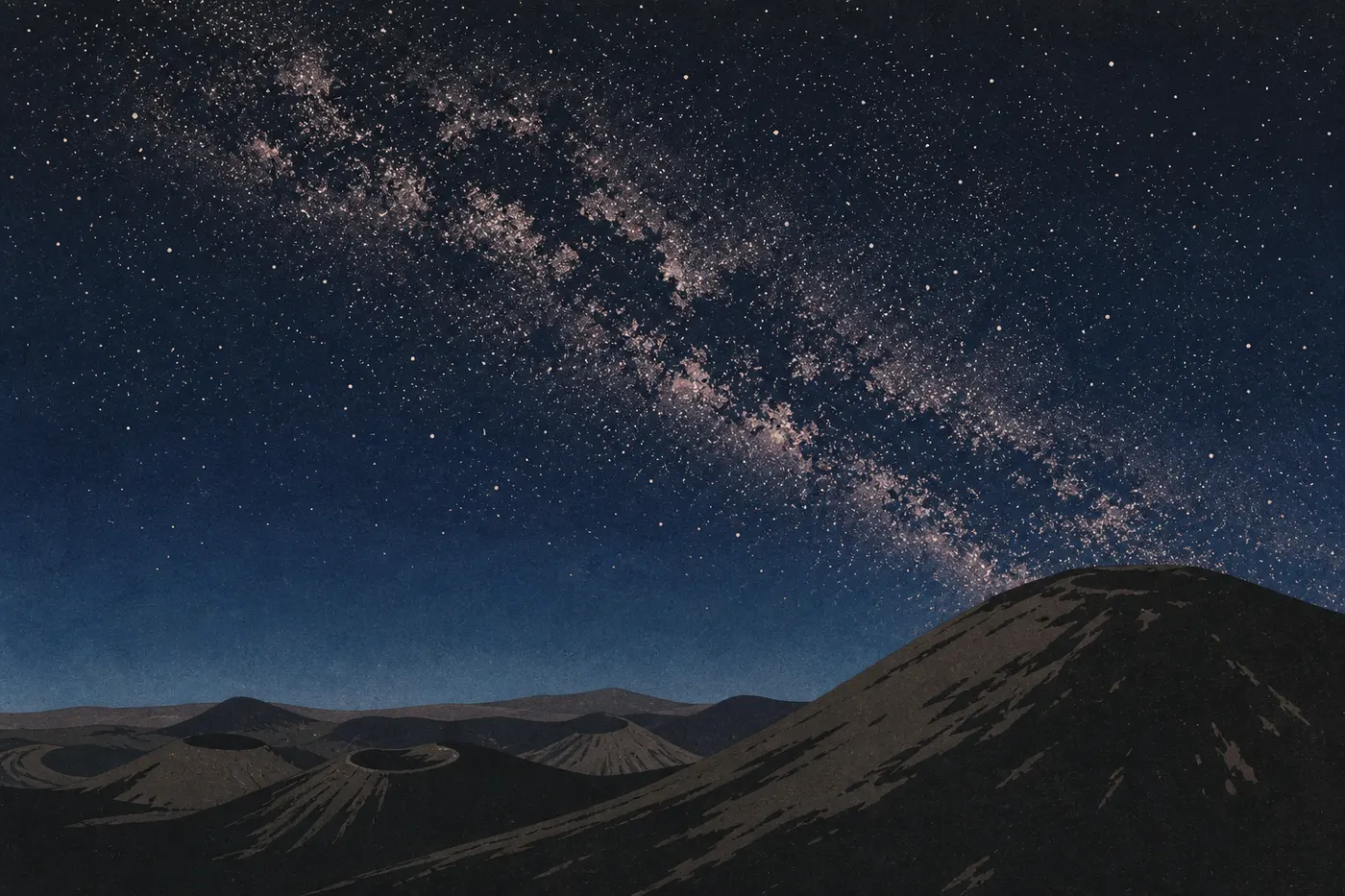
Haleakalā ranks among the world's best stargazing sites. Its elevation of 10,023 feet, low light pollution, and the unusual atmospheric stability of the Hawaiian Islands create exceptional viewing conditions. On a clear night, you can see the Milky Way with the naked eye from the summit, and the planets stand out without equipment. The park regularly hosts nighttime ranger programs. Check the schedule on the NPS website. After 7 a.m., you don't need a timed-entry reservation to enter the Summit District. Evening and nighttime access is open, since reservations apply only to the 3 a.m. to 7 a.m. window.
Endemic Wildlife Viewing

Haleakalā is home to species found nowhere else on Earth. In addition to the nēnē and Hosmer Grove birds mentioned above, the park protects several endemic invertebrates and rare plants. The ʻāhinahina at Kalahaku Overlook is worth a longer stop by itself. Touch it and you could kill it, since oils from your skin damage its leaves. Stay on marked trails throughout the park. The Haleakalā wildlife page introduces the signature species and the best viewing areas by season.
Photography and Late-Day Light

Sunrise is the main event, but sunset from Puʻuʻulaʻula Overlook is just as photogenic and far less crowded. No reservation is required for entry after 7 a.m. Late-afternoon golden light on the crater's red ash creates extraordinary conditions for landscape photography. For wildlife photography, Hosmer Grove remains the most reliable spot early in the morning.
Biking Down the Volcano

Biking down from the summit is a popular activity offered by local operators. It takes place mostly on roads open to traffic, not on dedicated bike paths. Bikes aren't allowed on the park's hiking trails. If you're interested, check with tour operators certified by the State of Hawaiʻi before you leave.
Family Visits

The Summit District works well for families. The overlooks, including Leleiwi and Kalahaku, and the Hosmer Grove Loop are accessible for children as young as 5 or 6 without particular difficulty. In Kīpahulu, the ʻOheʻo Pools coastal trail and the first few miles of the Pīpīwai Trail through the banyan forest work for families, although the final climb to Waimoku Falls is more demanding for younger children. Haleakalā with kids lists activities by age and fitness level.
Camping
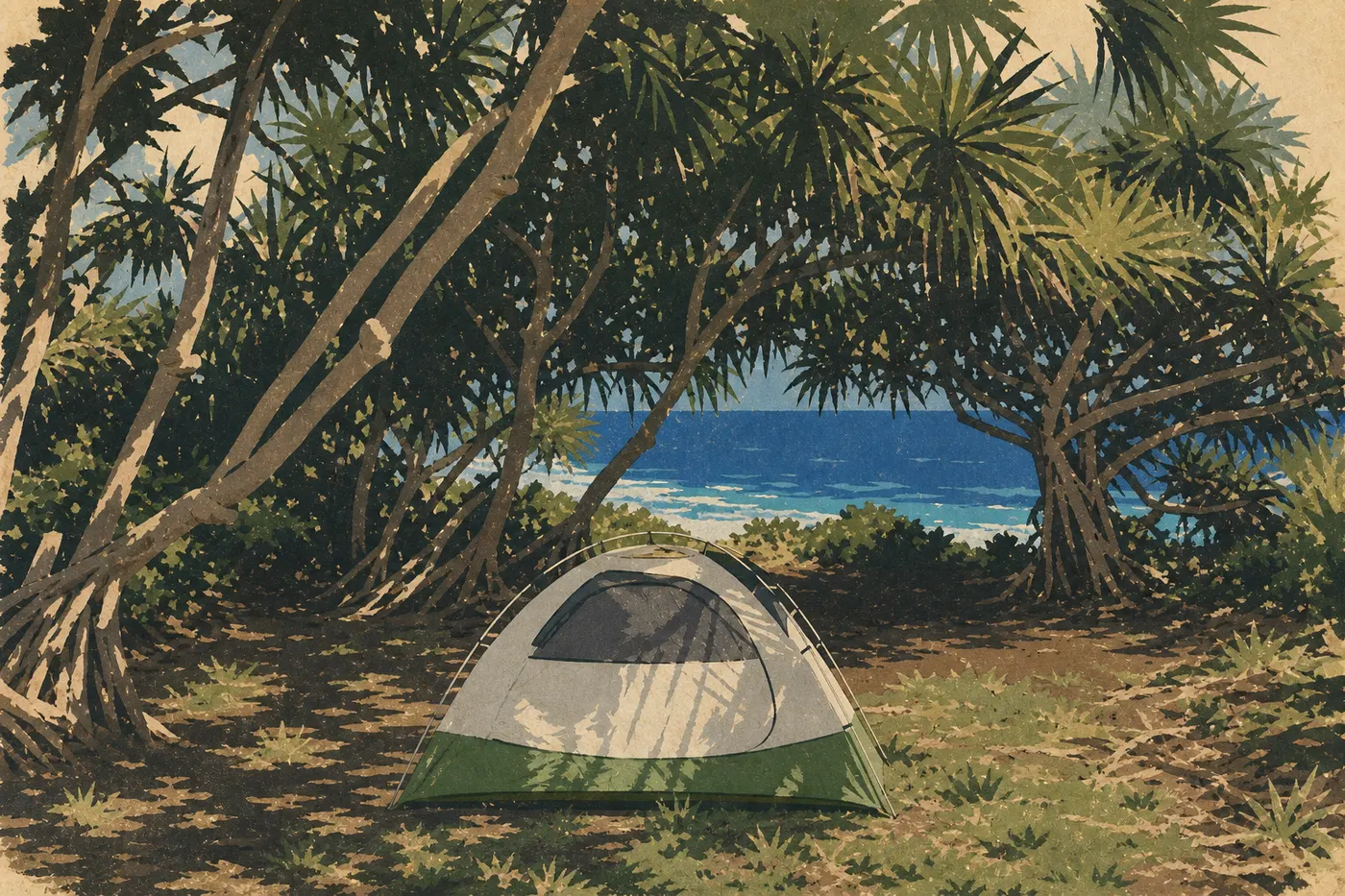
The Summit District has three campgrounds: Hosmer Grove Campground, which is accessible by car, and Hōlua and Pāliku, which can only be reached on foot from the crater trails. Kīpahulu District has a campground near the visitor center. Spending the night in the park is one of the best ways to experience sunrise without the pressure of driving up from Maui in the dark. For rules, reservations, and available facilities, see our Camping page.
Things to Do Around Haleakalā
Haleakalā fits naturally into a Maui trip, and the island offers a remarkable concentration of experiences around the park.
The Hana Highway is almost unavoidable if you're reaching Kīpahulu from the north side of the island. Its roughly 50 miles of tight curves run past cliffs, waterfalls, and black-sand beaches. Highlights include Waiʻānapanapa State Park, with its volcanic black-sand beach and lava cliffs, and Twin Falls, accessible within the first few miles. Allow a full day each way if you want to enjoy the drive instead of stopping only at the most photographed spots.
Maui's west coast offers a complete contrast to the volcanic interior: white-sand beaches, snorkeling, and, from November through April, humpback whale watching from the beaches of Kāʻanapali or on a boat excursion. Lahaina, the historic town devastated by the August 2023 fire, is gradually coming back to life.
The Haleakalā Observatory, known as Science City and located in a section of the Summit District closed to the public, houses several research telescopes, including facilities operated by the University of Hawaiʻi. You can't tour the installations, but their silhouettes from NPS overlooks are part of the landscape and often spark conversations about Hawaiian astronomy.
Maui naturally belongs in a broader Hawaiian itinerary: Oʻahu, with Honolulu, Diamond Head, and Pearl Harbor, or the Island of Hawaiʻi with Hawaiʻi Volcanoes National Park, the archipelago's other major active-volcano park. Hawaiʻi road trips make it possible to combine Maui with other islands depending on the length of your stay.
The Bottom Line: What to See First in Haleakalā
Haleakalā suits many different travelers and is absolutely worth the trip. For a one-day visit, focus on sunrise at the summit, with a timed-entry reservation made several weeks ahead, the crater overlooks, including Leleiwi for the Brocken specter and Kalahaku for ʻāhinahina, and the Hosmer Grove loop on your way back. With two days, add a full day in Kīpahulu: spend the morning on the Pīpīwai Trail to Waimoku Falls and the afternoon on the coast. Experienced hikers can extend the trip with an overnight in the crater via the Keoneheʻeheʻe Trail and Halemauʻu Trail. If you spend a night in the park, the night sky from 10,023 feet, free of light pollution, is an experience in its own right that few American parks can match.
For an overview of the park, its entrances, fees, and safety rules, the Haleakalā guide brings together the essential practical information. Our Where to Stay page lists lodging options in and around the park.
Frequently Asked Questions
What can you do at Haleakalā?
At Haleakalā, you can watch sunrise from the 10,023-foot summit, hike through the volcanic crater on the Keoneheʻeheʻe Trail and Halemauʻu Trail, look for endemic species such as nēnē, ʻāhinahina, and forest birds, explore the ravines and waterfalls of Kīpahulu on the Pīpīwai Trail, stargaze from one of the Northern Hemisphere's best sites, and camp inside the crater.
How much time should you plan for Haleakalā?
Plan on at least two days to visit both districts, Summit and Kīpahulu, comfortably. One day is enough for the Summit District, including sunrise, the overlooks, and Hosmer Grove. Allow one additional full day for Kīpahulu because of the distance and the length of the Pīpīwai Trail. Three days are recommended for a crater hike with an overnight stay in a cabin.
Is Haleakalā worth visiting?
Haleakalā is absolutely worth visiting. Few American parks offer such a range of landscapes on a single island, from high-elevation volcanic desert to lush tropical forest. Sunrise above the clouds at 10,023 feet is unlike anything else in Hawaiʻi, and Kīpahulu District ranks among the most striking natural areas in the archipelago.
Do you need a reservation to visit Haleakalā at sunrise?
Yes. You need a timed-entry reservation to enter the Summit District between 3 a.m. and 7 a.m. Hawaiian time. Get one through recreation.gov, up to 60 days in advance. Outside that window, from 7 a.m. to 7 p.m., you don't need a reservation to enter the park. You only need to pay the entrance fee.
What is the best hike at Haleakalā?
In the Summit District, the Keoneheʻeheʻe Trail (Sliding Sands) is the signature hike. It descends more than 2,460 feet from the summit into the crater through an almost lunar landscape. In Kīpahulu District, the Pīpīwai Trail, 4 miles round-trip, crosses a giant bamboo forest to Waimoku Falls, which drops more than 400 feet. Our Hiking page compares all the options, distances, elevation changes, and required fitness levels.
What are the must-do activities on Maui, including Haleakalā?
Maui highlights include sunrise at Haleakalā, the Hana Highway with its waterfalls and Waiʻānapanapa State Park with its black-sand beach, the Pīpīwai Trail to Waimoku Falls, snorkeling at Molokini Crater, and humpback whale watching from the west coast from November through April.