
Haleakalā Itinerary: What to See in 1, 2, or 3 Days
Haleakalā is a dormant volcano rising to 10,023 feet on the island of Maui, and a national park split into two districts with no connecting road: the Summit District at the top and the Kīpahulu District on the Hana coast. They are two different worlds, with two different moods and two separate access routes. The ideal itinerary takes two full days, one for each district. If you've only got one day, focus on the summit. With three days, take the Hana Highway and slow down.
How Long Do You Need to Visit Haleakalā?
One day is enough to see the Summit District's highlights: sunrise, the high-elevation Visitor Center, and a hike into the crater. It's the minimum you'll need to avoid leaving disappointed.
Two days let you cover both districts without rushing. Spend the first day at the summit and the second in Kīpahulu, with the Hana Highway along the way.
Three days give you time for a real crater hike. The descent on the Keoneheʻeheʻe Trail takes half a day, and you won't have to pack up before seeing the stars from the summit the night before.
After three days, the park naturally leads into regional extensions. Our Maui Road Trips guide has ideas for combining Haleakalā with the rest of the island.
Access, Entrances, and Getting Around the Park
Two Districts, Two Roads, No Direct Connection
You can't drive straight through Haleakalā National Park. The two districts are separated by more than two hours of driving via Highways 36 and 360, the famous Road to Hana, and no road inside the park connects them directly.
Summit District: From Kahului, near Kahului Airport, allow about 1.5 hours via Highway 37 and Route 378, also known as Haleakalā Highway. The climb is gradual and spectacular. You'll go from sea level to 10,023 feet over roughly 12 miles of switchbacks. Speed limits on these winding roads are generally 25 to 35 mph. Follow them carefully, since fog and blind curves are common.
Kīpahulu District: You can reach it from Hana at the end of Route 360, about three hours from Kahului. There is no good route from the Summit District to Kīpahulu around the south side of the volcano. Piilani Highway, or Route 31, is partly unpaved, and the NPS formally advises against taking it in a standard rental car.
Entrance Fees
The entrance fee is $30 per vehicle, valid for three days in both districts. It costs $25 for motorcycles and $15 per person entering on foot or by bicycle. The park's annual pass costs $55. If you're staying more than three days or visiting other national parks, check our Fees and Passes page. The $80-per-year America the Beautiful pass often pays for itself by your third park.
Sunrise Reservations Are Required
From 3 a.m. to 7 a.m., entry to the Summit District requires a reservation. It isn't optional. Rangers check at the entrance. You make the reservation through the NPS website, recreation.gov, usually several weeks in advance. Show up without one during those hours and you'll be turned around.
Getting Around the Park
Haleakalā doesn't have an official NPS shuttle. You'll need a car. Several downhill biking operators offer rides to the summit so you can bike down the road, but keep in mind that biking is prohibited on the park's trails.
Haleakalā's Districts
Summit District: The Volcano's High Country
This is where you'll find the crater, technically an eroded caldera, high-elevation overlooks, silverswords, and hikes through a lunar-looking landscape. The district's average elevation is above 6,900 feet. Summit temperatures can drop to 30°F in winter, even in full sun, and UV exposure is intense at this elevation. Bring layers, a windbreaker, and at least SPF 50 sunscreen.
Key stops in the Summit District include:
- Hosmer Grove (3,150 feet): A forest planted in the early 20th century, accessible just inside the park entrance. It's a good spot for seeing endemic birds.
- Leleiwi Overlook (8,990 feet): The first caldera overlook as you drive up. The view of clouds pouring into the crater is striking.
- Kalahaku Overlook (9,416 feet): The place to see silverswords in their natural habitat, against an ochre-colored crater.
- Haleakalā Visitor Center (9,760 feet): Open every day but closed in the middle of the night. This is the starting point for the main trails.
- Puʻuʻulaʻula (Red Hill) (10,023 feet): The official summit, with a glass-enclosed shelter and 360-degree views in clear weather.
Kīpahulu District: Waterfalls and Rainforest
Kīpahulu looks completely different. You're just a few feet above sea level, surrounded by dense tropical vegetation. The natural pools of ʻOheʻo Gulch, often called the “Seven Sacred Pools,” are the main attraction. The nickname is commercial and has no historical basis. Temperatures hover around 77 to 81°F, with humid air and intensely green scenery.
Be careful. The natural pools and coastal trails may close after heavy rain because of the risk of flash flooding. Check trail conditions at the district entrance before setting out on foot.
Day-by-Day Itinerary
Day 1: The Summit and Sunrise
Wake-up call at 2 a.m. This isn't a joke. To reach the summit before sunrise, between 5:45 and 6:20 a.m. depending on the season, you'll need to leave Kahului or Kīhei by 3 a.m. at the latest, with your reservation in hand.
Driving up in the pitch dark is an experience in itself. About halfway up, you often break through the clouds and enter a world of high-altitude silence. It's cold at the summit, usually 32 to 41°F at dawn and sometimes colder. A blanket, gloves, and a warm hat aren't overkill.
Sunrise from Puʻuʻulaʻula speaks for itself. Light slowly rises behind a horizon above the clouds, and you understand why ancient Hawaiians considered this place sacred. I remember my fingers being too numb to change lenses during our January visit, so bring thin gloves that work with touchscreens.
After sunrise, head back down to the Haleakalā Visitor Center for breakfast. Bring your own food, since there are no food services anywhere in the park. Then take the Keoneheʻeheʻe Trail (Sliding Sands) down into the caldera, across fine volcanic ash, with silversword tips at eye level. Allow two to three hours for a 1.9-mile descent and return along the same route, or four to five hours to make a loop by combining it with the Halemauʻu Trail. See Day 2 for shuttle logistics between the two trailheads.
In the late afternoon, head down toward Kula or Pāʻia for the night. Haleakalā lodging options are organized by budget.
Day 2: Kīpahulu, Waterfalls, and the Hana Rainforest
Leave your lodging early. The Hana Highway takes three hours from Kahului without stops, and you'll want to make some. Plan to reach Kīpahulu in the early afternoon.
At the Kīpahulu Visitor Center, start with the ranger presentation if the timing works. Then take the Pīpīwai Trail, a two-mile one-way hike through a giant bamboo forest, with two waterfalls along the way, including Waimoku Falls, which drops 300 feet. Allow two to 2.5 hours round-trip. It's one of the most photogenic trails on Maui.
Depending on water conditions, the natural pools of ʻOheʻo Pools are accessible from the Visitor Center parking area. Swimming is possible when they're open, but currents can be strong. Be sure to ask the rangers about conditions.
Return to Hana for dinner and the night. The drive back the way you came, along Maui's north coast, takes about 2.5 hours. Some people choose to loop around the south side on Piilani Highway, but this isn't recommended in a standard rental car.
Day 3: A Long Caldera Hike
Day three is optional, but highly recommended for serious hikers. The plan is the Summit-to-Halemauʻu crossing, about 7.5 miles downhill, combining the Keoneheʻeheʻe Trail and the Halemauʻu Trail. You'll need to arrange a car shuttle between the two trailheads, or return to your starting point, which means a serious climb back up.
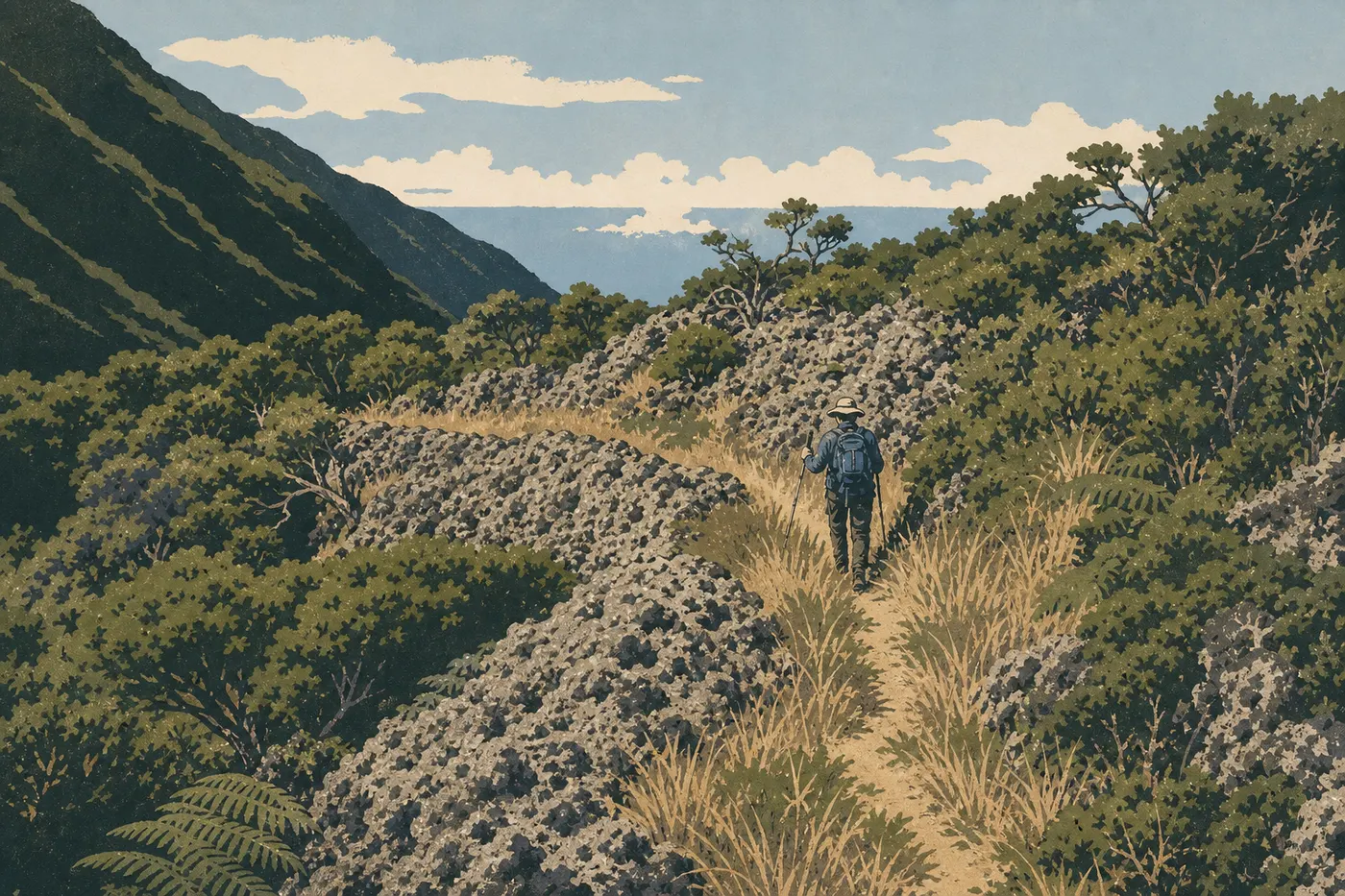
The crossing drops into the caldera, passes secondary volcanic cones, follows colorful lava fields, and climbs back out along the cliffs on the crater's north side. You may spot nēnē, Hawaiʻi's endemic goose, on the grassy slopes.
In the evening, head back to the summit for stargazing if the sky is clear. Haleakalā is one of the world's best astronomy spots in the Northern Hemisphere. Its elevation, low light pollution, and dry Pacific air all work together. No reservation is required after 7 a.m., outside the sunrise hours.
Options for Different Trip Lengths
Express (1 Day or Less)
Choose the Summit District. Get a sunrise reservation if you can. Otherwise, arrive in midmorning after the sunrise crowds have left, visit Kalahaku Overlook for the silverswords, walk 30 minutes down the Keoneheʻeheʻe Trail to set foot on the volcanic ash, and leave around 1 p.m. It's brief, but it gives you an honest taste of the park.
Classic (2 to 3 Days)
Follow the Day 1 and Day 2 itinerary described above. Spend the night in Hana or near the park. Add Day 3 if you've got the energy and the legs for it.
Maui Road Trip (4 Days or More)
Haleakalā fits naturally into a longer Maui itinerary. Combine it with West Maui, including Lahaina and Kaanapali, the beaches at Kaanapali or Makena, and the northern coastal road. Our Maui Road Trips guide offers a complete seven-day itinerary.
Itinerary Map
The NPS publishes a free official Unigrid map as a PDF on the park website. It shows both districts, access roads, trailheads, and overlooks. Print it before you leave. Cell service is nonexistent across much of the park, especially at the summit and in the Kīpahulu rainforest. The Haleakalā map brings together the park's official mapping resources.
Where to Stay Along the Itinerary
The park has two campgrounds, Hosmer Grove, which is free, in the Summit District, and Kīpahulu Campground in the Kīpahulu District. It also has three cabins in the caldera, accessible only on foot and bookable months in advance through recreation.gov. Outside the park, lodging is concentrated in Kahului, Kula, and Pāʻia on the summit side, and in Hana on the Kīpahulu side. Our Where to Stay page covers the options and price ranges.
Extend Your Trip: What to See Around Haleakalā
To extend your trip, our Maui Road Trips guide covers island itineraries, and our Hawaiʻi Region guide explains how to plan an island-hopping trip.
The Ideal Itinerary for Your Available Time
Less than a day: Stick to the Summit District. Skip sunrise if you don't have a reservation, focus on Kalahaku Overlook, and make a short descent into the caldera.
Two days: Day 1 at the summit, with sunrise and a crater hike. Day 2 in Kīpahulu, with the Pīpīwai Trail and the natural pools if they're open. Spend the night in Hana between the two.
Three days or more: Add the long crater crossing and a night of stargazing from the summit. Consider the caldera cabins if you enjoy high-elevation camping.
Whatever your itinerary, check trail conditions and the weather at the Visitor Center when you arrive. Haleakalā weather can change in 20 minutes, and hiking through summit fog without landmarks can quickly turn into a bad experience. Haleakalā weather summarizes typical conditions by season.
Frequently Asked Questions
How high is the summit of Haleakalā?
The summit of Haleakalā, at Puʻuʻulaʻula (Red Hill), rises to 10,023 feet above sea level. It's the highest point on the island of Maui.
Where can you see sunrise at Haleakalā?
You can watch the sunrise from the summit, Puʻuʻulaʻula at 10,023 feet, or from the Haleakalā Visitor Center at 9,760 feet. You need a reservation through recreation.gov to enter the park between 3 and 7 a.m.
What is the curse of Haleakalā?
Hawaiian tradition holds that park rocks shouldn't be taken away. They belong to Pele, the volcano goddess, and removing them brings bad luck. The NPS formally advises visitors not to take any rocks or natural objects from the park, for both cultural and legal reasons.
What are the best hikes in Haleakalā National Park?
The best hikes depend on the district. In the Summit District, the Keoneheʻeheʻe Trail (Sliding Sands) and its combination with the Halemauʻu Trail are the standouts. In Kīpahulu, the Pīpīwai Trail to Waimoku Falls is the most memorable route. Haleakalā hikes are described trail by trail, with elevation gain, duration, and required experience.
Can you visit both districts in one day?
Technically, yes, but it's exhausting and not recommended. Driving between the two districts via Kahului takes more than four hours round-trip. It's much better to give each district a full day.
How much does it cost to enter Haleakalā?
Entry costs $30 per vehicle, valid for three days, $25 per motorcycle, and $15 per person entering on foot or by bicycle. For entrance fees and annual passes, see the National Parks Fees & Passes page.
When is the best time to visit Haleakalā?
You can visit year-round, but clear skies at sunrise are slightly more likely in summer, from May through September. The best time to visit Haleakalā breaks down conditions month by month using precipitation data.