
Glacier Wildlife: What Animals You'll See and Where to Look
Glacier National Park takes its name from the ice that carved its valleys over thousands of years, but its wildlife is classic Rocky Mountain wildlife. Grizzly bears, mountain goats, bighorn sheep, and gray wolves share more than 1,580 square miles of dense forests, alpine meadows, and snow-covered passes. This isn't the Arctic. It's Montana.
There are five iconic species to remember right away: the mountain goat, the grizzly bear, the black bear, the bighorn sheep, and the moose. Together, they cover every habitat in the park, from valley floors to ridgelines above 8,200 feet. The animal you're most likely to see on a trail? The mule deer. It ranges from the park entrances to the forest edges, from sunrise to nightfall.
For predators, Glacier is one of the few places in the continental United States where four large carnivores, grizzly bears, black bears, gray wolves, and mountain lions, share the same territory. Bring binoculars with at least 10x42 magnification.
Glacier's Iconic Animals
The Mountain Goat
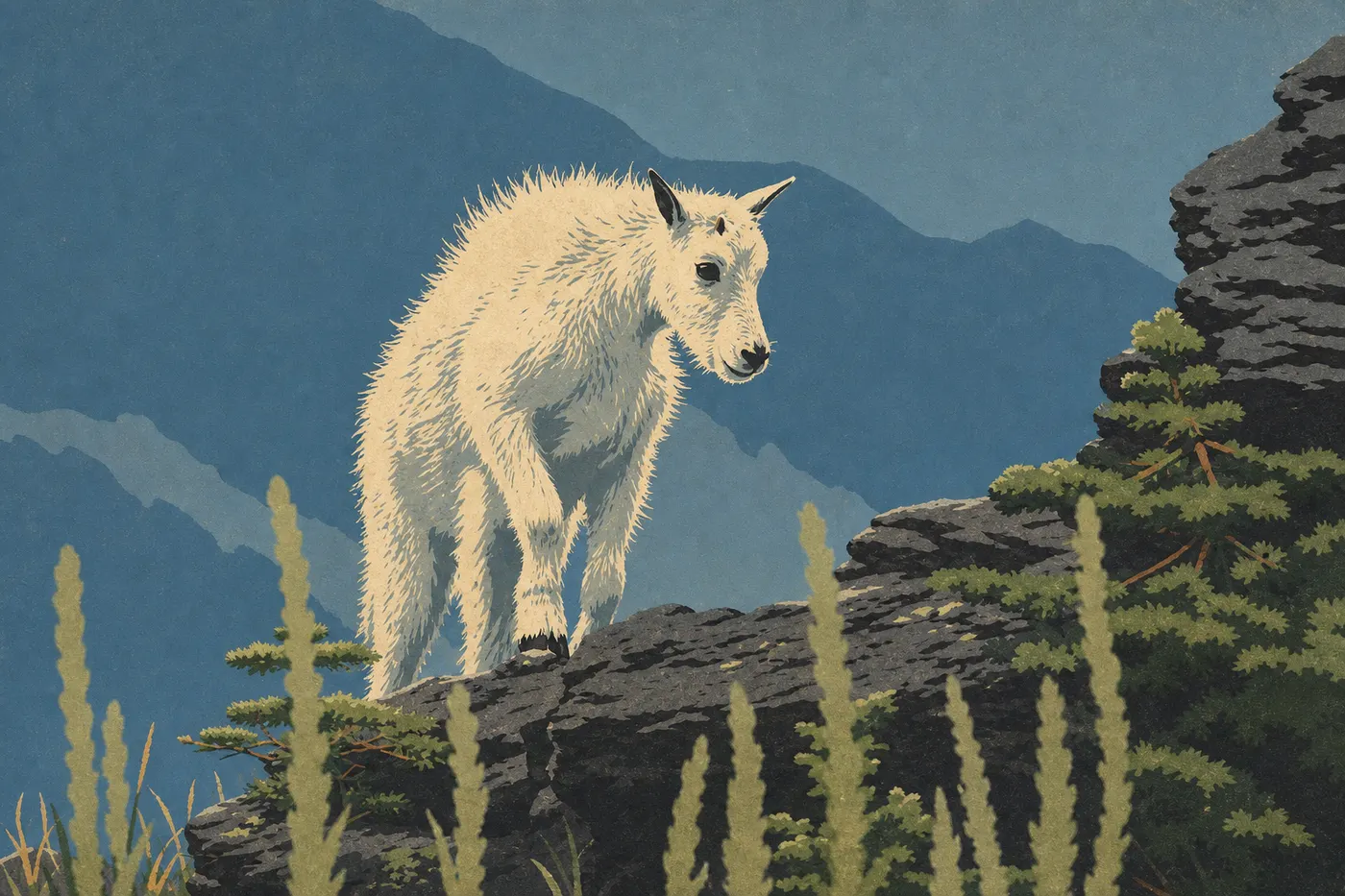
The mountain goat (Oreamnos americanus) is the park's icon, with an immaculate white coat, short black horns, and a calm gaze on cliffs where nothing else ventures. It isn't technically a domestic goat. It belongs to the Rupicaprinae subfamily and is closer to the alpine chamois than to an ordinary billy goat.
Glacier is home to several hundred mountain goats. You'll see them mostly above 5,900 feet, on cliffs that naturally protect them from predators. Their soft-padded hooves, edged with a hard rim, let them grip angles no one else would attempt. When we visited Logan Pass in July, a dozen goats were grazing 10 feet from the parking lot without giving visitors a second look.
Best season: June through September, on alpine trails and at the passes.
The Grizzly Bear
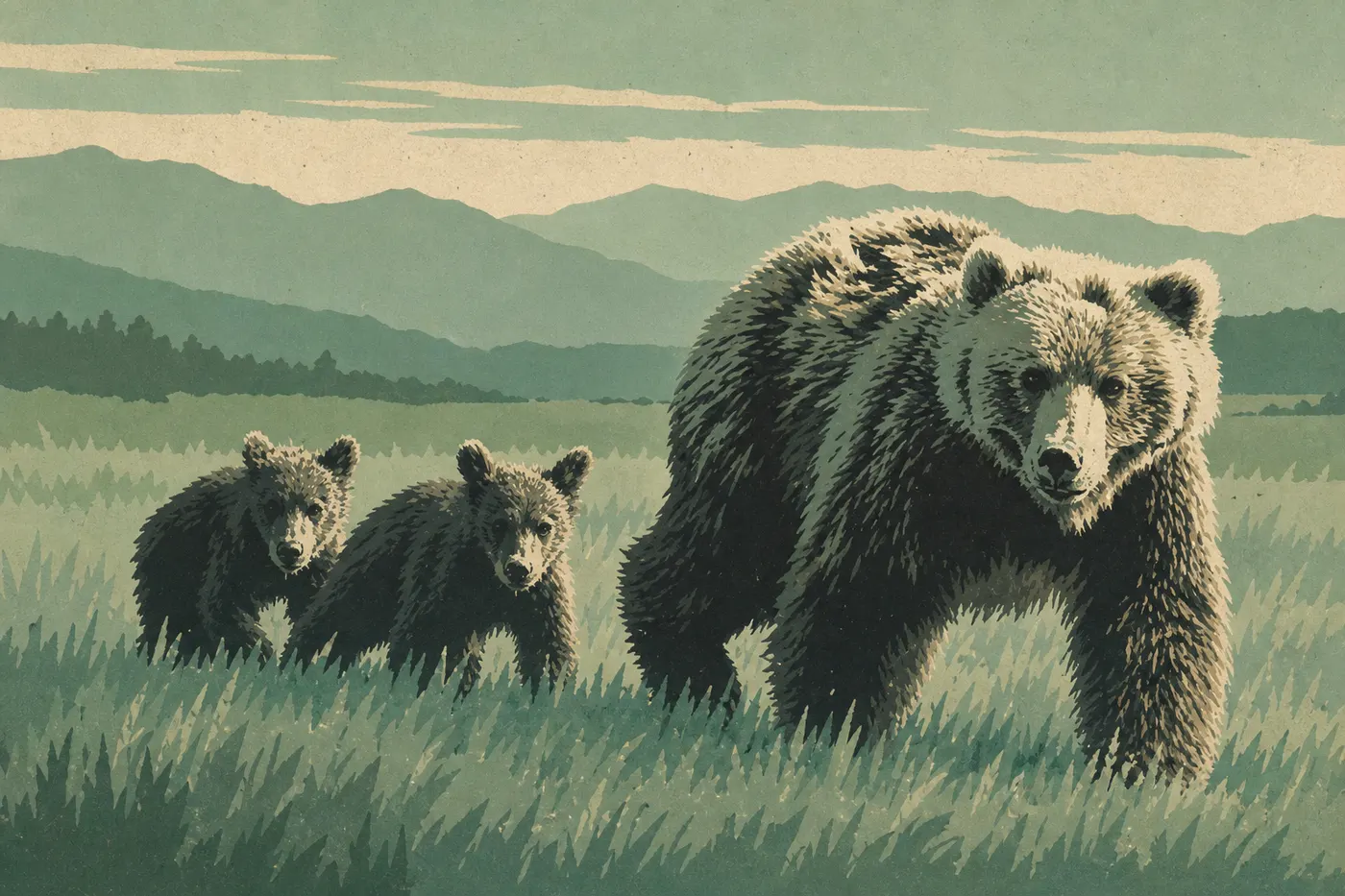
Glacier supports one of the densest grizzly bear populations in the continental United States outside Alaska. That's a fact, not a marketing pitch. Here, a grizzly isn't an unusual sighting. It's a resident.
Glacier's grizzlies are opportunistic omnivores. In spring, they scour south-facing slopes for roots and the remains of winter kills. In summer, they climb higher to feed on wild huckleberries, their main food source before hibernation. In fall, they're everywhere and easier to spot because they're in a period of intense hyperphagia. This cycle points you toward the best viewing areas: follow the huckleberries, and you'll find the bears.
The Black Bear
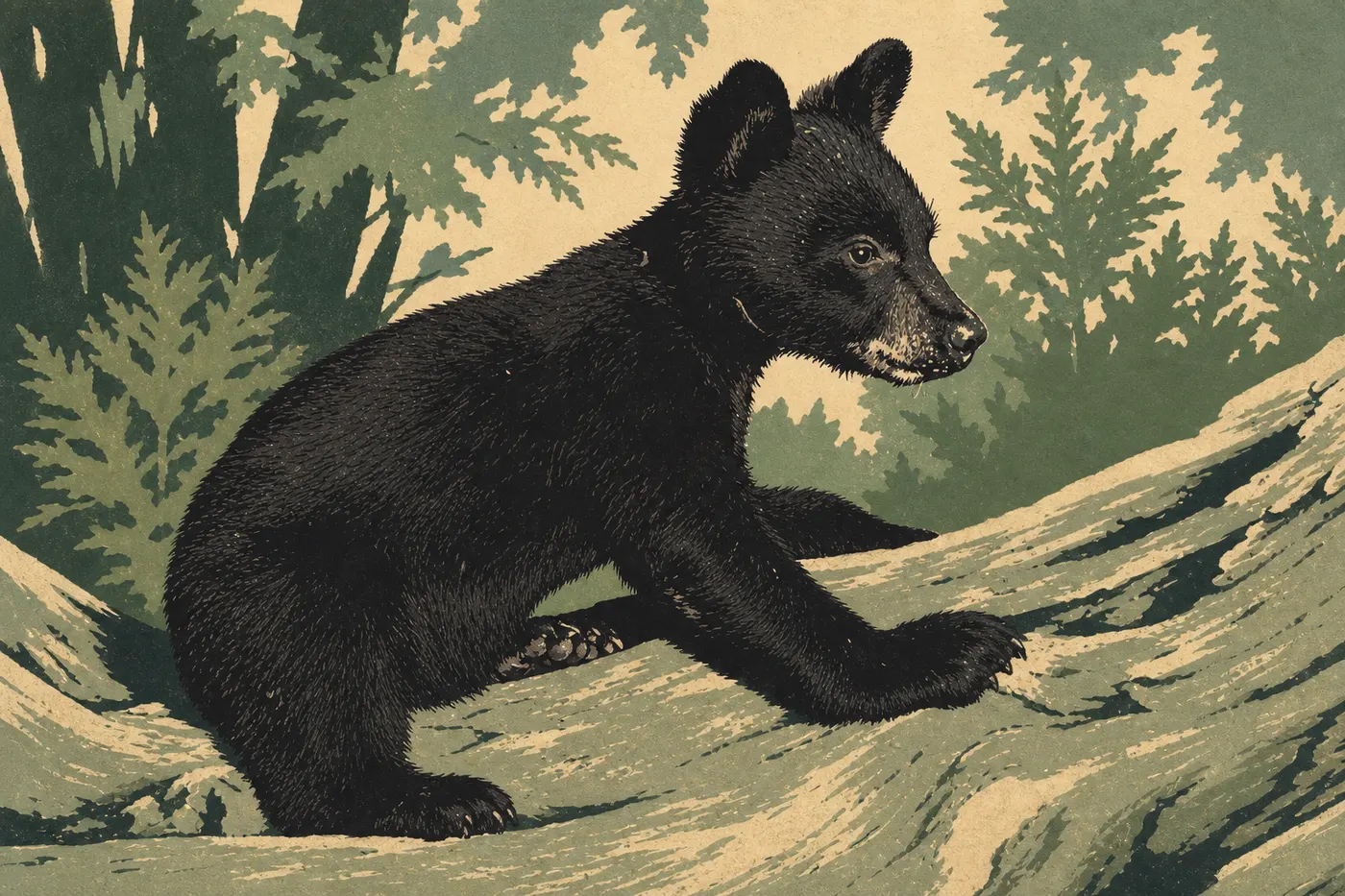
The black bear (Ursus americanus) is smaller than the grizzly, with a more slender build and a straight muzzle. It prefers the park's dense forests, especially on the west side. It rarely climbs above treeline, so look for it along forest edges and in narrow valleys.
Telling a Black Bear from a Grizzly
Two bear species live side by side in Glacier. Coat color isn't enough to tell them apart. A black bear can be cinnamon brown. Here are the three reliable clues in the field:
- The shoulder hump: present on a grizzly, absent on a black bear. It's the most visible feature from a distance.
- The muzzle profile: concave on a grizzly, straight or slightly convex on a black bear.
- The claws: long and light-colored on a grizzly, adapted for digging; short and dark on a black bear.
Memorize these three points before entering the park. What you should do if you encounter a bear depends on which species you've identified.
The Bighorn Sheep
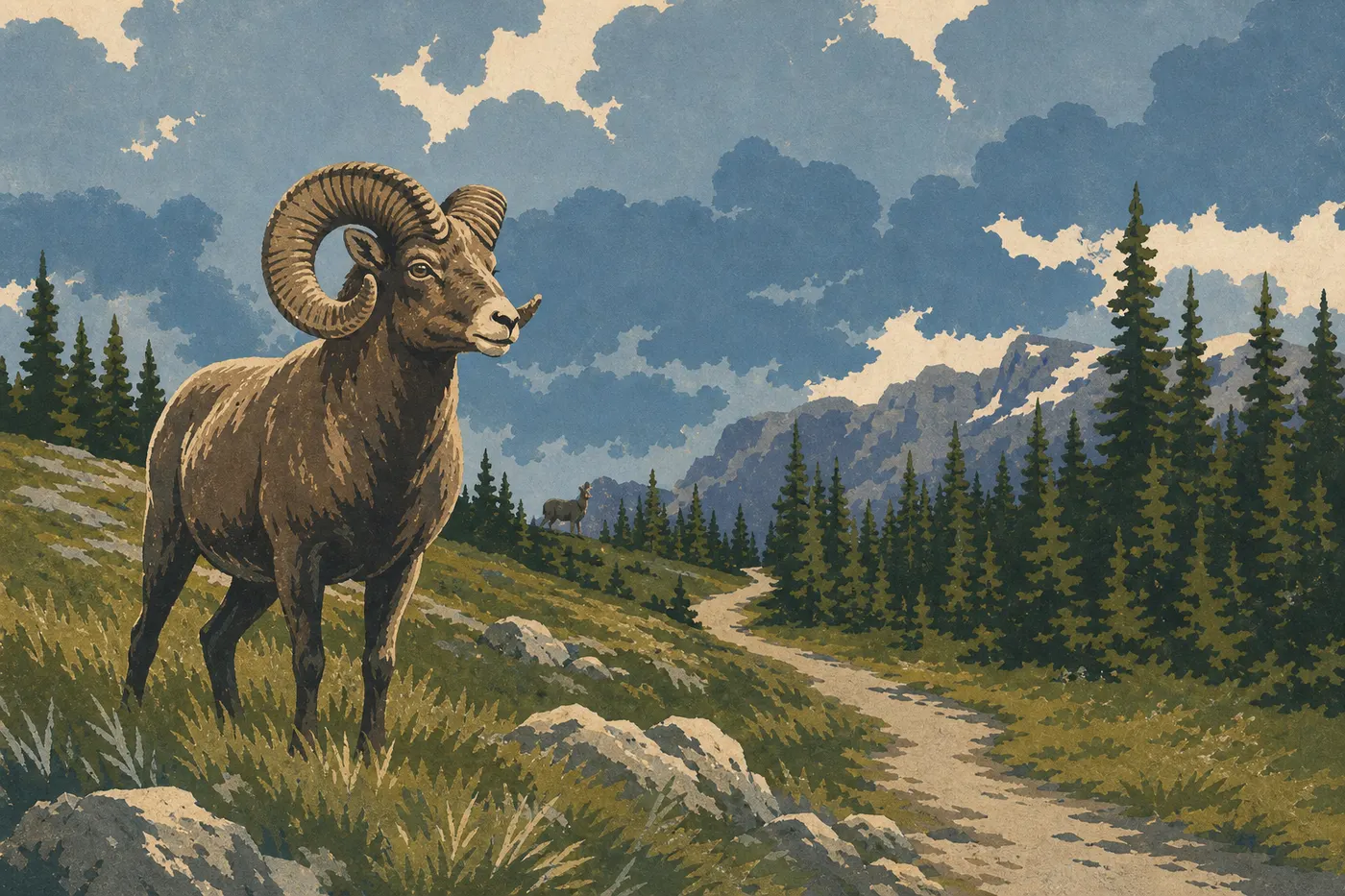
The bighorn sheep (Ovis canadensis) rules the rocky slopes on the park's east side. Rams carry spiral horns that can weigh up to 31 pounds, as much as their entire skeleton. During the fall rut, males charge each other head-on at full speed, and the clashes can be heard hundreds of yards away. Two Medicine offers the park's best chances of seeing them.
The Moose
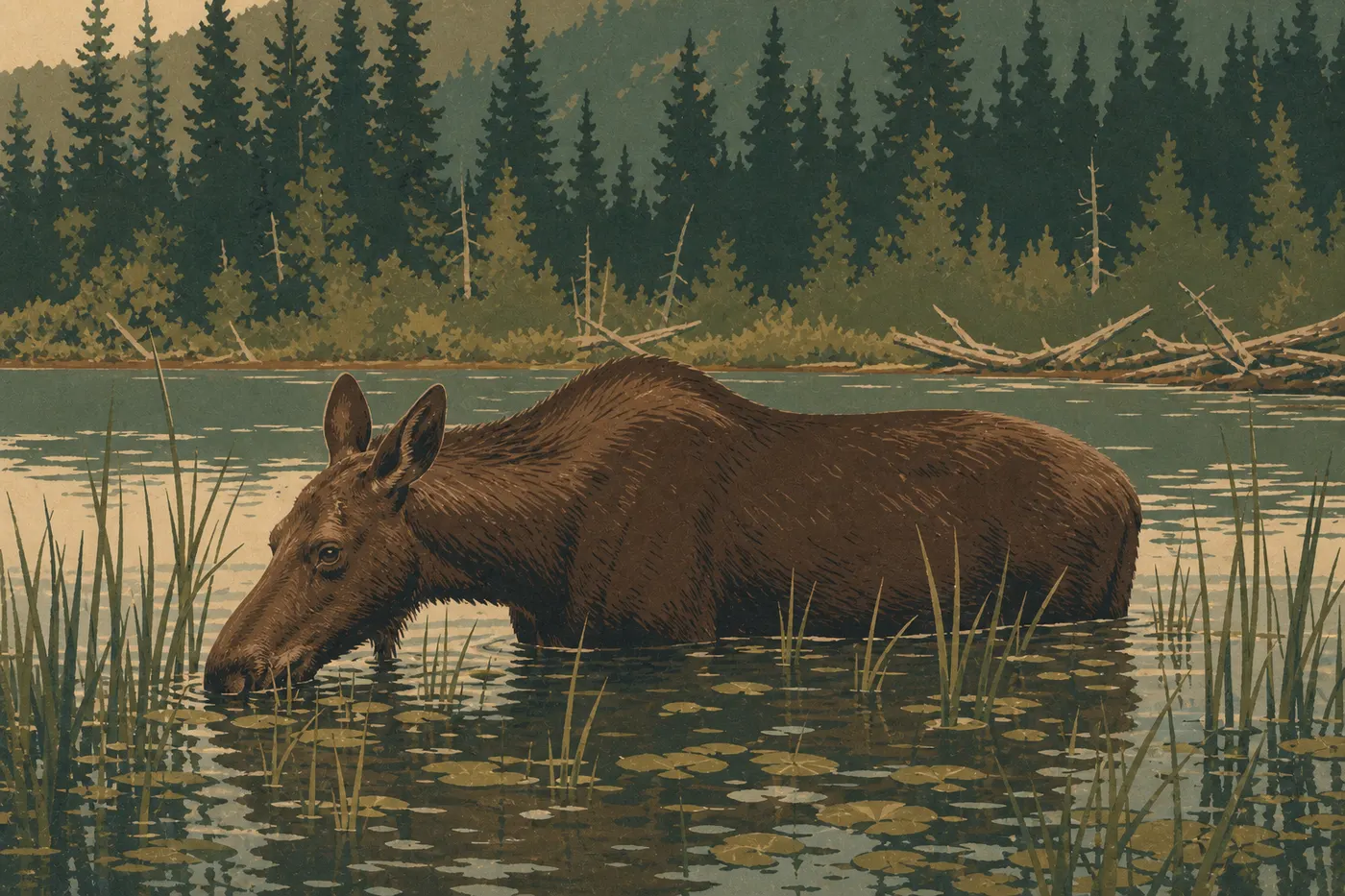
The moose (Alces alces) is North America's largest deer. An adult male can weigh more than 1,320 pounds and stand up to 6.5 feet at the shoulder. Don't let its placid expression fool you. A frightened moose can charge at 34 mph, and cows with calves attack without warning, more often than grizzlies do.
Moose favor wetlands, ponds, and riverbanks. They dive their heads underwater to pull up aquatic plants, their main summer food. The Many Glacier area and the shores of St. Mary Lake are reliable places to spot them at dawn.
Where to See Wildlife in Glacier
Glacier is large, but wildlife viewing areas cluster in four sections.
Logan Pass (6,647 feet): Mountain goat headquarters. The Highline Trail starts across from the visitor center and follows alpine cliffs where goats move within binocular range. You'll also see pikas, hoary marmots, and occasionally high-elevation grizzlies. The parking lot fills by 7 a.m. during the season. For trails starting at Logan Pass, the Glacier hiking guide breaks down difficulty and elevation profiles.
Many Glacier: The go-to area for large mammals. Grizzlies feed on huckleberry-covered slopes, moose gather around the lakes, and elk graze in the meadows. The Swiftcurrent Nature Trail, less than 3.1 miles and flat, follows wetlands that are ideal for a quiet morning wildlife watch. Bring binoculars.
Two Medicine: Less busy than Many Glacier, this area is ideal for bighorn sheep and golden eagles soaring over the ridges. The lighter visitor traffic works in your favor. The animals are less stressed.
West side, Lake McDonald: The temperate forests of the park's largest valley shelter mule deer and black bears. Along the streams, look for harlequin ducks (Histrionicus histrionicus), a rare species tied to Glacier's fast-moving waterways. On calmer rivers, ospreys and great blue herons are nearly always present in summer.
The area's sectors and access points are shown in the Glacier map guide.
When to Watch Wildlife in Glacier
The time of day matters as much as the season. Grizzlies, moose, and bighorn sheep are most active at dawn, between 5 and 8 a.m. in summer, and at dusk, between 7 and 10 p.m. In the middle of the day, they rest in the shade or in wooded areas out of sight.
Spring (May-June): Bears emerge from hibernation and feed intensely on exposed slopes. Moose and elk move down into valleys that are still relatively quiet. Kids and lambs are born in May. Watch your distance around their especially defensive mothers.
Summer (July-August): Every habitat is accessible. Mountain goats and bighorn sheep are at higher elevations, while grizzlies follow the ripening wild huckleberries. This is peak season for wildlife around the passes and on alpine trails.
Fall (September-October): The rut brings deer, elk, and bighorn sheep into the meadows. Grizzlies are in hyperphagia, so they're highly active but also more unpredictable. Fall colors are spectacular, and visitor numbers drop.
Winter: The park remains open, but most roads and trails are closed. Wildlife is still here. Access is limited to backcountry skiers and properly equipped visitors.
The month-by-month details, including the best periods for nocturnal species such as Canada lynx, wolverines, and great gray owls, are in the Glacier seasons guide.
Predators and Large Animals in Glacier
Gray wolves (Canis lupus) hunt in packs on the park's east side. A direct sighting is difficult because wolves are wary and avoid people, but hearing a pack howl around Many Glacier at daybreak remains one of the park's most powerful sounds.
The wolverine (Gulo gulo) is Glacier's rarest and most elusive carnivore. Nocturnal and solitary, it covers enormous territories in the high mountains. Seeing one is pure luck. An adult male's territory can exceed 193 square miles.
The mountain lion (Puma concolor) lives throughout the park. Most visitors never suspect it's there, which tells you everything about how elusive it is. It hunts at night and late in the day, mainly taking deer and other members of the deer family.
The moose remains the largest animal you're likely to encounter. An adult male weighs more than an average adult grizzly. Contrary to popular belief, moose cause more human injuries than bears in the parks of the American Northwest. Keep your distance.
Staying Safe Around Wildlife
Glacier National Park's rules are clear, nonnegotiable, and apply to every species.
Required minimum distances:
- 300 feet (100 yards) from any bear or wolf. If a bear looks 100 yards away, judge the distance through binoculars rather than on foot.
- 75 feet (25 yards) from any other wild animal: deer, moose, bighorn sheep, and ospreys on their nests.
Behavior guidelines:
Carry bear spray and practice drawing it. Its effective range is 23 to 30 feet, and it works better than a firearm in the vast majority of grizzly encounters. Wear it on your belt, not in your pack.
Make noise on the trails. Talk loudly, sing, and clap your hands around corners and in places where visibility is limited. Bears avoid human contact. Surprise is the only reason they attack.
Never feed an animal. An animal accustomed to people loses its natural fear and becomes dangerous. The NPS puts it this way: “A fed bear is a dead bear.” That's not a metaphor.
Travel in a group. Studies in the park show that groups of four or more people have almost never been attacked by grizzlies. If you're alone or with one other person, stay on marked, well-traveled trails.
Store food in the provided camping lockers. Food smells attract bears day and night. A failed food cache leads to a habituated bear, which creates a problem for you and for the bear.
Complete procedures for a direct encounter, including the difference between a predatory attack and a defensive reaction, are in the complete Glacier park guide.
In Short: The Species You Shouldn't Miss and Where to Find Them
| Species | Best area | Best time |
|---|---|---|
| Mountain goat | Logan Pass, Highline Trail | Morning (possible all day) |
| Grizzly bear | Many Glacier, huckleberry-covered slopes | Dawn and dusk |
| Black bear | West side, Lake McDonald | Dawn and dusk |
| Bighorn sheep | Two Medicine, east side | Morning |
| Moose | Many Glacier, shores of St. Mary Lake | Dawn |
| Gray wolf | East side, Many Glacier | Dawn (more likely heard than seen) |
| Harlequin duck | Streams on the west side | All day, June-August |
Recommended binoculars: at least 10x42 to maintain the required distance while watching comfortably.
Frequently Asked Questions
What animals live in Glacier National Park?
Glacier National Park in Montana is home to more than 70 mammal species. Grizzly bears, black bears, mountain goats, bighorn sheep, moose, elk, mule deer, gray wolves, wolverines, Canada lynx, and mountain lions are among its permanent residents. Glacier's wildlife is typical of the continental Rocky Mountains, not the polar regions despite the park's name.
What is the most common animal in Glacier National Park?
The mule deer (Odocoileus hemionus) is the species visitors see most easily, both along roads and on trails. At higher elevations, American pikas and hoary marmots are everywhere once the passes open.
What is the largest animal in Glacier?
The moose (Alces alces) is the park's largest land animal. An adult male weighs more than 1,320 pounds and stands 5.9 to 6.6 feet at the shoulder. It outweighs and outsizes elk and grizzlies.
What predators live in Glacier?
Glacier's four major predators are grizzly bears, black bears, gray wolves, and mountain lions. Canada lynx, wolverines, ermine, and martens round out the carnivore community. It's one of the most complete predator ecosystems in the continental United States.
What animals are active at night in Glacier National Park?
At night, the main players are mountain lions, wolverines, Canada lynx, and raccoons. Black bears and grizzlies may also move around at night, especially in fall during hyperphagia. For trails suitable at dawn, the best window for daytime wildlife, see our Hiking page.