
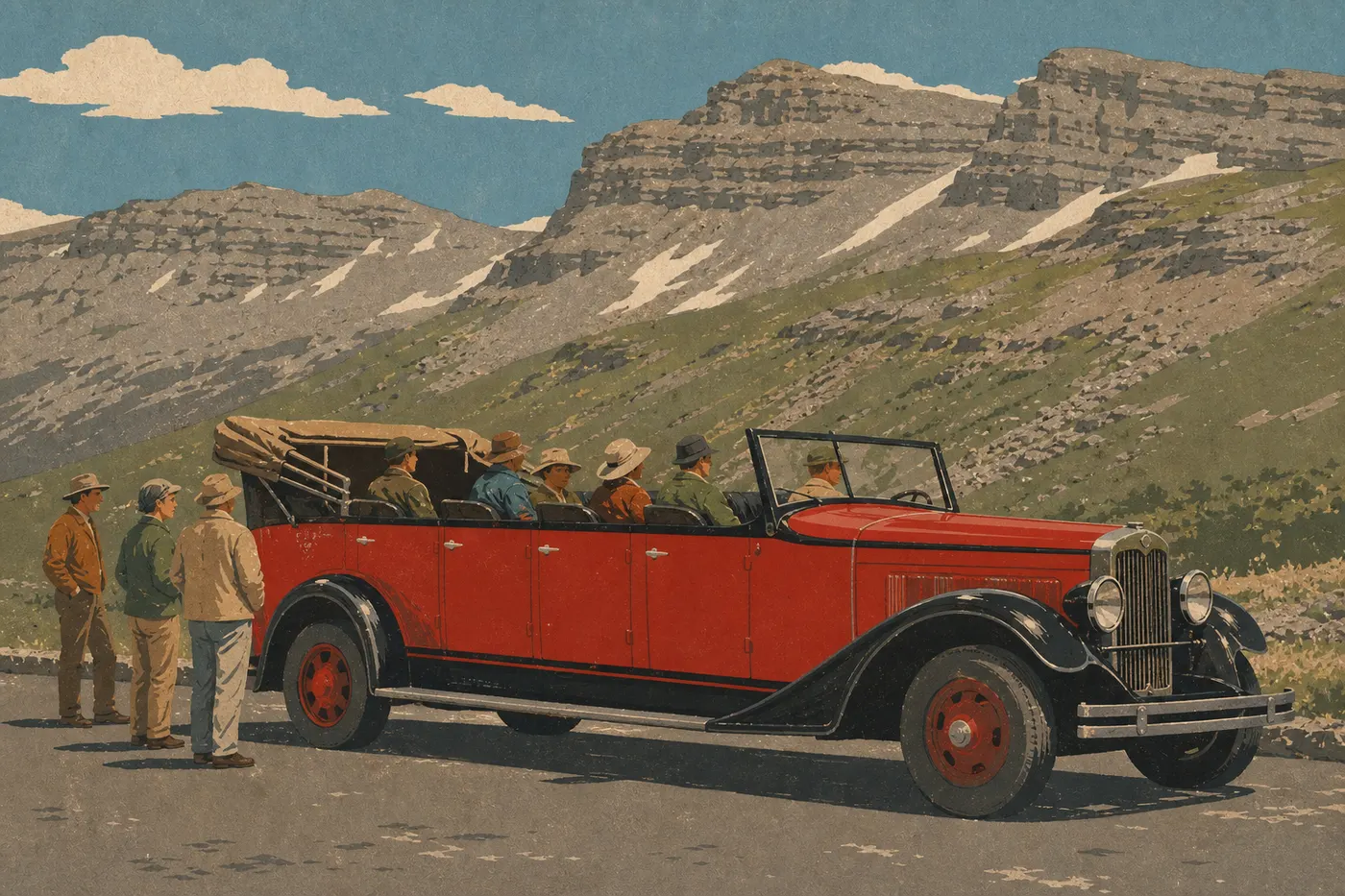
Glacier Itinerary: What to See in 1, 2, or 3 Days
Glacier National Park (Montana) doesn't have one central loop. Instead, it divides into two sides separated by Going-to-the-Sun Road, the road that crosses the Continental Divide at 6,646 feet. The route follows the park's geography. You cross from one side to the other, or focus on a single side depending on how much time you've got. Two days gives you a solid overview. With three days, you can finally slow down and take it in.
The short answer: Two nights are enough to cover Going-to-the-Sun Road and the Many Glacier area. With three nights, you can add Two Medicine and a sunset at Lake McDonald without watching the clock.
How Much Time Do You Need to Visit Glacier?
The park covers about 1,583 square miles and has more than 684 miles of marked trails. Technically, you can drive Going-to-the-Sun Road in three hours from West Glacier to St. Mary, but driving across the park isn't the same as visiting it.
- 1 day: Possible if you're coming from Kalispell or Whitefish early in the morning. You'll drive the GTSR, stop at Logan Pass and St. Mary Lake, and see the scenery. You'll have less time for wildlife and hikes.
- 2 days: The minimum that makes sense. Day 1 covers the west side of the GTSR, and day 2 takes you to Many Glacier on the northeast side.
- 3 days: Ideal for a first trip. Add Two Medicine or a relaxed morning in Apgar, and you can leave without feeling like you've just checked boxes.
- 4 days or more: For hikers who really want to tackle Grinnell Glacier, the entire Highline Trail, and the North Fork area.
One important note: the GTSR generally closes before mid-June and after mid-October, depending on snow conditions. If your trip falls outside that window, the itinerary changes completely. Check our Weather page and When to Go page before you book.
Access and Fees
The itinerary revolves around two main gateways: West Glacier on the west side (Lake McDonald and the start of the GTSR) and St. Mary on the east side (the end of the GTSR and the gateway to Many Glacier). Two Medicine is accessible from East Glacier Park to the south, while Polebridge lies along an unpaved road to the northwest. You'll need a car to get between Many Glacier and Two Medicine. During the busy season, a timed entry reservation may be required on the GTSR between Apgar and St. Mary, so check NPS updates before finalizing your plans. Free shuttles run the full length of the GTSR in summer. They're ideal for combining one-way hikes without worrying about parking. For access from Kalispell and full shuttle details, see how to reach Glacier and its entrances.
Entrance fees: $35 per vehicle, valid for 7 days; $20 on foot or by bicycle; and $30 for a motorcycle. The park's annual pass costs $70. The America the Beautiful Pass ($80) pays for itself once you've visited your third park. For entrance fees and annual passes, see the National Park Fees & Passes page.
Glacier's Areas
Glacier doesn't have one single loop. It's a collection of areas linked from west to east by the GTSR. Here's the mental map to keep in mind before planning your days.
West Side: Lake McDonald and Apgar Valley
This is the park's historic gateway. Lake McDonald, the park's largest lake at about 10 miles long, stretches below the mountains, bordered by the moist temperate forest typical of the Pacific side. Apgar Village has the first services you'll find, including shuttle stops, kayak rentals, and a small visitor center. The road follows the lake for about 12 miles before climbing toward Logan Pass.
Going-to-the-Sun Road and Logan Pass
The heart of the park, and one of the most photographed roads in all the American national parks. This 50-mile road crosses the Continental Divide at Logan Pass (6,646 feet), passing red quartzite walls, waterfalls, and glacial cirques. At the top, you'll find the Logan Pass Visitor Center, the trailhead for Highline Trail (a 12-mile one-way ridge hike along the Garden Wall), and access to Hidden Lake Overlook (3.1 miles round-trip, with mountain goats almost guaranteed on the July snowfields).
East Side: St. Mary and Two Medicine
At the plains-side end of the GTSR, St. Mary Lake opens onto Montana's broad grasslands. The contrast with the west side is striking: vegetation thins out, and the views stretch all the way to the horizon. Two Medicine, farther south, remains the least-known area for visitors in a hurry, and one of the most rewarding for solitude and wildlife. Allow about an hour to drive there from St. Mary.
Many Glacier (Northeast)
The favorite of returning visitors. Many Glacier has five lakes, a historic 1915 hotel, Many Glacier Hotel, on the shore of Swiftcurrent Lake, and some of the park's most demanding trails. The corridor between Swiftcurrent Lake and Grinnell Glacier is one of Montana's most active grizzly bear areas. From West Glacier, allow 1.5 to 2 hours via St. Mary and Babb.
Day-by-Day Itinerary
Day 1: Going-to-the-Sun Road from West to East
Leave West Glacier before 9 a.m. if you can. The GTSR gets congested quickly in July and August, and the Logan Pass parking lot fills before 9:30 a.m. Take the shuttle from Apgar to avoid the problem and keep your options open for stops.
Make your first stop at the Avalanche Lake Trailhead. The Trail of the Cedars (1.9-mile loop, flat) passes through a forest of giant cedars that you wouldn't expect to find in a high-mountain park. If you've got another hour, continue to Avalanche Lake (4.3 miles round-trip, 590 feet of elevation gain), tucked between cliffs.
Climb toward Logan Pass. Take the Hidden Lake Overlook trail (3.1 miles round-trip, 590 feet of elevation gain) for mountain goats on the snowfields. On Highline Trail, the first 3.1 miles along the Garden Wall already show why regulars can't get enough of it.
In the afternoon, head down toward St. Mary. Stop at St. Mary Falls (1.9 miles from the shuttle stop, a two-tiered waterfall in a red shale gorge). Continue to Virginia Falls (3.1 miles round-trip) if your legs are up for it. Spend the night in St. Mary or Browning.
Day 2: Many Glacier and a Day of Wildlife
Get an early start. From St. Mary, drive to Babb and then Many Glacier (25 miles, about 50 minutes). Arrive before 8 a.m. The parking lot fills quickly, and grizzly bears are active in the morning on the slopes around Swiftcurrent Lake.
Choose between two options based on your fitness level:
- Grinnell Glacier Trail (11.2 miles round-trip, 1,600 feet of elevation gain): climb to the remains of Grinnell Glacier, a hanging cirque above a lake of striking turquoise. It's the area's signature hike, and also its most demanding.
- Swiftcurrent Nature Trail + Fishercap Lake (4.3 miles, nearly flat): an ideal option for wildlife watching. Fishercap Lake reflects the Swiftcurrent Range, and bears regularly visit the shores in the evening.
Have lunch at Many Glacier Hotel or on the lakeshore. In the afternoon, try Iceberg Lake (9.3 miles round-trip, 1,600 feet of elevation gain) if you've still got energy. The bowl-shaped cirque holds floating ice until August. Head back west for the night, or stay in St. Mary if you've made a reservation.
Day 3: Two Medicine and a Relaxed Return
Reach Two Medicine from the East Glacier Park village in 45 minutes. This is the part of Glacier that weekend visitors miss. Two Medicine Lake opens onto sheer walls without the crowds at Logan Pass.
Start with Running Eagle Falls (0.5 miles round-trip, flat), a waterfall that disappears underground for part of the year. It's a rare phenomenon in a park of granite and shale. Continue to Twin Falls (5 miles round-trip, moderate) or head straight for Upper Two Medicine Lake (9.3 miles round-trip, secluded, abundant wildlife).
Head back toward West Glacier or Whitefish in the late afternoon. Make one last stop at Lake McDonald for sunset. The multicolored stones polished by Pleistocene glaciers create a foreground you'll find in every American nature photography magazine.
Options for Different Trip Lengths
One-day express trip from Kalispell or Whitefish: the full GTSR, Logan Pass, and St. Mary Falls. Make every stop count and take the shuttles if possible. Many Glacier and Two Medicine will have to wait for your next trip.
Classic 2-day trip: day 1 on the GTSR from west to east, day 2 at Many Glacier. This is the standard itinerary for a first visit, a good balance between scenic driving and high-elevation hiking.
Four-day hiking trip or longer: add a night in Polebridge (North Fork, remote and off the grid), try the crossing into Waterton Lakes National Park in Canada (an international peace park, passport required), or head south toward Missoula to reach the Bitterroot Mountains. These inter-park extensions go beyond Glacier and fit into a broader Road Trips itinerary or a regional exploration (Regions).
Itinerary Map
The NPS publishes an official Glacier "Unigrid" map, available at every entrance station and as a PDF download on the park website. It shows all marked trails, shuttle stops, campgrounds, water sources, and areas subject to mandatory reservations. Our Map page features an annotated version with the areas described above.
Where to Stay Along the Itinerary
Options range from lakeside campgrounds at Apgar and Fish Creek to historic lodges operated by the park concessioner, including Many Glacier Hotel, Lake McDonald Lodge, and Glacier Park Lodge in East Glacier. In-park accommodations book up several months ahead for the busy season. Outside the park, Whitefish and Kalispell offer a wide range of prices and lodging styles. Our Where to Stay guide breaks down the options by area and explains the logistical advantages of each base. The Hotels and Lodges and Camping pages round out the picture.
Extend Your Trip: What to See Around Glacier
About 19 miles west, Whitefish is worth an evening stop for its craft breweries, local market, and scenic lake. To the north, the Canadian border opens onto Waterton Lakes National Park, which shares a UNESCO-designated international peace park with Glacier. To the south, the Flathead Valley and its lakes offer a nature-focused alternative without the park's peak-season crowds. These extensions invite a broader regional exploration (Regions).
The Ideal Itinerary for Your Available Time
| Length | Priorities | Save for Your Next Trip |
|---|---|---|
| 1 day | GTSR + Logan Pass + St. Mary Falls | Many Glacier, Two Medicine, North Fork |
| 2 days | GTSR + Many Glacier | Two Medicine, North Fork |
| 3 days | GTSR + Many Glacier + Two Medicine | North Fork, Waterton |
| 4 days or more | Complete itinerary | Nothing essential |
Keep this priority rule in mind: Logan Pass before 9 a.m. or after 5 p.m., shuttles for Highline Trail, and Many Glacier at dawn. Adjust the rest to your pace, fitness level, and the day's weather.
Frequently Asked Questions
How many days do you need to visit Glacier National Park?
Allow at least 2 days for Going-to-the-Sun Road and Many Glacier, and 3 days for a complete first trip without rushing. With 4 days or more, you can explore wild areas such as North Fork.
What itinerary do you recommend for visiting Glacier?
The classic itinerary covers Going-to-the-Sun Road from west to east on day one, including Logan Pass and St. Mary Falls, followed by Many Glacier on day two. If you've got a third day, Two Medicine is the best choice for avoiding crowds and watching wildlife in peace.
Can you drive across Glacier National Park?
Yes. Going-to-the-Sun Road crosses the park from west, at West Glacier, to east, at St. Mary, over 50 miles. It's generally open from mid-June to mid-October. Outside that period, you can't cross the park on its interior road. Only US-2 to the south goes around the park.
What's the best town to stay in near Glacier?
Whitefish, 30 to 40 minutes northwest of the west entrance, is the most convenient base for the west side. St. Mary or Many Glacier Hotel work well for the east side. Our Where to Stay guide details the options by area and budget.
How much is the entrance fee for Glacier National Park?
The fee is $35 per vehicle, valid for 7 days; $20 per person on foot or by bicycle; and $30 for a motorcycle. The park's annual pass costs $70. The National Park Fees & Passes page explains entrance fees and passes.
What's the best time to visit Glacier?
July and August give you access to the entire park, with the GTSR fully open. June and September bring fewer visitors and often comparable conditions. Our When to Go page covers conditions season by season, along with road and trail opening dates.
Is Glacier National Park worth the trip?
Glacier is one of the few American parks where you can walk for hours along ridgelines without seeing another person, above glaciers that are rapidly disappearing. If you love mountains, wildlife, and wide-open spaces, it's well worth the trip.