
Glacier National Park: The Complete Visitor Guide
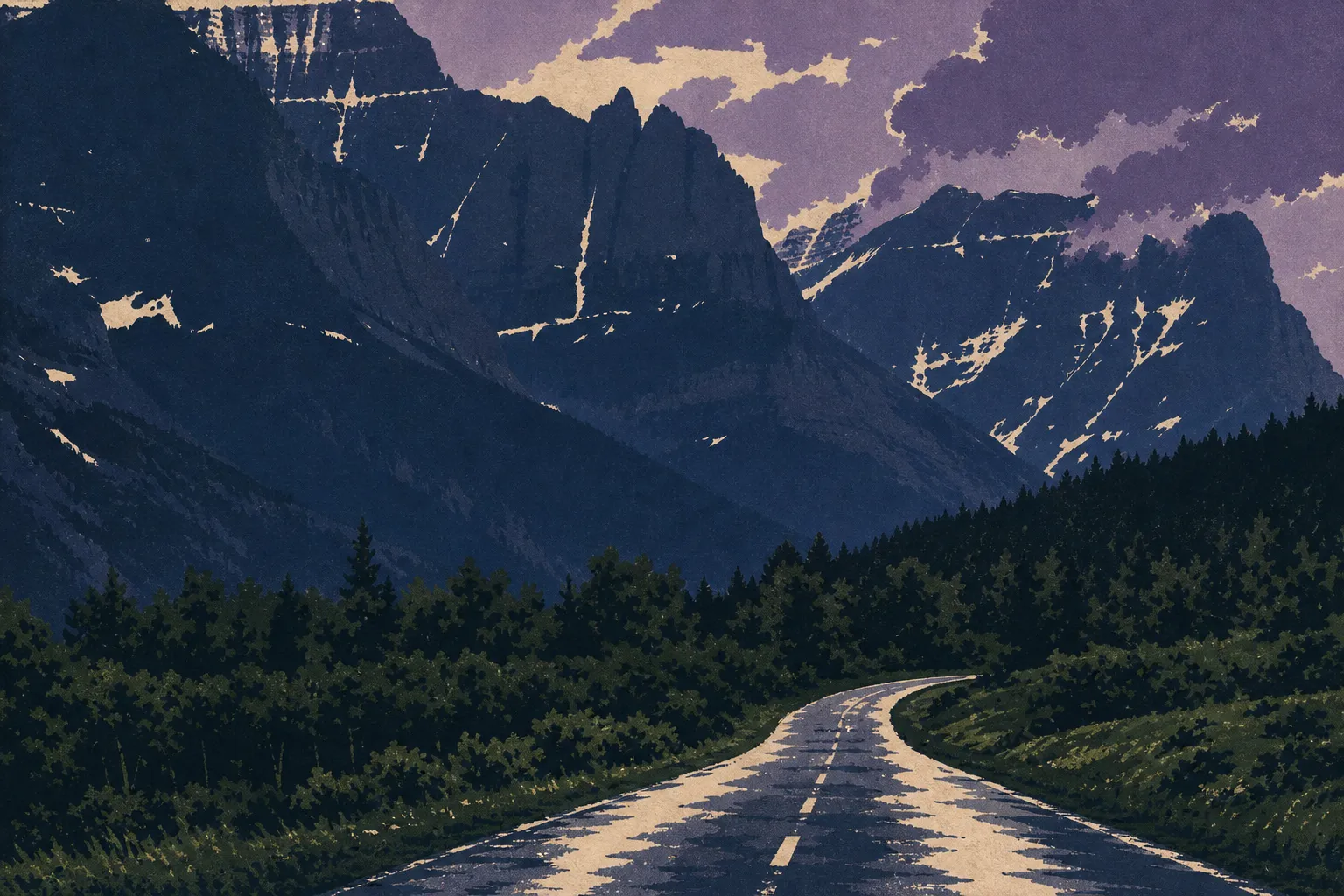
Glacier National Park is home to million-dollar scenery in Montana's northwestern corner, right on the Canadian border. Jagged peaks, icy mint-green lakes, mountain goats balancing on cliff ledges, and a scenic road that made the park famous around the world: that's Glacier. The park straddles the Continental Divide, where warm Pacific air collides with cold Arctic air. The result is unpredictable weather and conditions that can shift in an hour.
The quick answer. Plan on at least 2 to 3 days for a first visit, or 4 to 5 days to take your time. Most visitors focus on the Going-to-the-Sun Road, including the west side and Logan Pass, as well as the wilder Many Glacier area. The best window is roughly late June through mid-September, when the scenic road is fully cleared of snow. Book a vehicle reservation during peak season, and bring layers even in midsummer.
This guide gives you the big picture and points you to our detailed guides throughout the text, topic by topic.
Glacier at a Glance: Where the Park Is and How to Get There
Glacier occupies the northwestern corner of Montana along the spine of the Rocky Mountains. To the north, it borders Waterton Lakes National Park in Canada. Together, the two parks form Waterton-Glacier International Peace Park.
By car, the main access route is Highway 2, which follows the park's southern boundary and connects its two main gateways. On the west side, West Glacier leads to Lake McDonald and the start of Going-to-the-Sun Road. On the east side, US-89 takes you to St. Mary and Many Glacier. One thing to know: Highway 2 goes around the southern edge and does not cross the park. Inside the park, Going-to-the-Sun Road is the only route between west and east, and it is open only seasonally.
Without a car, it's still doable. Amtrak Empire Builder stops at West Glacier and East Glacier Park, right along the park's edge. The closest airport is in Kalispell, at Glacier Park International, about 30 minutes from the west entrance.
For train schedules, exact distances from major cities, and details on the park entrances, head to our guide Getting to Glacier. And if you're planning a larger Rocky Mountain trip, our road trips connect Glacier with the other major parks of the West.
Entrance Fees, Passes, and Reservations
Glacier charges an entrance fee per vehicle, not per person for cars. Here are the current official rates, valid for 7 days:
- Private vehicle: $35
- Motorcycle: $30
- Pedestrian or cyclist (per person): $20
If you're planning to visit several national parks in the same year, the math changes quickly. Glacier's annual pass costs $70. But the America the Beautiful interagency pass, which covers every national park in the country, is often the better choice for a road trip. Our page National Park Fees & Passes explains entrance fees and passes, including free-admission categories such as children, military members, and fee-free days.
Here's what catches many visitors off guard: beyond the entrance fee, Glacier requires a vehicle reservation during peak season to access certain areas, including Going-to-the-Sun Road. This reservation is separate from the entrance fee and sells out quickly online. Policies and time slots change from year to year, so we keep the current rules on our Getting Around page and our Practical Information, Rules & Safety page.
The park is open 24 hours a day, 365 days a year. Even when the entrance stations are unattended, the entrance fee still applies. Self-service payment kiosks are installed at every entrance.
Reservations, Permits, and Rules to Know
Reservations and Peak-Season Access
For the past few years, access to Going-to-the-Sun Road has required a timed entry reservation during peak season, generally from late May to early September. Reservations are made through recreation.gov and sometimes sell out within minutes of being released. Don't leave this to chance. Check the exact rules for the current year on the official NPS website, since the system changes each season.
Hiking Permits
Day hikes generally don't require a permit. Backcountry camping, however, requires a wilderness permit, which you can reserve through recreation.gov or pick up at ranger stations. These permits are in high demand for popular areas such as Highline Trail and Many Glacier, so plan several months ahead if you're targeting July or August.
Essential Rules to Know
Here are a few nonnegotiable rules before you enter the park:
- Pets are allowed in the park but prohibited on trails, along lakeshores, and in backcountry areas. They must be leashed at all times.
- Drones are prohibited throughout the park.
- Picking plants, minerals, or any natural object is prohibited.
- Campfires are allowed only in designated sites. Additional restrictions may apply during dry periods.
- The speed limit is 45 mph on the main roads, and lower in some sections.
- Food, beverages, and scented items must be stored in bear-resistant containers or in a locked vehicle, never left visible inside a vehicle.
How to Get Around Glacier
You can't see Glacier from a single base. The park is divided into distinct areas, often separated by long roads around the outside. Understanding the geography will keep you from losing half a day to driving.
Going-to-the-Sun Road is the park's backbone. This scenic road crosses the park from west to east for about 31 miles, climbs to Logan Pass, its highest point, and connects Lake McDonald with St. Mary. It opens all the way only after snow removal is complete, generally from late June to mid-October depending on snowfall. A free shuttle runs along the road in summer, letting you hike from one point to another without returning to your car.
The other areas, including Many Glacier, Two Medicine, and North Fork, are reached via roads outside the park. Many Glacier, the most spectacular valley for wildlife and large lakes, is accessed from the east on a separate road. Build it into your itinerary. You can't just swing by from the west.
Our detailed advice on shuttles, schedules, mountain driving, and vehicle-size restrictions, including limits on large RVs and trailers along Going-to-the-Sun Road, is collected on our Getting Around page. If you're traveling by van or motorhome, also see our dedicated RV Camping page.
How Long Do You Need to Visit Glacier?
How long should you spend in Glacier? Allow 2 days for an honest overview, 3 to 4 for a proper visit, or a week if you're a hiker.
Here's our on-the-ground take:
- 2 days: one day on Going-to-the-Sun Road with a stop at Logan Pass, and one day in Many Glacier. That's the minimum to avoid leaving disappointed.
- 3 to 4 days: add Lake McDonald and a day hike, such as Avalanche Lake or Highline Trail, plus the quieter Two Medicine area.
- 5 days or more: take your time with the major hikes, look for wildlife early in the morning, and continue to the remote North Fork area.
The main challenge isn't distance but the driving time between areas, which visitors often underestimate. Use our Itinerary & Trip Length guide to build a realistic day-by-day plan.
Plan your visit
What to See and Do in Glacier
This is the heart of the visit. We've divided the park by area, from the most accessible to the most remote.
Road trip journal · 4 areas
West Side: Lake McDonald and Going-to-the-Sun Road
This is the busiest and easiest entry point. Lake McDonald, the park's largest lake, is lined with its famous multicolored rocks beneath clear water. From there, Going-to-the-Sun Road climbs along the mountainside, with waterfalls, stone bridges, and dramatic overlooks leading to Logan Pass. Family-friendly walks around Avalanche Lake start in this area.
Logan Pass: The Road's High Point
Set on the Continental Divide, Logan Pass is the park's balcony. It's the starting point for two signature hikes, Highline Trail and the climb to Hidden Lake, where mountain goats and bighorn sheep are common. The parking lot fills by midmorning. Arrive early or take the shuttle.
Many Glacier: The Wild Heart of the Park
Many people consider this the most beautiful area, and it's easy to see why. There's a dramatic glacial valley, large lakes, a historic wooden hotel on the shore, and, above all, an exceptional concentration of wildlife. This is the best place to watch grizzlies from a safe distance and the starting point for the hike to Grinnell Glacier.
Two Medicine and North Fork: Finding Some Quiet
Two Medicine, in the southeast, offers equally grand scenery with a fraction of the visitors. North Fork, in the northwest near Polebridge, remains rugged, with dirt roads and a true end-of-the-world feel. Both are ideal options if you're trying to escape the summer crowds.
For the complete list of activities, including viewpoints, boat trips, photo spots, and ranger programs, see our Things to Do page. It covers the highlights area by area.
Explore the park
Glacier's Best Hikes
Glacier is a hiker's paradise, with more than 620 miles of trails ranging from flat family walks to demanding alpine traverses. Three classics come up again and again: Highline Trail from Logan Pass, a dramatic balcony along the cliff; the climb to Grinnell Glacier in Many Glacier; and the gentle Avalanche Lake loop on the west side.
Elevation gain, duration, difficulty, opening dates, and bear-safety advice are covered in our Hiking Guide. Open that page before you hit the trail.
The detailed guide Glacier Hiking Guide: Best Trails for Every Skill Level Glacier National Park's best hikes, with trail guides by area, difficulty,… Read the guide →Wildlife and Plants to Look For
Glacier is home to one of the most diverse wildlife populations in the contiguous United States. You may see both species of bear, grizzly and black bear, as well as bighorn sheep, elk, moose, and mountain goats, the park's symbol, often around Logan Pass. Elusive predators such as wolves, wolverines, and lynx also live here, although sightings are rare.
The golden rule is to keep your distance, at least 330 feet from bears and 80 feet from other animals, never feed wildlife, and carry bear spray on the trails. Our wildlife-watching advice, the best times of day, and the most promising areas are collected on our Wildlife page. Complete safety guidance appears on our Practical Information, Rules & Safety page.
The detailed guide Glacier Wildlife: What Animals You'll See and Where to Look Grizzly bears, mountain goats, bighorn sheep, and moose Read the guide →When to Visit Glacier
Peak season runs from late June to mid-September. It's the only time when Going-to-the-Sun Road is fully open and all services are operating. July and August offer the best weather, but they also bring the biggest crowds. The beginning and end of the season can offer pleasant surprises with fewer people.
Be careful: Glacier's weather is extreme and changeable. Summer days can be warm and sunny, but snow is possible at higher elevations at any time. In winter, temperatures drop well below freezing and the park gets heavy snowfall, closing the scenic road.
Our When to Visit page breaks down road openings, crowds, and rates month by month. For forecasts, average temperatures, and snowfall information, see our Weather page.
The detailed guide When to Visit Glacier: Best Times, Weather, and Seasons July and August offer full park access, while September brings fall color with… Read the guide →Where to Stay in Glacier
You have three main options. Historic lodges inside the park, such as the ones at Many Glacier and Lake McDonald, offer the ideal location but book up months in advance. Hotels in the gateway communities, including West Glacier, St. Mary, and East Glacier, are easier to find. Finally, campgrounds in the park appeal to budget travelers and nature lovers. Some take reservations, while others are first come, first served.
Our complete comparison, with prices, opening periods, and booking advice, is in our dedicated guides: our Where to Stay guide for an overview, our Hotels & Lodges page, and our Camping page for the details.
Stay in the park
Around Glacier: Things to Do Nearby
Glacier sits in one of the most beautiful corners of the Rocky Mountains. To the north, the Canadian border opens onto Waterton Lakes National Park, a natural complement to your trip. To the west, the Flathead Valley and its large lake offer swimming and charming towns. Southbound, the road takes you toward Missoula and, farther on, Yellowstone.
To build a route linking several parks, our road trips and Regions guides put Glacier in the larger context of the American Northwest.
Our Take: Is Glacier Worth the Trip?
Yes, without a doubt. Glacier ranks among the most beautiful American national parks, with a rare advantage: a scenic road that brings high mountain scenery within easy reach, plus a trail network for those who want to go farther. The abundance of wildlife, turquoise lakes, and still-wild atmosphere in areas such as Many Glacier more than justify the trip.
The limitations are worth knowing. Access takes planning, with vehicle reservations and accommodations that fill quickly, and the useful season is short. Prepare carefully and you'll leave with the kind of memories that don't fade. If you're traveling with kids, our Family page brings together suitable walks and practical tips.
Frequently Asked Questions
How many days do you need to visit Glacier?
Plan on at least 2 to 3 days to see Glacier properly, and 4 to 5 days to enjoy it without rushing. Two days let you cover Going-to-the-Sun Road and Many Glacier. Beyond that, add hikes and the quieter areas. Our Itinerary & Trip Length guide offers day-by-day plans.
How much is the entrance fee at Glacier?
The entrance fee at Glacier is $35 per private vehicle, valid for 7 days, $30 for motorcycles, and $20 per person on foot or by bicycle. The park's annual pass costs $70. During peak season, a separate vehicle reservation may be required for certain areas. Our National Park Fees & Passes page explains entrance fees and passes.
Can you visit Glacier by car?
Yes. Most visitors explore Glacier by car via Going-to-the-Sun Road, which crosses the park from west to east. The road opens completely only from late June to mid-October depending on snowfall, and large vehicles are restricted. A free shuttle provides another option in summer. See our Getting Around page.
When is the best time to visit Glacier?
The best time to visit Glacier is from late June to mid-September, when Going-to-the-Sun Road is fully cleared of snow and all services are open. July and August are the busiest months. Our When to Visit page covers each month in detail.
Which area of Glacier is best?
The best area depends on what you want to see. Choose Many Glacier for wildlife and large lakes, Going-to-the-Sun Road and Logan Pass for accessible panoramas, and Two Medicine or North Fork for peace and quiet. Our Things to Do page compares the areas one by one.
Is Glacier worth visiting?
Yes. Glacier is one of the most complete parks in the Rockies, combining accessible high mountain scenery, turquoise lakes, and abundant wildlife. It simply requires some planning because of reservations and the short season. To prepare your visit from start to finish, this guide points you to all our detailed Glacier guides.
The American Parks shop
Bring Glacier home
Our park-inspired creations, made to order and shipped to your door.
Latest park news
- A Scenic Aerial Tramway in the Works at Glacier's DoorstepA scenic aerial tramway near Glacier is under review by the U.S. Forest Service. Here's what we know so far, according to Morningstar.
- Glacier: Eight Grizzlies Gather Atop Siyeh Peak for Moth SeasonFrom mid-July through late August, hikers on Glacier's high rocky summits may run into several grizzlies feasting on high-altitude moths.
- Glacier: Going-to-the-Sun Road Closed on Its Alpine SectionGlacier's scenic road is currently closed between Avalanche and Jackson Glacier Overlook because of winter conditions.