
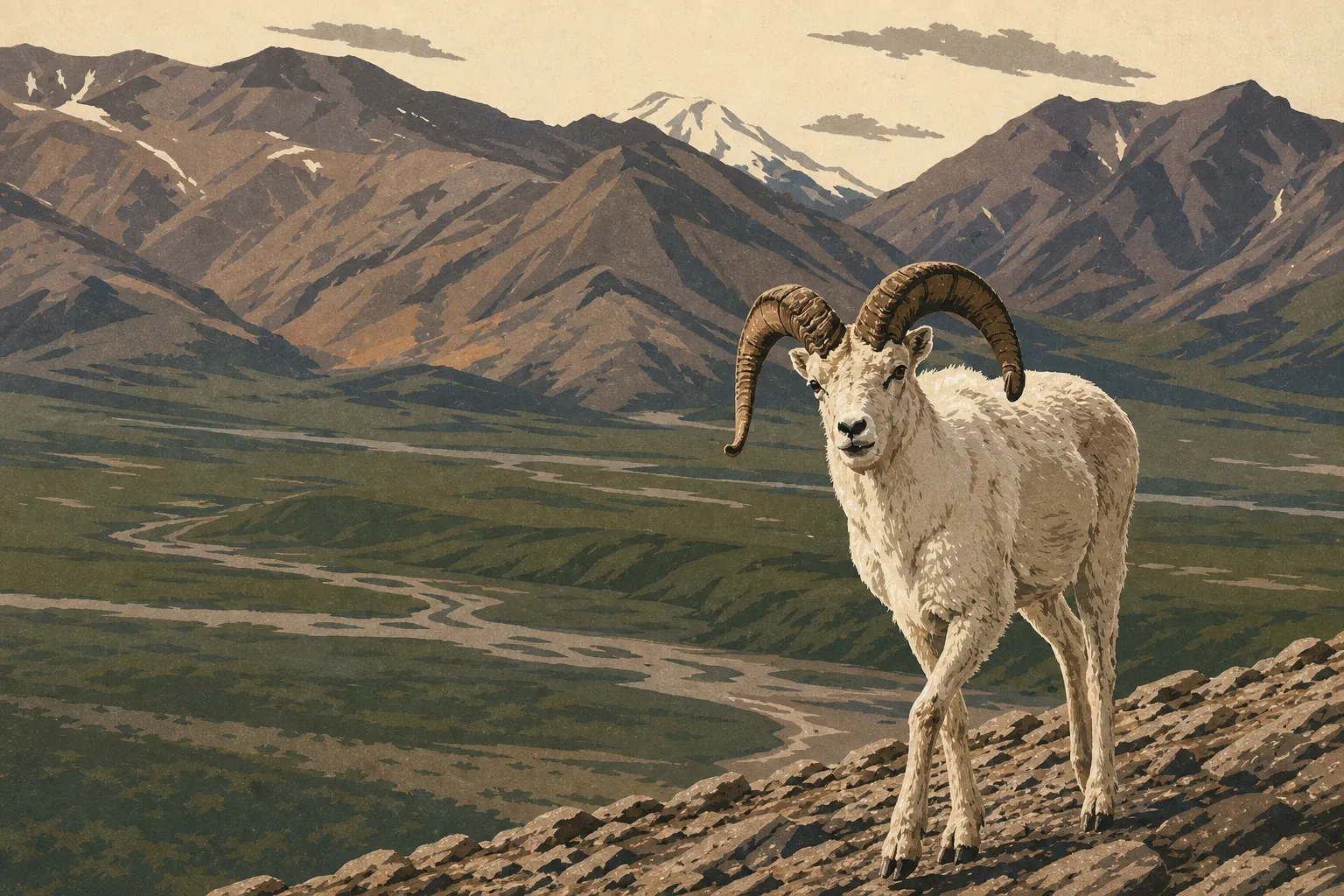
Denali National Park: The Complete Visitor Guide
Denali encompasses six million acres of wild Alaska around the highest peak in North America (20,310 feet). A single road enters the park, wildlife moves freely, and you see most of the park from a bus, not from your car. Plan on at least one full day here, or two or three if you really want to head into the backcountry and give the mountain a chance to show itself. It spends most of its time in the clouds. Here's the big picture: access, fees, transportation, areas, and how long to stay, with links to our detailed guides on each topic.
Denali at a Glance: Where the Park Is and How to Get There
The park lies in Alaska's interior, halfway between Anchorage and Fairbanks along Highway 3, better known as the George Parks Highway. From Fairbanks, it's about a 2-hour drive south. From Anchorage, plan on roughly 5 hours north. The park has one entrance, at the start of the park road. Everything funnels through there.
There are three ways to get here. A rental car gives you the most flexibility, and it's what we recommend for a road trip. The Alaska Railroad connects Anchorage and Fairbanks with a stop in Denali, a slower, scenic option if you aren't driving. Long-distance bus service costs less but gives you less flexibility. Our guide to getting to Denali brings together schedules, distances, and rental options.
Good to know: the park is open 24 hours a day, and there's no gate at the entrance. Services such as the visitor center, bus ticketing, and food service close early, though, usually around 6 p.m. in summer and 4 p.m. in winter. Arrive during the day so you don't find the doors closed.
Entrance Fees, Passes, and Reservations
Entrance costs $15 per person, not per vehicle, which often surprises visitors. The ticket remains valid for several days, enough for a typical stay. If you're visiting several national parks on the same trip, the park's $45 annual pass or the America the Beautiful pass quickly become better values. Our Fees & Passes page explains entrance fees and annual passes.
Keep in mind that admission and transportation are separate expenses. The entrance ticket doesn't include the bus ride beyond the area accessible by car. Reserve buses separately, and remember that during peak season, from June through August, they often sell out several days ahead. Reserve your seats as soon as your dates are set. If you want to sleep in the park, there are two options: campgrounds require a valid reservation, while backcountry camping requires a free but mandatory backpacking permit.
Reservations, Permits, and Rules to Follow
Reservations: spots on transit buses and campsites open for booking on recreation.gov in mid-November for the following season. July weekend buses sell out within hours of opening. Reserve before you even finalize your plane tickets. That's rule number one for Denali.
Backcountry camping permits: they're free but required for any camping outside developed campgrounds. Pick yours up in person at the Backcountry Information Center at the park entrance, either the day before or the morning of your departure. Staff will assign you an available zone and check your gear, especially your bear canister.
Essential rules:
- Store all food, scented waste, and toiletries in a bear canister, an approved hard-sided bear-resistant container. You can borrow canisters for free at the entrance.
- Never approach a bear or wolf within 300 feet. For other animals, the limit is 80 feet. These aren't suggestions.
- Ground fires are prohibited outside designated fire areas in developed campgrounds.
- Drones are prohibited throughout the park.
- Dogs are allowed, but only on the main road, in parking areas, and in campgrounds. Not on trails and not off trail.
Our Hiking page and Wildlife page add practical, on-the-ground advice to these rules.
Getting Around Denali: The One Road and the Park Bus
This is what sets Denali apart from other national parks. Denali has just one road, about 92 miles long, and private vehicles may drive only the first 15 miles, as far as Savage River. Beyond that point, the road is reserved for park buses. This isn't an arbitrary administrative rule. It keeps the landscape intact and wildlife undisturbed.
There are two main types of buses. Green transit buses let you get off and back on anywhere along the road, which is ideal for hiking independently or getting off when you spot a caribou. Tour buses follow a set route with commentary from a driver-guide, so they're a good fit if you'd rather sit back and listen. On our visit, our best wildlife sightings came from a transit bus that stopped short when a grizzly crossed the road. Our guide to getting around Denali covers bus types, fares, and the logistics of getting on and off.
In practice, remember this: your car gets you to the park and helps you explore the entrance area, but you visit the heart of Denali by bus. Set aside a full day for a deep backcountry round trip, including breaks.
How Much Time Do You Need to Visit Denali?
One full day is the bare minimum. It lets you explore the entrance area on foot and take a bus round trip into the interior. Two to three days is the right pace for most travelers, combining one long bus day, one or two hikes, and some extra time for weather. If you're a hiker or photographer, you can easily spend a full week in the park without getting bored.
Our advice: don't squeeze Denali into a half-day between two stops. The distances inside the park are long, the weather is unpredictable, and you only see the summit about one day out of three. Give yourself some margin. For a day-by-day plan based on the number of nights you're staying, see our Itinerary & Length of Stay page.
Plan your visit
What to See and Do in Denali
It helps to think of the park as three areas along the road. Here's how we divide them up. Our guide to things to do in Denali covers the activities in more detail.
Road trip journal · 3 areas
The Entrance Area, Accessible by Car
The first few miles contain the services and several easy trails around the visitor center. This is where you park, pick up your bus tickets, and hike without relying on shuttles. The park's sled dog kennel is in this area too. Denali is the only U.S. national park that still maintains a working sled dog team, a living piece of Alaska's history.
Savage River, the End of the Road for Cars
At about mile 15, Savage River marks the boundary beyond which your vehicle can't go. The area has accessible walking loops and beautiful first views of the tundra. It's an excellent snapshot of the park if you're short on time or traveling with kids. Our dedicated page lays out the family-friendly options.
The Backcountry, the Real Denali
Beyond Savage River begins the Denali people come looking for: endless tundra, braided rivers, scenic passes, and, on clear days, the mountain's immense silhouette. You can reach it only by bus. This is big wildlife country and prime off-trail hiking territory, one of the park's defining features. Here, you often hike without a marked trail.
Explore the park
Denali's Best Hikes
There are two ways to hike in Denali. Marked trails cluster around the entrance area and Savage River, making them perfect for a half-day without bus logistics. Off-trail hiking is the park's signature experience. You get off a transit bus, choose a ridge or a riverbed, and make your own way through the tundra. That freedom comes with a tradeoff: you are fully responsible for navigation and bear safety.
Our Denali Hiking guide compares routes, difficulty levels, and practical advice from the field. Read it before heading off trail, especially for river crossings and safe distances from wildlife.
The detailed guide Hiking in Denali: The Best Trails for Every Ability Marked trails, off-trail tundra, and essential bus rides Read the guide →Wildlife and Plants to See
Denali is known for its "Big Five": grizzly bears, wolves, caribou, moose, and Dall sheep. Seeing them takes patience and often a bus ride into the interior, where animals roam without fences or corridors. Alpine tundra starts to turn colorful at higher elevations in August, then in the valleys in early September. It's a brief but striking show.
The basic rule is nonnegotiable: keep your distance. Never approach a bear or moose, never feed them, and store all food out of reach. Our Wildlife page and Practical Information, Rules & Safety page cover exact safety distances, what to do during an encounter, and the best times for wildlife viewing.
The detailed guide Denali Wildlife: Which Animals You’ll See and Where A practical guide to spotting Denali's five iconic species Read the guide →When to Visit Denali
The visiting season is short. Summer, from June through August, is cool and often wet. Highs generally range from 57 to 63°F, lows from 39 to 48°F, with occasional spikes near 81°F. Snow can fall in any month, so pack warm layers even in July. Fall colors arrive on the high-elevation tundra in August and in the valleys in early September. Winter sets in by mid-September and is extreme, with temperatures falling as low as -40°F in January. Spring is a brief spell in April and May.
In short, the useful high season runs from late May through mid-September, when the park road and buses operate. Our When to Visit page covers the month-by-month tradeoffs among crowds, light, and fall colors, while our Weather page has complete climate averages.
The detailed guide When to Visit Denali: Best Times, Seasons, and Access Late June to mid-August is the ideal window for Denali Read the guide →Where to Stay in Denali
Two lodging patterns coexist. Inside the park, accommodations are limited to campgrounds, which require reservations, and backcountry camping, which requires a free permit. Just outside the entrance, a small area often called Glitter Gulch is packed with hotels, lodges, and restaurants. It's convenient but very busy in summer. Nearby villages offer quieter options farther out.
Our dedicated guides have the full comparison. See our Hotels & Lodges guide for comfort, our Camping page for park campsites, and our RV Camping page if you're traveling by RV. Book early. Supply is limited, and the short season fills up fast.
Stay in the park
Around Denali: Things to Do Nearby
Denali fits naturally into a larger trip. South of the park, the road to Anchorage crosses the Susitna Valley and opens onto the Kenai Peninsula. North of the park, Fairbanks is a base for the deep interior and, in the right season, the northern lights. The George Parks Highway itself makes a logical road-trip route between the two cities.
To connect your stops coherently, use our Region and Road Trip guides. They place Denali in a complete Alaska itinerary instead of treating it as an isolated visit.
Our Take: Is Denali Worth the Trip?
Yes, as long as you embrace the way the park works. You don't experience Denali by driving from viewpoint to viewpoint. You earn it by boarding a bus, walking through the tundra, and accepting that the mountain may stay hidden. What makes it special is the rare combination of the continent's highest peak, abundant free-roaming wildlife, and a management model that preserves the wilderness through one road and mandatory bus travel. If you're looking for an easy park to check off in two hours, this isn't it. If you want to feel the depth of Alaska, the choice is obvious.
Frequently Asked Questions
Can You Visit Denali on Your Own?
Yes, you can visit Denali on your own without joining an organized tour. Explore the entrance area by car and on foot, then take a park bus into the backcountry. The only catch is that summer buses must be reserved in advance, and off-trail hiking requires self-reliance and vigilance around wildlife.
What's the Best Way to Experience Denali?
The best way to experience Denali is by park bus because private vehicles stop at Savage River, around mile 15. Green transit buses let you get off wherever you want to hike, while tour buses add guided commentary. See our Getting Around page for details.
What Makes Denali So Special?
Denali's summit comes first. At 20,310 feet, it's the highest peak in North America. Then there's the free-roaming wildlife, including grizzlies, wolves, caribou, moose, and Dall sheep; a single park road closed to private cars; and the sled dog kennel the park still maintains.
What's the Most Beautiful Place in Alaska?
The most beautiful place in Alaska depends on what you're looking for, but Denali belongs on every list. It has few rivals for high mountains and wildlife, while the Kenai Peninsula complements it with glaciers and ocean. Our Region and Road Trip pages can help you combine these different sides of Alaska.
The American Parks shop
Bring Denali home
Our park-inspired creations, made to order and shipped to your door.
Latest park news
- Denali Shifts Into Winter Mode: The Visitor Center Moves to Mile 1.3As of September 24, 2026, Denali's visitor services move to the Murie Science Center, and private vehicle access to mile 30 closes soon.
- Denali Park Road now open to the Teklanika RiverThe Denali Park Road is currently open to Mile 30, at the Teklanika River. Here's what that means for your visit.
- Denali: Park Road Opens to Private Vehicles as Far as Teklanika on Sept. 18Starting September 18, 2026, you can drive your own vehicle to mile 30 of the Denali Park Road, weather permitting.