
When to Visit Denali: Best Times, Seasons, and Access
The best time to visit Denali is from late June to mid-August, when the park road is fully open to Wonder Lake, wildlife is at its most active, and the midnight sun stretches the day to 20 hours of daylight. The visitor season runs from late May to mid-September. Outside that window, roads close, buses stop running, and services shut down one by one. If you'd rather see fall colors with far fewer people, the second half of August is the smartest choice.
Denali Weather Month by Month
The table below summarizes conditions at the park entrance. For detailed forecasts and hour-by-hour data, see the Denali weather guide.
One useful warning: snow can fall any month of the year in Denali. Even in July, pack warm layers. It's a rule, not a precaution.
| Month | High | Low | Precipitation | What to expect |
|---|---|---|---|---|
| January | 5°F | -13°F | Light (snow) | Extreme cold, near-permanent darkness |
| February | 9°F | -9°F | Light (snow) | Northern lights visible |
| March | 18°F | 0°F | Moderate (snow) | Longer days, cross-country skiing |
| April | 34°F | 16°F | Moderate | Gradual thaw, very limited access |
| May | 48°F | 32°F | Moderate | Roads begin reopening in stages |
| June | 61°F | 41°F | Heavy | Midnight sun, peak season |
| July | 63°F | 45°F | Heavy | Busiest month, wildlife highly active |
| August | 59°F | 41°F | Heavy | Colors begin by mid-August, fewer visitors |
| September | 43°F | 28°F | Moderate | Golden tundra, first overnight freezes |
| October | 27°F | 12°F | Moderate (snow) | Snow-covered roads, park nearly closed |
| November | 12°F | -4°F | Light (snow) | Deep winter |
| December | 3°F | -11°F | Light (snow) | Almost permanent darkness |
Approximate average temperatures at the park entrance. Conditions at higher elevations or on the mountain slopes can be dramatically different.
Denali in January
With temperatures ranging from -13°F to 10°F and fewer than five hours of daylight a day, January is the harshest month of the year. The park road is closed, all visitor services are suspended, and no lodging is available inside the park. Only climbers preparing for an ascent or fully self-sufficient adventurers venture in. This isn't a month for ordinary travelers.
Denali in February
The cold remains intense, ranging from -11°F to 17°F, but the days start getting noticeably longer after the December solstice. You can see the northern lights on clear nights if you're staying in the Healy or Fairbanks area. No lodging is open inside the park. The road and services remain closed. This month is for experienced Alaska travelers, not first-time visitors.
Denali in March
Temperatures range from 3°F to 30°F, and daylight increases quickly, with days gaining several minutes each week. Backcountry skiing and dog sledding are possible for experienced, well-equipped groups. The park offers no visitor services, and the main road remains closed to ordinary vehicles.
Denali in April
The thaw begins. Days climb back to around 32°F to 43°F, but snow remains at higher elevations and conditions vary widely. The park road is still closed to ordinary vehicles. Visitor numbers are close to zero, and access is very limited. This is a transition period best avoided unless you're seeking complete solitude and can handle logistical uncertainty.
Denali in May
May is the month of gradual reopening. Temperatures rise from 34°F to 55°F, and the first 15 miles of the road to Savage River reopen to private vehicles. The first grizzlies emerging from hibernation can already be spotted along this stretch. Visitor numbers are at their lowest and lodging rates are noticeably below summer prices, but buses into the park and many lodges haven't opened yet.
Denali in June
June marks the real start of the season, with daytime temperatures from 45°F to 61°F, buses running to Wonder Lake, and visitor centers open. The midnight sun settles in, sometimes providing up to 20 hours of daylight. That shifts visitors' schedules and changes wildlife behavior. Demand is strong from the start of the month. Reserve bus seats on Recreation.gov as early as possible. July departures often sell out before spring is over.
Denali in July
July is the absolute peak: 46°F to 59°F, wildlife fully active, caribou migrating, and grizzlies easy to spot. Every service is open. It's also the busiest and wettest month of the year, with about 2.2 inches of precipitation. Full buses and packed campgrounds are the norm. Make reservations several months ahead and bring waterproof clothing.
Denali in August
The first half of August extends summer, with temperatures from 43°F to 55°F and wildlife still active. Starting around August 15, the tundra gradually turns red and gold, and visitor numbers drop sharply. Bus seats open up, and the feel of the park changes. Low evening light is especially good for photography. This is our second recommendation, right after late June and early July.
Denali in September
Temperatures drop to between 32°F and 45°F, and the first overnight freezes arrive. The alpine tundra puts on a spectacular display of color, and fall light is beautiful at any hour. The road begins closing in stages from mid-September, depending on the first snowfall. Check access conditions before booking, and bring warm clothing, especially for nighttime.
Denali in October
With temperatures from 14°F to 30°F and a road already covered in snow, October marks the end of the accessible visitor season. Nearly all services are closed. A few experienced hikers still visit the area around the entrance, but the park interior is inaccessible. It's a transition month into the Arctic winter, with little to offer visitors without the right gear.
Denali in November
Deep winter has arrived, with temperatures from -2°F to 17°F and rapidly shortening days. No visitor services are available in the park, and the main road is closed. A November trip to Denali requires Arctic-level logistics and equipment, with lodging arranged entirely outside the park.
Denali in December
December is the darkest month, with temperatures ranging from -11°F to 9°F and fewer than four hours of daylight a day. No visitor services are available inside the park. If you're drawn to Alaska in winter, Fairbanks offers much better infrastructure for northern lights viewing and winter activities.
Denali Season by Season
Winter (mid-September to late April)
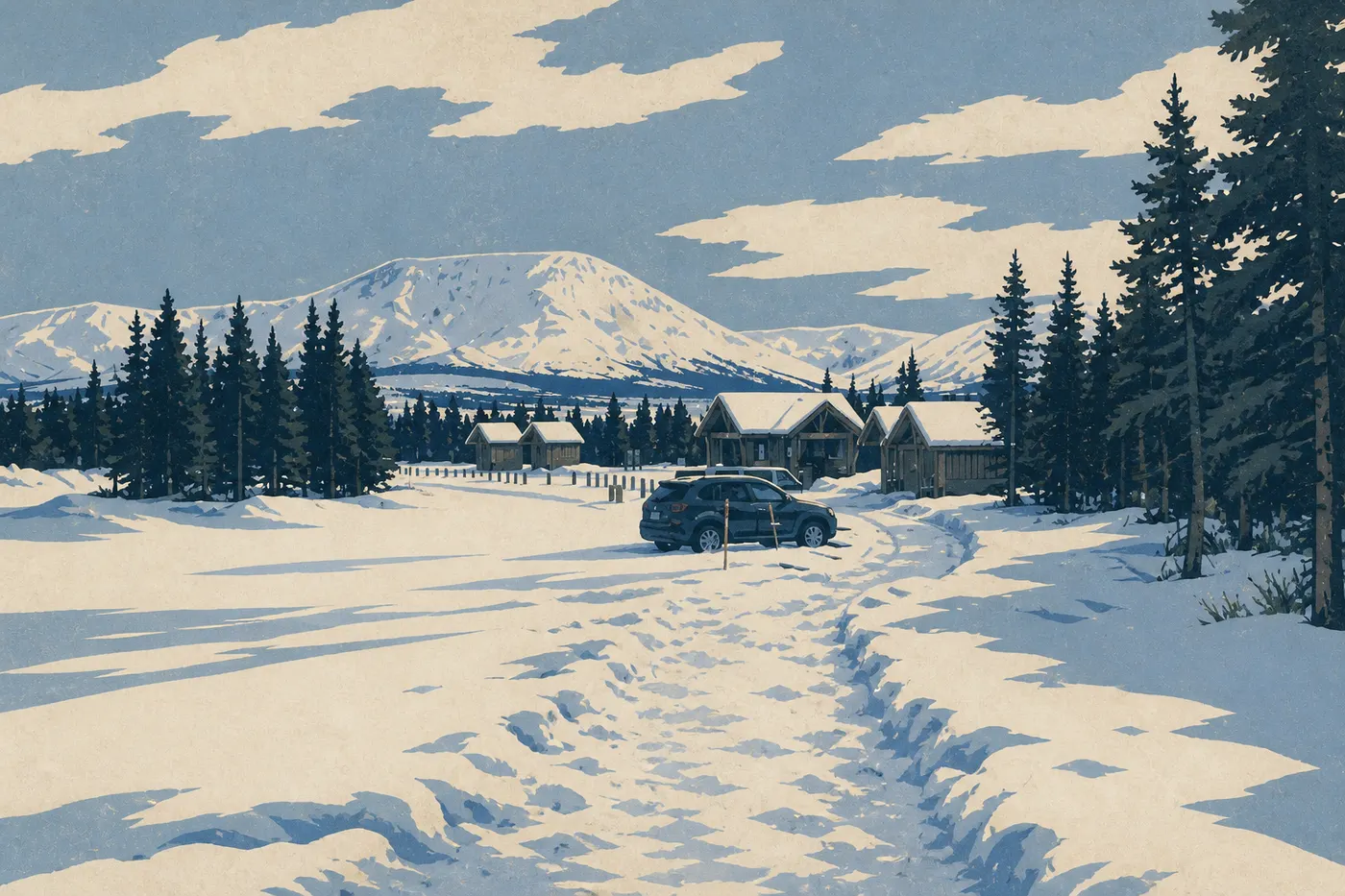
Winter in Denali is no figure of speech. Temperatures regularly drop to -40°F in January. The park road closes to standard vehicles, buses stop running, and nearly every service, including lodges, campgrounds, visitor centers, and gas stations, closes by mid-September.
The few winter visitors are fully self-sufficient adventurers who come for backcountry skiing, dog sledding, or mountaineering on Denali itself. You can technically see the northern lights from this part of Alaska, but the park has no infrastructure for viewing them comfortably. The cold demands more preparation than most travelers expect.
Spring (April and May)
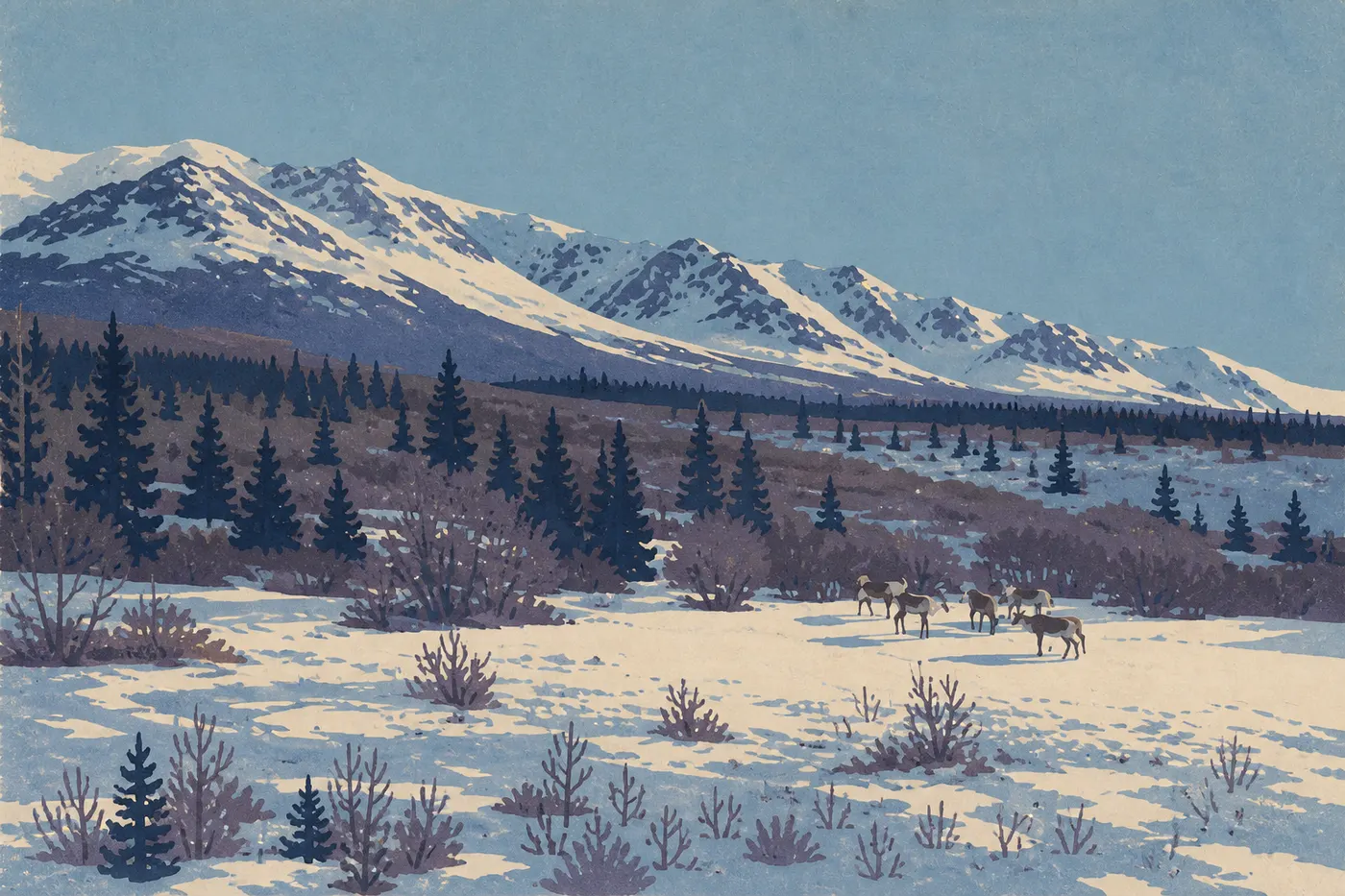
Spring in Denali is the shortest season on the calendar and the one with the fewest amenities. Daytime temperatures rise above freezing starting in April, but snow remains deep at higher elevations. The park road gradually reopens toward late May. The first 15 miles to Savage River become accessible to private vehicles first. Tour buses into the park interior don't resume until the very end of the season.
The advantage of May is low visitor numbers, lodging prices well below summer rates, and the chance to see the first grizzlies emerging from hibernation. The drawback is that many services haven't opened yet, and only a fraction of the full road length is accessible.
Summer (June to mid-August)
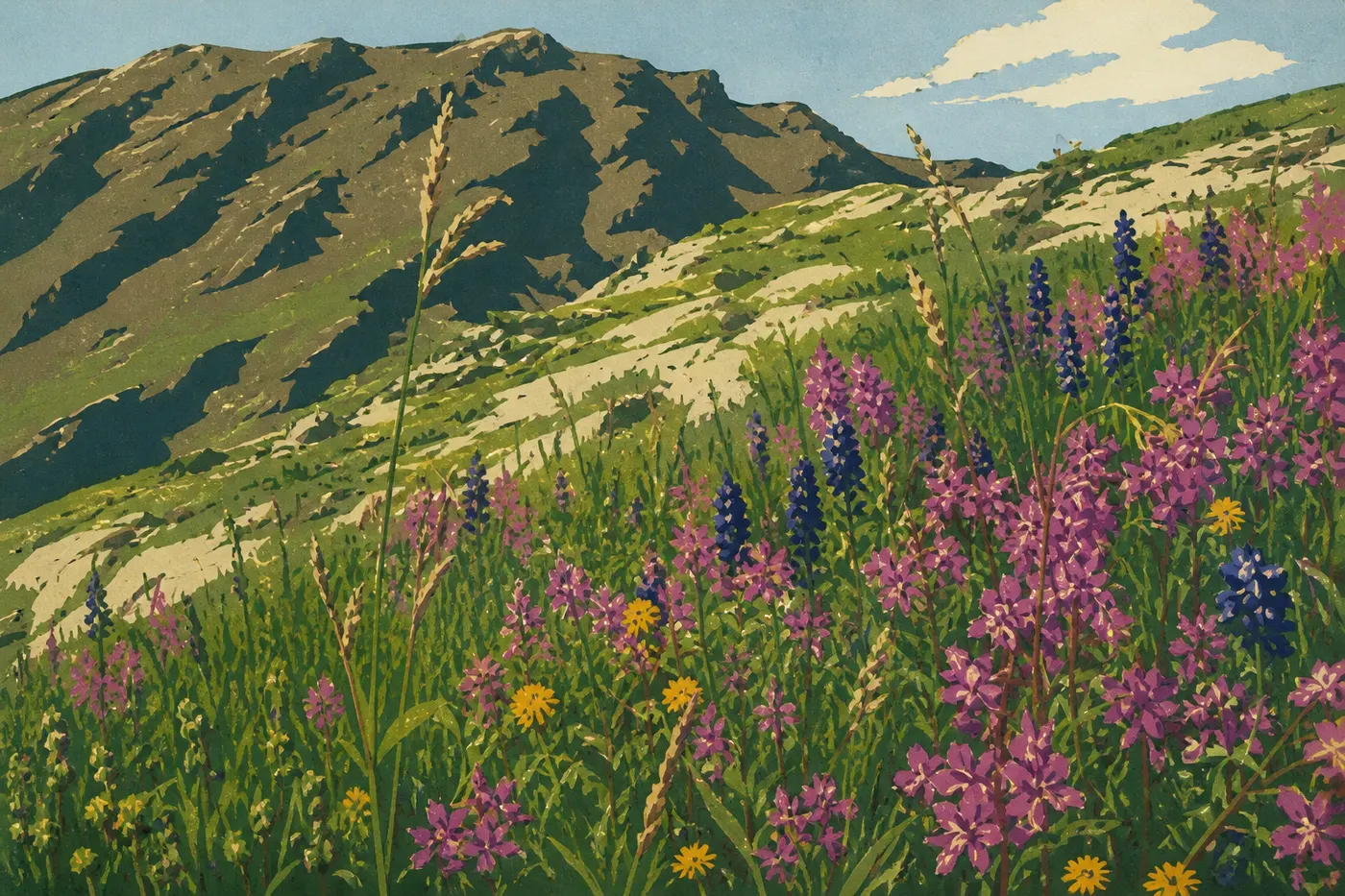
This is Denali's main season, the one the park was built to support logistically. Daytime temperatures reach 59°F to 63°F, with rare highs around 81°F. Rain is common, especially in July. The weather event that surprises every first-time visitor is the midnight sun. In June, it never gets completely dark. The sun skims the horizon and provides up to 20 hours of daylight, shifting visitors' schedules and, with them, the animals' routines.
The park road is open for its full 92-mile length to Wonder Lake. Green wildlife-viewing buses run along the entire route. For visitors without a wilderness permit, this is the only way to reach the park interior. Grizzlies, migrating caribou, Dall sheep on the talus slopes, and wolves can all be seen from the road. Visitor centers, campgrounds, and dining services operate at full capacity.
Keep in mind that July is the busiest month. Buses often sell out weeks ahead. Booking early isn't optional.
Fall (mid-August to mid-September)
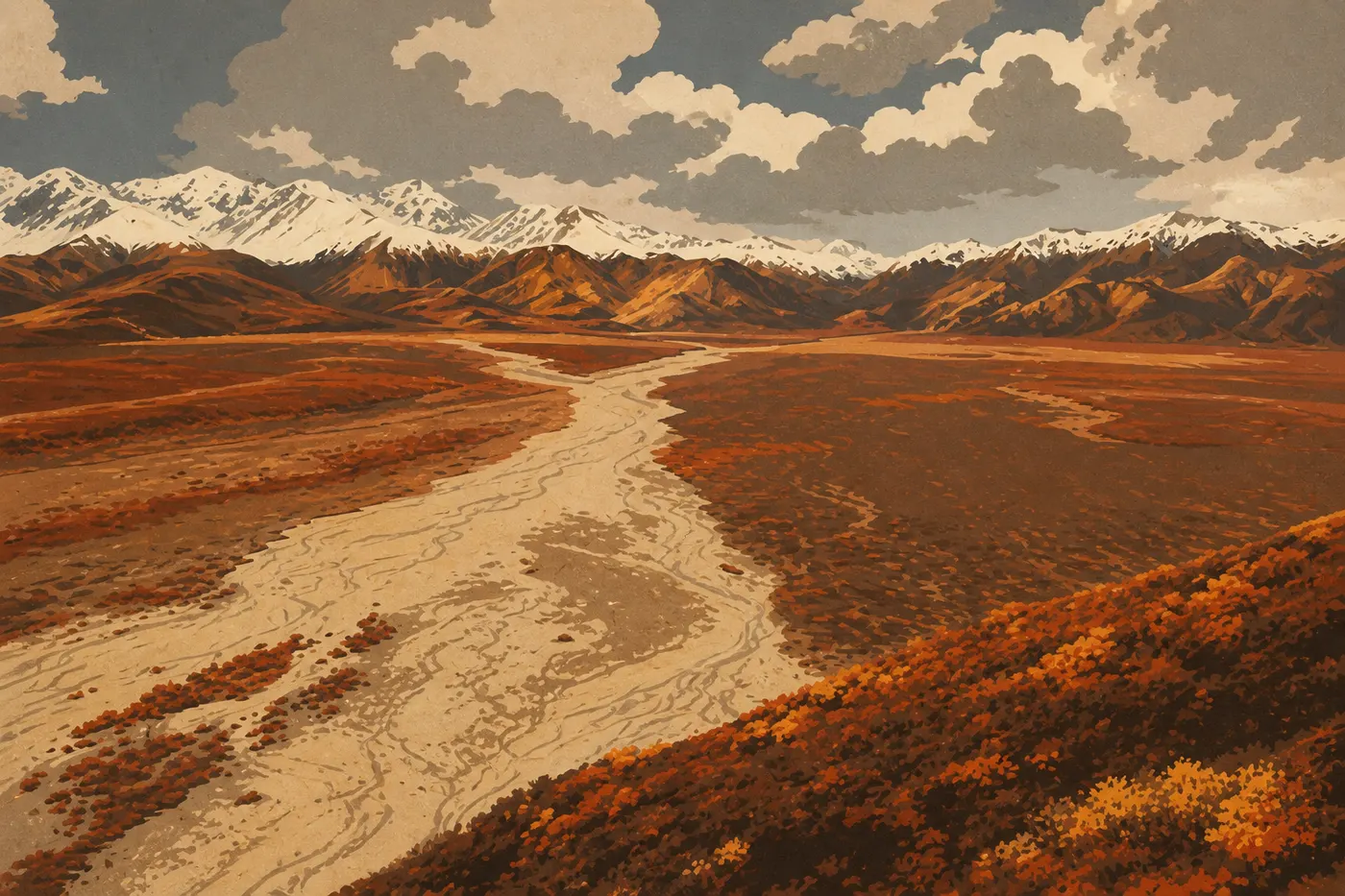
In our view, the second half of August offers Denali's best compromise. The alpine tundra starts turning red and gold in mid-August, and the lower valleys follow in early September. The low light of the Arctic fall makes for exceptional photography at any hour. Daytime temperatures remain manageable, from 43°F to 59°F, but nights cool quickly and the first freezes arrive in September.
Visitor numbers drop noticeably after August 15. Buses remain available, departures are easier to book, and the park regains a less industrial feel. The road begins closing in stages from mid-September, depending on the first snowfall.
Crowds: When to Avoid the Rush
Most visitors arrive between mid-June and early August. July brings the peak: full campgrounds, buses reserved weeks in advance, and the entrance parking lot full by 9 a.m.
| Month | Crowds | Notes |
|---|---|---|
| January to April | Almost none | Services closed, extremely limited access |
| May | Very low | Start of season, partial services |
| June | High | Midnight sun, strong demand |
| July | Very high | Absolute peak |
| August | High, then moderate | Sharp drop after the 15th |
| September | Low | Gradual closure |
| October to December | Almost none | Arctic winter |
Practical advice for peak season: get to the park entrance before 8 a.m. The bus line forms early, and same-day bus seats that weren't reserved disappear fast.
Reservations and Access by Season
Denali doesn't require a timed entry reservation to enter the park itself. However, beyond Savage River, 15 miles from the entrance, private vehicles aren't allowed on the park road. Anyone who wants to reach Eielson Visitor Center or Wonder Lake must reserve a seat on a park bus through Recreation.gov, sometimes several months ahead for July and early August.
Park admission costs $15 per person, or $45 for the America the Beautiful pass. Our Access and Transportation page covers the full bus reservation process, seasonal openings, and annual opening dates.
Best Time to Visit on a Budget
Lodging around Denali and flights to Anchorage or Fairbanks follow the visitor curve. July is the most expensive month, unsurprisingly. Rates are noticeably lower in May and September, but services are only partially open.
Our Denali lodging guide breaks down options by price range and season. In short, to lower the cost without giving up too much, aim for the first half of June, before July's peak, or the second half of August, when you get fall colors and lower prices.
When to Go Based on Your Priorities
Wildlife: June to mid-August. Grizzlies, caribou, Dall sheep, and wolves are all active and visible from the wildlife-viewing buses. The major caribou migrations most often take place in July.
Hiking: June to early September. Snow-free areas are accessible, and weather conditions are relatively stable. Our Denali hiking guide lists trails that work for different skill levels and seasons.
Photography: Two distinct windows stand out. Midnight-sun light in June and July gives the landscape warm tones at unusual hours. Fall, from mid-August to early September, brings tundra colors with low light all day.
Families: July. All services are open, weather is at its mildest, and the Junior Ranger program is active. Our Denali family guide brings together specific advice.
Tight budget: May or late August to early September. Keep in mind that services are limited at the start of the season.
Northern lights: Visible from Alaska between August and April, but Denali's winter visitor infrastructure is too limited for this to be a realistic goal. Fairbanks, two hours north via the George Parks Highway, is much better equipped for northern lights viewing.
The Bottom Line
The ideal window runs from late June to mid-August. The road is fully open, buses are available, wildlife is at its peak, services are fully operating, and daylight lasts up to 20 hours a day. The second half of August is our second choice for fall colors and a quieter park. May works for self-sufficient travelers who can accept limited services. Winter isn't recommended without solid experience in Arctic conditions.
Whatever month you choose, reserve bus seats several months ahead. This is the most common failure point in a Denali trip. To set the overall framework for your stay, our complete Denali guide answers all your questions about the park.
The Worst Time to Visit Denali
For the typical visitor, the worst period runs from October through April. Expect extreme cold, down to -40°F in January, near-permanent winter darkness, vehicle restrictions on the closed road, and no services. Even the area around the entrance is only practical with specialized cold-weather gear. Without complete self-sufficiency in an Arctic environment, there's simply nothing to do in the park during this period.
July deserves mention for a different reason. The park is fully open, but it's the busiest and wettest month. Buses sell out weeks ahead, the entrance parking lot is full by 9 a.m., and mosquitoes reach their peak activity. That's not reason enough to avoid July, but it is a reason to book far ahead or target June or the first half of August instead.
Frequently Asked Questions
When is the best time to visit Denali?
The best time to visit Denali is from late June to mid-August. The park road is fully open, wildlife-viewing buses run to Wonder Lake, and the midnight sun provides nearly 20 hours of daylight.
What is the peak season at Denali?
Peak season runs from mid-June to early August, with an absolute peak in July. All services are open and wildlife is at its most active, but this is also the busiest period. Reserve bus seats on Recreation.gov several months ahead. July departures go quickly.
Can you visit Denali in winter?
Technically, yes, but there is no visitor infrastructure. The park road is closed, campgrounds and visitor centers are closed, and no buses run. The few winter visitors are climbers preparing for an ascent or self-sufficient backcountry skiers. For a winter trip to Alaska, Fairbanks is much better equipped, especially for northern lights viewing.
Is Denali worth visiting?
Denali is worth the trip for anyone looking for large North American wildlife, including grizzlies, caribou, and wolves, in an Arctic landscape without a safety net. It's one of the few American parks where the road itself is the hike. From a bus, you can watch wildlife across dozens of miles of open tundra.
How many days do you need to visit Denali?
Plan on at least two full days to travel beyond Savage River by bus and enjoy the park interior in reasonable conditions. Our Denali itinerary guide suggests combinations based on your priorities and time budget.
What's the best way to see Denali mountain?
You can see Denali mountain from several points along the park road on clear days, especially around Eielson Visitor Center. The mountain is often hidden in clouds, so plan on two or three consecutive days in the park to maximize your chances of a clear view.
What is the coldest month in Alaska?
January is generally the coldest month in Alaska. In Denali specifically, temperatures often drop to -40°F in January, with near-permanent darkness.
What is the best time to visit Alaska in general?
For Alaska as a whole, June through August offers the best conditions for hiking, wildlife viewing, and exploring the great outdoors. For the northern lights, aim for September through March, but plan to stay outside Denali National Park, which isn't set up for winter visitors. Our Alaska region guide offers an overview of the state's main destinations.