
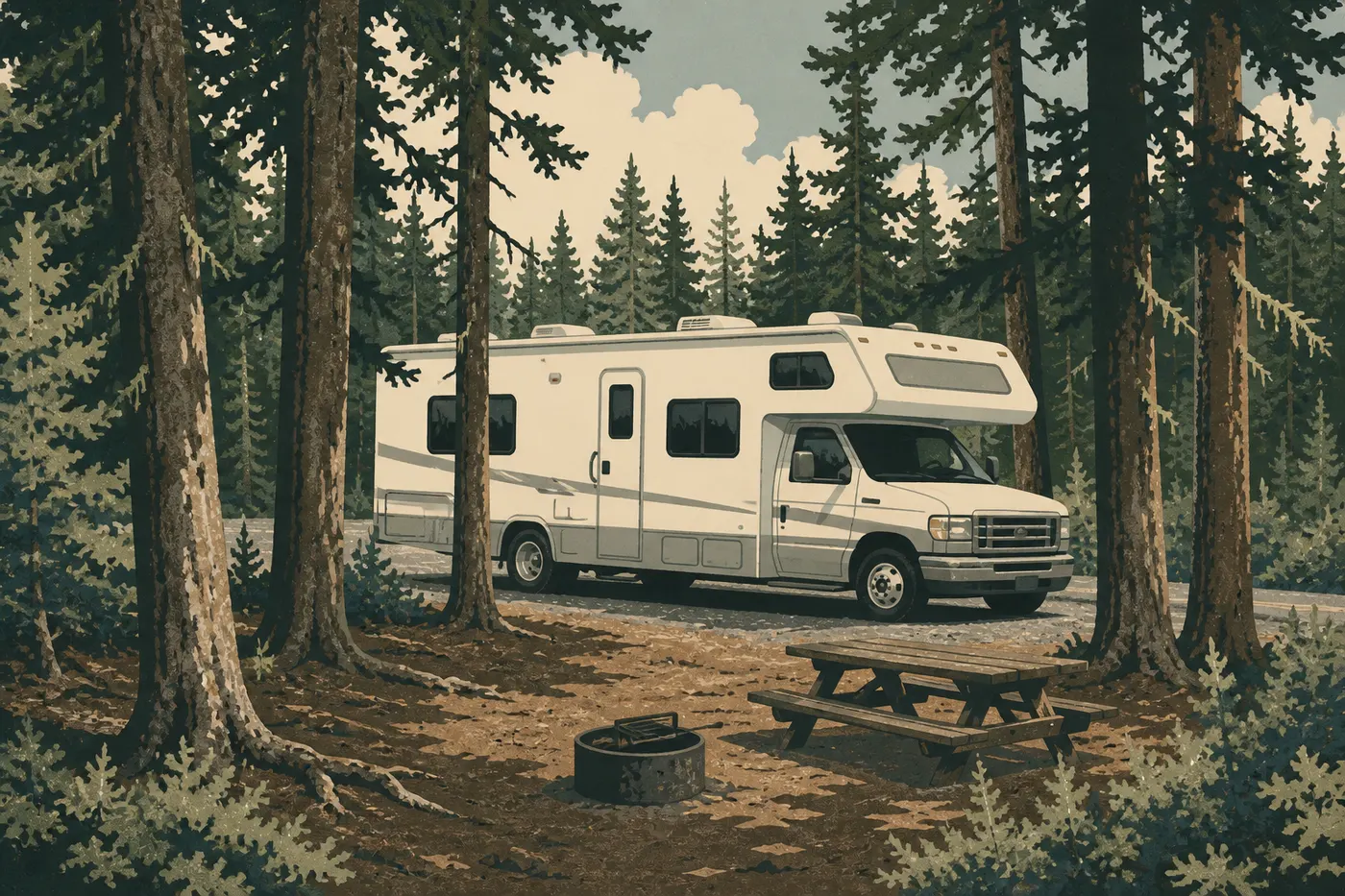
Denali by RV: Campgrounds, Rules & Tips
Visiting Denali by RV is possible. There's one important catch as soon as you enter the park road: private vehicles can travel only as far as mile 15. Your RV won't reach the foot of Denali. Three campgrounds do accommodate RVs, though, and the experience remains one of the wildest in Alaska.
The short answer. Yes, you can sleep in your RV at Denali at three official campgrounds that welcome RVs: Riley Creek, Savage River, and Teklanika River. The main restriction is mileage: beyond mile 15, only park buses operate, except for Teklanika campers, who can access mile 29 under the conditions detailed below.
Can You Drive and Camp at Denali in an RV?
Denali works differently from almost every other American national park.
The Denali Park Road stretches 92 miles through the park. Private vehicles, including RVs, can freely access only the first 15 miles, as far as the Savage River area. Beyond that, the park uses official buses to limit the human impact on wildlife. You'll see wolves, grizzlies, and caribou from those buses, not from your RV. This isn't a minor inconvenience. It's what defines the Denali experience.
In practice, you park your RV at Riley Creek or Savage River, catch the bus early in the morning, and spend the day taking in landscapes the road wouldn't show you in quite the same way.
To reach the park, take Highway 3, also known as the George Parks Highway. Fairbanks is 2 hours north, and Anchorage is 5 hours south. There is no entrance gate. The entrance fee is $15 per person, not per vehicle, so two adults pay $30. The annual pass costs $45.
RV Restrictions and Regulated Roads
The mile 15 cutoff is the main rule. A few other points deserve your attention before you hit the road.
Maximum vehicle length. Each campground has its own limit. As a general rule, RV sites accept vehicles up to about 35 to 40 feet. Check your campground's exact limit when you book on recreation.gov, since some loops are shorter.
Parking outside a campground. There are no informal RV parking areas in the park. Parking your RV along the park road outside a designated site is prohibited.
Generators. At Teklanika River, generators are allowed during set hours. At Savage River, their use is heavily restricted. Check the rules when you make your reservation.
The road itself. The first 15 miles are paved and easy enough for a standard RV. Beyond that, on the way to Teklanika, the road surface is hard-packed gravel. Denali has no clearance-restricted tunnel, unlike Zion or the Great Smoky Mountains. Vehicle length and the mileage cutoff are the only two barriers you need to anticipate.
The Park's Official Campgrounds
The park has six campgrounds. Only three accommodate RVs. The other three, Sanctuary River, Igloo Creek, and Wonder Lake, are reserved for tents and small vehicles without living facilities.
Riley Creek
Riley Creek is 1,640 feet from the entrance, just past the park's welcome area. It's the only campground open year-round. It offers sites with electrical hookups, an on-site dump station, and access to potable water.
If you're arriving late or leaving early, this is the logical base. It's also the campground to choose if your RV is long or you need regular services. Sites with hookups save you from putting extra strain on your batteries or running the generator. Book on recreation.gov.
Savage River
At mile 13, Savage River marks the limit of unrestricted access for private vehicles. There are no electrical hookups and no on-site dump station. The setting is considerably wilder than Riley Creek, though: you camp along the edge of the tundra, and Dall sheep are often visible on the nearby ridges.
This is the right choice for a self-contained RV with full tanks, solar panels, or a generator used during the permitted hours. Plan to stop at Riley Creek to dump your tanks as you leave the park. Book on recreation.gov.
Teklanika River
Teklanika is the campground farthest into the park that accommodates RVs, at mile 29. It's also the most regulated.
To reach it in a private vehicle, the rule is clear: a minimum stay of three consecutive nights is required. Once you arrive, your RV must stay on its site until the end of your reserved stay. You get around the park by bus. This restriction is intentional. It reduces traffic on the road and protects wildlife beyond mile 19.
In return, Teklanika offers an immersion that few visitors experience by RV. The nights are quiet, and the river is close by. Generators are allowed on a set schedule. An on-site dump station is available. Book on recreation.gov several months ahead for July and August.
Boondocking and Areas Around Denali
Backcountry camping in the national park is reserved for hikers with a backcountry permit, issued free of charge by the park. RVs have no place outside designated campgrounds.
There are a few boondocking options around the park.
Healy (9 miles north of the entrance) has several private RV parks with full hookups. It's the first alternative if the park campgrounds are full, or if you want a serviced base before entering.
Denali State Park (south of the national park, along Highway 3) offers more accessible, less crowded campgrounds in a similar landscape.
BLM lands in the area sometimes allow dispersed camping, but permitted areas vary. Contact the Bureau of Land Management Alaska office before settling in outside marked sites.
To plan an Alaska itinerary beyond the park, our Alaska Road Trip guide covers the main stops along the way.
Dump Stations, Water, and Services
The dump station available without a reservation is at Riley Creek. If you're camping at Savage River, plan to dump at Riley Creek before leaving the park. It's on your way out.
At Teklanika, a dump station is available right at the campground.
For everyday needs such as groceries, fuel, and bulk water, Healy has gas stations and a grocery store. Cantwell, farther south on Highway 3, is another useful stop.
Which Campground Is Right for You?
Want full services and flexibility? Choose Riley Creek. With hookups, a dump station, and year-round access, it's the ideal base for one or two nights before taking the buses into the park.
Looking for tundra without the services? Choose Savage River. The setting feels wilder, wildlife is closer, and you're right at the edge of the unrestricted zone. It's perfect for self-contained RVs.
Want to settle in at the heart of the park? Choose Teklanika. Accept the three-night rule and the requirement to keep your vehicle parked, and you'll have a campsite few visitors experience by RV.
For other types of lodging in the park, including lodges and cabins, see our guide to lodging in Denali.
Renting an RV to Visit Denali
If you don't have an RV, rental companies are concentrated in Anchorage, 5 hours from the park, and Fairbanks, 2 hours away. Anchorage offers a wider choice of vehicle classes and sizes. Fairbanks is more convenient if you're arriving from the north.
For Denali's campgrounds, a vehicle under 35 to 40 feet is ideal, such as a Class C or small Class A. Very large Class A motorhomes may be restricted in some site loops. An 26- to 30-foot Class C is a safe bet: it's easier to maneuver into sites and along Alaska's gravel roads.
Reserve your RV several months before your trip if you're targeting July or August. Demand surges, and the best vehicles go early.
RVs, Pets, Budget, and Reservations: What to Know
Pets. Dogs are allowed in the park's campgrounds when leashed, with a maximum leash length of 6 feet. They're not allowed on trails or outside camping areas and roads. That's convenient if you're sleeping in an RV with a dog, but plan to explore the park without your pet.
Site costs. RV sites at Denali start at around $28 per night. Sites with hookups at Riley Creek cost a little more. Add the per-person entrance fee of $15 and the recreation.gov reservation fee for each stay. Our Fees & Passes page explains entrance fees and passes.
When to book. Sites at Teklanika and Savage River disappear within minutes when reservations open on recreation.gov, usually sometime between January and February for the summer season. Riley Creek is easier to book, but it also fills quickly in July and August. Don't wait past February if you're aiming for peak season.
Season. Summer in Denali is short and cool. Daytime temperatures range from 57 to 63°F from mid-June through mid-August, with chilly nights between 39 and 48°F. Snow can fall in any month of the year. Bring warm layers and a rain jacket, even in midsummer. Our When to Visit Denali guide compares the months in detail.
Our Denali RV Plan: At a Glance
Here's how we build an efficient RV stay at Denali.
- Start at Riley Creek for the first few nights. You'll have full services and bus access starting the next morning.
- Spend a night at Savage River if your RV is self-contained and you want the tundra close at hand.
- Stay three nights at Teklanika for an immersive experience in the heart of the park, with your RV parked on site.
- Return via Riley Creek to dump your tanks before getting back on Highway 3.
Denali is one of Alaska's most logistically demanding parks. Those same restrictions are also what have allowed it to remain so intact.
Frequently Asked Questions
Can you camp in a tent at Denali?
Yes. You can tent-camp at every campground in Denali, including sites reserved exclusively for tents, such as Sanctuary River, Igloo Creek, and Wonder Lake. Backcountry camping is possible with a free permit issued by the park's visitor center.
Where is Denali National Park?
Denali National Park is in Alaska, along Highway 3, the George Parks Highway, about 2 hours south of Fairbanks and 5 hours north of Anchorage.
Where are RVs prohibited at Denali?
RVs are prohibited beyond mile 15 of the park road, except for campers with reservations at Teklanika, who can travel as far as mile 29. RVs aren't allowed in tent-only campgrounds, including Sanctuary River, Igloo Creek, and Wonder Lake, or in undesignated parking areas.
Where can you stay in an RV in the United States if Denali is full?
If Denali is full, Healy's private RV parks, 9 miles north of the entrance, are the most convenient first alternative. Denali State Park to the south also has open campgrounds. For other stops in Alaska, our Alaska Road Trip guide covers the main RV destinations.