
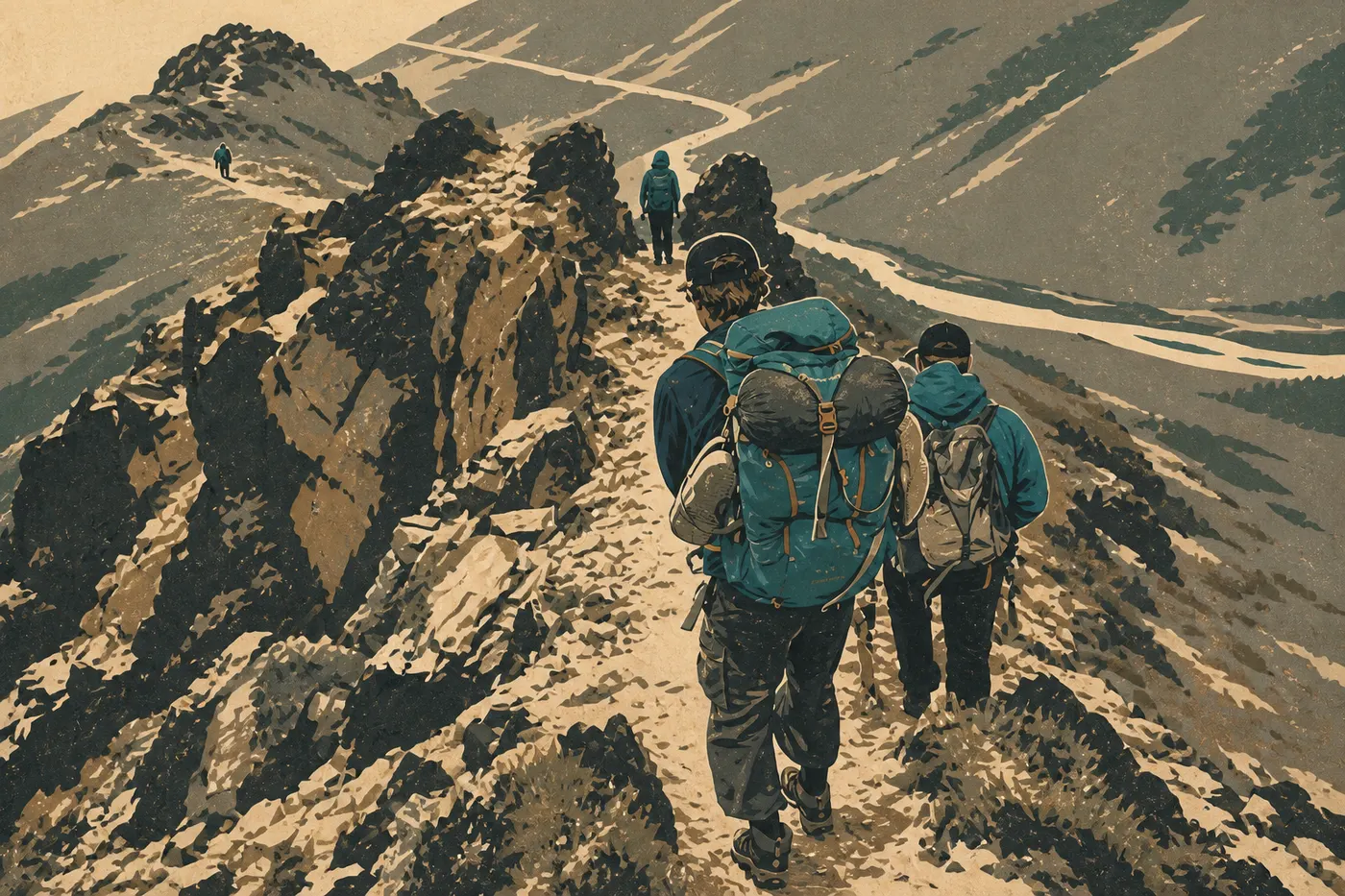
Hiking in Denali: The Best Trails for Every Ability
Hiking in Denali feels unlike anything you've experienced elsewhere. The park has only a handful of marked trails, all concentrated within the first 14 miles around the entrance. Beyond that, you're in open tundra with no established trail, navigating by map and compass. That's exactly what makes the experience unique in North America: you can set out wherever you want, without crowds or trail markers, with nothing but vastness on the horizon.
Our must-do hike is the Savage River Loop (3.0 miles, easy), accessible by car and offering direct views of the alpine ridges and river. To go farther, the Eielson Alpine Trail (1.2 miles from the bus) offers a straight-on view of the mountain range in clear weather. And if you're looking for a full day of real effort, the off-trail climb to Thorofare Ridge from Eielson Visitor Center is one of the most memorable outings you can do in Alaska.
Preparing for Your Denali Hike
Permits
You don't need a permit for a day hike on the marked trails. Any overnight stay outside official campgrounds, however, requires a free backcountry permit, which you must pick up in person at the Wilderness Access Center near the park entrance. The park is divided into hiking units, each with a limited daily capacity. During peak season, some units near popular areas such as Eielson and Wonder Lake fill up as soon as the window opens.
Safety and Wildlife
Grizzlies live throughout the park. Bear spray is required off the marked trails and strongly recommended everywhere else. If you encounter one, make yourself look big, speak loudly, and back away slowly. Never run. Caribou, moose, and wolves share the tundra, so stay at least 300 feet from all wildlife.
Another often-overlooked risk is rivers. Most waterways outside the entrance area have no bridges. Even in summer, a river crossing can be dangerous after rain or during a late snowmelt. Before entering the water, check the depth with a stick, unbuckle your backpack, and walk facing upstream.
Dogs
Dogs are not allowed on trails or off the main road. They may accompany their owners in campgrounds and within 100 feet of the road, as long as they're on a leash no longer than 6 feet.
Water
Surface water is plentiful, but you must filter or treat it before drinking it, with a mechanical filter or chemical tablets. No exceptions, because of the risk of giardia.
Entrance Fees
The entrance fee is $15 per person ($45 for an annual park pass). Our Practical Information, Rules & Safety page explains exemptions and the validity of the America the Beautiful pass.
The Best Hikes, Area by Area
Denali's geography centers on a single road, Park Road, which runs for 92 miles. In summer, private cars can drive freely only as far as mile 14 at Savage River. Beyond that point, only park buses have access. The farther you travel along the road, the fewer people you'll find on the tundra.
Entrance Area and Savage River (miles 0-14)
This is the only area accessible by private car, and it contains the park's few marked trails through a boreal forest of birch and spruce.
Horseshoe Lake Trail About 2.2 miles round-trip · negligible elevation gain · very easy · loop A horseshoe-shaped lake carved by glaciers, surrounded by quiet, low-growing vegetation. It's a great place to get started, find your pace, and possibly spot beavers. Trailhead: the entrance area, at the main parking lot near the Denali Visitor Center.
Taiga Loop Trail About 1.6 miles · flat · very easy · loop An immersion in taiga forest, the subarctic vegetation typical of interior Alaska. It's short, but useful for getting a feel for the park before venturing farther. Trailhead: the same area as the previous trail.
Savage River Loop 3.0 miles · little elevation gain · easy · loop Our recommendation for anyone arriving by car with just one day. The trail follows the Savage River, with open views of the ridges and a carpet of colorful tundra starting in late July. Mile 14 is where private cars must turn around. It also marks, as a practical consequence, the boundary between the crowds and the quiet. Trailhead: Savage River parking lot at mile 14.
Savage Alpine Trail About 5.3 miles round-trip · 1,740 feet of elevation gain · difficult The trail climbs above the treeline to an unobstructed alpine plateau. Hiking shoes and trekking poles are recommended. Allow 4 to 5 hours round-trip. Trailhead: Savage River parking lot at mile 14, at the same point as the loop.
Eielson Visitor Center (mile 66, bus required)
Located 66 miles from the entrance, Eielson is the key spot for viewing Denali. The mountain, rising to 20,308 feet, is visible from the center in good weather, but that view is never guaranteed. The bus ride from the entrance takes 2 to 3 hours each way.
Eielson Alpine Trail About 1.2 miles · 260 feet of elevation gain · easy · loop A short trail that climbs onto an alpine tundra ridge with a direct view of the mountain range. It's the ideal hike for visitors who take the bus but don't want to venture off-trail. Trailhead: Eielson Visitor Center.
Thorofare Ridge (off-trail) About 5 miles round-trip · 1,700 feet of elevation gain · strenuous There is no established trail, so you'll climb by reading the terrain between slabs of shale and tundra moss. The reward is a panorama of three glacial valleys and, in favorable weather, a close-up view of Denali's north face. Allow 5 to 7 hours total. A topographic map is required, and a GPS is recommended. Trailhead: Eielson Visitor Center.
Wonder Lake (mile 85, bus required)
This is the end of the road. There are no marked trails in this area, but it's one of the most spectacular places in Denali for free hiking. Reflections of the mountain range in the lake at daybreak make the 5-hour bus ride worthwhile on their own. A serious warning: the mosquitoes are fierce in July. A head net isn't a luxury here.
From Wonder Lake, experienced hikers head out across the tundra in any direction, as long as they have a backcountry permit and know how to navigate off-trail.
Easy Hikes for Families
Denali isn't the easiest park for families with young children. There are no marked trails beyond mile 14, wildlife is present, and many rivers have no bridges. Still, a few options work well for kids ages 6 to 8 and up, as well as anyone looking for an outing without a major physical effort.
Horseshoe Lake Trail and Taiga Loop Trail are the two reliable choices. They're flat, short, and entirely within the boreal forest. Bear spray is still recommended in this area, both out of habit and as a basic precaution.
Eielson Alpine Trail, accessible by bus, is manageable with adventurous kids. Plan on a full day. Between the 2- to 3-hour ride out, the hike, and the ride back, the day will be packed.
The guide to visiting Denali with kids covers gear, family-friendly campgrounds, and lodging near the entrance.
Strenuous Hikes and Full-Day Views
For hikers looking for elevation, exposure, and a real physical challenge, Denali offers two clearly different levels.
Intermediate: Savage Alpine Trail. Accessible by car, it climbs above the treeline and offers a beautiful panorama for a manageable effort, with a 4- to 5-hour round trip. It's the park's most demanding marked trail and one of the few places where you can truly leave the vegetation behind without taking a bus.
Strenuous: Thorofare Ridge from Eielson. Plan on a full day, including the bus ride. The off-trail climb requires navigation skills and good physical conditioning. You'll literally leave the beaten path behind, with one of Alaska's most striking views as your reward.
Expert: Several days of free hiking. The park encourages independent hiking away from marked trails. Routes through the tundra units can cover 9 to 19 miles per day across open terrain, including river crossings. This type of trip requires complete mastery of navigation with a 1:63,000 map, compass, and GPS, as well as wildlife encounters and Leave No Trace camping.
Access, Trailheads, and Parking
The Wilderness Access Center, located at the park entrance and open from late May to mid-September, is the required stop for anything beyond mile 14. This is where you reserve bus seats, pick up your backcountry permit, and get up-to-the-minute conditions information.
Private cars can drive as far as mile 14 at Savage River in summer. Free parking is available there. This is the trailhead for Savage River Loop and Savage Alpine Trail.
Beyond that point, only park buses travel Park Road. There are two types of buses. Transit buses let you get on and off anywhere along the road, subject to availability. Guided buses, including the natural history tour, provide commentary about the area's natural history. Booking online is strongly recommended, especially in July.
The Getting Around Denali guide covers shuttles, bus types, and schedules. For general park information, see the Denali overview.
When to Hike in Denali
The ideal window runs from late June through mid-August. Temperatures range from 39 to 63°F, with occasional hot spells reaching 81°F. Snow can fall in any month of the year, so always pack a waterproof layer, even in midsummer.
Late August and September bring tundra colors, with reds and golds appearing in the alpine areas by mid-August and in the low valleys in early September, along with far fewer mosquitoes. The tradeoff is a higher risk of early snow, and some buses stop running. Access to Wonder Lake may be compromised as early as September.
For the best times to visit and month-by-month weather conditions, see the When to Visit Denali guide.
Which Hike Fits Your Profile?
| Profile | Recommended hike |
|---|---|
| Family with children | Horseshoe Lake Trail or Taiga Loop |
| First visit by car | Savage River Loop |
| Denali views by bus | Eielson Alpine Trail |
| Full-day workout without a bus | Savage Alpine Trail |
| Strenuous panorama by bus | Thorofare Ridge (off-trail) |
| Independent multi-day trip | Free hiking across the tundra with a backcountry permit |
| Wildlife viewing | Transit bus with flexible stops |
If you want to combine hiking with grizzly or caribou viewing, the transit bus is your best bet. It stops on request when wildlife is spotted. The Denali Wildlife guide details the species found here and the areas most likely to produce sightings in each season.
Frequently Asked Questions
Can you take day hikes in Denali National Park?
Yes. The marked trails near the entrance, including Horseshoe Lake and Savage River Loop, can be completed in a day without a permit. For the more distant areas around Eielson and Wonder Lake, the bus can take you there and bring you back the same day, as long as you take one of the first departures from the entrance.
Is climbing Denali difficult?
Climbing Denali's summit at 20,308 feet is a technical mountaineering expedition for experienced climbers. It requires a specific permit, several weeks in the field, and extensive preparation. It's not a hike. Don't confuse hiking in Denali National Park with climbing Denali. They're two completely different activities.
Do you need a permit for a day hike in Denali?
No. You don't need a permit for marked trails or for a day hike off-trail. The free permit is required only for camping outside official campgrounds. You must pick it up in person at the Wilderness Access Center near the park entrance.
Are there loop hikes in Denali?
Yes. Horseshoe Lake Trail, Taiga Loop, and Savage River Loop are marked loops accessible from the entrance area. Beyond that point, the open tundra lets you create custom loop routes without an established trail, depending on the terrain and conditions.
Can you hike with your dog in Denali?
No. Dogs aren't allowed on trails or off the main road. They're welcome in campgrounds and within 100 feet of the road, as long as they're on a leash.
What's the best time to hike in Denali?
The best time to hike in Denali is from late June through mid-August, when buses are running, temperatures are mild, and daylight is at its longest. Late August brings fall colors and fewer insects, but conditions deteriorate more quickly. The When to Visit Denali guide has all the seasonal details.
Which trails are best for wildlife viewing?
The transit bus is the best “trail” for wildlife. It stops on request when an animal is spotted from the road. The areas around Teklanika, roughly mile 43, and Eielson at mile 66 are known for grizzlies, caribou, and wolves. The Denali Wildlife guide covers the species and the best viewing areas by season.
Is hiking in Denali safe?
Yes, as long as you prepare carefully. Bear spray is essential as soon as you leave the marked trails. River crossings require caution and shouldn't be underestimated. Weather conditions change quickly, so always pack a waterproof layer and warm clothing, even in July. On the marked trails near the entrance, the risk is limited for a properly equipped hiker.