
Crater Lake Wildlife: Bears, Elk & Where to See Them
Crater Lake isn't just blue. Beneath the sugar pines and Douglas firs, in the high-elevation meadows and along the cliffs of cooled lava, the park shelters a surprisingly diverse alpine wildlife community for a volcano. In short, the five animals you're most likely to encounter are the black bear, mule deer, elk, Clark's nutcracker, and, in the lake, rainbow trout. Mountain lions and coyotes are here too, but they're elusive. Here's how to find them.
Crater Lake's Signature Animals
Black Bear (Ursus americanus)
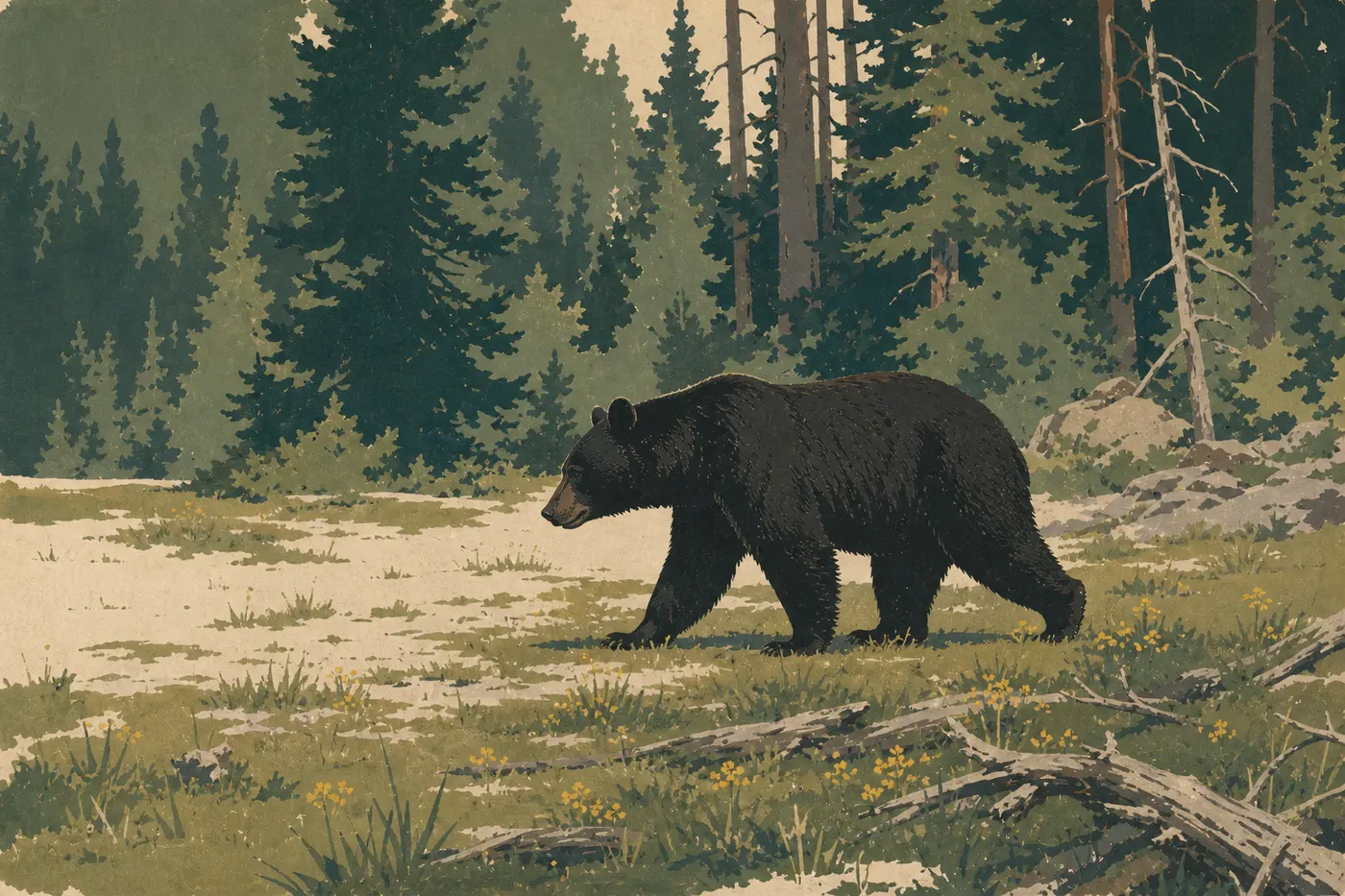
The black bear is the park's most photographed mammal after the lake. Its name can be misleading: at Crater Lake, its coat often shades toward brown or cinnamon. It's an opportunistic omnivore. In spring, it digs through the ground for worms and roots. In summer and fall, it focuses on wild blueberries, mountain ash berries, and raspberries to build the fat reserves it needs for hibernation.
Watch the forest edges along the meadows, especially around Mazama Village and the campgrounds. Bears are drawn to trash cans and poorly secured coolers in these areas. See the safety section below.
One question comes up often: no, there are no grizzlies at Crater Lake. The grizzly's range ends well north of Oregon. Here, the black bear is the only bear species present.
Mule Deer (Odocoileus hemionus)
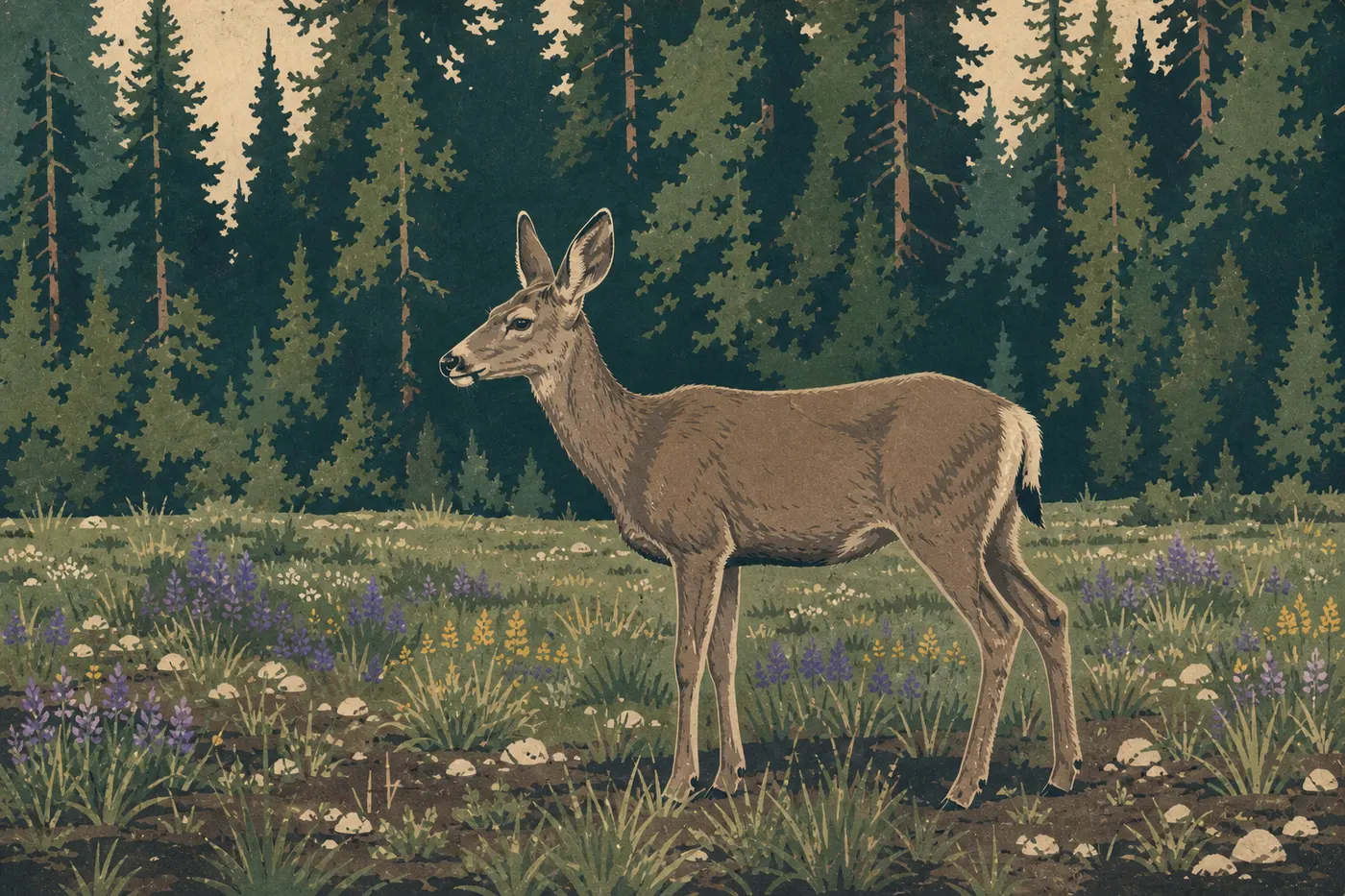
The mule deer's name comes from its large, fan-shaped ears, which resemble a mule's. It's the park's most common deer. If you pass through Rim Village at dawn or dusk, you're almost certain to see one. It grazes on high-elevation meadow grasses and young aspen shoots, showing remarkable indifference to visitors.
How can you tell it apart from the elk, which also live in the park? Mule deer are much smaller, weighing 130 to 220 pounds compared with 550 to 990 pounds for elk. Their coats are gray-brown in winter and reddish-brown in summer, and their antlers branch into symmetrical forks. Elk have a darker neck and a distinctive beige rump.
Elk (Cervus canadensis)
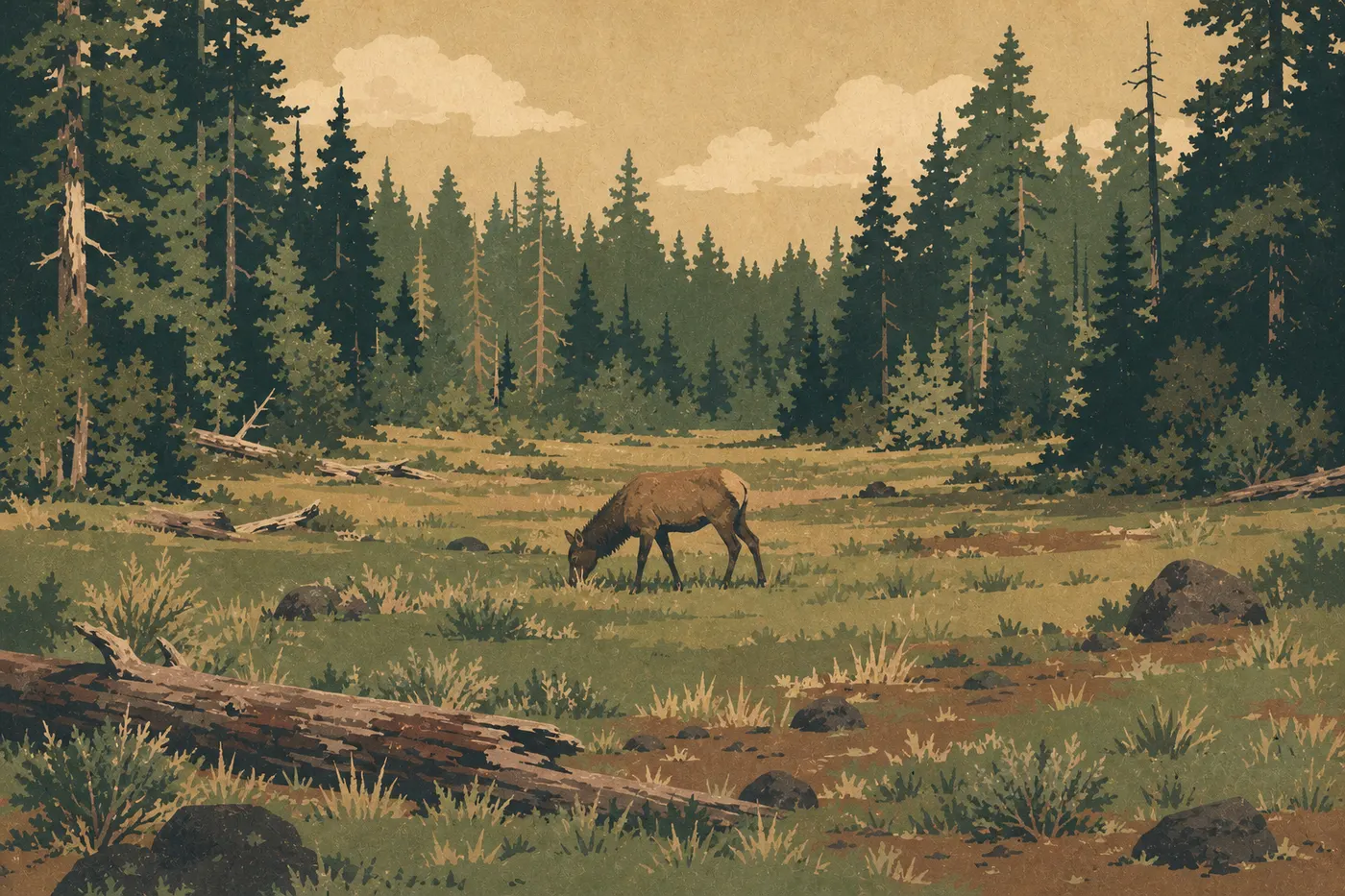
Elk are the park's largest deer. An adult male weighs between 550 and 990 pounds and carries an impressive rack from May through January. Herds frequent the high-elevation meadows and forest edges, especially during the cooler hours of the day.
September is rutting season. Males let out a whistling bugle that carries a long way through the quiet park. It's spectacular, and you can hear it clearly from a campsite. Basic precaution: in September, 100 feet isn't far enough from a bull in rut. If he stares at you or paws the ground, back away immediately.
Clark's Nutcracker (Nucifraga columbiana)
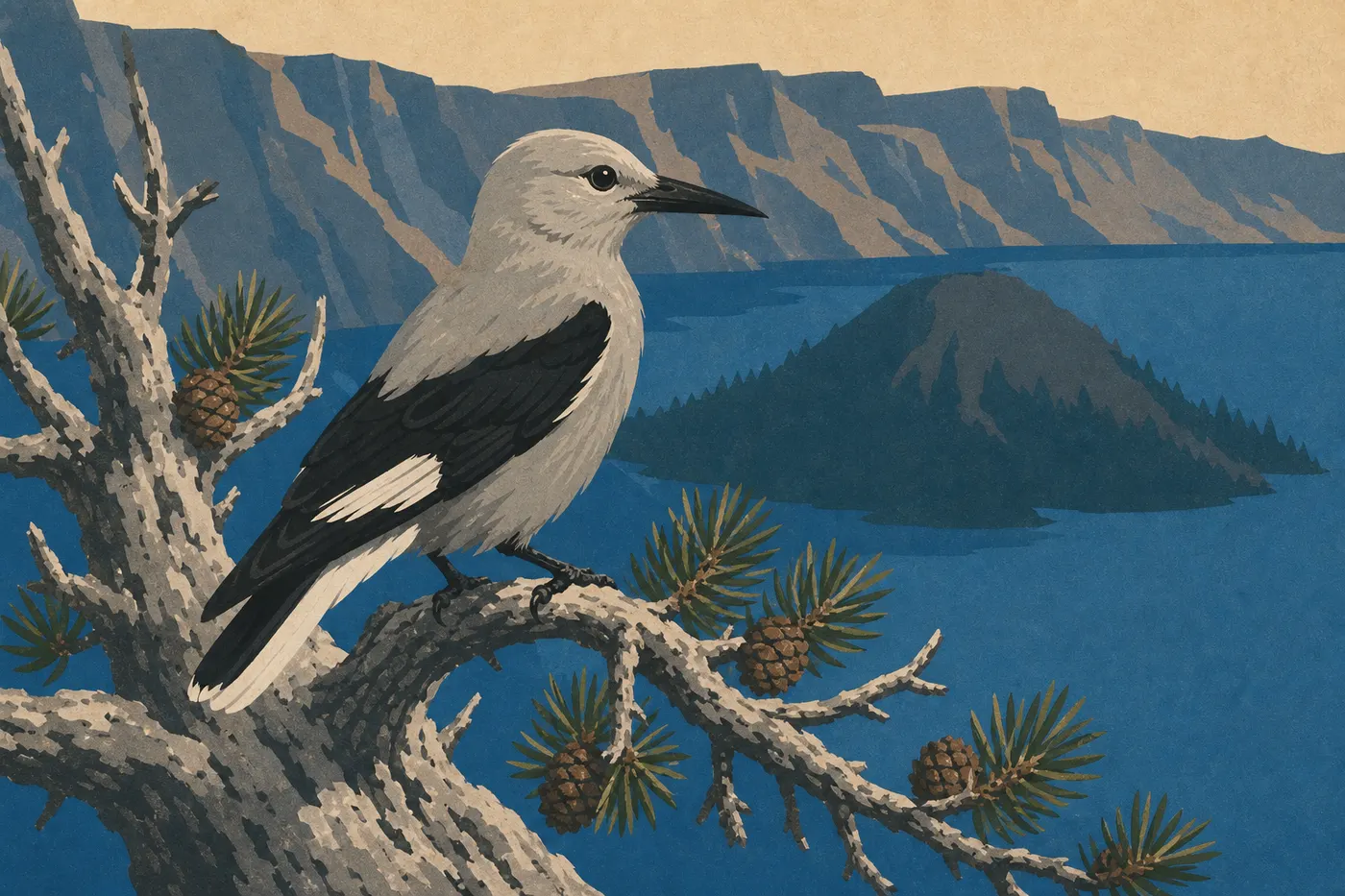
This is the bird you'll see most often, by far. Gray and white, chatty, and bold, the Clark's nutcracker lives at high elevations in the pine and fir forests surrounding the Rim. It hides up to 30,000 seeds each fall to make it through the winter, then finds most of them again thanks to its remarkable spatial memory. Without it, whitebark pines (Pinus albicaulis), a keystone species in high-mountain forests, wouldn't regenerate. The bird is their main seed disperser.
On a visit to Cloudcap Overlook, I counted five in less than a mile of trail. They demand picnic leftovers with confidence bordering on insolence. Don't feed them. A bird that's accustomed to people quickly becomes aggressive, and feeding it disrupts its natural behavior.
Rainbow Trout and Kokanee Salmon
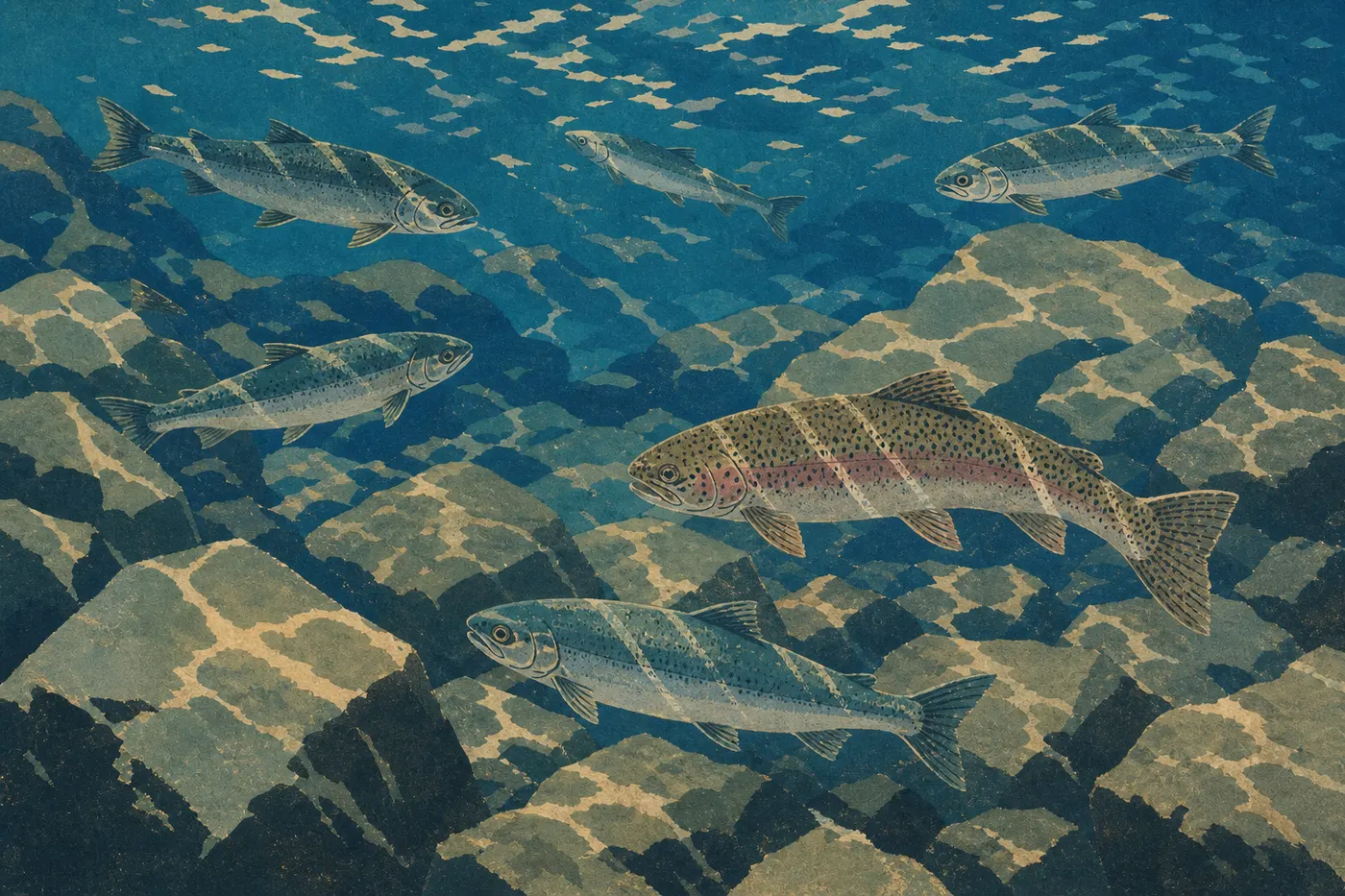
Here's a fact that always surprises people: Crater Lake originally contained no fish. Its volcanic isolation and depth of 1,942 feet, the deepest in the United States, kept it biologically sterile until the late 19th century. Fisheries officials then introduced several species. Two survived: rainbow trout (Oncorhynchus mykiss) and kokanee salmon (Oncorhynchus nerka), a nonmigratory form of sockeye salmon.
Fishing is allowed without an Oregon state license from accessible shorelines and from Wizard Island. No artificial bait may be brought into the lake.
Where to See Wildlife in the Park
Crater Lake wildlife is concentrated in a few specific areas.
Rim Village and the immediate surroundings: Mule deer and Clark's nutcrackers are practically guaranteed during the open season. Arrive at dawn to see the deer before the crowds arrive.
Mazama Village and the campground area: Black bears along the forest edge, especially in the evening. This is also where golden-mantled ground squirrels (Callospermophilus lateralis) and Cascade squirrels are most active during the day.
Annie Creek Canyon Trail: This 1.6-mile trail descends into a narrow canyon carved into volcanic rock. It's prime habitat for the American dipper (Cinclus mexicanus), a songbird that dives into streams to hunt aquatic larvae.
Cleetwood Cove Trail and the lakeshore: Ospreys, bald eagles, and diving ducks can be seen on the water from this trail, which is 2.0 miles round-trip with 700 feet of elevation gain. This is the only legal access to the lakeshore.
Meadows between Mazama Village and South Entrance: A prime area for watching elk at dawn and dusk, especially in September.
The Crater Lake hiking guide has practical details on each trail to help you plan these wildlife-viewing outings.
When to Watch Wildlife at Crater Lake
The golden rule is to pay attention to the time of day, not just the season. Wildlife is active at dawn, beginning 30 minutes before sunrise, and at dusk. In the middle of the day, most mammals shelter in shade or the forest.
July through September: Optimal conditions. The meadows are accessible, deer and elk are visible in clearings, and bears are active in the berry patches. Nesting birds, including peregrine falcons on the caldera cliffs and American kestrels in open meadows, are present.
September: Elk bugling peaks. Wildlife activity is at its highest before winter.
October: The first snowfields appear. Bears enter hyperphagia, an intensive feeding period before hibernation, so they're especially active. Few visitors are around, which guarantees a wild atmosphere.
Winter: Rim Drive closes on November 1. Deer and elk move down to elevations with less snow. Access is limited, and wildlife is harder to spot.
For month-by-month conditions and road-opening dates, see the Crater Lake guide to when to visit.
Predators and Large Animals at Crater Lake
Mountain lions (Puma concolor, also called cougars) live in the park. The NPS receives a few reports each year, but direct sightings are rare. These cats hunt at night, alone, and actively avoid contact with people. You may find signs of one in tracks in the snow or deer carcasses hauled high into trees. If you encounter one, stay standing, make yourself look bigger by raising your arms, speak firmly, and don't run.
The mountain lion is also the park's largest land predator. Elk, however, are the largest animals in both size and weight.
Coyotes (Canis latrans) are much easier to spot. You may hear them howl at dawn or see one along the roads in midmorning. They help regulate rodent and hare populations. Don't approach one. A coyote that's used to people can become unpredictable.
Great horned owls (Bubo virginianus) are the park's largest nocturnal aerial predators, with a wingspan close to 4.6 feet. They're active starting at sunset. One sign they're nearby is crows loudly harassing them at dawn, often revealing the owl's roost.
Watching Wildlife Safely
NPS rules are clear and nonnegotiable.
Required minimum distance: 100 feet from any large mammal, including bears, deer, elk, and coyotes. If an animal changes its behavior when you approach, such as lifting its head, changing direction, or speeding up, you're too close.
Never feed wildlife: A bear that associates people with food is eventually doomed to euthanasia. A Clark's nutcracker that learns to steal from bags can become aggressive toward children. The rule applies to every animal, including ground squirrels and squirrels.
Securing food at camp: Store all food, including scented cosmetics, toothpaste, and coolers, in an approved bear-resistant food locker or in the locked trunk of your vehicle. Never leave it in your tent or unattended on a picnic table.
If you encounter a bear: Don't run. Speak calmly and loudly, make yourself look bigger, and back away slowly. Bear spray is recommended for hikes through dense forest.
If you encounter an elk in rut in September: 100 feet is a minimum distance, not a comfortable one. A bull that paws the ground or pins its ears back is on alert. Move away immediately.
In Short: Species You Shouldn't Miss and Where to Find Them
Crater Lake is worth getting up early for. Black bears in the berry patches at Mazama Village, mule deer at Rim Village at dawn, elk in the meadows at dusk, and Clark's nutcrackers on any trail around the Rim are the easiest wildlife sightings, and they don't require special equipment. For trout, bring a fishing rod and head down to Cleetwood Cove. As for mountain lions, be patient and consider any sighting a bonus.
Our complete Crater Lake guide brings together all the resources you need to plan your trip.
Frequently Asked Questions
Are there animals that live in Crater Lake?
Yes. Rainbow trout and kokanee salmon, both introduced in the late 19th century, live in the lake. There were no fish here originally. The lake also contains unique colonies of mosses and microbial communities discovered in the 1980s. They grow at great depth in conditions with almost no light.
Are there grizzlies at Crater Lake?
No. Grizzly bears (Ursus arctos horribilis) don't live in Oregon. At Crater Lake, only black bears (Ursus americanus) are present. Their coats can be brown or cinnamon, which sometimes causes confusion, but their straight profile, lack of a shoulder hump, and pointed muzzle make them easy to distinguish.
What is the most common animal at Crater Lake?
Mule deer and Clark's nutcrackers are the two species you're most likely to see on a daily basis. Golden-mantled ground squirrels (Callospermophilus lateralis) are also a common sight around campgrounds.
What is the largest animal at Crater Lake?
Elk (Cervus canadensis). An adult male can weigh more than 990 pounds and carry antlers more than 3 feet high.
What predators live at Crater Lake?
The mountain lion is the main land predator. The great horned owl rules the skies at night. Coyotes hunt rodents and hares. No wolves are established in the park at this time.
What animals are out at night at Crater Lake?
Bats, including 13 species recorded in the park, great horned owls, raccoons, North American porcupines (Erethizon dorsatum), and, more rarely, mountain lions and coyotes. Crater Lake's night sky, protected from light pollution and sitting at 6,900 feet, also offers remarkable conditions for stargazing. That's one good reason to stay outside a little longer in the evening.
Why can't you swim in Crater Lake right now?
Swimming is allowed only at Cleetwood Cove, the lake's only legal shoreline access. For current conditions on Cleetwood Cove Trail, check the park transportation information.
What has been found at the bottom of Crater Lake?
Unexpected biological communities, including mats of mosses (Drepanocladus spp.) and cyanobacteria growing at depths of 490 to 1,300 feet, where light is extremely limited. Studied since the 1980s, these ecosystems make Crater Lake a recognized limnological research site.