
Crater Lake National Park: The Complete Visitor Guide
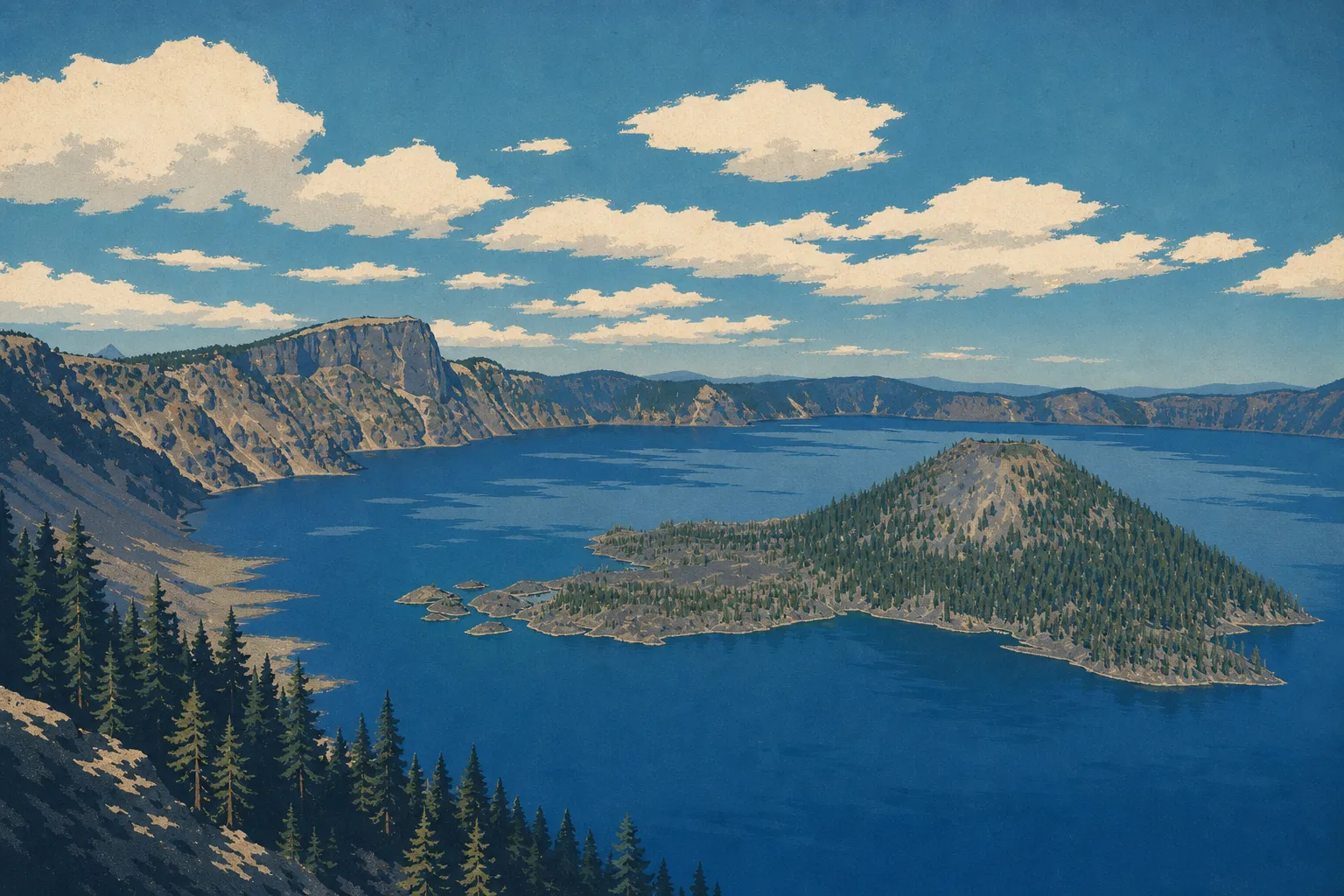
A volcanic crater filled with water so blue it looks edited, with no inflow or outlet and fed only by snow and rain. That's Crater Lake, Oregon's only national park. The lake fills the caldera of Mount Mazama, which collapsed after a major eruption, and reaches nearly 1,940 feet deep, making it the deepest lake in the United States. Most visitors come for one thing: driving the scenic road around the crater and stopping at every overlook. Plan on a full day for the highlights, or two if you want to hike and make your way down to the shore. The season is short. July through September is your best bet, once the snow has finally cleared the high-elevation roads.
Crater Lake at a Glance: Where the Park Is and How to Get There
The park lies in southern Oregon, across the Cascade Range and far from the major cities. The two most practical airports are Medford to the west and Klamath Falls to the south, both about a 1.5-hour drive from the crater.
Three entrances serve the park, but they don't all stay open on the same schedule:
- West Entrance, from Medford via Highway 62: open year-round, and the backup route when snow closes everything else.
- South Entrance, from Klamath Falls via Highway 97 and then Highway 62: also open year-round.
- North Entrance, via Highway 138 from Interstate 5: seasonal and closed as soon as the first heavy snow arrives.
In practice, a logical road trip links Crater Lake with the Oregon coast, Redwood National and State Parks in neighboring California, or Mount Shasta farther south. These larger routes are covered in our Road Trips and Regions sections. Details for getting there, including parking, distances, and the nearest gas stations, are in our Crater Lake access guide.
Entrance Fees, Passes, and Reservations
You pay the entrance fee per vehicle, and the rate changes by season. Summer is more expensive than winter.
| Pass type | Fee |
|---|---|
| Car (private vehicle), summer | $30 |
| Car (private vehicle), winter | $20 |
| Motorcycle, summer | $25 |
| Motorcycle, winter | $15 |
| Pedestrian or cyclist (per person) | $15 |
| Snowmobile | $15 |
Each entrance pass is valid for seven consecutive days. If you're stringing together several national parks in the American West, the annual America the Beautiful pass ($81, valid at all federal recreation sites) quickly pays for itself. Crater Lake's own annual pass costs $55 and only makes sense if you'll return several times in the same year. You don't need a timed entry reservation here, unlike at some heavily congested parks. Our National Park Fees & Passes page explains entrance fees and passes. If you collect stamps, our Passport & Stamps page covers stopping at the visitor center for a cancellation.
Reservations, Permits, and Rules to Follow
Entering the park: Unlike Zion or Rocky Mountain during peak season, Crater Lake doesn't currently require a timed entry reservation. You pay at the entrance station.
Boat tours: Tours around Wizard Island leave from Cleetwood Cove. Space is limited, and you can book through Recreation.gov, often several weeks ahead for July and August. During peak season, don't count on finding a spot the day you arrive.
Important temporary closure: The Cleetwood Cove Trail is closed for restoration work at least through 2029. During this period, swimming in the lake, which is allowed only here, and boat tours are suspended. Check the trail's status on the NPS website before planning your visit if this access point is central to your itinerary.
Hiking and backcountry camping: You need a free permit for every night spent outside developed campgrounds. Pick one up at the Steel Visitor Center or Rim Visitor Center. You must store food in a bear canister or campground locker to protect the area's black bears.
Essential rules:
- Pets are allowed in developed areas and on roads, but not on any trails.
- Drones are strictly prohibited throughout the park.
- Collecting plants, rocks, minerals, or fossils is prohibited.
- Fires are allowed only in designated campground fire rings. Follow seasonal restrictions tied to wildfire risk, which are often tightened in late summer.
Getting Around Crater Lake
The park's backbone is Rim Drive, the scenic road that circles the entire caldera for about 33 miles. You can drive it, stopping at roughly 30 overlooks and pullouts along the way. Allow two to three hours for the loop alone if you stop often, and longer if you're photographing in the morning or evening light.
One key point to build into your plans: Rim Drive isn't open year-round. The North Entrance Road, along with the east and west sections of Rim Drive, closes for the season on November 1, or earlier after a major snowfall. Plowing starts in April, but the reopening date varies from year to year depending on snow conditions. Outside summer, part of the road is off-limits to cars and becomes a route for snowshoes or skis.
There isn't a mandatory shuttle system like there is at Zion. Here, you'll get around in your own vehicle. Our guide to getting around the park explains internal distances and the best order for the stops.
How Long Do You Need to Visit Crater Lake?
A full day covers the essentials: the Rim Drive loop, the main overlooks, and a stop at Rim Village. It's the most common plan for travelers crossing Oregon.
Two days is more comfortable if you want to get the most out of the park. That gives you time to add a high-elevation hike, walk down to the lakeshore, and possibly take a boat tour. Beyond that, the park remains compact and doesn't warrant a long stay unless you're using it as a base for exploring the region. Our Itineraries & Length of Stay page breaks down these options into a half-day, one day, or two days.
Plan your visit
What to See and Do at Crater Lake
The visit centers on the crater, one area at a time. Here's the big picture. Our activities guide goes into detail on what to do and where to find the best views.
Road trip journal · 4 areas
Rim Village and the West Side
This is the natural starting point for a visit, on the crater's southwest side. You'll find the Rim Village Visitor Center, a shop, food options, and, most importantly, your first sweeping view of the lake from the paved path along the cliff edge. The Crater Lake Lodge, a historic wood hotel, overlooks the crater from its terrace. Even if you're not staying there, it's worth stopping for the view.
West Rim Drive
The western branch of the scenic road connects some of the park's most photographed overlooks. The stop you shouldn't miss is the trail up to The Watchman, a former fire lookout perched above the lake, with a sweeping view of Wizard Island, the small volcanic cone rising from the water like an island deliberately set there. The Discovery Point overlook marks where settlers "discovered" the lake in 1853.
East Rim Drive and The Pinnacles
The eastern branch of the loop leads to wilder views, including Cloudcap, one of the park's highest points accessible by road. A turnoff leads down to The Pinnacles, spires of compacted volcanic ash standing like organ pipes in a valley away from the crater. The detour is worth it, especially since you'll see far fewer people there.
Cleetwood Cove and Lake Access
This is the only place in the park where you can legally reach the lakeshore. The Cleetwood Cove Trail drops to the water on a steep slope you'll have to climb back up. It's easy on the way down and a workout on the way back. At the bottom, you can swim in the cold water and, when tours are running, take a boat out on the lake. Some departures stop at Wizard Island. These excursions require reservations and operate only in summer.
Explore the park
Crater Lake's Best Hikes
Hiking is the perfect complement to driving because the best views are earned on foot. Three hikes come up again and again: the short, rewarding climb to The Watchman for its view of Wizard Island; the longer ascent of Mount Scott, the park's highest summit, for a 360-degree panorama of the entire crater; and the steep descent on the Cleetwood Cove Trail to reach the water. You'll also find gentle walks around Rim Village that work well for families.
Distances, elevation gains, times, and difficulty levels are brought together on our Hikes page. If you're traveling with kids, our Family-Friendly page sorts out the trails and stops that work for little legs.
The detailed guide Crater Lake Hiking: The Best Trails for Every Skill Level The best Crater Lake hikes by area, with trail details, difficulty ratings,… Read the guide →Wildlife and Plants to Look For
The park is a high-elevation conifer forest where golden-mantled ground squirrels, chipmunks, and marmots show up around the overlooks, mule deer graze along the edges, and a black bear or fox occasionally appears. Raptors own the sky, while hummingbirds flock to the alpine flowers in summer. Keep your distance, never feed wildlife (the parking-lot marmots are skilled beggars), and put all food away. Our Wildlife page has more on the species and the best times to see them.
The detailed guide Crater Lake Wildlife: Bears, Elk & Where to See Them Black bears, elk, mule deer, pikas and Clark's nutcrackers Read the guide →When to Visit Crater Lake
The ideal window is narrow. July, August, and September bring the warmest, driest weather, and this is the only time Rim Drive is fully open. In May, June, and October, sunny days alternate with rain and snow, and some roads remain closed. Winter is long and extremely snowy. Pacific storms dump an average of 44 feet of snow each year at park headquarters. One detail that discourages many winter visitors: when it's snowing or raining, clouds hide the lake, and it's completely invisible about 50% of the time in winter.
This is only a summary. Our When to Visit page covers each month's crowds and road conditions, while our Weather page covers temperatures, precipitation, and snowpack.
The detailed guide When to Visit Crater Lake: Best Times, Weather, and Seasons Visit Crater Lake in September for the best balance of summer weather, an open… Read the guide →Where to Stay at Crater Lake
Lodging in the park is limited and books up far in advance. There are two historic options: Crater Lake Lodge, right on the crater rim, and the Mazama Cabins, lower down near the South Entrance. For camping, Mazama Campground is the park's main developed campground, supplemented by a smaller, more rustic camp. All of these options operate only in summer. Outside the season, or when everything is booked, look to motels in Klamath Falls, Medford, or Prospect.
Stay in the park
Around Crater Lake: Things to Do Nearby
The park is rarely a stand-alone destination. Head south to Mount Shasta and California's volcanoes to continue the geological scenery. To the west, you can reach Oregon's wild coast and California's redwood country. River lovers stop along the Rogue River and in its canyons. Our Road Trips and Regions sections can help you fit Crater Lake into a longer itinerary.
Our Take: Is Crater Lake Worth the Trip?
Yes, as long as you come in the right season and under clear skies. When the sky is blue, the lake's color is startling, and Rim Drive easily delivers on a full day. When clouds settle in, all you're left with is a gray crater and a long drive for nothing. That's why it's so important to aim for July through September and keep an eye on the forecast. This isn't a park you visit for the length of your stay, but for the intensity of a one-of-a-kind landscape. As part of an Oregon road trip, it's well worth the detour. Before you go, remember the altitude, mountain roads, and park guidance outlined above.
Frequently Asked Questions
How long do you need to visit Crater Lake?
You need a full day for the Crater Lake essentials: the Rim Drive loop, the main overlooks, and Rim Village. Plan on two days if you want to add a hike, walk down to the shore, and take a boat tour. Our Itineraries & Length of Stay page has the detailed breakdown.
How much is the entrance fee at Crater Lake?
The entrance fee at Crater Lake is $30 per car in summer and $20 in winter, and it's valid for seven days. Motorcycles cost $25 ($15 in winter), while pedestrians and cyclists pay $15 per person. See our Fees & Passes page for details.
Can you visit Crater Lake by car?
Yes. You can visit Crater Lake by car via Rim Drive, the scenic road that circles the crater for about 33 miles. There's no mandatory shuttle. Keep in mind that the east and west sections close around November 1 because of snow. See our Getting Around page.
What is the best time to visit Crater Lake?
The best time to visit Crater Lake is July through September, when the weather is warm and dry and Rim Drive is fully open. In winter, clouds hide the lake about half the time. Our When to Visit page has the full calendar.
Is Crater Lake worth visiting?
Yes, Crater Lake is worth visiting if you come in clear weather between July and September. The lake's color and the scenic drive justify a full-day stop. Under cloudy skies, the lake stays hidden, which makes it especially important to check the weather.
Where is the best place to see Crater Lake?
The best first view of Crater Lake is at Rim Village on the southwest side, with its cliff-edge walkway and the Crater Lake Lodge terrace. For a bird's-eye view of Wizard Island, hike up to The Watchman. Our Things to Do page covers all the overlooks.
The American Parks shop
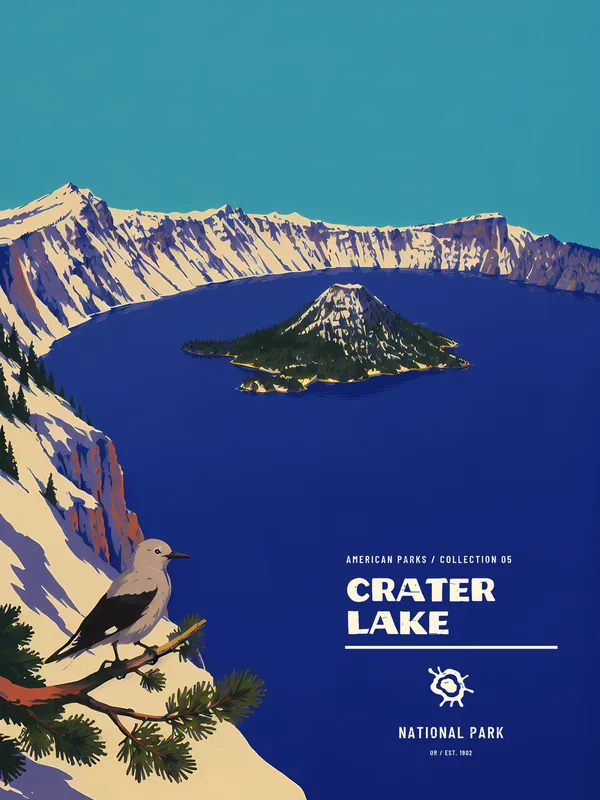
Bring Crater Lake home
Our park-inspired creations, made to order and shipped to your door.
Latest park news
- Crater Lake: Icy Roads, Drive with CautionRecent snow and icy patches are making Crater Lake's roads slick, especially morning and evening. Here's how to drive them with confidence.
- Crater Lake: Single-Lane Traffic on East Rim Drive on Certain DaysRoad work has East Rim Drive down to one lane near Phantom Ship Overlook, with delays on two specific days from 7am to 5pm.
- Crater Lake: Cleetwood Cove Trail closed for construction, no more lake access from the north shoreThe only trail down to the waters of Crater Lake is closed for rehabilitation. Here's what that means for your visit.