
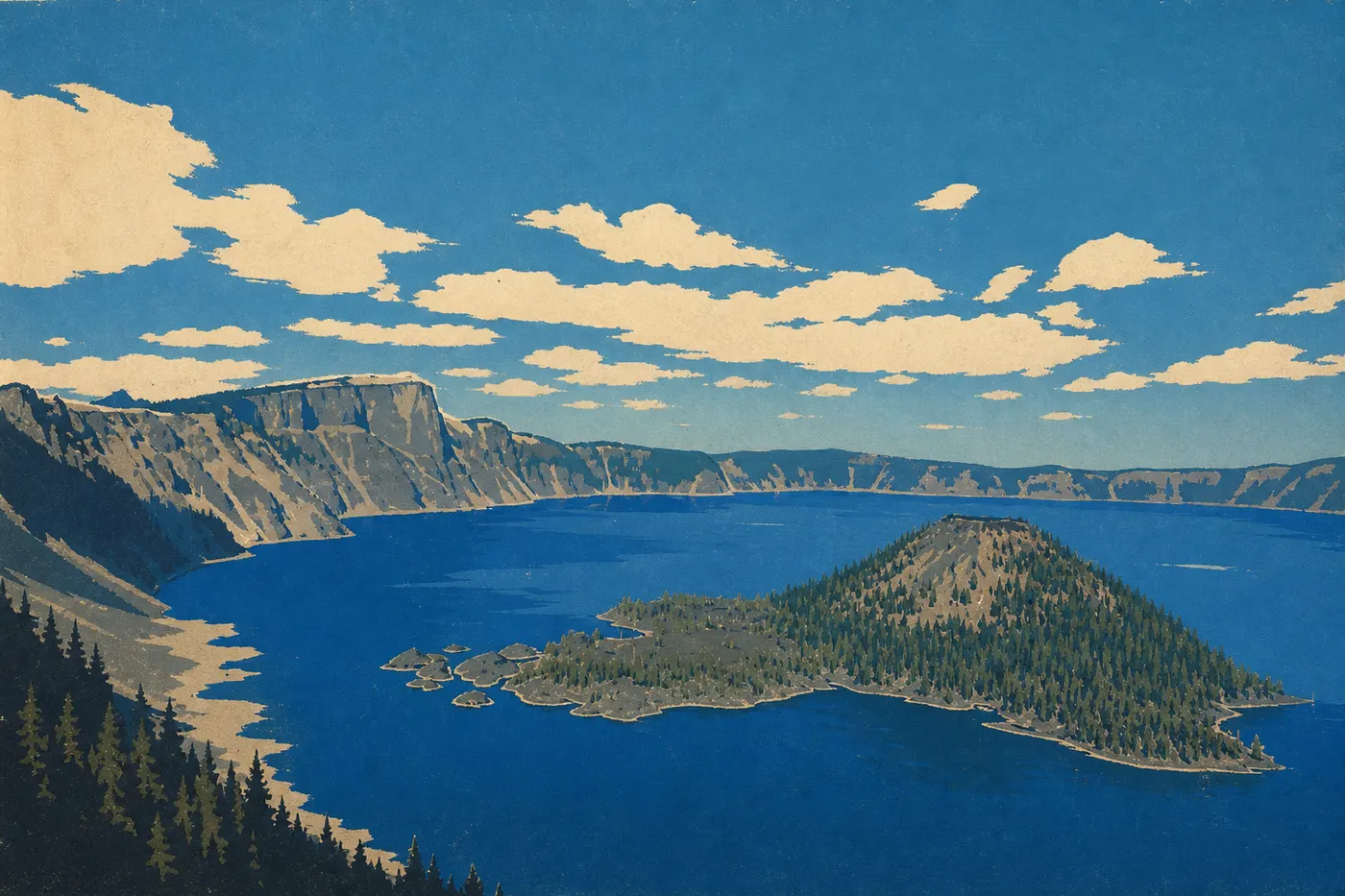
What to Do at Crater Lake: Must-See Sights and Activities
At a glance: Rim Drive and its 30 overlooks across 53 miles, a boat trip to Wizard Island (the volcanic cone rising from the lake), the Crater Lake Lodge terrace at sunset, and at least one hike to The Watchman for a full view of the crater. If the sky is clear in the evening, stay out: Crater Lake is one of the few national parks certified as a dark-sky site.
Crater Lake at a Glance: Areas, Access, and Getting Around
Crater Lake formed when Mount Mazama collapsed, after a stratovolcano erupted inward about 7,700 years ago. The resulting caldera gradually collected rainwater and snowmelt, creating the deepest lake in the United States, reaching 1,949 feet in places. Its intense cobalt blue comes from the exceptional purity of the water, with no outside input of sediment or rivers.
The park is organized around a few areas you should know before you go.
Rim Village is the natural starting point for a visit: lodge, panoramic terrace, visitor center, and seasonal shuttles. Almost everyone passes through here first.
Rim Drive circles the lake for about 53 miles and is divided into two sections, East Rim Drive to the east and north, and West Rim Drive to the west. You can combine them or drive them separately, depending on how much time you have. The speed limit is 45 mph on dry roads, but in practice you'll drive well below that because of the number of overlooks.
Mazama Village lies 6 miles south of the lake and has the main campground, gas station, and general store. It's the park's logistical base.
The North Entrance via Highway 138 closes with the first snow in November and reopens in early summer, depending on snow levels. The West Entrance via Highway 62 from Medford stays open year-round. To plan your drive based on where you're coming from, see how to get to Crater Lake.
How Long Do You Need to Visit Crater Lake?
Plan on two days to drive around the lake and fit in a hike, or three if you want to add Wizard Island and Mount Scott. For a day-by-day plan, see the Crater Lake itinerary.
Must-See Sights by Area
Rim Village: The Heart of the Visit
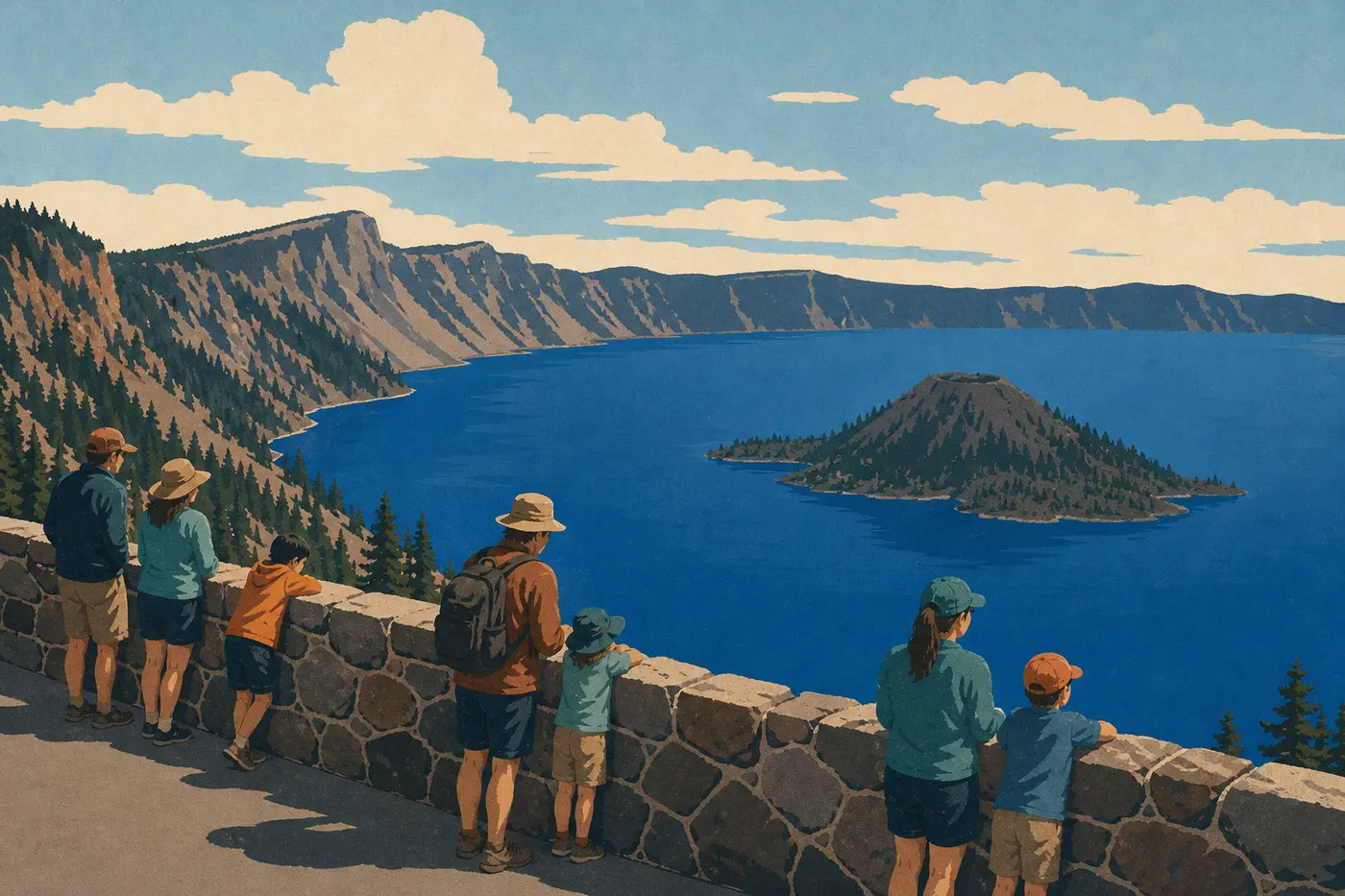
Rim Village is where almost every visitor first lays eyes on the lake. The access road passes through conifer forest without revealing the lake until you reach the parking lot, so the sudden reveal can be striking.
The Sinnott Memorial Overlook is the overlook terrace just below the visitor center. It faces Wizard Island and gives you a clear sense of the crater's depth. During the season, rangers regularly give talks about the park's geology, usually in the morning. Check the notices at the visitor center when you arrive.
The Crater Lake Lodge is worth a stop even if you're not staying there. The large common room and lakeside terrace look out over the water at an elevation of 7,054 feet. When we visited in August, we had coffee on that terrace at 7 a.m. The lake was smooth and windless, an almost unreal shade of blue. Those are the moments you don't forget easily. The restaurant takes reservations, so book ahead during the busy season.
West Rim Drive: Discovery Point and The Watchman
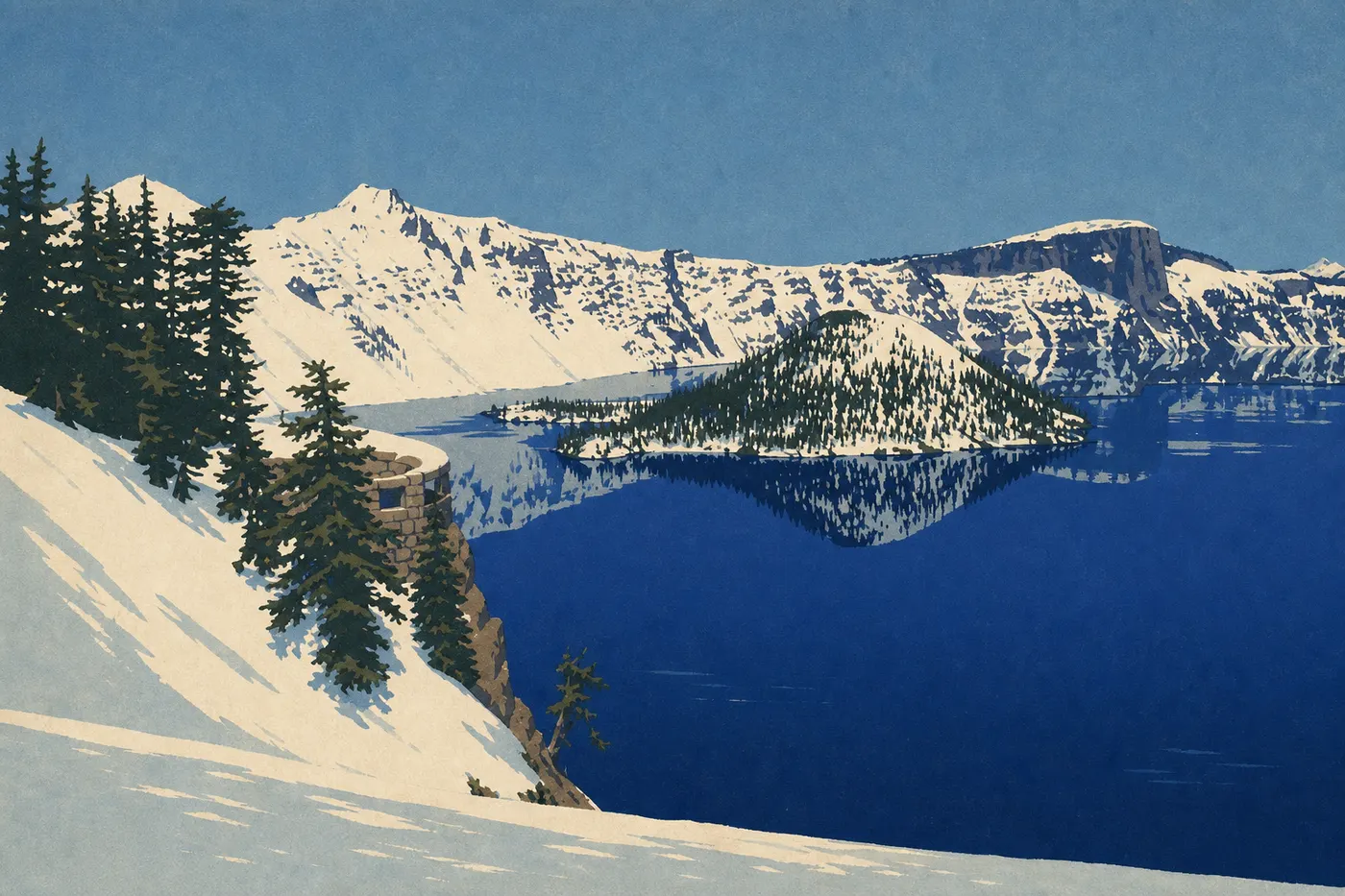
West Rim Drive follows the western edge from Rim Village to North Junction for about 19 miles. It's the busiest section, and for good reason.
Discovery Point is where Euro-American explorers first saw the lake in 1853. Today, a short trail from the parking lot leads to this overlook, with a direct view of Wizard Island to the west.
The Watchman is our favorite stop anywhere along Rim Drive. The trail up to it, about 1.6 miles round-trip with 300 feet of elevation gain, reaches a historic fire lookout at 8,143 feet. The view takes in the entire lake, with Wizard Island in the foreground and, on clear days, Mount Shasta more than 93 miles south in California. The trailhead is at the Watchman Overlook parking lot on West Rim Drive.
East Rim Drive: Elevation and Shifting Colors
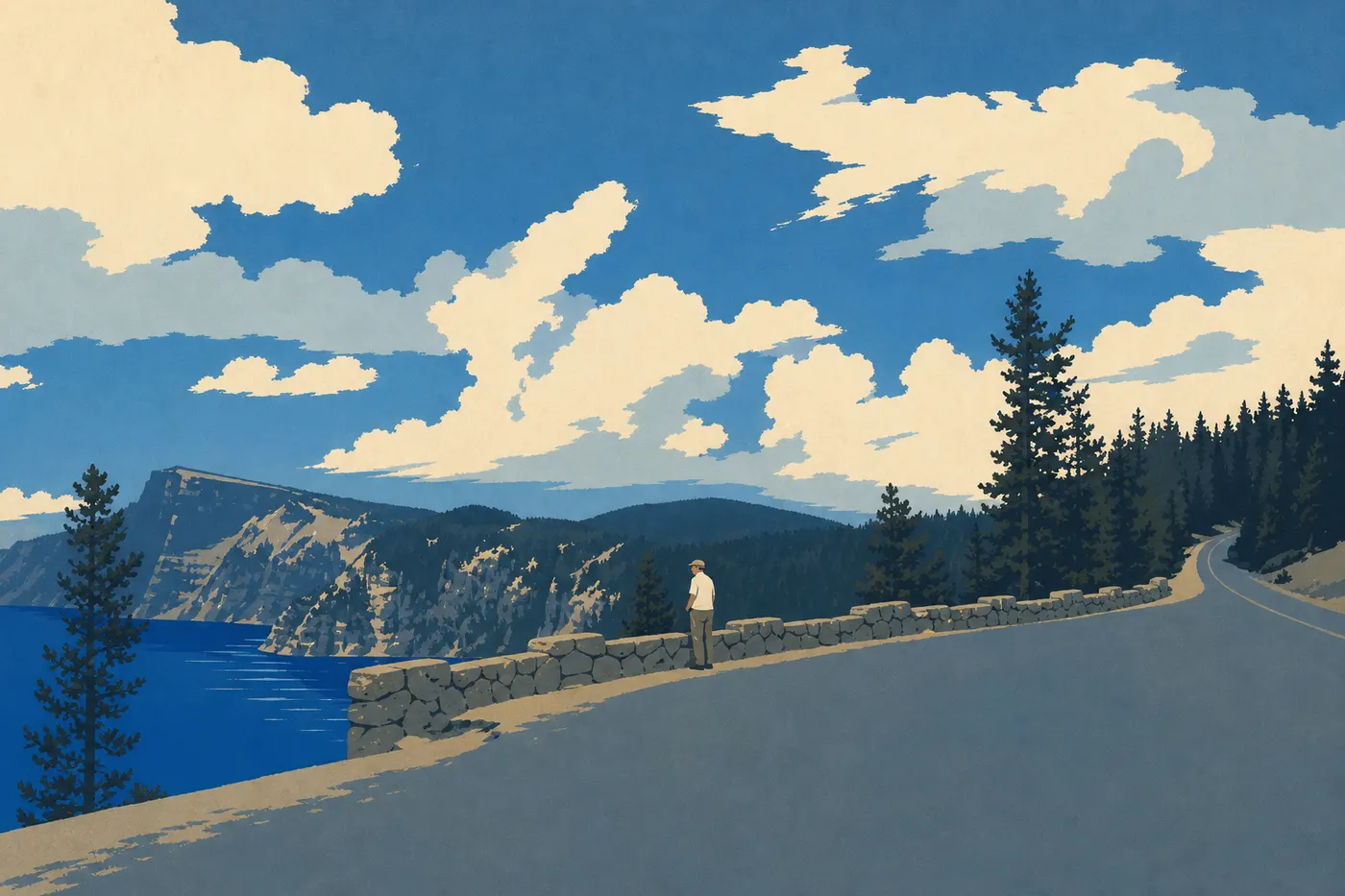
East Rim Drive is often less crowded than the west side, especially early in the morning. It's the logical place to start your day before groups spill into Rim Village.
Cloudcap Overlook is the highest point in the park accessible by car, at 8,619 feet. The short side road leading there, 0.9 miles from Rim Drive, doesn't open until mid-summer. From this elevation, the lake's color looks different. You can make out the shallower areas near the shore, which are lighter blue than the deep blue-black water in the center.
Pinnacles Overlook is a slight detour at the park's southeastern end, via Pinnacles Road, 6.2 miles from Rim Drive. The overlook looks down on a canyon carved into volcanic ash deposits by ancient fossil fumaroles. The spire-like formations reach up to 49 feet high. Few visitors make the detour, so you'll find welcome quiet and can take a few good photos without crowds.
Kerr Notch and Sentinel Rock are two additional stops along the way, offering different angles on the caldera walls.
Cleetwood Cove and Wizard Island
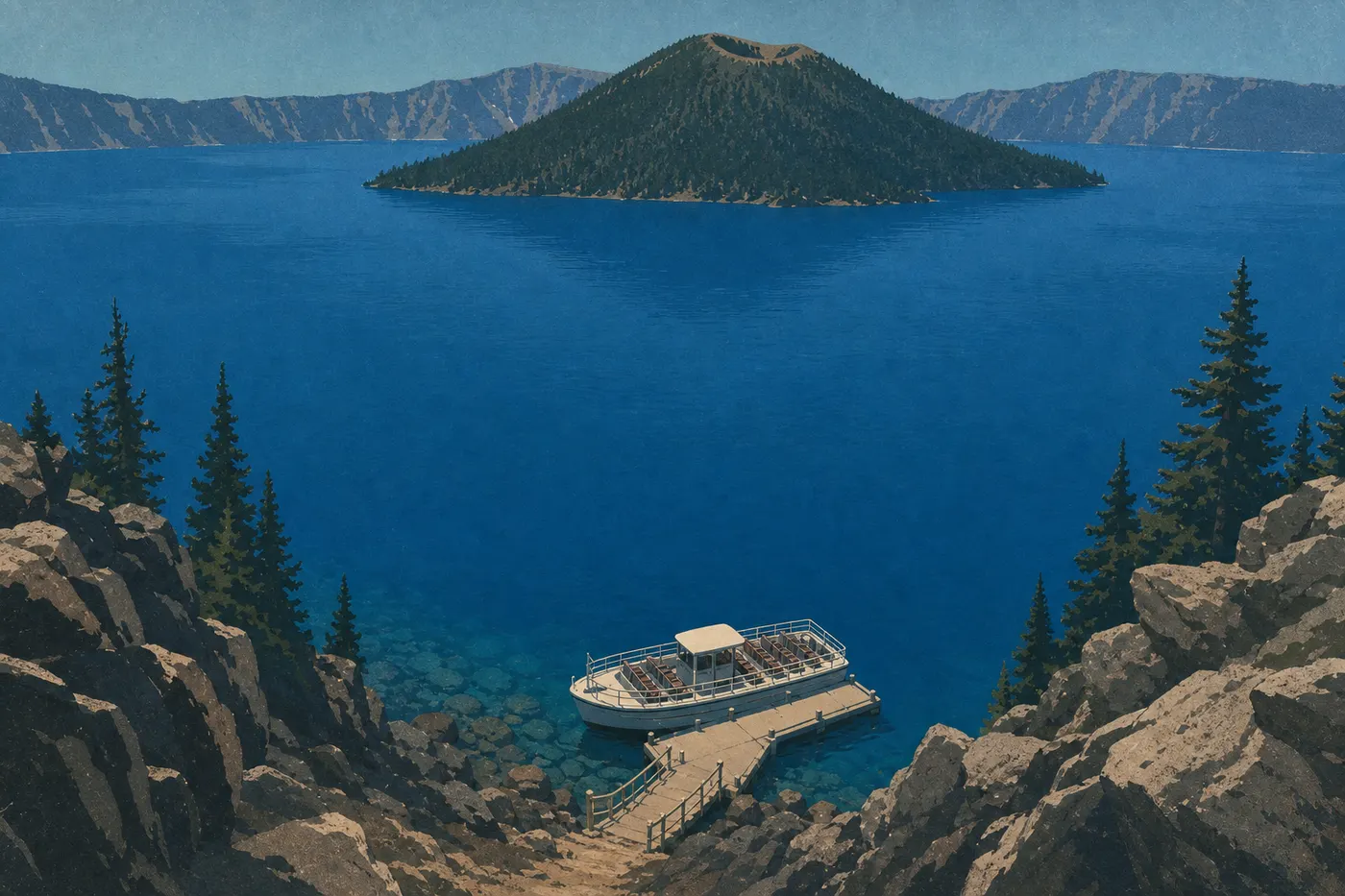
Cleetwood Cove is the park's only access to the lakeshore. The trail, 2.2 miles round-trip with 650 feet of elevation gain, descends to the dock where boats leave for Wizard Island. The climb back is strenuous, especially at elevation and in hot weather. Start early, bring more water than you think you'll need, and avoid the hottest hours.
Wizard Island is a volcanic cone rising about 755 feet above the lake's surface. The boat trip from Cleetwood Cove includes about two hours of free time on the island. The Wizard Summit Trail, about 2.2 miles round-trip from the landing, reaches the cone's summit, where you'll find a small crater and a sweeping view of the entire lake from an angle you can't get from the rim. Boat capacity is limited and reservations are available in advance. This is the park's most requested reservation, so plan ahead.
Important note: Swimming in the lake is suspended through 2029. Cleetwood Cove Trail, the only legal access to the shore, is undergoing a major reconstruction project. If swimming is a priority, check the project's progress before planning your visit.
The North Side of the Park: Pumice Desert and Steel Information Center

The North Entrance via Highway 138 serves a less-visited area, partly because it closes in winter. The drive in from the north is still worth it.
The Pumice Desert is a plain of pumice stone ejected during the eruption of Mount Mazama. Thousands of years later, vegetation remains sparse. The contrast between this arid expanse and the park's dense forests is striking, almost lunar.
The Steel Information Center, near the South Entrance, is useful for picking up maps and checking road-opening conditions at the beginning and end of the season. It also has a short geology exhibit that's worth 20 minutes.
The Best Hikes at Crater Lake
Crater Lake offers a range of trails, from a quick overlook walk to several-hour treks. Apart from The Watchman, described above, these are the most significant hikes.
Garfield Peak Trail runs 5.6 miles round-trip from Rim Village, with 920 feet of elevation gain, along the caldera's southern rim. The 360-degree view of the lake and surrounding forests gets better all the way to the summit.
Mount Scott Trail climbs 4.7 miles round-trip, with 1,280 feet of elevation gain, to the park's highest point at 8,927 feet. The ascent is steady and nontechnical, but you'll feel the elevation. Keep your pace slow and stay well hydrated. From the summit, you can see the entire caldera and, on clear days, the Cascade Range to the north.
Cleetwood Cove Trail is 2.2 miles round-trip with 650 feet of elevation gain. It's less a hike than access to the boat dock, but it's essential if you're taking the trip to Wizard Island.
For complete trail descriptions, difficulty levels, and seasonal gear advice, see the Crater Lake hikes.
Other Activities for Every Kind of Visitor
Wildlife Watching

Golden-mantled ground squirrels are everywhere around Rim Village and the picnic areas. Don't feed them. It's prohibited in America's national parks and causes aggressive behavior toward visitors.
Black-tailed deer frequent the edges of the park at dawn and dusk, especially around Mazama Village. Black bears live in the park. Store all food in the bear boxes at campgrounds and in your vehicle's trunk, with nothing visible on the back seat. The fine for violating the rule is steep, and rangers take it seriously.
Birds of prey, including golden eagles and peregrine falcons, regularly soar over the caldera rim. Binoculars are useful from the overlooks. For more on the park's wildlife and the best viewing areas, see Crater Lake wildlife.
Photography and Stargazing
Crater Lake has received the National Park Service's Dark Sky Park designation. Far from any urban center and more than 6,560 feet above sea level, clear summer nights offer exceptional viewing conditions. The Milky Way reflects in the lake on moonless nights. For astrophotography, Cloudcap Overlook and The Watchman are good spots away from Rim Village's light pollution. Bring a sturdy tripod and extra layers. August nights regularly drop to around 41°F, even in midsummer.
For landscape photography, the light is best early in the morning, when it grazes the eastern walls, and late in the afternoon, when it warms The Watchman and Wizard Island. Midday light flattens the textures and shifts the lake's blue toward gray.
Family Activities
The Junior Ranger Program is available at the Rim Visitor Center and Steel Information Center. Kids complete an activity booklet during their visit and receive an official badge at the end. It's a good way to keep them engaged at every stop along Rim Drive.
Crater Lake with kids covers age-appropriate activities and park-specific considerations, including elevation, sun exposure, and the distances between stops.
Biking on Rim Drive

Rim Drive is open to cyclists, but peak-season vehicle traffic makes it less pleasant than you might expect. The best time to ride here is in spring, when the road has just been cleared of snow but isn't open to cars yet. This window lasts a few weeks in May and June, depending on snow levels. Check with the park for separate bike and vehicle opening dates.
Snowshoeing and Cross-Country Skiing in Winter

Winter transforms the park completely. Snowfall averages 44 feet a year near park headquarters, one of the region's records. The West Entrance via Highway 62 stays open year-round, but Rim Drive closes from November through May. Snowshoes are available to rent in Rim Village, with availability varying by season. Cross-country skiing takes place on closed roads and through the forest, with no groomed trails or lifts.
What to Do Around Crater Lake
Klamath Falls, 56 miles south, is the nearest city with a range of lodging, restaurants, and an Amtrak station. In spring and fall, the Klamath Basin hosts one of the largest concentrations of migrating waterfowl in the American West, with several national wildlife refuges accessible by car.
Medford and the Rogue Valley, 62 miles west, offer a striking contrast to the park's volcanic forest: vineyards, open-air markets, and direct flights from several U.S. cities. This is the most comfortable lodging base for visitors who don't want to stay in the park.
Diamond Lake, 28 miles north, is a mountain lake surrounded by forest, with classic outdoor activities such as kayaking, fly-fishing, and biking. Combined with Crater Lake, it makes a pleasant stop along Highway 138 between Interstate 5 and Bend.
Lava Beds National Monument, 106 miles southeast on the California side, explores another aspect of Cascade volcanism: lava tubes you can explore with a headlamp. Adding it to Crater Lake creates a cohesive geological road trip over two or three extra days.
To build a regional itinerary around your visit, see our Region and Road Trip pages.
The Bottom Line: What to See First at Crater Lake
Crater Lake is well worth the trip. The lake's color and depth, along with the caldera's silence, create an atmosphere unlike anything else, and one that's hard to compare with other parks in the West.
Start by driving all or part of Rim Drive, stopping at The Watchman. If you can reserve ahead, take the boat to Wizard Island. If you only make one stop, choose The Watchman. The view from the historic lookout is the most complete in the park, and you can reach it in a 45-minute walk.
For a first visit, we suggest two nights on site: one for sunset and one for the stars. That pace really makes a difference.
Our complete Crater Lake guide brings together all the practical information you need to plan your stay from start to finish.
Frequently Asked Questions
What are the must-see places at Crater Lake?
Crater Lake's highlights include Rim Drive, both sections, with stops at The Watchman and Cloudcap Overlook, the Crater Lake Lodge terrace at Rim Village, and a boat trip to Wizard Island. If you only make one stop, choose The Watchman. The 360-degree view from the historic lookout is the most complete in the park.
What should you absolutely not miss at Crater Lake?
Don't miss Wizard Island if you can reserve a boat seat. Time slots fill quickly as soon as reservations open. Don't miss a sunrise or sunset from the rim, either. The light at those times dramatically changes the color of the water. If you're staying overnight, step outside in the middle of the night for the stars.
How long do you need to visit Crater Lake?
Two days let you drive around the lake and take a hike without rushing. Three days are ideal if you want to add Wizard Island and Mount Scott. One day is possible, but you'll have to choose between East Rim Drive and West Rim Drive. Our Itinerary & Length page offers plans for every length of stay.
Why can't you swim in Crater Lake before 2029?
Swimming in Crater Lake is suspended through 2029 because Cleetwood Cove Trail, the only legal access to the lakeshore, is being reconstructed. The trail has deteriorated too much to keep visitors safe and is undergoing a major renovation. Once the work is complete, swimming will be possible again from this access point.