
Getting Around Redwood: Access, Entrances, Shuttles, and Parking
Unlike Zion or Yosemite in peak season, Redwood doesn't require you to take a shuttle. Your car remains the main way to get around this complex, which stretches along about 62 miles of Northern California coastline. You can move freely between areas and stop wherever you like. The short answer is that you'll visit Redwood by car, with no access restrictions.
How to Get to Redwood
To reach Redwood from San Francisco, Portland, or by air via Arcata-Eureka, you'll find all the details in the Redwood Access Guide.
Park Entrances and Which One to Choose
Redwood has no toll booth or entrance gate to pass through. You enter from US-101 or the secondary roads, with no formalities. The area managed by the national park is free. Some areas belonging to the associated California state parks, including Prairie Creek Redwoods, Del Norte Coast Redwoods, and Jedediah Smith Redwoods, may charge parking fees during peak season. Our Fees & Passes page explains entrance fees and passes.
The four visitor centers line the north-south route and serve as natural entry points:
- Thomas H. Kuchel Visitor Center (Orick): the southern entrance. It's the logical first stop if you're driving up from San Francisco.
- Prairie Creek Visitor Center: in the heart of the forest, in the area of the giant ferns and Fern Canyon.
- Hiouchi Visitor Center: midway along the route, and the gateway to Jedediah Smith Redwoods and its coastal redwoods.
- Crescent City Information Center: the northernmost center, downtown and the last stop before Oregon.
Where should you start? If you're traveling through the park from south to north, begin in Orick. In the opposite direction, start in Crescent City.
Getting Around the Park
By Car
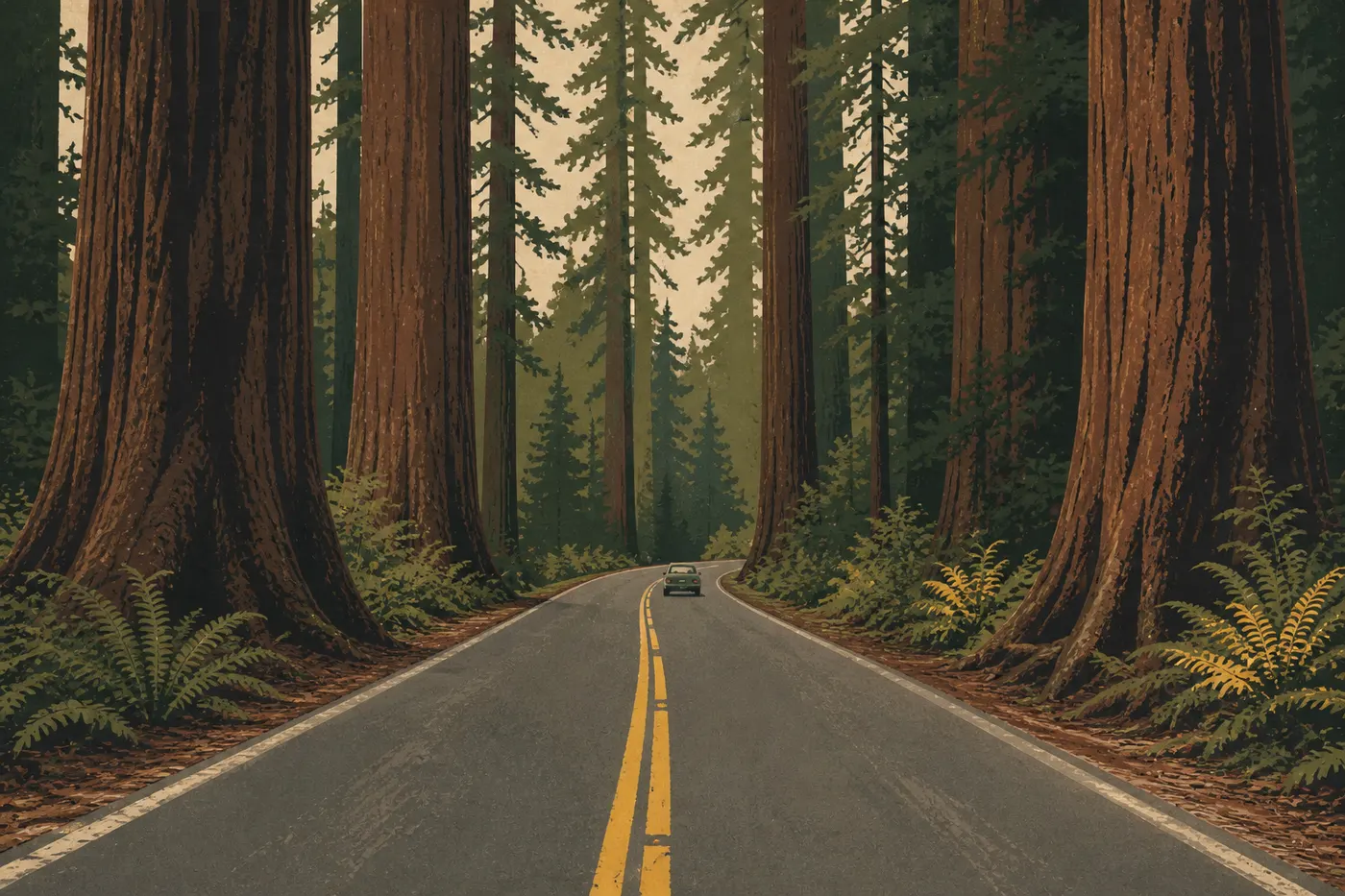
Your car is the essential way to get around Redwood. US-101 connects the different areas, but the real discoveries are along the side roads:
- Newton B. Drury Scenic Parkway: a 10-mile forest road running parallel to US-101 through Prairie Creek Redwoods. Redwoods frame the road just a few yards away on either side. It's free and open to cars and motorcycles. Vehicles over 24 feet long aren't recommended along the entire route.
- Howland Hill Road: an unpaved road through Jedediah Smith Redwoods. It's impressive but inaccessible to RVs and large trailers. A compact car or SUV can handle it without a problem.
The general speed limit on US-101 in the park is about 45 mph. Slow down even more on the secondary roads. Roosevelt elk may cross without warning, and the park's giants, the trees, deserve a look up.
By Shuttle
A seasonal shuttle serves the Prairie Creek area in summer, mainly to reach trailheads without hunting for a parking spot in crowded lots. Schedules and availability vary from year to year and depend on available funding, so check directly with the Thomas H. Kuchel Visitor Center when you arrive. Outside summer, you'll need your own vehicle.
By Bike
Biking is possible, but demanding. Newton B. Drury Scenic Parkway works well for a ride, with little traffic, redwoods within arm's reach, and moderate elevation gain. Avoid US-101 completely. Truck traffic and inadequate shoulders make it unsafe. Paved bike paths inside the park remain rare.
Where to Park: Parking Lots and Parking Rules
Every visitor center has a parking lot. The busiest sites have their own lots:
- Lady Bird Johnson Grove: free parking, connected to the trail by a short walk.
- Fern Canyon (Prairie Creek Redwoods State Park): one of the most popular sites. Parking fees apply during peak season. Arrive before 9 a.m. Summer parking spaces fill before 10 a.m.
- Gold Bluffs Beach: part of the access route is unpaved, and parking fees may apply depending on the area.
- Elk Prairie (near Orick): an informal pullout along US-101 for viewing Roosevelt elk. There is no formal parking lot, but there are pullouts along the shoulder.
Here's the rule that prevents frustration: arrive early. The When to Visit Redwood Guide explains how crowds vary by season.
Distances and Drive Times Between Areas
The complex stretches for about 62 miles from north to south. Driving from Crescent City to Orick without stopping takes about 1 hr 15 min on US-101. In practice, you won't make this drive without stopping.
Here are a few useful reference times:
- Orick to Prairie Creek Visitor Center: 45 to 60 minutes.
- Prairie Creek to Hiouchi Visitor Center: 30 minutes.
- Hiouchi to Crescent City: about 30 minutes.
To plan your days in a logical order and choose which area to prioritize, the Redwood Itinerary Guide can help you decide which area to prioritize.
Special Cases: RVs, Vans, Accessibility, and Pets
RVs and camper vans: Redwood is generally welcoming to large vehicles on US-101 and the main roads. Newton B. Drury Scenic Parkway isn't recommended for vehicles over 24 feet long. RVs can't use Howland Hill Road. Some campsites have a maximum vehicle length per site. The Redwood RV Camping Guide lists campgrounds that accommodate large vehicles.
Accessibility: visitor centers are wheelchair accessible. Some short trails, including Lady Bird Johnson Grove, have been adapted for accessibility. Contact the Kuchel Visitor Center for an updated accessibility map before your visit.
Pets: dogs are allowed on paved roads, in parking lots, and at campgrounds. They're not allowed on natural trails. Leashes are required and may be no longer than 6 feet. Never leave a pet alone in a vehicle in direct sun.
Practical Transportation Information: Fuel, Cell Service, and Apps
Fuel: there are no gas stations inside the park. Fill up in Orick to the south or Crescent City to the north before entering. On some stretches, the next station may be more than 37 miles away.
Cell service: coverage is very weak in the wooded areas and nearly nonexistent on Howland Hill Road and in steep ravines. Download your maps for offline use before you leave. The official NPS app offers this feature, and AllTrails covers the main trails with maps and reviews.
Road conditions: between October and April, sections of road may close temporarily after heavy rain. The region gets between 59 and 79 inches of rain a year during this period. Check conditions on the NPS website or call a visitor center directly before setting out.
Frequently Asked Questions
How do you get around Redwood National Park?
Your car is the main way to get around Redwood. US-101 connects the areas from north to south, while Newton B. Drury Scenic Parkway and Howland Hill Road lead to the densest forests. A seasonal shuttle runs in summer in the Prairie Creek area.
Can you visit Redwood National Park by car?
Yes, and it's the most practical way to explore the park. Redwood has no restrictions on entering by car. Unlike Zion or Yosemite in peak season, you can drive freely throughout the road network.
Where can you park in Redwood National Park?
The main parking lots are at the four visitor centers. Popular sites, including Fern Canyon and Lady Bird Johnson Grove, have their own lots. Plan to arrive before 9 a.m. in summer so you don't find the lots full.
What's the best entrance to Redwood National Park?
Redwood has no single entrance gate. From the south, coming from San Francisco, start at the Thomas H. Kuchel Visitor Center in Orick. From the north, coming from Portland or Seattle, Crescent City is the natural entry point.
Is there cell service in Redwood National Park?
Cell service is very weak in dense forest areas and often nonexistent on secondary roads such as Howland Hill Road. Download your maps and information for offline use before entering the park.
Is Redwood National Park free?
Access to the national part of Redwood is free. Parking fees may apply in some areas of the associated state parks, including Prairie Creek, Del Norte Coast, and Jedediah Smith. Our Fees & Passes page explains entrance fees and passes.