
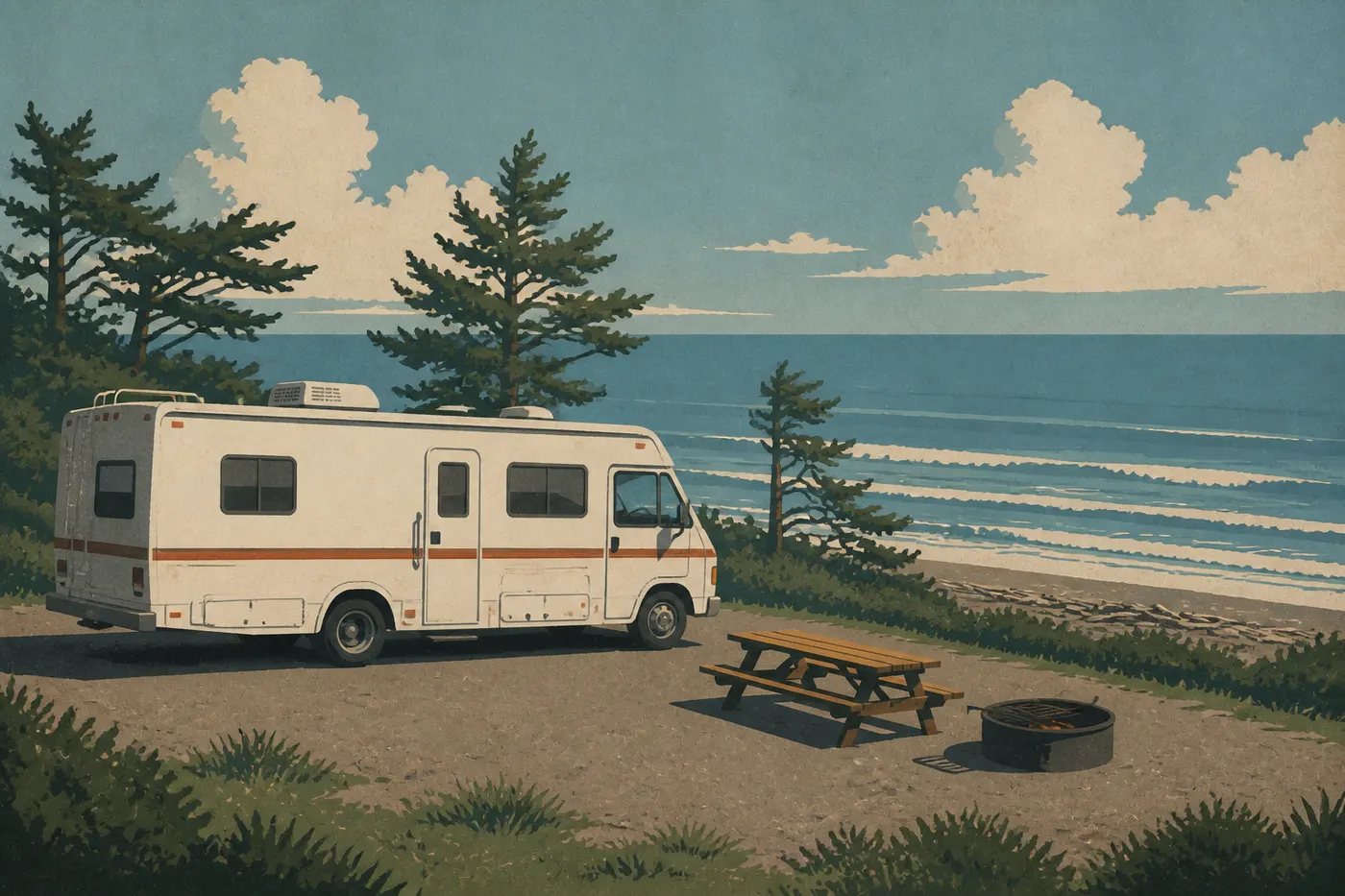
Olympic National Park by RV: Campgrounds, Rules, and Tips
Olympic National Park is a great place to visit by RV. In fact, it's one of the parks where an RV really makes sense: three ecosystems (mountains, temperate rainforest, and Pacific coast) spread across a peninsula that's difficult to cover any other way. Here's the quick answer: yes, you can spend the night in an RV at several official campgrounds. The main limitation is that most sites max out at 21 feet, which rules out large Class A motorhomes. Check your vehicle's length before you book.
Can you drive and camp at Olympic National Park by RV?
Getting to the peninsula is easy. From I-5, take Highway 101 around the Olympic Peninsula. It's a wide, well-maintained road that works for every vehicle size.
Once you're inside the park, things change. Roads to campgrounds and major sites are often narrow, winding, and sometimes steep. The basic rule is simple: a 19- to 21-foot vehicle can get almost everywhere. Larger vehicles won't be allowed on some roads.
The park is open 24 hours a day year-round. Some campgrounds close in winter or operate for only part of the year. The entrance fee is $30 per vehicle, valid for 7 days. The park's annual pass costs $55 and pays for itself after two visits. For entrance fees and annual passes, see the National Parks Fees and Passes page.
RV restrictions and regulated roads
This is the one thing you absolutely need to check before leaving home.
Hurricane Ridge Road. This mountain road climbs to the park's scenic ridge and is its best-known route. Vehicles longer than 21 feet are discouraged, and sometimes prohibited, because of the tight switchbacks and sustained grade. Vehicles towing trailers fall into the same category. Tire chains may be required in winter. The rule of thumb is to visit Hurricane Ridge by car, not in a Class A.
Hoh Rain Forest Road. The road from Highway 101 to the Hoh visitor center is about 18.6 miles long. It's paved but narrow in places. RVs up to 21 feet can make the drive without a problem. Longer vehicles can technically attempt it, but the curves make for a stressful drive. Check NPS alerts on the official website before you go, especially after heavy rain, when landslides are possible.
Sol Duc Road and secondary roads. The same logic applies here. Standard vehicles up to 21 feet can use them, while long combinations are discouraged.
The good news for travelers coming from Zion or Yosemite is that Olympic doesn't have restrictions like a tunnel permit or an escorted convoy. There are no special administrative steps to enter the park.
The park's official campgrounds
Olympic has about a dozen NPS campgrounds. These are the ones that actually accommodate RVs.
Kalaloch Campground
Perched on cliffs above the Pacific Ocean, Kalaloch is the park's only oceanfront campground. It accepts vehicles up to about 35 feet, making it the park's most accommodating option for large vehicles. There are no electrical hookups. Expect to pay about $22 to $35 per night, depending on the season. Reservations are available through Recreation.gov. Ocean-view sites go within minutes of reservations opening.
Heart O' the Hills Campground
Eight miles south of Port Angeles, this campground is an ideal base. It's close to town for groceries, gas, and a mechanic if you need one, as well as the ferry to Victoria, Canada, and the main visitor center. It accommodates RVs up to 21 feet. There are no hookups. It's open year-round, weather permitting in winter.
Sol Duc Campground
In the heart of the conifer forest, Sol Duc is a short walk from the Sol Duc Hot Springs. RV sites accommodate vehicles up to 21 feet. There are no hookups, but you'll find clean restrooms and potable water. Rates run about $22 per night. Reservations are strongly recommended from June through September.
Hoh Campground
At the end of the Hoh Rain Forest Road, this campground lets you fall asleep beneath a canopy of moss-covered maples. The maximum length is about 21 feet. There are no hookups. It's accessible year-round, but the road can be icy in winter and may sometimes close after heavy rain.
Fairholme Campground
On the shores of Lake Crescent, Fairholme is the only campground in the park with an accessible dump station. It's available to registered campers, and sometimes to non-campers for a small fee, depending on the season. Check the NPS website to confirm availability before driving to the campground just for that.
Mora Campground
Close to wild beaches and coastal trails, Mora works well for RV travelers who want to combine forest and ocean without going through Kalaloch. Maximum length: 21 feet. There are no hookups.
Dispersed camping and areas around Olympic (boondocking)
Inside the park, motorized vehicles may not camp outside designated campgrounds. Backcountry camping is allowed only on foot, with a wilderness permit.
Outside the park, Olympic National Forest surrounds much of it and offers free dispersed camping on Bureau of Land Management (BLM) and USDA Forest Service lands, without services.
For overnight stops while passing through, the towns of Port Angeles, Forks, and Aberdeen have private campgrounds with full hookups (water, electricity, and dump stations).
Dump stations, water, and services
Dump station in the park: Fairholme Campground is the main dump station inside the park. It's available to registered campers, and sometimes to non-campers for a small fee, depending on the season. Confirm availability on the NPS website before heading to the campground just for that.
Potable water: It's available at every campground with restrooms (Heart O' the Hills, Sol Duc, Kalaloch, Hoh, Mora, and Fairholme). Bring a spare water container if you're stringing together several nights on the road.
Outside the park: Port Angeles is the best-equipped town, with a municipal dump station, water, and private campgrounds with hookups. Forks and Sequim round out the options. Alternating a night in the park with a night at a private campground with hookups is an effective strategy for stays longer than five days.
Which campground is right for you?
For ocean views and a little thrill: Kalaloch, without a doubt. You'll fall asleep to the sound of waves below. Book as early as possible. Front-row sites go fast.
For an immersion in temperate rainforest: Hoh Campground. Waking up surrounded by giant ferns and moss-covered trunks, with the Hoh River murmuring nearby, is an experience that justifies the trip here all by itself.
For a convenient base: Heart O' the Hills, just outside Port Angeles. You can refuel, pick up packages, and take the car up to Hurricane Ridge.
For families with kids: Sol Duc, for the hot springs a short walk from camp. The hot-springs pool charges an admission fee, is less crowded on weekdays, and keeps kids entertained for hours.
Renting an RV to visit Olympic National Park
Traveling without an RV? Seattle is the logical starting point, about 3 hours from Port Angeles. Several agencies operate there. Cruise America is the most widespread national chain, while RVshare and Outdoorsy are the strongest peer-to-peer platforms. Choose a 19- to 21-foot vehicle to reach every campground without size restrictions. A Class B camper van is even more versatile on the narrow roads to the Hoh or Sol Duc. Our Olympic lodging guide compares the options if you're deciding between a lodge, tent, and RV.
RVs, pets, budget, and reservations: what to know
Pets. Dogs are allowed in official campgrounds but must be leashed, with a maximum leash length of 6 feet. They're not allowed on trails or in backcountry areas.
Budget. Plan on $22 to $35 per night for an RV site in the park, plus the $30 per-vehicle entrance fee, or $55 for the annual pass. NPS campgrounds don't have hookups, so plan accordingly for your batteries and water supply. For the total trip budget, our Olympic seasons guide provides benchmarks for each time of year.
Reservations. The vast majority of sites can be reserved through Recreation.gov up to 6 months in advance. In July and August, Kalaloch and Sol Duc fill up within hours of reservations opening. Set your alarm for 7 a.m. Pacific Time on the day reservations open, and have your account ready.
Weather and seasons. July, August, and September are the driest and sunniest months, with pleasant daytime temperatures around 64 to 75°F. The rest of the year brings abundant rain, especially around the Hoh. To choose your travel window, read our When to Visit page.
In summary: our Olympic National Park RV plan
Olympic is made for RV travel as long as you plan for two things: your vehicle's length (21 feet is the limit for reaching everything) and booking well ahead for July and August. Our three-night itinerary is Kalaloch for the coast, Hoh for the forest, and Sol Duc for the hot springs. Three radically different settings in three days, with Fairholme as your dump station on the way back. Read our complete Olympic guide to build an itinerary around this route.
Frequently asked questions
Can you camp at Olympic National Park in an RV?
Yes. You can camp by RV at several official NPS campgrounds: Kalaloch, Hoh, Sol Duc, Heart O' the Hills, Fairholme, and Mora. None of the campgrounds has electrical hookups.
Can you visit or drive through Olympic National Park by RV?
Yes. You can drive through the park by RV on Highway 101 without vehicle-size restrictions. Some internal roads, especially Hurricane Ridge Road, prohibit vehicles longer than 21 feet.
Can you park an RV anywhere at Olympic National Park?
No. RV parking is allowed only in designated campgrounds. Parking outside those areas can result in a fine and the vehicle being towed.
Where are RVs prohibited at Olympic National Park?
RVs longer than 21 feet are prohibited on Hurricane Ridge Road. Motorized vehicles may not camp outside official campgrounds, regardless of their size.
Which campground should you choose at Olympic National Park?
It depends on your priorities: Kalaloch for the ocean, Hoh for the temperate rainforest, Sol Duc for the hot springs, and Heart O' the Hills for proximity to Port Angeles.
How much does an RV site cost at Olympic National Park?
An RV site in the park costs $22 to $35 per night, depending on the campground and season, not including the $30 per-vehicle entrance fee.
What's the best time to visit Olympic National Park by RV?
July, August, and September are the best months, and the driest of the year. To narrow it down by area, see our When to Visit page.