
When to Visit Olympic National Park: Best Seasons and Month-by-Month Guide
Olympic National Park brings together three radically different ecosystems on the same Washington State peninsula: a wild coastline, some of the wettest temperate forests on the continent, and an alpine range rising above 7,900 feet. That variety has a direct impact on planning. Weather differs from one area to the next, and the answer to "when should you go?" depends as much on what you're looking for as it does on the forecast.
The best time to visit Olympic is July, August, and September, the driest and sunniest months, when Hurricane Ridge and the alpine areas are fully accessible. The park welcomes visitors year-round in the Hoh Rain Forest and along the coast. The shoulder seasons, especially June and September, bring smaller crowds and lower rates without sacrificing the quality of the experience.
Our complete Olympic guide gives you an overview of the park if you're just starting to plan.
Olympic Climate Month by Month
The Olympic Peninsula catches most of the weather systems coming in from the Pacific. Hoh Rain Forest receives up to 3,500 mm of rain a year, making it one of the wettest temperate forests in the continental United States. But "rainy" doesn't mean "unusable." Fog and waterlogged moss are part of the park's identity, and the coast has its fans in every season.
The table below summarizes conditions in the low-lying areas, including the coast and forested valleys. At higher elevations on Hurricane Ridge, temperatures run 14 to 18°F colder, with snow possible from October through May. Detailed charts and complete monthly averages appear in Olympic weather conditions.
| Month | Low / high (°F) | Precipitation | Sunshine |
|---|---|---|---|
| January | 36 / 46 | Very high | Low |
| February | 36 / 48 | High | Low |
| March | 37 / 52 | High | Moderate |
| April | 41 / 55 | Moderate | Moderate |
| May | 45 / 61 | Moderate | Fair |
| June | 50 / 66 | Declining | Good |
| July | 54 / 73 | Low | Excellent |
| August | 54 / 73 | Low | Excellent |
| September | 50 / 68 | Slightly rising | Good |
| October | 45 / 57 | High | Moderate |
| November | 39 / 50 | Very high | Low |
| December | 36 / 46 | Very high | Low |
Olympic in January
January is the most wintry month, though the coast stays relatively mild. Low-elevation temperatures hover around 36 to 46°F, with some of the year's heaviest precipitation. Hurricane Ridge builds up snow and the access road closes regularly, sometimes for several days at a time. The rewards are large Roosevelt elk herds moving down into the Elwha Valley, where you can see them from the roads, and Hoh Rain Forest at its most striking, with deep green moss and ferns under cold rain. The Kalaloch and Ruby Beach coast is practically deserted.
Olympic in February
February looks much like January, with precipitation easing slightly, to around 85 mm, and daytime temperatures slowly climbing toward 48°F. Hurricane Ridge still closes regularly. The first gray whales migrating toward Alaska may sometimes be spotted offshore as early as late February. Visitor numbers are at their lowest, and lodging is available without advance reservations. It's a good time for the coast and rain forest as long as you come prepared for wet weather.
Olympic in March
March marks a turning point. Precipitation starts to drop, to around 75 mm, and the days grow longer. Gray whale migration is in full swing, with whales following the coast toward Alaska. Hurricane Ridge may reopen in late March, depending on how much snow remains, but conditions vary, so checking the NPS website before heading up is essential. Crowds remain light, and low-elevation trails gradually become easier to hike.
Olympic in April
April offers a good low-season compromise: daytime temperatures around 57°F, precipitation near 55 mm, and a forest coming back to life with color. Wild rhododendrons begin blooming on the slopes. Hurricane Ridge generally reopens in April, depending on lingering snow conditions. Gray whales are still offshore, and the first elk calves appear in the meadows. Low-elevation campgrounds gradually open, and reservations are still easy to get.
Olympic in May
May is one of the most versatile months, with precipitation around 40 mm, temperatures reaching 63°F, and Hurricane Ridge generally fully accessible. Low-elevation trails are in good shape, elk calves can be seen in the meadows, and vegetation is at its most colorful in spring. Crowds are moderate, campgrounds have availability, and lodging rates sit in the middle range. It's a good choice for exploring the park in comfortable conditions without the summer crowds.
Olympic in June
June opens the favorable window. Precipitation drops to around 30 mm, and temperatures reach 66°F. The park is fully accessible, Hurricane Ridge is operating, and all visitor centers are on their regular schedules. Resident orcas begin visiting the Strait of Juan de Fuca. Crowds increase but remain below July and August levels, making for a good balance of weather, full access, and manageable visitation. Lodging is still available at lower rates than in peak season.
Olympic in July
July is the driest month, with around 18 mm of precipitation, and the sunniest, with low-elevation temperatures around 73°F. Every area of the park is open and conditions are at their best. Elk move toward the alpine grazing grounds, while black-tailed deer follow the beaches. It's also the busiest month. Parking at the Hoh Visitor Center, Rialto Beach, and Hurricane Ridge fills up by 9 a.m. even on weekdays. Reserve popular campgrounds on Recreation.gov several weeks ahead.
Olympic in August
August is nearly identical to July for weather, with temperatures around 73°F and roughly 20 mm of precipitation, as well as full access. Crowds remain at their peak through Labor Day. Resident orcas are still offshore in the Strait of Juan de Fuca. If you're visiting in August, choose weekdays, start before 8:30 a.m., and focus on less-visited areas such as Ozette Loop or the Quinault Valley. Popular campgrounds fill up without advance reservations.
Olympic in September
September is our favorite month. Summer crowds thin out noticeably after Labor Day, and lodging rates drop. The weather remains mild, around 68°F with approximately 25 mm of precipitation, and the first fall colors appear in the deciduous trees. Hurricane Ridge is still fully accessible. You get a summer-like experience with spring-like crowd levels, which makes September the best overall combination on the calendar.
Olympic in October
October brings the rain back in earnest, with around 65 mm of precipitation and daytime temperatures dropping to 59°F. Hurricane Ridge may close without warning starting in mid-October as the first mountain snow arrives. Check NPS conditions before any trip to higher elevations. Hoh Rain Forest is beautiful in fall colors and mist if you don't mind the wet weather. The coast remains accessible and practically deserted. Hikers should shift their attention to lower elevations.
Olympic in November
November brings a return to winter conditions: highs around 50°F, very heavy precipitation, approximately 100 mm, and short days. Alpine access is suspended or highly unpredictable. Elk move down into the low valleys and can be seen from roads across the peninsula. For anyone who enjoys misty settings and saturated forests, November in Hoh Rain Forest is a complete experience in its own right. Crowds are very light, and lodging is inexpensive.
Olympic in December
December is the wettest month, with around 115 mm of precipitation, and one of the darkest. Hurricane Ridge is closed most of the time. Accessible areas are concentrated along the coast, in the low valleys, and in Hoh Rain Forest, which is at its most dramatic: giant ferns, bright moss beneath cold rain, and near-total silence. Visitor numbers and rates are at their lowest, offering a version of the park that few visitors know. All you really need is a technical rain jacket and sturdy waterproof shoes.
Olympic Season by Season
Winter (December to February)
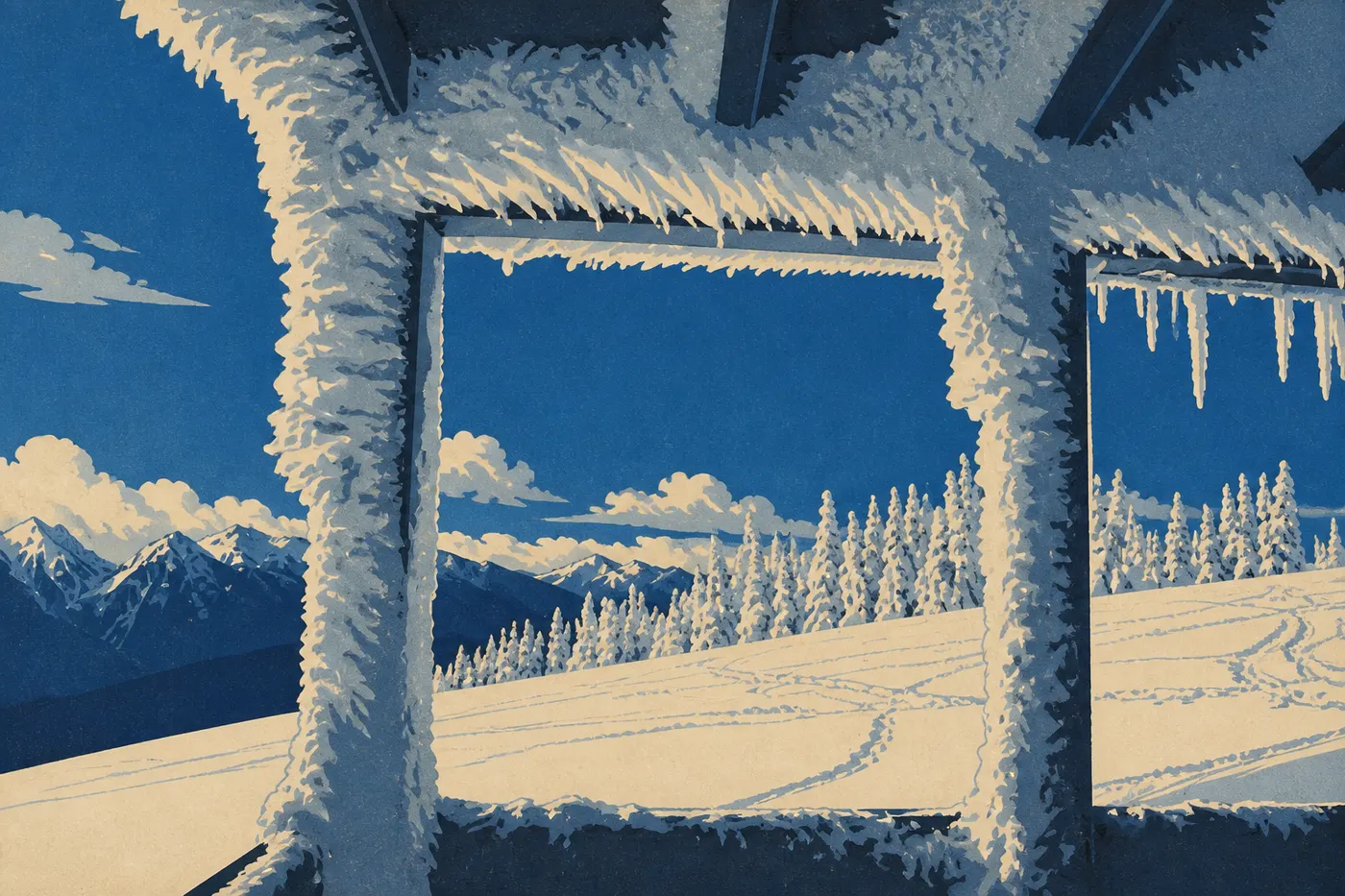
Low elevations stay mild for this latitude, and temperatures rarely drop below freezing on the coast. Hurricane Ridge, however, accumulates several feet of snow, and the access road closes regularly, sometimes for several days at a time. Some mountain trails require snowshoes or light traction devices.
What you gain in winter is the chance to see Roosevelt elk herds moving into the low valleys from the roads, especially in Elwha Valley. Hoh Rain Forest is at its most visually intense, with moss and ferns in an almost unreal shade of green. The coast, especially Kalaloch and Ruby Beach, is practically deserted. If you're looking for an immersive experience without crowds, winter stands on its own.
Plan on bringing a technical rain jacket and several layers. On mountain roads, tire chains or snow tires may be required. Check conditions on the NPS website before setting out.
Spring (March to May)
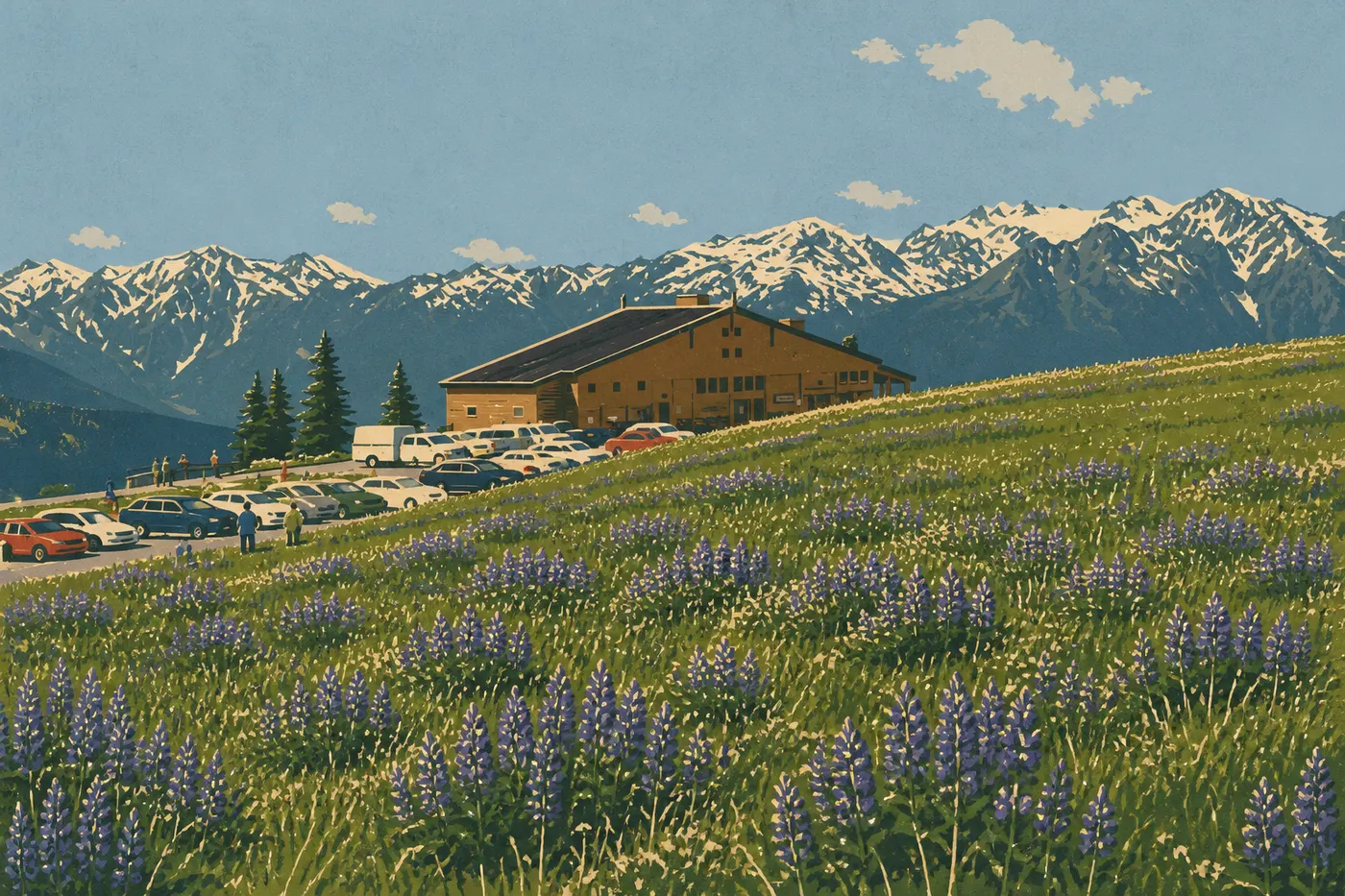
The park gradually emerges from winter. March and April remain wet, but precipitation eases in May. Hurricane Ridge generally reopens sometime between late March and May, depending on lingering snow. Conditions change quickly, so checking the NPS website before heading up remains essential.
This is the season for newborn elk in the peninsula's meadows and gray whales migrating along the coast toward Alaska, from March through May. Low-elevation trails regain their color, and wild rhododendrons begin to bloom. Crowds remain reasonable, campgrounds open gradually, and sites are available without booking weeks ahead.
Summer (June to August)

July and August are peak season, with predictable weather and nearly every part of the park accessible. Low-elevation temperatures range from 64 to 75°F according to NPS data, and precipitation reaches its annual low. Hurricane Ridge is fully open, and alpine trails are generally hikeable without specialized equipment.
This is also the busiest time of year. The Hoh Rain Forest Visitor Center, Rialto Beach, and the Hurricane Ridge parking lot may fill up by 9 a.m. on July weekends. Going on a weekday or arriving before 8:30 a.m. makes a noticeable difference. For popular campgrounds such as Kalaloch and Hoh, reservations on Recreation.gov are necessary several weeks ahead. Our Olympic camping guide explains the process and alternatives.
As for wildlife, elk move toward alpine grazing grounds, while black-tailed deer follow the beaches. Resident orcas visit the Strait of Juan de Fuca from June through October.
Fall (September to November)
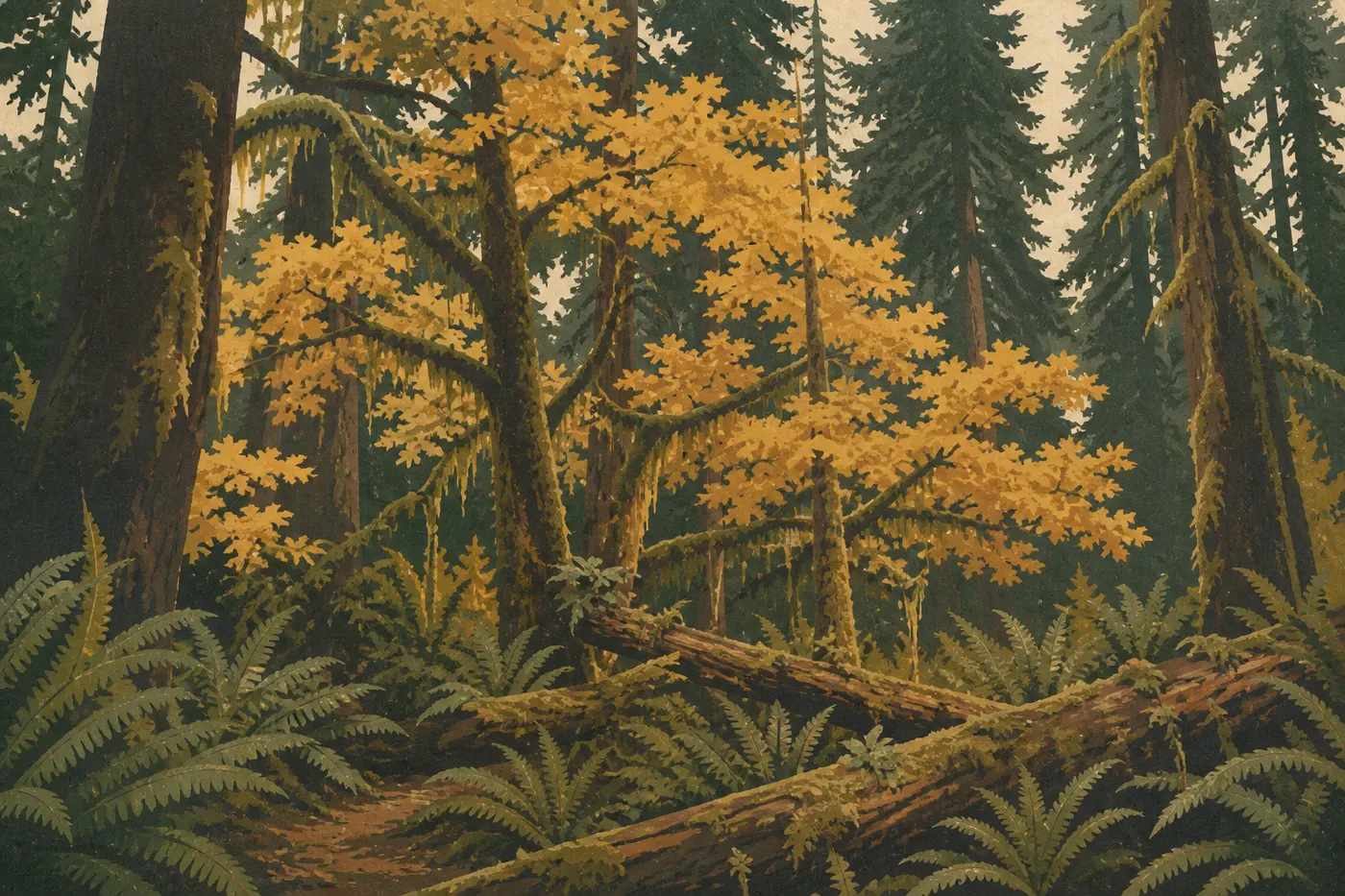
September is our favorite month for Olympic. Summer crowds thin out noticeably after Labor Day, the first Monday in September, deciduous trees begin to change color, and the weather stays mild through mid-October. You get an almost summer-like park with spring-like crowd levels.
October brings the rain back in earnest. Hurricane Ridge starts receiving snow by mid-October, and the road may close without warning. November marks a return to winter conditions. Hoh Rain Forest in the autumn mist is still beautiful, but alpine walks are over until the following spring.
Crowds: When to Avoid the Crowds at Olympic
Olympic National Park receives more than 3 million visitors a year. Most of them concentrate at three sites: the Hoh Rain Forest Visitor Center, Ruby Beach and Rialto Beach, and the Hurricane Ridge overlook.
Busiest months: July and August, especially the weekends around July 4 and Labor Day. Parking lots fill by midmorning at the most popular sites.
Moderate visitation: June and September. These months are pleasant for visiting, with comfortable access to the popular sites.
Quietest months: October through April. In January and February, you may have the coastal beaches almost entirely to yourself.
Here are a few practical summer adjustments: target weekdays, arrive before 9 a.m., and explore less-visited areas such as Ozette Loop on the north coast or Quinault Valley in the south. These areas offer the same quality of experience as the classics without the traffic funnel.
Best Time to Visit on a Budget
Rates on the Olympic Peninsula closely follow visitation patterns. Lodging in Port Angeles, Forks, and Lake Quinault costs 30 to 50% more in July and August than in the low season. Flights to Seattle-Tacoma (SEA), the logical gateway, follow the same pattern.
Low season (November to March): rock-bottom hotel rates and more affordable flights. The tradeoff is wet weather and limited mountain access.
Early shoulder season (April and May): a good compromise. Rates remain moderate while the park gradually comes back to life.
Late shoulder season (June and September): our best value recommendation. The weather is pleasant, and prices are lower than in midsummer. September is especially well balanced, with stable weather, smaller crowds, and falling rates. The Olympic lodging guide compares options by area and budget, from forest campgrounds to lakeside lodges.
For admission, the fee is $30 per vehicle or $15 per person on foot. The $55 Olympic annual pass pays for itself after two visits.
The Best Time for Your Trip Style
Wildlife: March through May for migrating gray whales and newborn elk in the meadows; June through October for offshore orcas in the Strait of Juan de Fuca; winter for large elk herds in the low valleys. Olympic wildlife breaks down the best viewing windows by species.
Alpine hiking: July through September, without exception. Hurricane Ridge trails and high-elevation routes are only hikeable without snow equipment in summer. Olympic hikes are organized by difficulty and season.
Hoh Rain Forest: year-round, but November through March is when the forest is greenest, mistiest, and most atmospheric. Bring a rain jacket and gaiters.
Photography: September for golden light and the first fall colors; December through February for misty scenes and winter wildlife against lush vegetation. Sunrises along the coast are spectacular year-round, without a fixed time dictated by crowds.
Families with young children: July and August. Weather is predictable, visitor centers are fully open, and Junior Ranger programs are active. Visiting Olympic with kids details age-appropriate activities.
Budget travelers: June or September. You get the park at full strength without paying midsummer rates.
In Summary: The Best Time for Your Trip Style
To access the entire park, including alpine areas, forest, and coast, July through September remains the ideal window. To combine good weather with reasonable crowds, September is our top pick. For the budget, June offers the best balance. For rain forest and winter wildlife, November through March has plenty of devoted fans.
One thing stays the same in every season: visit Olympic with a sturdy rain jacket and several layers. Always check road conditions, especially at Hurricane Ridge, on the NPS website before you leave.
The Worst Time to Visit Olympic
There isn't a truly bad season at Olympic, but some periods come with more constraints. From November through March, precipitation reaches its peak, with more than 100 mm a month at low elevations and several feet of snow on Hurricane Ridge. Days are short, and alpine access is suspended or highly unpredictable. For visitors who want to explore the entire park, including forest, coast, and alpine areas, this winter window is the least suitable.
If you want to avoid both crowds and bad weather, the weekends around July 4 and Labor Day, the first Monday in September, are the most challenging visitation peaks. Parking lots are full, campgrounds have been booked for weeks, and lines form at visitor centers. Aside from those two weekends, July and August are still enjoyable if you arrive early and target weekdays.
Frequently Asked Questions
What are the best months to visit Olympic National Park?
The best months to visit Olympic National Park are July, August, and September. They're the driest and sunniest months, with full access to the alpine areas. September is our top pick if you want summer conditions with significantly smaller crowds.
Can you visit Olympic in winter?
Yes, the park is open year-round. In winter, the coast, including Kalaloch and Ruby Beach, and Hoh Rain Forest are fully accessible and offer an incomparable atmosphere of dense fog and waterlogged moss. Hurricane Ridge regularly closes under snow from November through March, and access is unpredictable. Check NPS conditions before planning a trip to higher elevations.
What is peak season at Olympic National Park?
Peak season runs from mid-June through early September, with a peak in July and August. The weekends around July 4 and Labor Day, the first Monday in September, are the busiest. During this period, reserve popular campgrounds several weeks ahead on Recreation.gov and plan to reach popular sites before 9 a.m.
What is the climate like at Olympic National Park?
The climate at Olympic National Park varies widely by area. The coast and Hoh Rain Forest have a mild oceanic climate that is especially wet in fall and winter. Hurricane Ridge's alpine areas have a mountain climate with several feet of snow in winter. Summer is mild everywhere, from 64 to 75°F at low elevations, and much drier.
What is the best season to visit the American West?
The best season for the American West depends on the states and parks you plan to visit. For the Pacific Northwest, including Washington and Oregon, summer is essential for full access. Our Region guide offers a few pointers on the best times to visit different destinations.
What is the best time to visit Washington State?
The best time to visit Washington State is June through September. Summer is the dry season, with long days and pleasant temperatures on the coast and in the Cascades. Olympic showcases the state's natural beauty during this season.
How much time do you need to visit Olympic National Park?
You'll need at least three days to cover the park's three main areas: the coast, Hoh Rain Forest, and Hurricane Ridge. Our Itinerary and length-of-stay guide suggests one- to three-day routes based on your schedule and starting point.
How much does a trip to Olympic National Park cost?
Park admission costs $30 per vehicle or $15 per person on foot or by bicycle. The Olympic annual pass costs $55. For entrance fees and annual passes, see the National Parks Fees and Passes page. For the overall trip budget, including lodging, transportation, and food, our Where to Stay guide gives price ranges for accommodations.