
Cuyahoga Valley National Park: The Complete Visitor Guide
Cuyahoga Valley is a national park in Ohio, tucked between Cleveland and Akron along the Cuyahoga River. You don't come here for mountain peaks or canyons. You come for a green valley threaded with waterfalls, a historic canal converted into a trail, and a scenic railroad that runs through it all. Plan on a full day for the highlights, or two if you want to hike, bike, and take your time. It's one of the few national parks you can visit without paying an entrance fee, and one of the easiest to reach by car from a major city.
We've explored it in every season. Here's our overview to help you plan your visit before you move on to the details, waterfall by waterfall and trail by trail.
Cuyahoga Valley at a Glance: Where the Park Is and How to Get There
The park stretches across northeastern Ohio for about 19 miles from north to south, between Cleveland to the north and Akron to the south. The Cuyahoga River forms its backbone. This isn't a vast wilderness. It's a patchwork of forests, farms, country roads, and small hamlets such as Peninsula, right in the heart of the park.
You can reach it easily by road from every direction. A good starting point is Boston Mill Visitor Center, at 6947 Riverview Road in Peninsula, Ohio 44264. That's where you'll pick up maps, the day's schedules, and weather-specific advice. Two airports flank the park: Cleveland Hopkins International Airport to the north and Akron-Canton Regional Airport to the south, both about an hour away by car. From either one, renting a car is the most flexible option.
Good to know: The park is open every day, 24 hours a day. A few sites are exceptions and close from dusk to morning: Brandywine Falls, The Ledges, Octagon, Kendall Lake, and Kendall Hills.
For detailed trip planning, including drive times, parking areas, and railroad stations, see how to get to Cuyahoga Valley. To see the different areas at a glance, use our park map as your guide. And to decide how many days to spend, our itinerary suggestions offer several ways to plan your visit.
Entrance Fees, Passes, and Reservations
Good news for your budget: admission to the park is free. There is no vehicle entrance fee and no pass to buy at a booth. You drive in, park, and explore without a ticket.
The distinction is that some paid activities are run by partners. The main one is the Cuyahoga Valley Scenic Railroad, whose tickets must be booked separately. Some guided tours and programs may also charge a fee, depending on the season. Parking at the major sites is free, but lots fill up quickly on weekends.
For railroad fares, America the Beautiful passes, which are useful if your road trip includes other parks, and any reservations you may need, see our Fees & Passes page.
Reservations, Permits, and Rules to Follow
Park access: No reservation is required. You can enter freely at any time.
Camping: The park's only campground is Horseshoe Pond, a primitive campground. You need a permit, which you can reserve through Recreation.gov. Sites go quickly in summer and during October's peak foliage season, so book several weeks ahead.
Hiking: You don't need a permit for the trails. The park's roughly 124 miles of trails are open to everyone.
Main rules:
- Dogs are welcome in the park but must stay on a leash no longer than 6 feet. Pick up after them.
- Collecting plants, flowers, or mushrooms is prohibited throughout the park.
- Don't feed wildlife, including ducks and deer. Human food changes their behavior and can make them aggressive.
- Areas closed at night: Brandywine Falls, The Ledges, Octagon, Kendall Lake, and Kendall Hills close from dusk until morning opening. Check the entrance signs at each site.
- Campfires are prohibited outside designated areas and are limited to Horseshoe Pond Campground.
- Follow posted signs carefully on park roads. Valley roads are winding, narrow in places, and shared with cyclists and pedestrians.
Getting Around Cuyahoga Valley
There is no mandatory shuttle and no single scenic road like the one in Zion. Most visitors get around by car, moving from one parking area to the next along Riverview Road and Akron-Peninsula Road, which follow the valley. Every major site, from waterfalls to ledges and marshes, has its own parking area and trailheads.
Two features make Cuyahoga special. First, there's the Towpath Trail, the former towpath of the Ohio & Erie Canal. It's flat and mostly smooth, running for dozens of miles through the park and ideal for walking or biking. Then there's the scenic railroad, which lets you bring your bike, ride in one direction, and take the train back the other way. It's the smartest way to cover the valley without pedaling both directions.
We cover your options in more detail, including driving, biking, rail travel, and parking, in our guide to getting around the park.
How Much Time Do You Need to Visit Cuyahoga Valley?
One day is enough for the highlights. Brandywine Falls, part of the Towpath, The Ledges, and Beaver Marsh fit together well in one loop. If you add the railroad, a serious hike, or a canoe outing, plan on two days and stay in or near the park. With more time, the park rewards a slower pace from a single base, giving you a chance to explore its quieter corners.
It's also an excellent half-day stop if you're crossing Ohio as part of a longer road trip. Our Itinerary & Trip Length page offers ready-made plans ranging from half a day to two days.
Plan your visit
What to See and Do in Cuyahoga Valley
The park's highlights fall into a few geographic areas that are easy to connect by car. Here's how we'd explore it from north to south.
Road trip journal · 3 areas
Start with the Waterfalls at Brandywine Falls
Brandywine Falls is the park's postcard view, a waterfall spilling down a sandstone wall in thin ribbons and reached by a wooden boardwalk from the parking area. It's the busiest site, so aim for early morning. Other lesser-known waterfalls, such as Blue Hen Falls, require a walk through the forest. Flow varies widely. The falls are most dramatic after rain or snowmelt and quieter in midsummer.
The Canal, the Towpath, and the Railroad
Along the river, the former Ohio & Erie Canal tells the story of the region's industrial past. The Towpath Trail follows its route and reaches attractions such as Beaver Marsh, a restored wetland where beavers, herons, and turtles can be watched from a boardwalk. This is also where you'll encounter the scenic railroad, which you can combine with a bike ride.
The Ledges and the Forests
Away from the river, The Ledges offer a completely different setting: massive, moss-covered sandstone walls, narrow passages between boulders, and a popular sunset viewpoint. The wooded hills around them, including Kendall Hills and Kendall Lake, are good for walking and, in winter, sledding or cross-country skiing when the snow sticks.
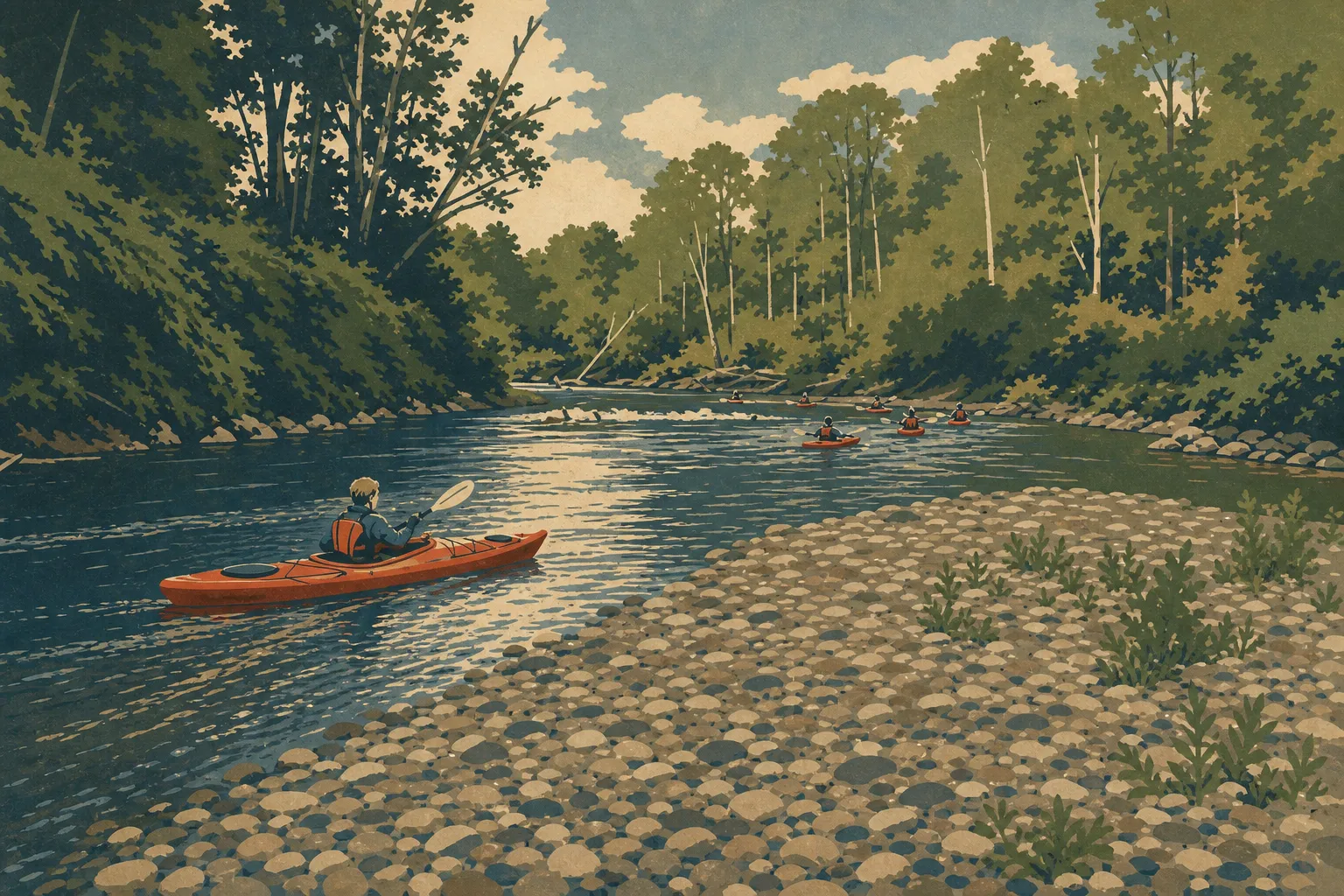
These are just the highlights. Our complete list of activities, including biking, canoeing and kayaking on the river, fishing, wildlife watching, and seasonal programs, is in our guide to things to do in Cuyahoga Valley. You'll find trail details in our selection of hikes. Keep our map handy to see where each site is located.
Explore the park
The Best Hikes in Cuyahoga Valley
The park mixes easy walks with more demanding loops. Must-do hikes include the short, family-friendly Brandywine Falls boardwalk, the Ledges Trail loop beneath its sandstone walls, Brandywine Gorge Loop into the gorge, and the flat sections of the Towpath, where you can cover miles without elevation gain. Stronger hikers can take on the hillier sections of the Buckeye Trail.
Distances, elevation gains, difficulty levels, and trailheads are listed on our Hikes page, your go-to resource for walking in Cuyahoga Valley.
The detailed guide Hiking in Cuyahoga Valley: the Best Trails for Every Skill Level The best hikes in Cuyahoga Valley, organized by area and difficulty, with trail… Read the guide →Wildlife and Plants to Look For
Cuyahoga Valley is a park of temperate forests and wetlands, not large predators. You'll mainly see white-tailed deer, beavers, especially at Beaver Marsh, raccoons, foxes, and a wide variety of birds, including herons, great horned owls, woodpeckers, migratory birds, and raptors throughout the year. In spring, wildflowers cover the forest floor. In fall, maples and oaks blaze with color.
Find out where and when to look, and which species to watch for each season, in our guide to Cuyahoga Valley wildlife.
The detailed guide Cuyahoga Valley Wildlife: What to See and Where to Find It A practical guide to spotting white-tailed deer, bald eagles, beavers, and… Read the guide →When Should You Visit Cuyahoga Valley?
Every season has something to offer. Spring wakes up the forest, swells the waterfalls, and carpets the ground with flowers. Summer is green and lively, but hot and sometimes humid. Fall is the busiest season for good reason: the foliage blazes with color, usually around mid-October. Winter transforms the valley under lake-effect snow from Lake Erie, with sledding and cross-country skiing when conditions allow.
Summer temperatures range from 48 to 95°F. In fall, daytime temperatures can sit around 68°F before dropping to 32°F at night. Winter temperatures fall from about 36°F to well below freezing. Dress in layers.
That's only a summary. Choose the best month for your plans, whether you're after fall colors, waterfalls, or fewer crowds, on our When to Visit page. You'll find detailed forecasts for each season on our Weather page.
The detailed guide When to Visit Cuyahoga Valley: Best Seasons and Month-by-Month Guide Best times to visit Cuyahoga Valley Read the guide →Where to Stay in Cuyahoga Valley
The park doesn't have a grand historic lodge like the national parks of the West, but lodging options are plentiful. Inside the park or along its edge, you'll find a historic inn and charming bed-and-breakfasts that make good bases for exploring on foot. Nearby Cleveland, Akron, and Ohio's smaller towns offer the full range of chain hotels, often at lower prices.
Tent camping inside the park is limited. Campers and RV travelers mostly use campgrounds in the surrounding area and nearby state parks.
We compare all these options in our Lodging Guide. Start with Where to Stay for the big picture, then see Hotels & Lodges, Camping, and RV Camping based on how you travel.
Stay in the park
Where to Eat in Cuyahoga Valley
Food options in the park are limited: a few casual spots, a well-known bakery near Peninsula station, and seasonal places to eat. The easiest approach is to pack a picnic for one of the designated areas or head to restaurants in Peninsula, Akron, or Cleveland. You'll find our tried-and-tested recommendations on the Where to Eat page.
Things to Do Around Cuyahoga Valley
The park sits in a densely populated region. Cleveland offers the Rock and Roll Hall of Fame, museums, and a strong food scene. Akron has its industrial past and metropolitan parks. The Cleveland Metroparks and nearby state parks extend the natural areas beyond the federal park boundary. Cuyahoga Valley also makes a logical stop on a route to the Great Lakes or Niagara Falls.
To fit it into a longer trip, see our road trips and our guides by region.
Cuyahoga Valley with Kids
The park checks a lot of boxes for families: short, flat trails, safe boardwalks overlooking waterfalls, a beaver-filled marsh, a scenic railroad, and ranger programs. The flat Towpath works with strollers and for a child's first bike ride. We collect our age-by-age advice on the With Kids page.
Practical Information, Rules, and Safety
Here are a few practical points. Sensitive sites, including Brandywine Falls, The Ledges, Octagon, Kendall Lake, and Kendall Hills, close from dusk until morning, so don't linger there at night. Stay on boardwalks and marked trails near the waterfalls, where wet rock is slippery. The Cuyahoga River can be polluted after rain, so avoid prolonged contact and choose canoeing or kayaking instead of swimming. In winter, lake-effect snow can arrive quickly and make roads slick. Check conditions before setting out. Follow posted speed limits on the park's small roads, which are shared with cyclists and pedestrians.
The complete rules, covering dogs, drones, fires, parking, and accessibility, are detailed on our Practical Information, Rules & Safety page.
Our Take: Is Cuyahoga Valley Worth a Visit?
Yes, as long as you know what you're coming for. This isn't a park of grand geological spectacles. It's an intimate, green valley with a deep history and unusually easy access. For a stop between Cleveland and Akron, a family nature outing, or a road trip stop on the way to the Great Lakes, it more than holds its own. Our winning plan is Brandywine early in the morning, a bike ride on the Towpath with a train ride back, The Ledges at sunset, and a visit in mid-October if you can choose your dates.
Frequently Asked Questions
Is Cuyahoga Valley National Park Worth Visiting?
Cuyahoga Valley National Park is worth visiting if you're looking for an accessible green valley, waterfalls such as Brandywine Falls, a historic canal, and a scenic railroad rather than the grand landscapes of the American West. It's an ideal stop between Cleveland and Akron or on a road trip to the Great Lakes.
Do You Have to Pay to Visit Cuyahoga Valley National Park?
You don't have to pay to visit Cuyahoga Valley National Park. Admission and parking are free. Only certain partner-run activities, such as the scenic railroad and guided tours, charge a fee. See our Fees & Passes page for details.
How Many Days Should You Plan for Cuyahoga Valley National Park?
Plan on one day for the essentials of Cuyahoga Valley National Park, including Brandywine Falls, the Towpath, The Ledges, and Beaver Marsh. Allow two days if you also want to ride the railroad, take a serious hike, or go canoeing. See our Itinerary & Trip Length page.
Which Waterfalls Are the Most Popular in Cuyahoga Valley National Park?
The most popular waterfalls in Cuyahoga Valley National Park are Brandywine Falls, reached by a wooden boardwalk, followed by the lesser-known Blue Hen Falls at the end of a forest trail. Their flow is most dramatic after rain or snowmelt. See our Things to Do page for details.
The American Parks shop
Bring Cuyahoga Valley home
Our park-inspired creations, made to order and shipped to your door.
Latest park news
- Cuyahoga Valley: Parking Lots Closing in Rotation, October 5-16Several Cuyahoga Valley parking lots will close for a few hours each for maintenance between October 5 and 16. Here's where and when.
- Cuyahoga Valley: A River Access Area Closes for a Sturgeon ReleaseAt Cuyahoga Valley, the river access near the Boston Store closes for one morning during a public sturgeon release.
- Cuyahoga Valley: the Towpath Trail Gets a Makeover, Two Sections Closing in PhasesConstruction is closing two stretches of Cuyahoga Valley's famous towpath one at a time, and here's what that means for your visit.