
What to Do in Cuyahoga Valley: Essential Sights and Experiences
Cuyahoga Valley National Park stretches for about 18.6 miles between Cleveland and Akron, Ohio. At first glance, the park can seem disorienting: no canyon, no volcano, no high elevations. What you'll find instead is a winding river, hardwood forests that blaze with color in October, waterfalls hidden among the trees, and a welcome sense of quiet just 30 minutes from two major cities.
The three absolute must-sees are Brandywine Falls, a 59-foot waterfall framed by sandstone and ferns; Beaver Marsh, a marsh reclaimed from a former junkyard that's now home to beavers and herons; and the Towpath Trail, the former towpath of the Ohio & Erie Canal, flat and suitable for biking or walking for dozens of miles. It's also worth adding the Cuyahoga Valley Scenic Railroad. The scenic train crosses the valley from north to south and remains one of the best ways to take in the park at an unhurried pace.
Cuyahoga Valley at a Glance: Areas, Access, and Getting Around
The park follows the Cuyahoga River along a north-south corridor, with Riverview Road as its main spine. It has three main areas: the north (on the Cleveland side, around Brecksville), the central area (Peninsula, Boston Mill, Brandywine Falls, and Beaver Marsh), and the south (Virginia Kendall, The Ledges, Kendall Lake, on the Akron side). The distances between these areas can exceed 9.3 miles, so most visitors get around by car.
Entry is completely free. There are no entrance booths and no pass to buy. The park is open 24/7, with one important restriction: Brandywine Falls, The Ledges, Octagon, Kendall Lake, and Kendall Hills close at sunset and reopen in the morning. Before planning a late-day outing, check park hours and closures.
How Long Do You Need to Visit Cuyahoga Valley?
A well-paced day lets you cover the three highlights, Brandywine Falls, Beaver Marsh, and The Ledges, while driving between sites. Two days give you time to add a longer hike and a train ride. Three days or more open up the park for bike touring, with an overnight stay in Peninsula or at Stanford House.
The short answer is this: plan on two days if you don't want to rush from one stop to the next. Our Cuyahoga Valley itinerary guide lays out day-by-day plans based on your priorities, whether you're traveling with family, photographing the park, cycling, or looking for trails.
Must-See Spots by Area
North Area: Brecksville and the River Gorge
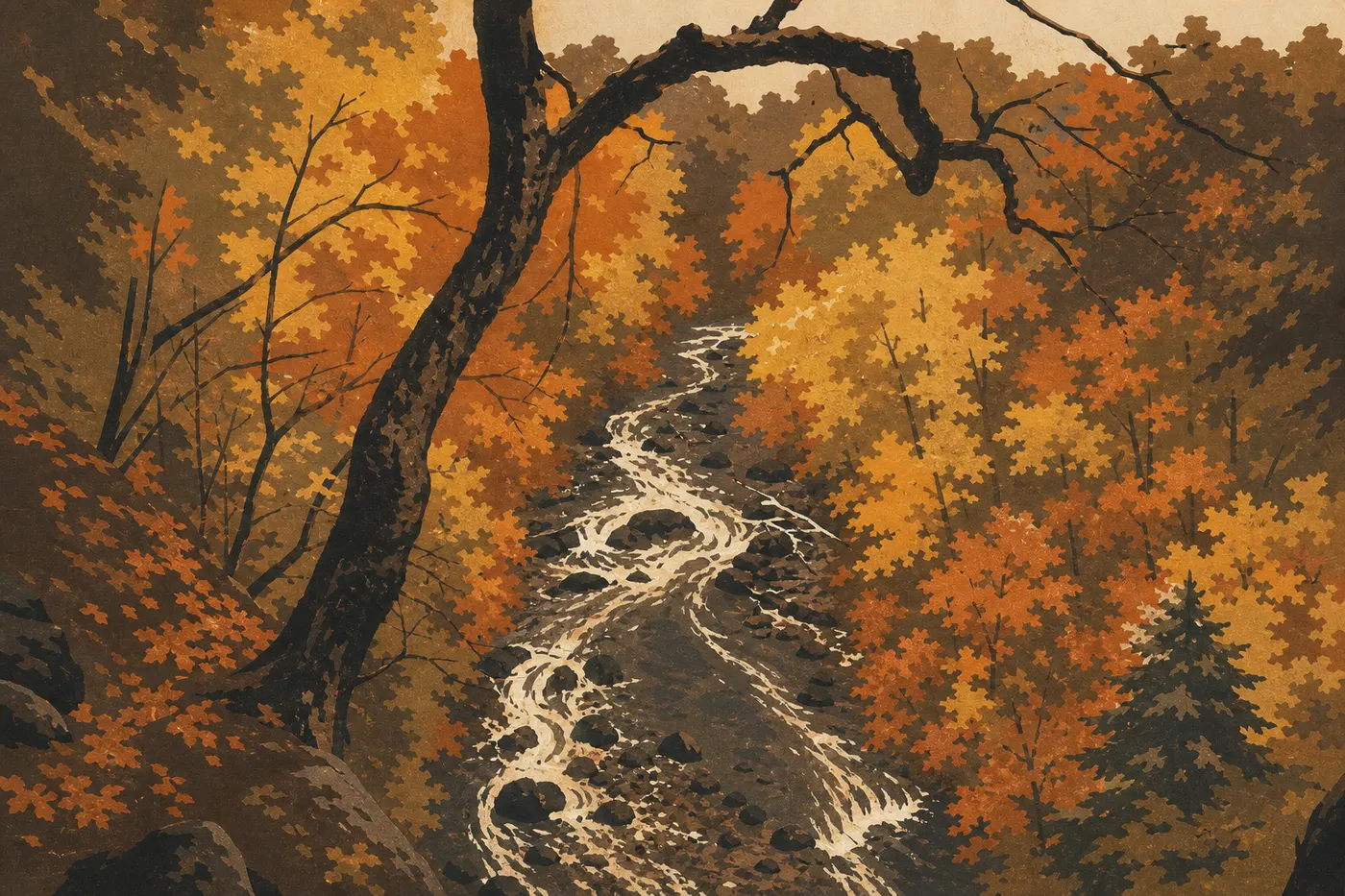
The north area is the least visited of the three, which makes it one of the most enjoyable. Here, the Cuyahoga River makes a broad loop through gorges of Berea shale, a local sandstone that appears in gray slabs along the water. Several overlooks, reached by 20 to 30 minutes of walking from the parking areas, look out over the gorge and offer a view of the wooded valley you won't find anywhere else in the park.
The area connects to the Brecksville Station of the Cuyahoga Valley Scenic Railroad, making it easy to include in a train-hike-train loop. Give yourself half a day to enjoy it at a relaxed pace.
Central Area: Brandywine Falls, Beaver Marsh, and the Towpath Trail
This is the park's tourism hub and the place where most visitors spend their time, often for good reason.
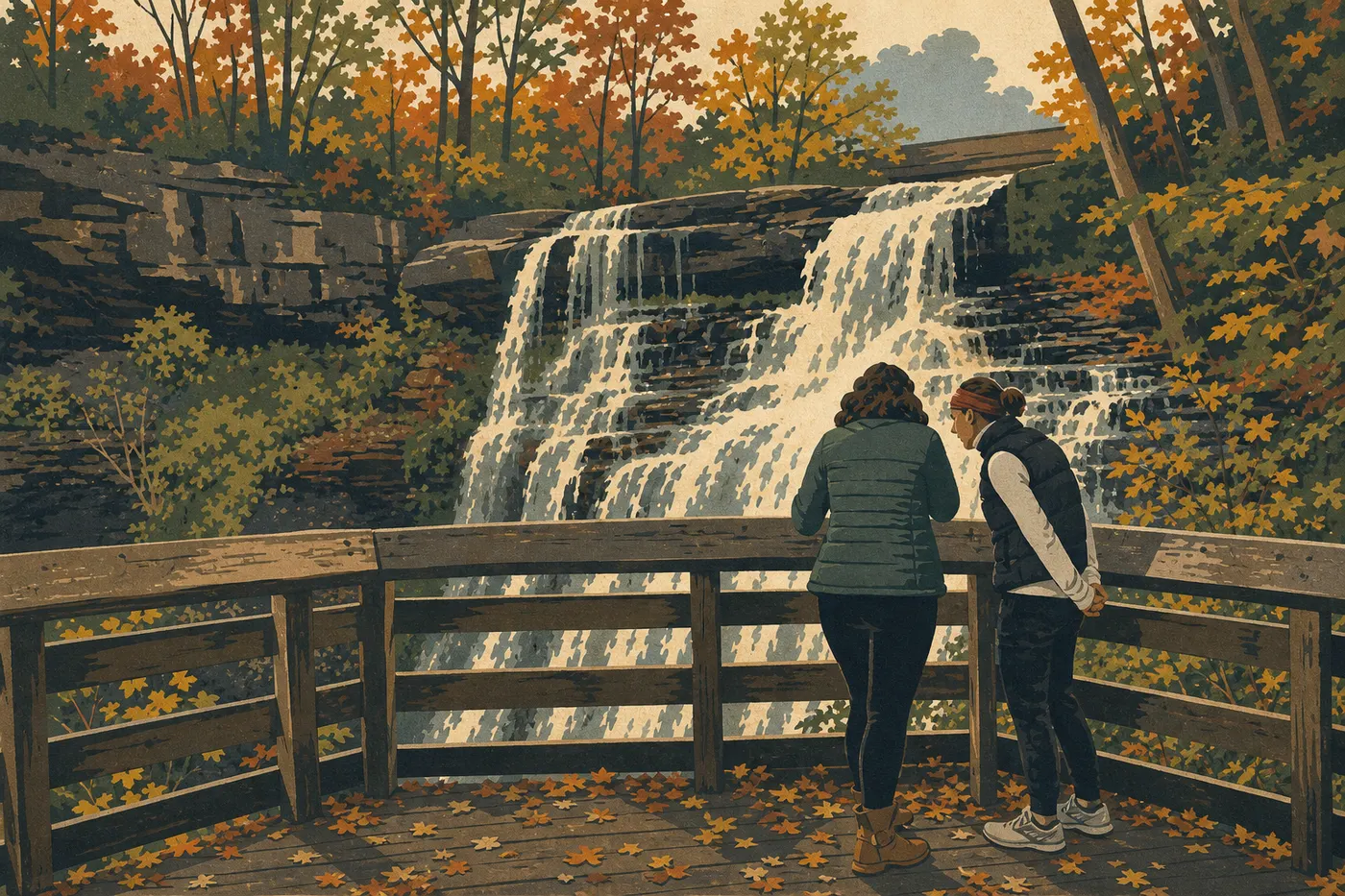
Brandywine Falls is the park's signature sight. The waterfall drops 59 feet over a sandstone ledge at the bottom of a fern-fringed gorge. A wooden boardwalk overlooks the falls and provides the classic view. You can reach it in 10 minutes on foot from the Stanford Road parking area. Early in the morning or after rain, the place feels completely different: the sound of the water drowns out everything else. In winter, the waterfall may freeze over, making it a sought-after winter photography spot. Allow 30 to 45 minutes for the round trip and time to take in the view.
The Boston Mill Visitor Center, a few minutes south on Riverview Road, is the right place to pick up a paper map, talk with a ranger, and get oriented. An exhibit traces the history of the Ohio & Erie Canal, which made the valley a commercial hub in the 19th century.
Beaver Marsh deserves 20 to 40 minutes of your time. Restored beginning in the 1980s on the site of a former junkyard, this marsh was reclaimed by beavers without any help from people. Today, you can see herons, turtles, wood ducks, and, with a little patience late in the day, the beavers themselves at work. Access is from the Towpath Trail, along a few hundred yards of flat walking.
The Towpath Trail is the park's main bike and hiking route. The former canal towpath is now surfaced with compacted gravel. It's flat, shaded, and manageable for families. You can ride or walk it in sections between parking areas or use it as the backbone of a multi-day trip. It extends well beyond the park, north toward Cleveland and south toward Akron.
The Cuyahoga Valley Scenic Railroad runs between several stations, including Rockside in the north, Peninsula in the center, and Akron Northside in the south. You can board at one station, hike to the next, and catch the train again. It's an elegant way to avoid driving back and forth and experience the park as a connected journey instead of a string of parking lots. Check the railroad's schedule and stops before you plan your trip.
South Area: Virginia Kendall, The Ledges, and Kendall Lake
The Virginia Kendall area is the park's most geologically distinctive section.
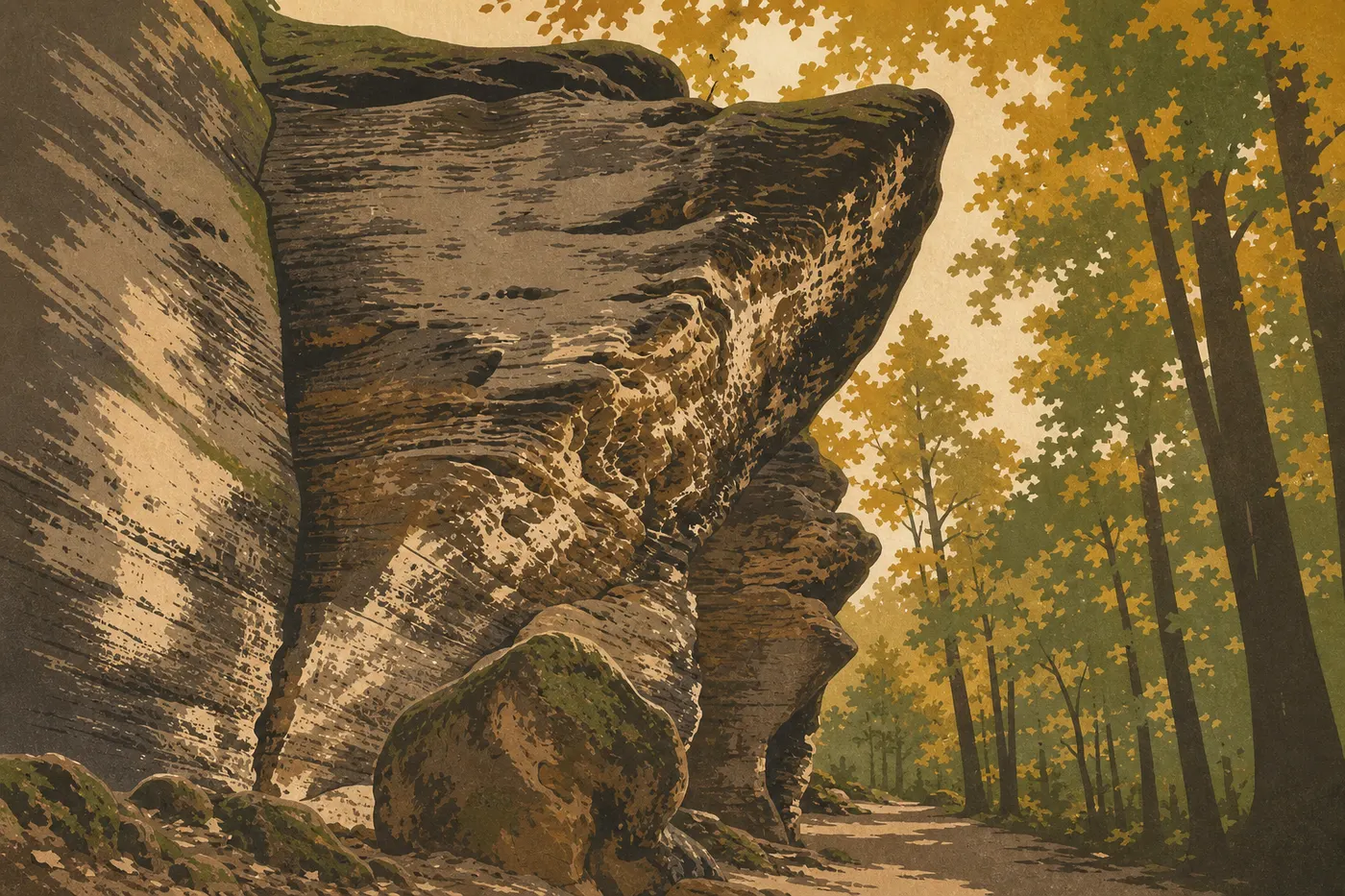
The Ledges are a series of Sharon Conglomerate outcrops, a sandstone made with white quartz pebbles that formed about 300 million years ago. The blocks pile up into 33- to 49-foot cliffs, with cool alcoves tucked between them even in midsummer. The main route, the Ledges Trail, follows these formations on a roughly 3.1-mile loop through the shade. An overlook, Ledges Overlook, provides an open view of the valley. In October, the mix of orange foliage and white rock makes for striking compositions.
Kendall Lake is a glacial lake reached by a short walk from its parking area. In summer, you can rent canoes and kayaks there. In winter, the surrounding area becomes a cross-country skiing destination, while Kendall Hills offers sledding. Keep in mind that the area closes at sunset.
The Octagon is a covered picnic shelter built in the 1930s by the Civilian Conservation Corps in the middle of the woods. It serves as a starting point for several trails in the south area. It's also a pleasant place for families looking for shade during a meal.
The Best Hikes in Cuyahoga Valley
The park offers more than 124 miles of marked trails, from the completely flat Towpath to climbs toward the gorges in the north area. Here are a few quick reference points:
- Brandywine Gorge Trail (about 1.2 miles, easy): loop around Brandywine Falls and an essential hike.
- Ledges Trail (about 3.1 miles, moderate): loop around the rock formations of Virginia Kendall.
- Towpath Trail (up to 25 miles and more, flat): ideal for biking or a hike done in sections.
- Buckeye Trail (long-distance, strenuous): crosses the park from north to south for experienced hikers.
For trail distances, elevation gains, trailheads, and difficulty ratings, see our Cuyahoga Valley hiking guide. Each trail is described there with its viewpoints and seasonal conditions.
Other Activities by Interest
Wildlife and Bird-Watching
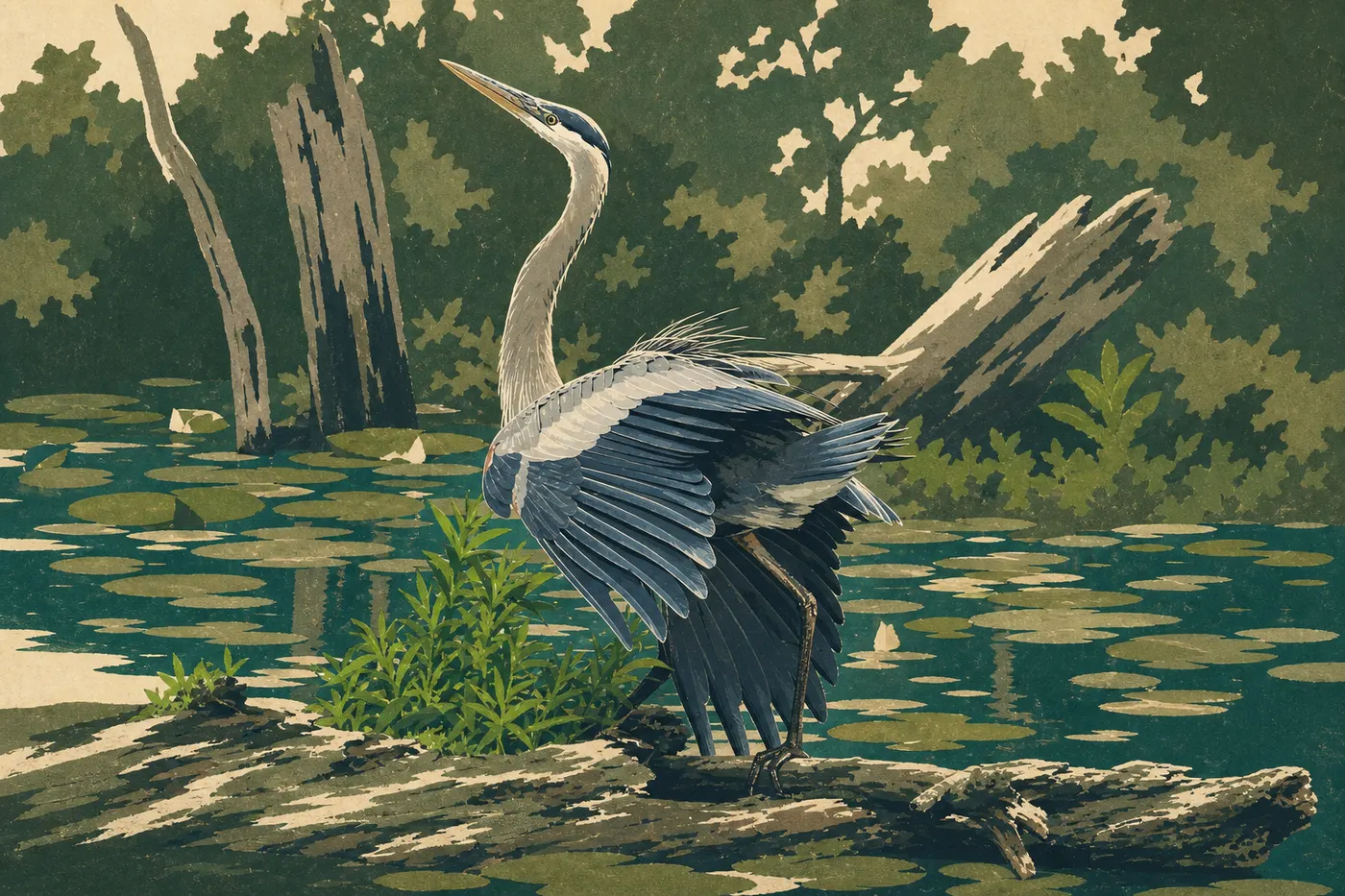
Cuyahoga Valley supports a surprisingly rich variety of wildlife for a park surrounded by urban areas. Bald eagles, belted kingfishers, great blue herons, and several species of woodpeckers are regularly seen here. The beaver is the local emblem, especially visible at Beaver Marsh in the evening. In fall, migration brings bird-watchers out in force. Our Cuyahoga Valley wildlife guide covers the best times and places for wildlife watching in each season.
Biking
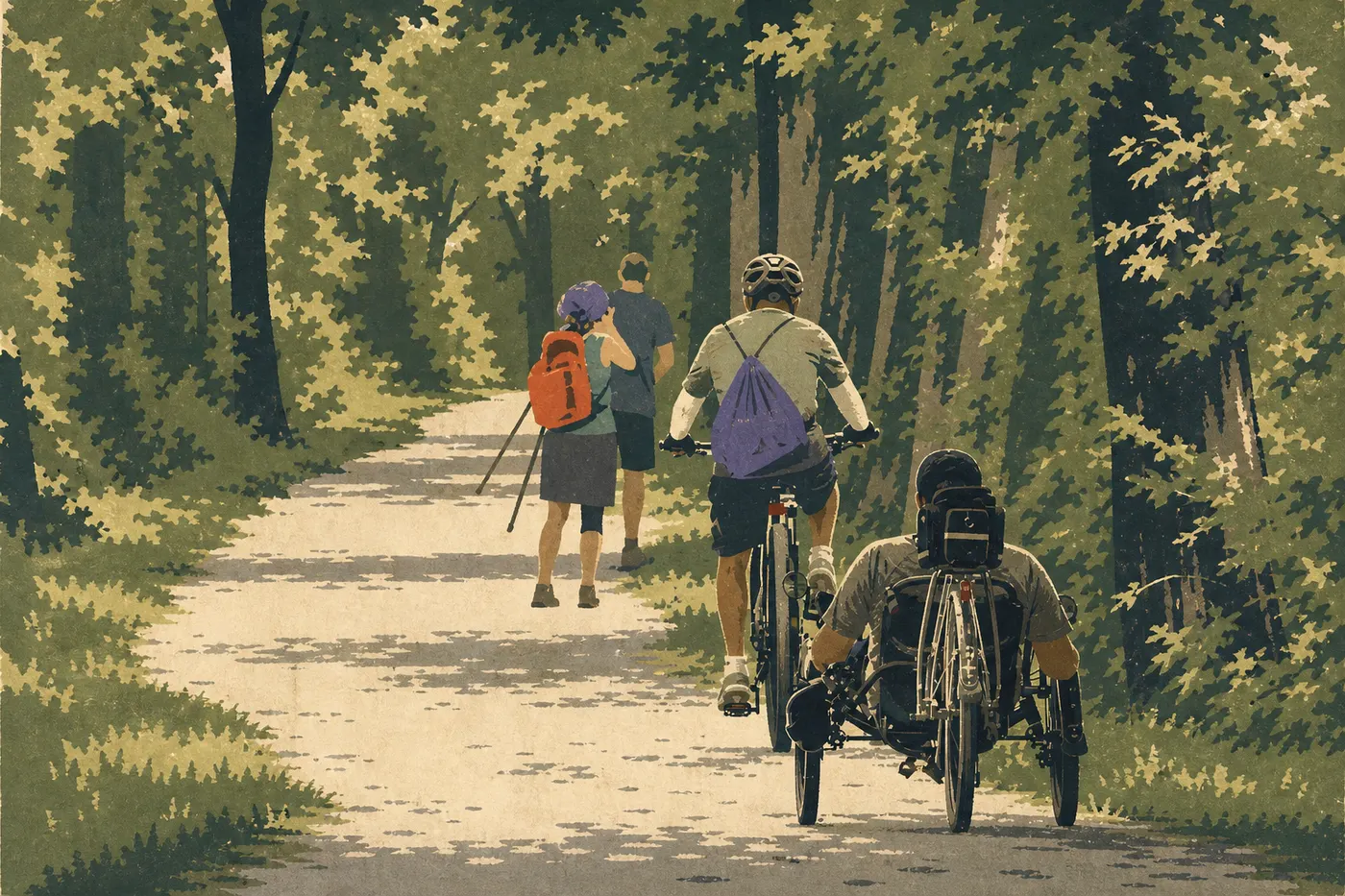
The Towpath Trail is the park's main cycling route. The central sections are family-friendly, with no elevation gain and a stable surface, but the trail also suits cyclists covering long distances. It runs north toward Cleveland and south to Akron. Bike rental shops operate in Peninsula and around the park.
Photography
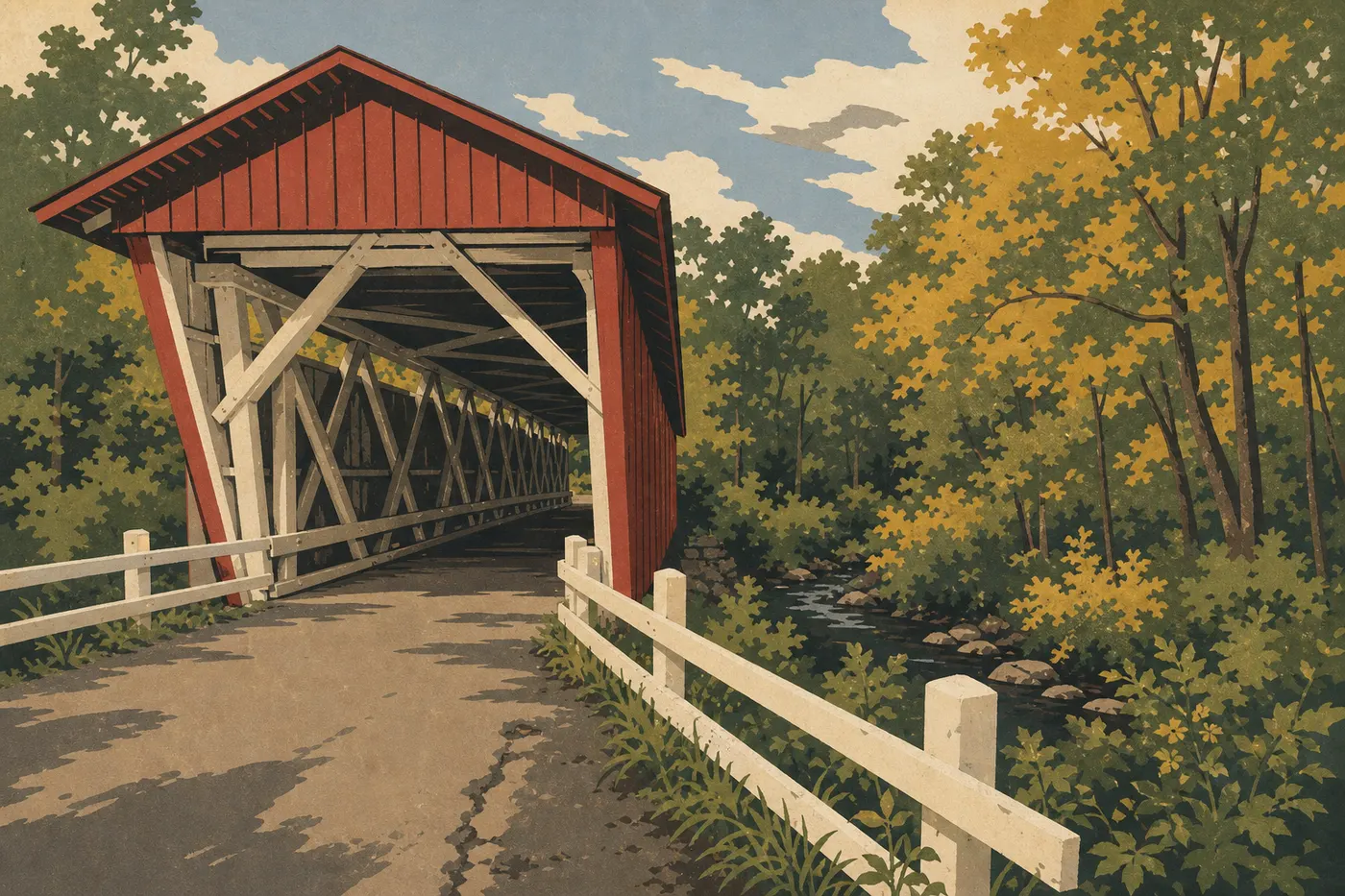
The two hours after sunrise are the best time for Brandywine Falls, when side light reaches into the gorge, and Beaver Marsh, when morning mist hangs over the water and herons are active. In October, Virginia Kendall offers a rare combination of vivid orange foliage and white quartz rock, a composition that regularly appears on specialized photography forums.
Visiting with Kids
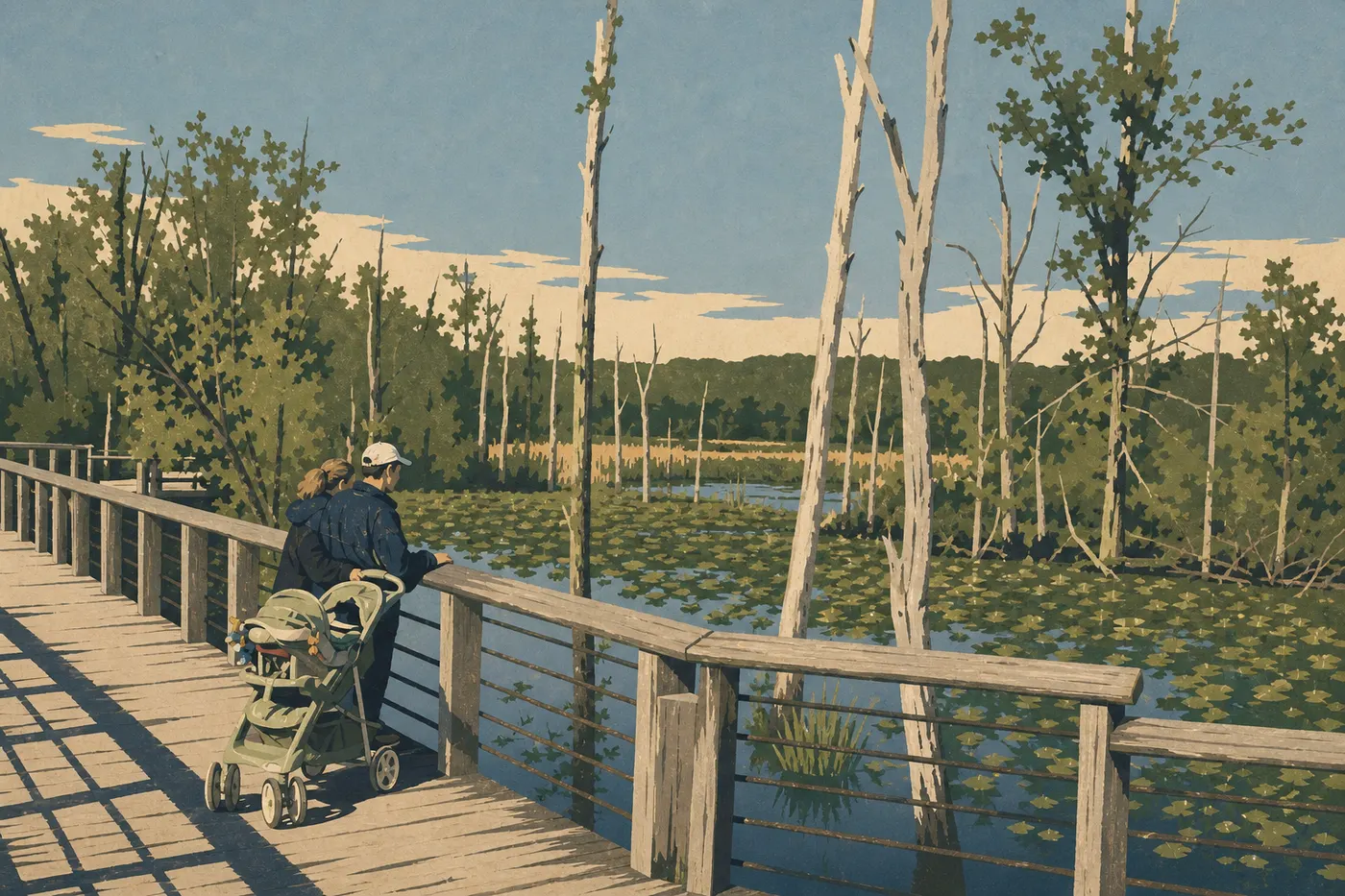
Free entry makes logistics easier. Kids especially enjoy the train, the Cuyahoga Valley Scenic Railroad, Beaver Marsh, which is easy, short, and surprising, and the rock formations at The Ledges, where they can climb and explore. Our guide to visiting Cuyahoga Valley with kids details age-appropriate itineraries.
Cross-Country Skiing and Sledding in Winter

Ohio regularly gets snow blown in from Lake Erie, the famous lake-effect snow, and Kendall Hills benefits from the phenomenon. Sledding hills and cross-country ski loops open as soon as snow conditions allow. This lesser-known side of the park is worth the trip if you're in the area between December and February. Our Cuyahoga Valley weather guide explains conditions season by season.
Things to Do Around Cuyahoga Valley
Cleveland borders the park to the north, about a 30-minute drive away, and Akron lies to the south, about 20 minutes away. This convenient location makes it easy to combine a day in the park with an evening in Cleveland, perhaps visiting the Rock and Roll Hall of Fame, the Lake Erie waterfront, or West Side Market, or to spend some time in downtown Akron.
To the east, the hardwood forests of Ohio and rural Pennsylvania offer lightly visited state parks, covered in our Road Trip guide. Our Regions guide covers the Great Lakes region, including its lakeside cities and country routes.
The Essentials: What to See First in Cuyahoga Valley
With half a day, go straight to Brandywine Falls, then make a short detour to Beaver Marsh. You'll see the park's two signature sights in three hours.
With one day, add The Ledges in the south area and walk a few miles on the Towpath Trail. That's when the park settles into its rhythm, a valley shared quietly by hikers and cyclists.
With two days, ride the Cuyahoga Valley Scenic Railroad. Take the train out, hike through the valley, and return on foot or by bike. It's the itinerary we recommend to anyone who wants to see the park as more than a series of views through a windshield.
Is this park worth a visit? Absolutely. It is worth the trip precisely because it doesn't look like any other American national park. There are no crowds like those at the major Western destinations, no entrance booth, and no need to plan around a timed entry reservation. Just a leafy valley, a river, and proof that nature can reclaim its ground 30 minutes from an international airport. Our complete Cuyahoga Valley guide has everything you need to plan your visit from start to finish.
Frequently Asked Questions
Is admission to Cuyahoga Valley National Park free?
Admission to Cuyahoga Valley National Park is completely free. There are no entrance fees, entrance booths, or passes to buy. The park is open 24/7, with one restriction: Brandywine Falls, The Ledges, Octagon, Kendall Lake, and Kendall Hills close at sunset. Check the Cuyahoga Valley Access page for current hours before a late-day visit.
Is Cuyahoga National Park really a national park?
Cuyahoga Valley became an official American national park in 2000 and is managed by the National Park Service. It had been designated a National Recreation Area since 1974. It is part of the United States' federal national parks system and has the same protected status as Yellowstone or Yosemite, with the distinction of being free and surrounded by urban areas.
What is there to do in Cuyahoga Valley?
The park offers hiking, with more than 124 miles of trails; biking on the long-distance, family-friendly Towpath Trail; wildlife watching, including beavers, herons, and bald eagles; scenic train rides on the Cuyahoga Valley Scenic Railroad; geological formations at The Ledges; waterfalls at Brandywine Falls; and cross-country skiing in winter. Entry is free.
How long does it take to visit Cuyahoga Valley?
How long should you plan for Cuyahoga Valley? One day covers the three main sights, while two days let you add a longer hike and a train ride. See our Itinerary & Length page for detailed plans based on your priorities.
Can you visit Cuyahoga Valley in winter?
You can absolutely visit Cuyahoga Valley in winter. The park stays open year-round. Lake-effect snow from Lake Erie opens the sledding hills and cross-country ski trails in the Kendall Hills area. Brandywine Falls may freeze over, making it a popular winter photography spot. Our Weather page covers conditions month by month and the precautions to take in each season.