
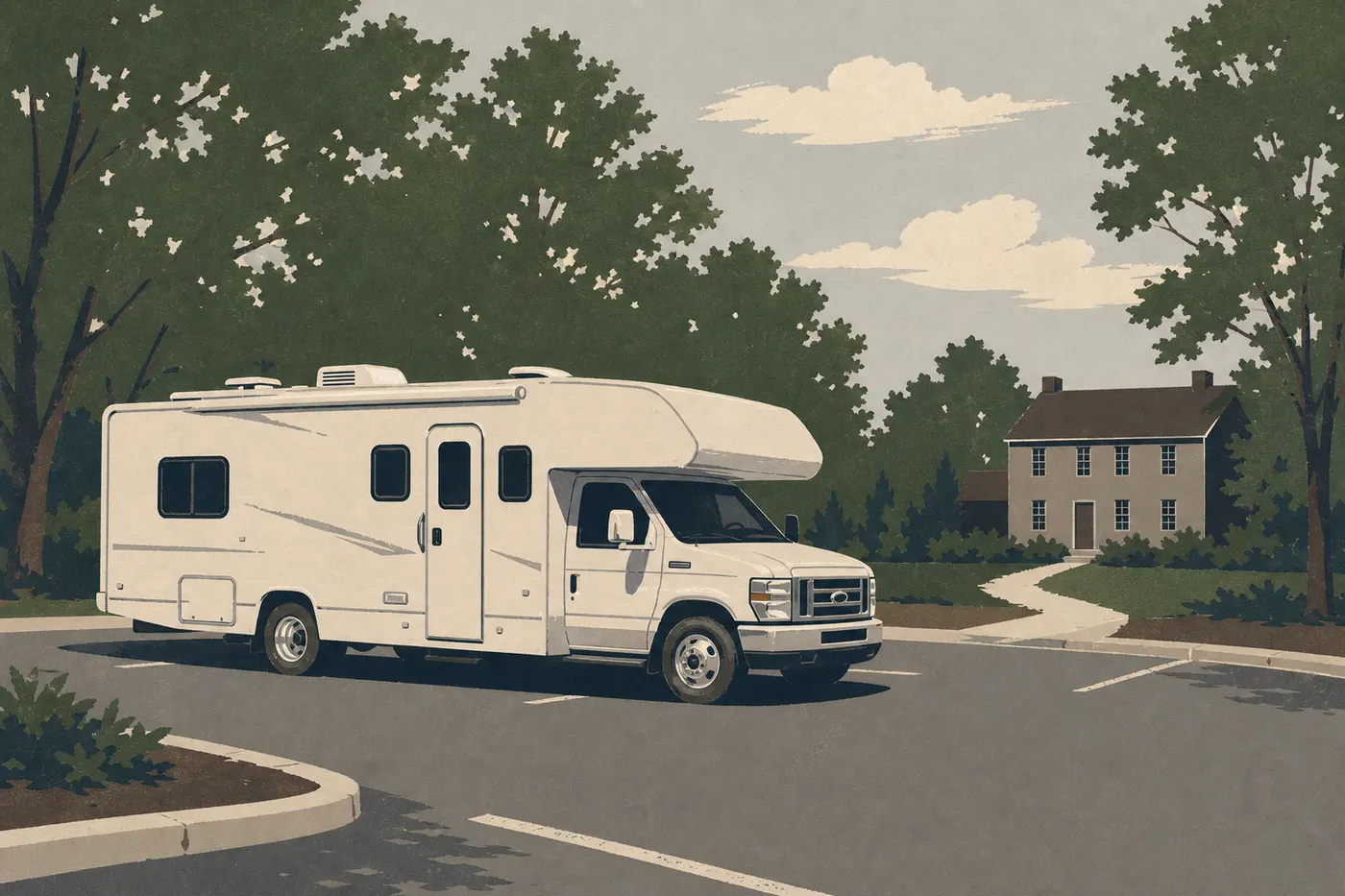
Cuyahoga Valley by RV: Campgrounds, Rules, and Tips
The short answer: you can absolutely visit Cuyahoga Valley by RV, but there's one key limitation to understand from the start. The national park doesn't allow camping anywhere within its boundaries. There are no RV sites, no overnight parking, and no backcountry camping. The NPS is clear about that. Your base camp will be outside the park, within about 12 to 25 miles, which isn't much of a burden given the park's ideal location between Cleveland and Akron.
Can you drive and camp an RV in Cuyahoga Valley?
Driving, yes. Camping inside the park, no. Cuyahoga Valley is an unusual national park: a 32-mile green corridor woven through a metropolitan area, open 24 hours a day, 365 days a year. A few areas, including Brandywine Falls and The Ledges, close from sunset to sunrise. RV access is easy on the park's main roads.
The NPS puts it plainly: “Backcountry camping or staying overnight in parking lots is prohibited.” There are no exceptions. Your RV is your lodging, and it will spend the night outside the park.
This setup as a day-use park changes how you organize your trip. For activities and routes once you're there, our complete guide to Cuyahoga Valley is the place to start.
RV restrictions and regulated roads
Cuyahoga Valley doesn't have the dramatic vehicle-size restrictions found at Zion, with its Mount Carmel Highway tunnel, or at Great Smoky Mountains, where some roads have height limits. The park's roads are typical Ohio country roads, with no officially posted length or height limits for standard RVs.
Here are a few practical points to keep in mind:
- Visitor center parking lots: the lots at Boston Mill Visitor Center and Canal Visitor Center are large enough, but a large RV over 30 feet may find maneuvering tight during busy weekend hours.
- Overnight parking: prohibited in every park parking lot, without exception. The park is patrolled, and fines are enforced.
- Speed limits: posted limits, often 35 mph, apply on roads that pass through residential areas. Follow them carefully.
The guide to Cuyahoga Valley entrances and roads explains the options for each arrival route.
Campgrounds near the park
Since Cuyahoga Valley has no campground inside the park, the NPS directs visitors to Cleveland Metroparks, Summit Metro Parks, Ohio state parks, and private campgrounds in the area. Here are the most practical options for an RV trip.
Punderson State Park
About 19 miles east of the park. This is the area's most complete option for RVs, with electric hookups, showers, and a dump station. Reservations through the Ohio DNR system are essential during the busy season.
KOA Streetsboro / Cleveland SE
This private campground is about 12 miles northeast of the park. It offers full hookups, including water, electricity, and sewer, plus a pool and Wi-Fi, all standard KOA features. Rates are higher than at state parks, but you'll get more comfort and an easy reservation process. It's well placed for day trips to Cleveland or the park.
Woodside Lake Park
This private campground is in Portage County, north of the park. It has a family-friendly atmosphere and a recreation lake. Check directly on the maximum vehicle length before you book.
Findley State Park
About 43 miles southwest of the park. It's more wooded, quieter, and less developed. Consider it if you're extending your route into southern Ohio or have already exhausted the previous options.
Nimisila Reservoir (Summit Metro Parks)
The closest metro-area option geographically. Capacity is limited, so confirm availability directly with Summit Metro Parks. It's best suited to a short stopover.
For an overview of all the lodging options in the area, our Cuyahoga Valley lodging guide covers lodges, B&Bs, and other alternatives to camping.
Dispersed camping and boondocking around Cuyahoga Valley
Ohio isn't a boondocking destination. Bureau of Land Management lands, which allow free camping in the American West, are nearly nonexistent in this state. Don't look for a BLM spot within 6 miles of the park. You won't find one here.
Here are a few alternatives for travelers on a tight budget:
- Harvest Hosts: farms, wineries, and breweries in the area sometimes accept members for one night. An annual membership is required, and it can pay off over a road trip lasting several weeks.
- Big-box store parking lots: legal in some Ohio municipalities, but check each location individually. Never use one inside the park or immediately along its boundaries.
- Federal reservoirs (Corps of Engineers): a few federal recreation areas in Ohio offer lower-cost sites. Search for them on recreation.gov.
Dump stations, water, and services
One practical benefit of a park surrounded by an urban area is that you'll never be far from services. Gas stations with dump stations are easy to find in nearby communities, including Peninsula, Brecksville, Hudson, and Akron. The iOverlander and RV Parky apps list paid dump stations in the area.
The NPS doesn't list any dump station inside the park. Plan to dump your tanks before entering or after leaving. For drinking water, the visitor centers have fountains accessible during the day, which are handy for topping off your tanks.
Which campground should you choose?
- Families with children: KOA Streetsboro for the pool, amenities, and easy online reservations.
- Keeping costs down: Punderson or Findley State Park. Ohio DNR rates remain significantly lower than private campgrounds.
- Comfort first: KOA or Woodside Lake, where full hookups and hot showers are available.
- Closest to the park: Nimisila Reservoir (Summit Metro Parks) to keep morning and evening drives short.
In the fall, when foliage peaks around mid-October, sites can fill within hours. Our guide to the best times to visit Cuyahoga Valley explains the busiest periods so you can plan ahead.
Renting an RV to visit Cuyahoga Valley
Cleveland Hopkins International Airport and Akron-Canton Regional Airport serve the area well. Several RV rental agencies operate nearby, and platforms such as Outdoorsy and RVshare also offer peer-to-peer rentals, often at lower rates than the major chains.
Before you sign, clarify two things: the rental company's insurance coverage in case of damage, and the vehicle's maximum length for the campground you've chosen. A 23- to 26-foot Class C fits all the campgrounds on this list. A 39-foot Class A requires advance confirmation.
To compare the total cost of an RV trip with a traditional stay, our Where to Stay page covers lodges and other options near the park.
RVs, pets, budget, and reservations: what to know
Pets: dogs are allowed in the park but must be kept on a leash no longer than 6 feet. They can access paved trails and picnic areas, but not buildings. Check your campground's specific policy for large dogs. Some private campgrounds have size restrictions.
Park entry: Cuyahoga Valley is free. No entrance fee is charged, which is unusual enough among America's national parks to mention.
Site fees: Ohio state parks charge competitive rates for sites with hookups, generally $25 to $40 per night depending on the amenities. KOA-style private campgrounds charge more for full hookups.
Reservations: use Ohio DNR for state parks, recreation.gov for federal sites, and the campground's own website for private campgrounds. In summer and during fall weekends, reserve two to four weeks ahead.
Winter: the park is open year-round, but lake-effect weather from Lake Erie can bring sudden snow and temperatures near 0°F during cold spells. An RV not equipped for winter has no business there in January.
Our RV plan for Cuyahoga Valley
Set up your base at a state or private campground 12 to 19 miles from the park, plan to dump your tanks in town, and spend your days in the park without worrying about vehicle size. Visiting Cuyahoga Valley by RV is like using a hotel outside town: you sleep elsewhere and enjoy the park during the day. It's less romantic than falling asleep in the park, but park access itself is free, the roads accommodate all standard RV sizes, and the area has enough campgrounds that you'll always have a backup option.
Frequently asked questions
Is there RV parking at Cuyahoga Valley National Park?
The park's lots, including Boston Mill Visitor Center and Canal Visitor Center, are open to RVs during the day. Overnight parking is strictly prohibited, so plan to stay at a campground outside the park.
Can you camp in an RV at Cuyahoga Valley National Park?
Camping in an RV inside Cuyahoga Valley National Park isn't allowed. The NPS prohibits all camping in the park, whether in a developed site, in the backcountry, or overnight in a parking lot. Alternatives include nearby state parks and private campgrounds, about 12 to 25 miles away.
What permit do you need to drive an RV in the United States?
No special permit is required to drive an RV in the United States beyond a standard driver's license, generally a Class B license for common rental RVs. The Class A, B, and C models offered by rental agencies fall within that framework. Weight regulations apply to commercial vehicles over 16,500 pounds on some state roads, but they don't concern typical recreational RVs.
Can you park an RV anywhere in Cuyahoga Valley?
No. Parking is allowed only in designated lots during the day. Parking an RV along park roads or in nearby residential neighborhoods can result in a fine. Visitor center lots remain the most practical places to park during a day visit.
What's the best time to visit Cuyahoga Valley by RV?
Spring, from April through May, and fall, from September through mid-October, offer the best weather. Foliage typically peaks around October 15. Summer is pleasant but can be hot and humid, with highs up to 95°F. Winter is possible in an RV equipped for cold weather, but lake-effect snow can be severe. Our When to Go page covers each season in detail.