
Capitol Reef by RV: Campgrounds, Rules, and Tips
Capitol Reef is one of Utah's most RV-friendly national parks. There are no permit-required tunnels like the ones at Zion, no mandatory one-way roads, and a true NPS campground set in a century-old orchard along the river. The main limitation is your vehicle's size at Fruita, along with the dirt roads that make the park's remote areas inaccessible to larger rigs. In short, you can camp here in an RV as long as you know a few basic rules.
For the park's complete overview, including history, activities, and itineraries, see our complete Capitol Reef guide.
Can you drive and camp in an RV at Capitol Reef?
Yes, without the complications that can make drivers of large vehicles nervous at Bryce Canyon or Zion. The main road, US-24, crosses the park from east to west with no vehicle-size restrictions. It's paved, wide, and suitable for every type of RV, from a compact van to a full-size motorhome.
Scenic Drive, which runs south from the visitor center for about 8 miles, is also paved and open to RVs. Parking lots at the main stops, including Capitol Gorge, Grand Wash, Hickman Bridge, and the Fruita Historic District, can accommodate reasonably sized vehicles. In peak season, arrive early if your vehicle is more than 23 feet long because parking fills quickly.
The entrance fee is $20 per vehicle and is valid for 7 days. The park's annual pass costs $35, which can pay off if you're also visiting Arches, Canyonlands, or Bryce Canyon on the same trip. The National Parks Fees and Passes page explains entrance fees and pass options.
RV restrictions and regulated roads
Capitol Reef has no tunnel restrictions, which is a real advantage. Still, keep three things in mind before you head into the park.
Unpaved roads are for high-clearance vehicles only. The road to Cathedral Valley in the north and the road to Cedar Mesa in the south are dirt roads, with possible creek crossings depending on conditions. They are for high-clearance 4WD vehicles only. A standard RV, even a compact one, has no business on these roads.
Storms can close slot canyons. Capitol Gorge and Grand Wash have sheer walls, and flash floods can rise suddenly with no warning visible from the canyon floor. Don't take your vehicle or passengers into these canyons if rain is forecast anywhere in the area, even if the storm is far away. The visitor center posts daily weather alerts. Check the Capitol Reef weather page before each day of your visit, too.
Rain and snow can make dirt roads impassable. After a storm, the park's unpaved roads can become dangerous for any vehicle. Check road conditions with the visitor center at 435-425-3791 before heading to remote areas. Seasonal road conditions are covered in the Capitol Reef Access guide.
The park's official campgrounds
Fruita Campground
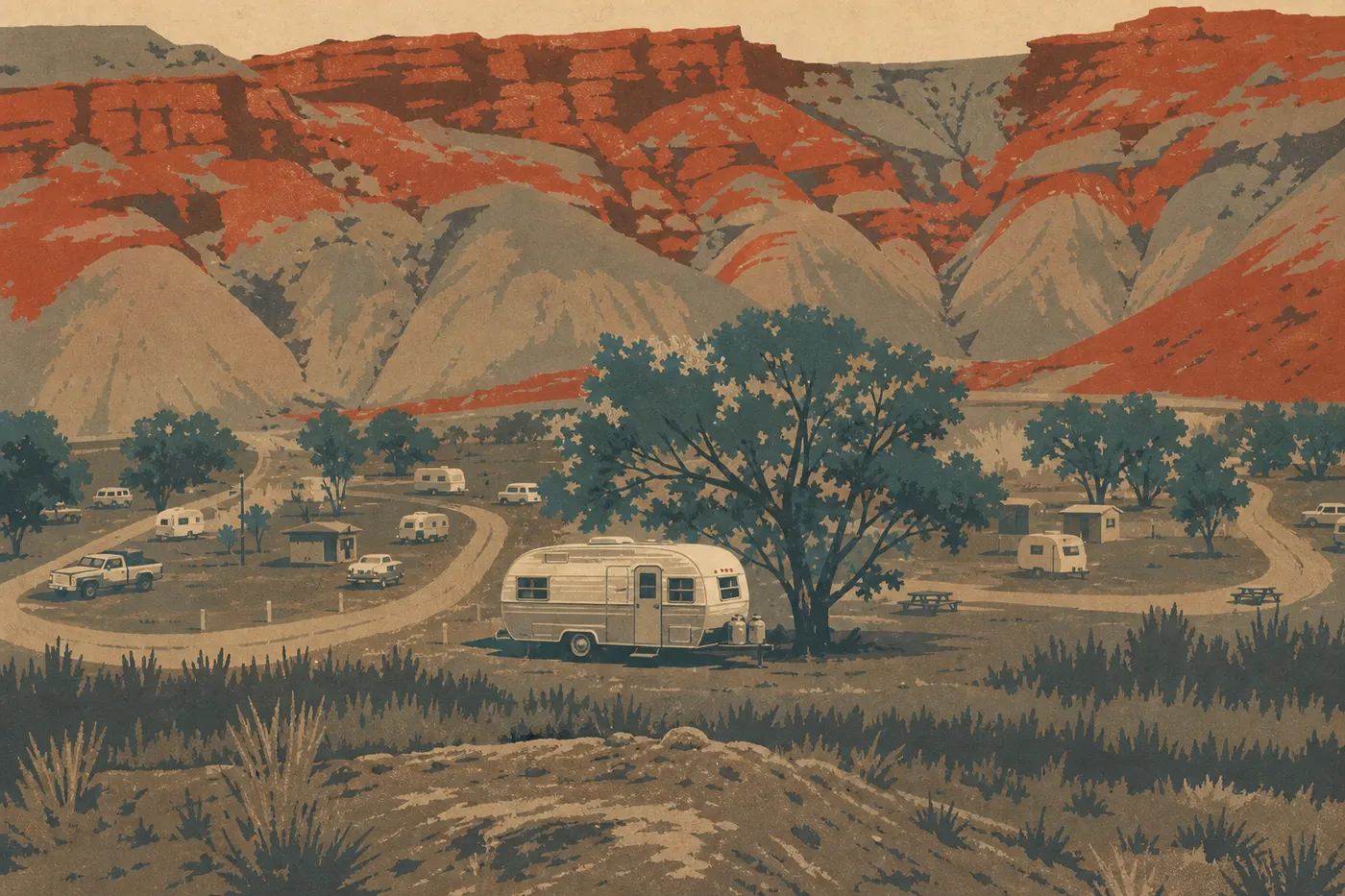
This is Capitol Reef's main campground and the only one that comfortably accommodates RVs. It's just a short walk from the visitor center, along the Fremont River, among historic orchards planted by the area's first Mormon settlers. In season, you can pick apples and pears straight from the trees, a detail that always comes as a pleasant surprise.
The campground has 71 sites. Some can be reserved through recreation.gov, and we strongly recommend booking from April through October. The rest are available on a first-come, first-served basis. Most sites accept vehicles up to about 26 to 30 feet long. Check the maximum length listed for each site when you book because limits vary by site. There are no electrical hookups. Potable water and flush toilets are available, though. The rate is about $20 per night. Open year-round.
Cathedral Valley Campground
Six primitive sites in the park's northern district, surrounded by a striking landscape of red monoliths. Reaching them requires several miles of dirt road and a creek crossing. This campground is for high-clearance 4WD vehicles only. There are no services and no potable water. Even short RVs should stay away.
Cedar Mesa Campground
Five primitive sites in the southern part of the park. The same rules apply as at Cathedral Valley: dirt road, no services, and 4WD required. Skip it if you're traveling by RV.
Boondocking and areas around Capitol Reef
This is one of the region's great advantages. BLM lands surround Capitol Reef for dozens of miles. Boondocking is legal, free, and often spectacular.
East of the park, BLM lands around Hanksville offer places to camp without infrastructure in an open desert landscape. The Henry Mountains to the southeast are another popular option, and you may occasionally see herds of wild bison roaming free. Check the ground after rain because access roads can turn into a skating rink.
For full hookups, including electricity, water, and sewer, private campgrounds in Torrey, about 6 miles west of the park on US-24, offer sites with hookups. Torrey is the area's natural resupply point. More lodging options are listed in Capitol Reef campgrounds and the lodging guide.
Dump stations, water, and services
A dump station is available at Fruita Campground for park campers. If you're boondocking on nearby BLM lands, plan to stop in Torrey or Hanksville for services.
Potable water is available at the visitor center and Fruita Campground. Outside these two locations, don't count on finding water on site. The park's remote areas and surrounding BLM lands have no infrastructure. Always leave with full tanks.
Choosing a campground for your trip
You're traveling with family or in a large vehicle: Fruita Campground is the only practical option in the park. Reserve several months ahead on recreation.gov for stays from April through October. Being close to the visitor center and orchards makes it especially pleasant for families with children. The Capitol Reef family guide offers ideas for activities on site.
You want views and solitude: Set up on BLM lands in the Henry Mountains or east of Hanksville. You'll need a self-contained vehicle with water, power, and onboard waste storage, but the quiet and scenery are worth the drive.
You want electrical hookups: There are no options inside the park. Head to the private campgrounds in Torrey, 6 miles west.
Renting an RV to visit Capitol Reef
Capitol Reef is especially well suited to an RV rental. The park lies along the route to several of Utah's major destinations, including Bryce Canyon to the southwest and Canyonlands and Arches to the east. That makes it easy to get good value from a 10- to 14-day road trip.
Salt Lake City and Las Vegas airports are the two most logical starting points. For the vehicle, a camper van or small Class C RV, under 23 feet long, offers the most flexibility. You'll have easier access to site parking, better maneuverability on secondary roads, and available sites at nearly every campground in the area. A Class A motorhome 30 feet or longer limits your choices to Fruita and private campgrounds in Torrey.
Budget varies by vehicle type and season, excluding fuel and entrance fees.
RVs, pets, budget, and reservations: what to know
Pets: Dogs are allowed at Capitol Reef, but they must remain on a leash no longer than 6 feet at all times in the park. They can't use hiking trails. They're allowed in campgrounds and on paved roads. Never leave a pet alone in a vehicle in hot weather.
Budget: Plan on a $20 entrance fee per vehicle, valid for 7 days, plus about $20 per night at Fruita and supplies in Torrey. Torrey is the last town before several hours of driving through empty desert. The National Parks Fees and Passes page explains entrance fees and pass options.
Reservations: Fruita's reservable sites go very quickly when availability opens on recreation.gov, usually 6 months ahead. During peak season, from May through September, don't count on a first-come, first-served site if you're traveling in a large vehicle.
When to go: Spring, from April through May, and fall, from September through October, offer the best conditions, with comfortable temperatures and moderate crowds. Summer temperatures in the canyons regularly top 95°F. Winter travel is still possible on the main roads, but some dirt roads and services may close. Our When to Go page breaks down conditions month by month.
In summary: our RV plan for Capitol Reef
Capitol Reef is made for a road trip by RV. Our usual plan is to arrive on a weekday evening at Fruita after booking well in advance, spend two or three days enjoying Scenic Drive and the central district's hikes, then spend a night or two boondocking on BLM lands in the Henry Mountains. Fill your water tanks and stock up on food in Torrey before entering the park, and never underestimate the weather. A storm can close a canyon here in just a few minutes.
Frequently asked questions
How long does it take to visit Capitol Reef by RV?
Two or three days are enough to cover the park's central district, including Scenic Drive, the Fruita Historic District, and a few hikes. To explore Cathedral Valley and the remote areas to the north or south as well, plan on five or six days total, with a 4WD vehicle for unpaved areas.
Where are RVs prohibited at Capitol Reef?
RVs can't reach the primitive campgrounds at Cathedral Valley and Cedar Mesa, which require a high-clearance 4WD vehicle. The park's dirt roads are also a poor choice for large rigs, especially after rain. Parking is available at the site lots, but spaces for vehicles over 23 feet are limited during peak season.
How much does a campsite cost in a U.S. national park?
At Fruita Campground, the rate is about $20 per night, with no electrical hookups. BLM campgrounds around the park are generally free. Private campgrounds in Torrey with hookups charge more depending on the season. For entrance fees and annual passes, see the National Parks Fees and Passes page.
What does “Capitol Reef” mean?
“Capitol” refers to the white sandstone formations that resemble the dome of the U.S. Capitol. “Reef” was a term Utah pioneers used for a rocky barrier that was difficult to cross, by analogy with a coral reef. Waterpocket Fold, the geological monocline that runs through the park for 100 miles, was exactly that kind of barrier for early settlers trying to travel west.