
When to Visit Capitol Reef: Best Seasons and Month-by-Month Guide
The short version: Spring (March-May) and fall (September-October) are the two best windows for visiting Capitol Reef. Temperatures make for comfortable hiking, the light is generous, and crowds remain manageable. Summer brings dry heat and flash floods; winter offers solitude and striking photographic conditions, but freezing nights.
The best time to visit Capitol Reef is April and May in spring, and September and October in fall, with temperatures from 68 to 84°F, clear access to remote areas, and light that brings out the red sandstone of Waterpocket Fold.
The good news is that Capitol Reef is open 365 days a year, 24/7, with no timed entry reservation system. That's unusual in Utah, where neighboring Arches and Zion can have lines at the entrance before sunrise. The real question isn't whether you can go, but when you'll get the most out of Waterpocket Fold. Our complete Capitol Reef guide covers the basics; here, we'll focus on the calendar.
Capitol Reef Climate Month by Month
Capitol Reef sits in the heart of Utah's desert at about 5,600 feet. The result is very hot summers, cold, dry winters, and modest precipitation except in July and August, when afternoon monsoon storms roll in from the Rockies. Winter temperatures regularly drop to 23 or 21°F at night, while July can top 99°F in the canyons. For short-term forecasts and storm alerts before entering a canyon, check our Capitol Reef weather page, where we display a real-time widget updated several times a day.
Capitol Reef in January
January is the park's coldest month. Highs rarely rise above 41°F, and lows regularly fall to 21°F. Snow may cover the plateaus, and dirt roads are often closed or slick. The park is nearly empty, making this the ideal month for photographers looking for snow-dusted sandstone without crowds on the trails. Pack warm layers and check conditions at the visitor center before setting out.
Capitol Reef in February
February still feels like winter, with highs around 48°F, but the days are getting longer and overnight freezes around 27°F begin to ease toward the end of the month. Crowds are still very light. Unpaved roads often remain impassable after the latest snow, while UT-24 is open year-round. It's a good window for visitors who want the park largely to themselves, with low lodging rates in Torrey.
Capitol Reef in March
March marks the start of the thaw. Highs climb to about 59°F, while nights remain cool at around 34°F. Fruita's orchards begin to bud, and the first wildflowers appear along the edges of UT-24. Dirt roads such as Cathedral Valley Loop gradually reopen, but check recent conditions at the visitor center because a single rainstorm can close them. Crowds are still moderate, and the morning light on the pink sandstone domes is exceptional.
Capitol Reef in April
April is one of the best months of the year. Daytime temperatures reach 70°F, and nights remain mild at 43°F. The cherry and peach trees in Fruita's orchards are in bloom, and wildflowers carpet the edges of the scenic road. Crowds increase noticeably compared with March, so choose weekdays over weekends if you want to find the Chimney Rock and Hickman Bridge parking areas still available in the morning. Cathedral Valley roads are generally passable with a 4WD vehicle.
Capitol Reef in May
May is the peak month of spring. Temperatures settle around 81°F during the day and 52°F at night, ideal conditions for every hike, including longer ones such as Rim Overlook and Navajo Knobs. Cherry picking begins toward the end of the month. Spring crowds are at their peak, and the main parking areas are often full before 10 a.m. on weekends. For exposed trails, start at dawn and bring more water than you think you'll need.
Capitol Reef in June
June is still manageable early in the month, with highs around 91°F, but the heat settles in for good from mid-June onward. Apricots and the first peaches arrive in the orchards, and visitors may pick freely for the amount they eat on site. Monsoon storms haven't become consistent yet, but isolated cells can form in the afternoon. Start your hikes before 8 a.m. if you plan to tackle exposed trails.
Capitol Reef in July
July is the hottest month of the year, with highs regularly reaching 99°F in the canyons. Afternoon monsoon storms become frequent, and flash floods are a real risk. Don't enter a narrow canyon if storm clouds are building upstream. Peach and apricot harvests are in full swing. Paradoxically, crowds are lower than in May because the heat keeps some unprepared visitors away.
Capitol Reef in August
August brings summer's two main challenges: highs around 93°F and monsoon rainfall totaling up to 1 inch, concentrated in violent afternoon downpours. Pears and the first apples arrive in the orchards. Hiking conditions are fine early in the morning, before 9 a.m., then become dangerous in narrow canyons as soon as the sky darkens. Check the daily weather bulletin at the visitor center before choosing your route.
Capitol Reef in September
September marks the return of good conditions. Highs fall to 84°F, and monsoon storms taper off sharply after midmonth. The orchards produce apples and pears through late October, and free picking remains open. Crowds rise as visitors return to the park in the milder temperatures, so go on weekdays to enjoy Chimney Rock and the Cathedral Valley roads in good conditions. This is our default recommendation.
Capitol Reef in October
October may offer the best light of the year. Cottonwood trees in Fruita Valley turn bright yellow, and the red sandstone cliffs take on saturated colors in the low afternoon light, with highs around 72°F and nights at 43°F. Storm season is over, and dirt roads are in good shape. Crowds are moderate, with a noticeable surge on fall weekends. For photographers, the second half of October is the most sought-after time of year.
Capitol Reef in November
November is a gentle transition into winter. Highs hover around 54°F, and nights begin to freeze at 30°F. The last fruit is picked in the orchards, and the leaves are gone. Crowds drop sharply, lodging in Torrey offers its lowest rates, and some businesses close until spring. Dirt roads can become slick after rain or the first snow, so check conditions if you plan to explore the north or south end of the park.
Capitol Reef in December
December is the quietest month of the year, with highs around 43°F and lows of 23°F. Snow is possible on the high plateaus, and unpaved roads are often closed. The visitor center has reduced hours, so call before you go (435-425-3791). For photographers, the contrast between orange sandstone and white snow under a crystal-clear blue sky is striking. UT-24 remains open, and the marked trails in Fruita Valley are accessible on foot with the right gear.
Capitol Reef Season by Season
Spring (March-May): The Golden Window
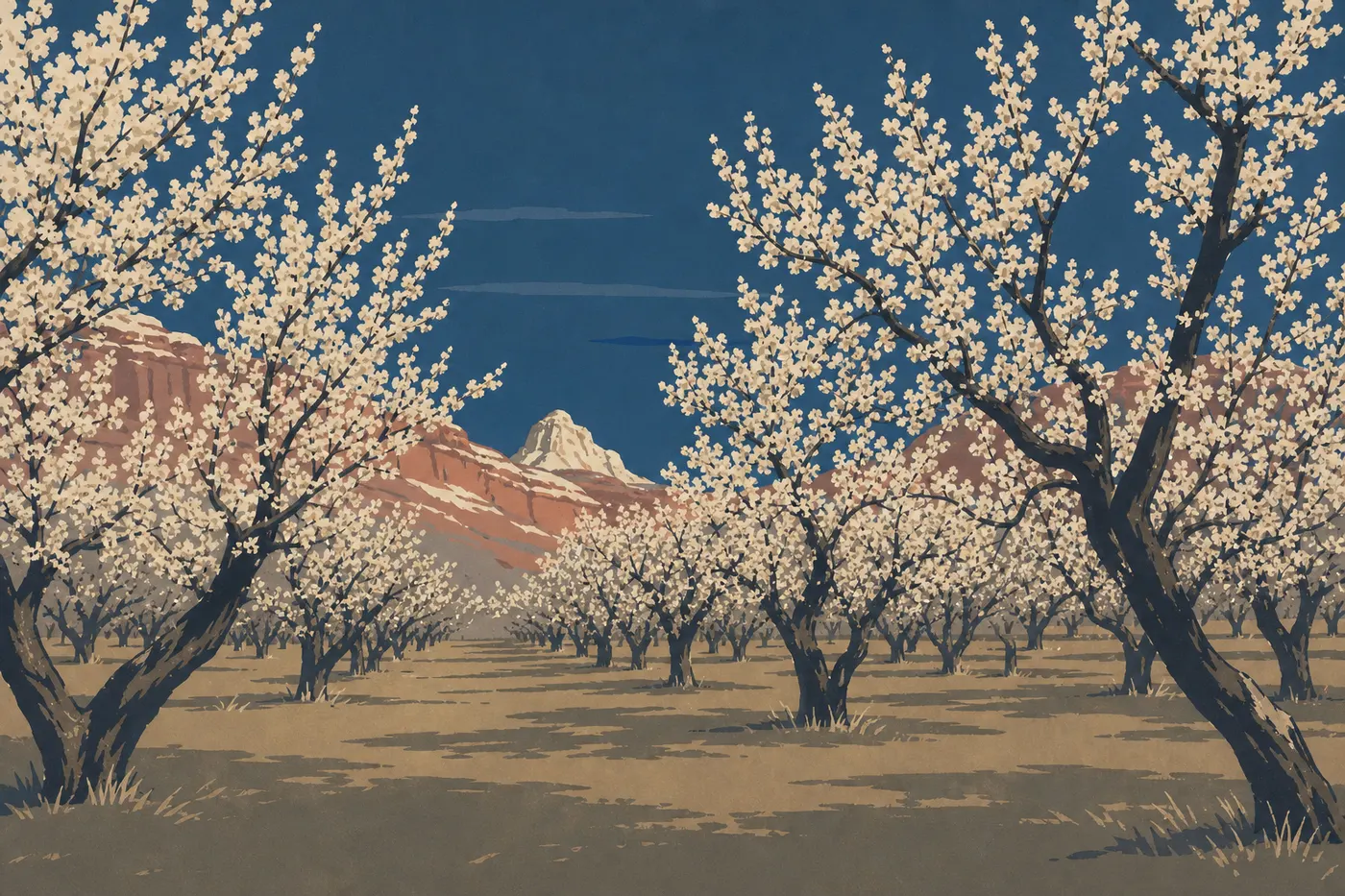
This is the season we recommend first. Daytime temperatures range from 59 to 81°F, nights stay cool and can be cold in March, and wildflowers line UT-24 in bright yellow. Fruita's orchards, planted in the 19th century by Mormon settlers, begin to bud in April: cherry, peach, and apple trees. The show is free, and so is the photography.
Dirt roads such as Cathedral Valley Loop in the north of the park and Notom-Bullfrog Road to the east are generally passable with a 4WD vehicle once the spring snow melts, usually around March or April depending on elevation. After rain, these clay roads become slick and can strand a low-clearance vehicle for hours. Check conditions at the visitor center before setting out.
Wildlife is active too: deer in the Fruita meadow early in the morning, and nesting raptors on the red sandstone cliffs. As for crowds, March stays quiet, while visitation rises noticeably in April and May. Weekdays are much more peaceful.
Summer (June-August): Intense Heat and Storm Risk
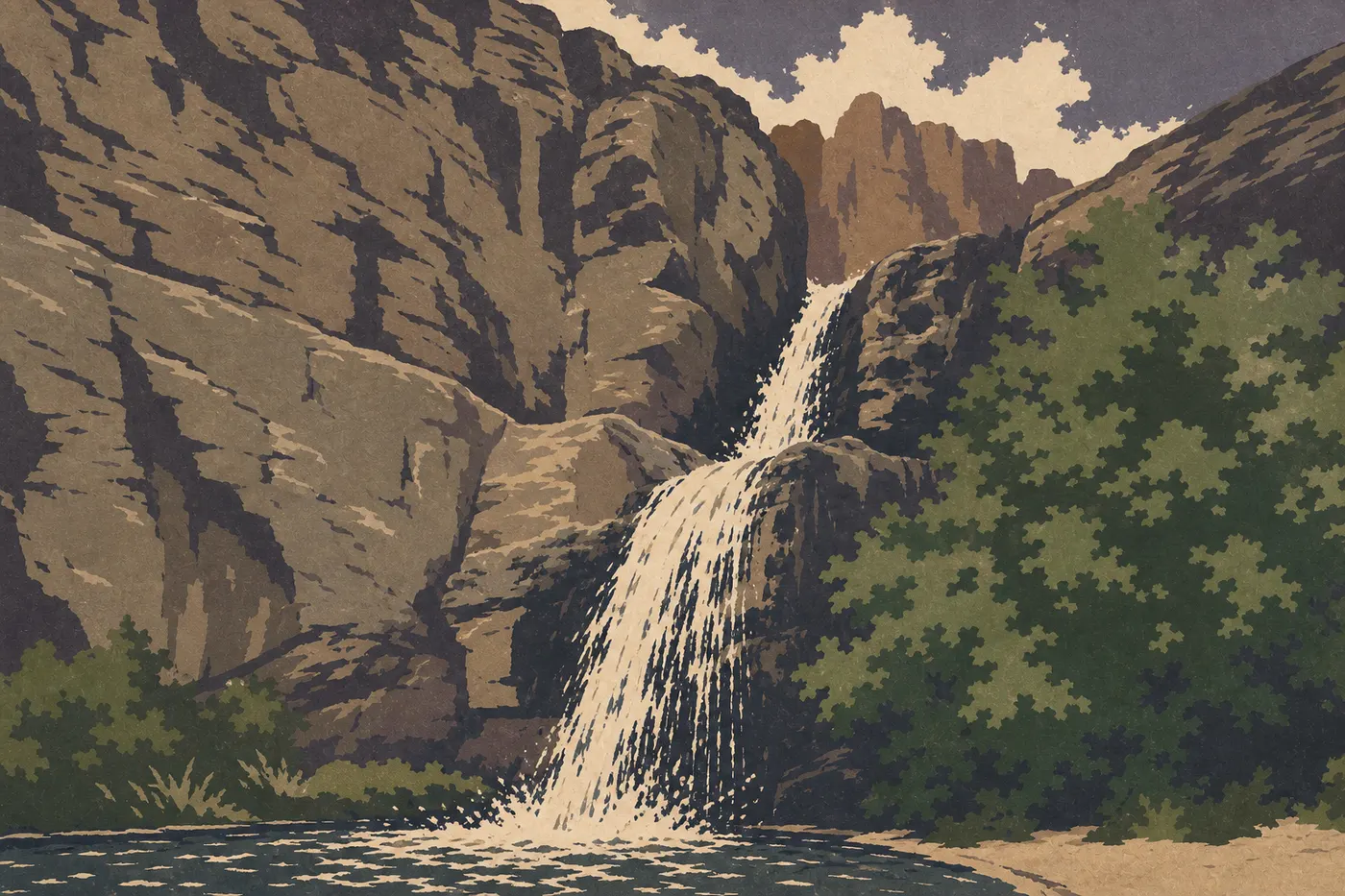
June is still manageable, at 91°F during the day, but July and August regularly push past 99°F in exposed canyons. Trails without shade become genuinely punishing after 9 a.m., and parking lots heat up like grills.
From mid-July through September, monsoon storms can hit in the afternoon without warning. The danger is real: a flash flood can race through a narrow canyon within minutes, long before you hear thunder. Never enter a narrow canyon if storm clouds are building upstream or if rain has been reported in the area. Weather bulletins are posted daily at the visitor center and updated in real time. During an August visit, I picked apples in the Fruita orchards beneath an apocalyptic orange post-storm sky. Memorable, but I made a very quick return to the cars.
What makes the heat worthwhile is the fruit harvest, which is in full swing: cherries in June, apricots and peaches in July, and apples and pears from late August through October. The NPS allows free picking for the amount consumed on site, with no extra charge. Crowds are paradoxically lower than in May because the heat filters out less-prepared visitors.
Fall (September-October): Our Second-Choice Season
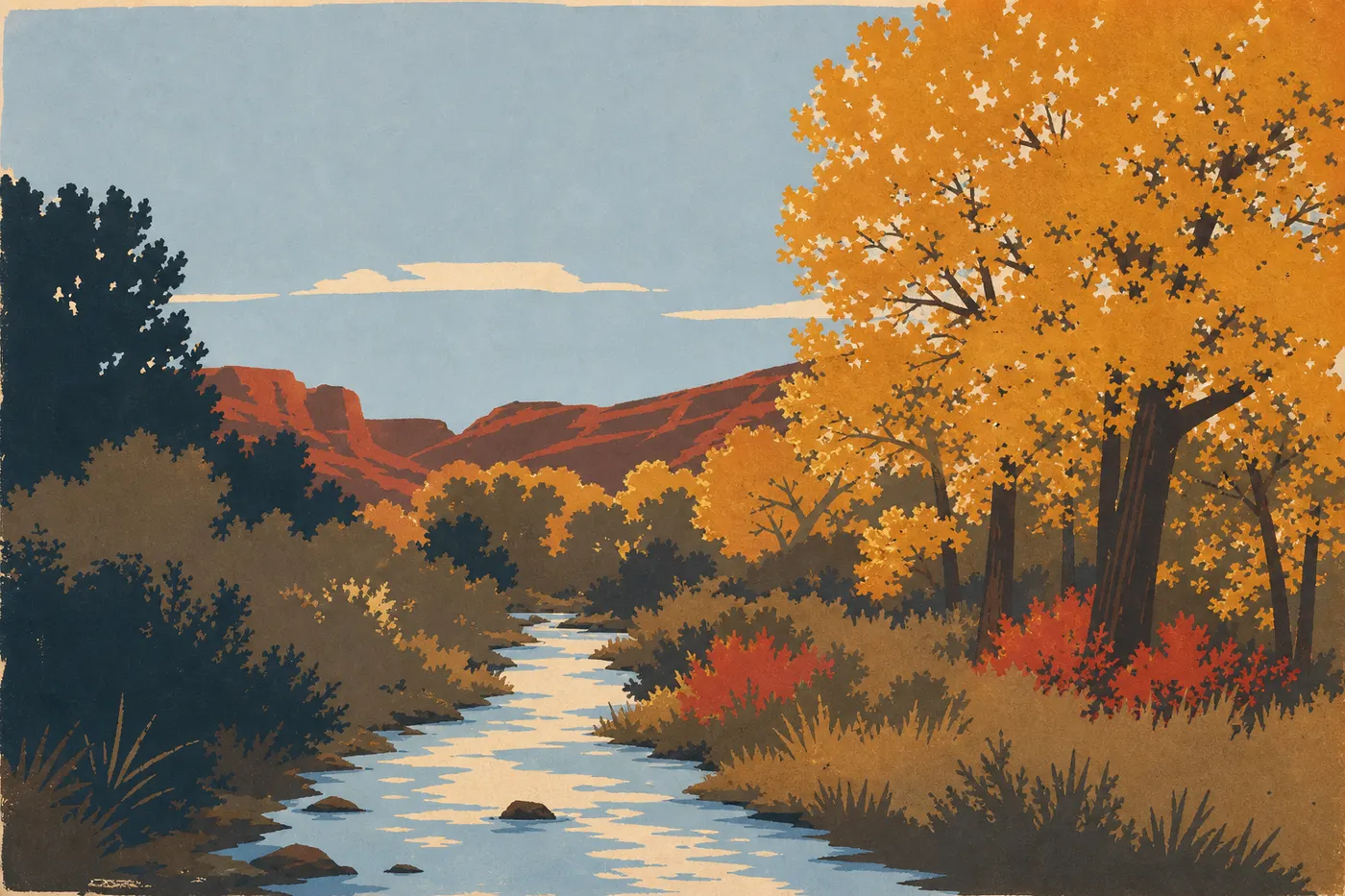
Visually, fall is probably the most rewarding season. Cottonwoods in Fruita Valley turn bright yellow in October, and the red sandstone cliffs take on even more saturated colors in the low afternoon light. Daytime temperatures fall to 72-84°F, and nights cool to 43-55°F, ideal conditions for camping.
Storm season fades sharply after mid-September. Dirt roads return to good condition, and the orchards produce their last harvests. Visitation rises in September and then settles down in October. For photographers and campers, October offers the best balance between quality light and peace and quiet.
Winter (November-February): Silence and Cold Light
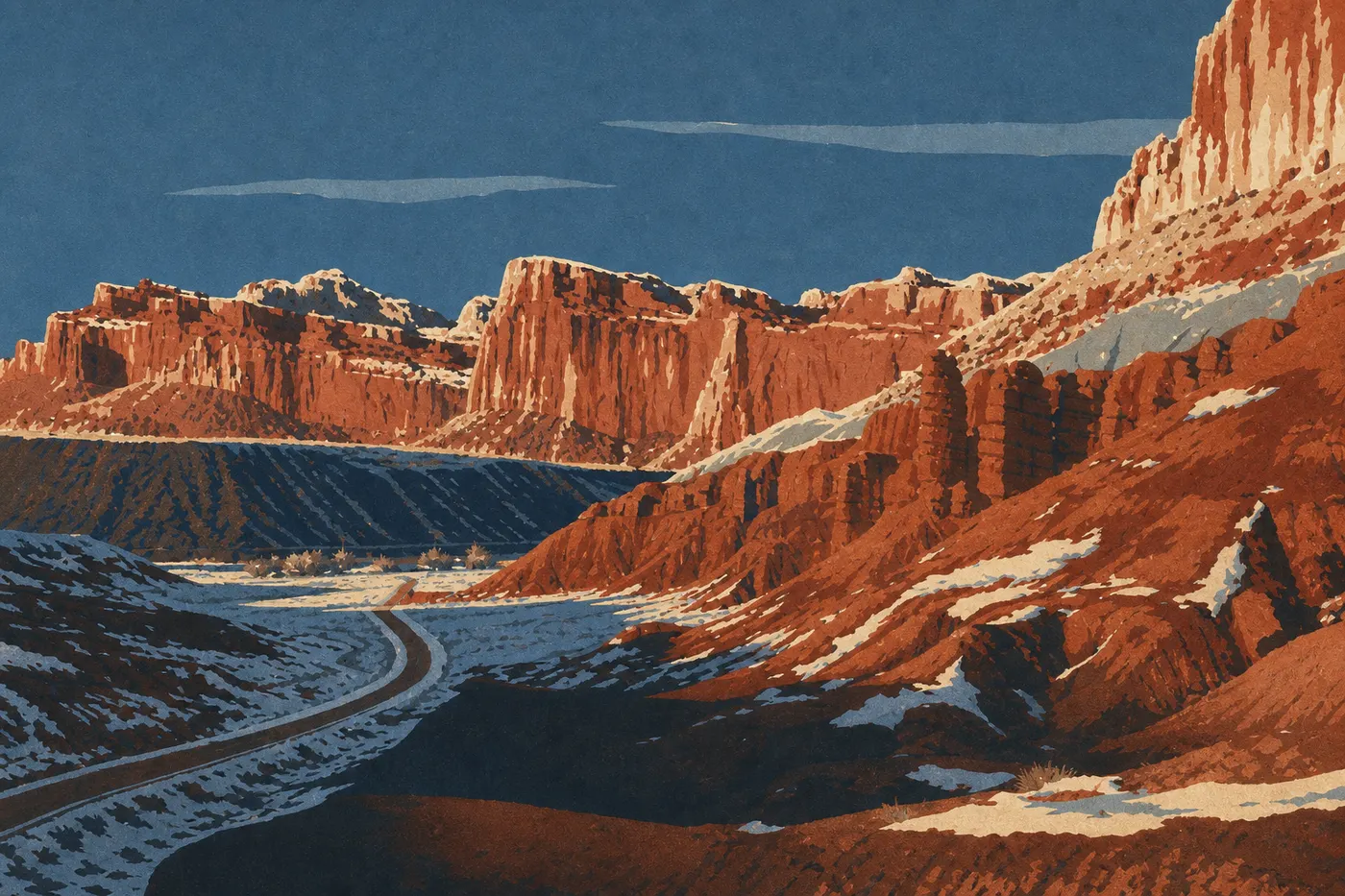
Capitol Reef in winter is an almost empty park beneath often-crystal-clear skies. Daytime temperatures range from 41 to 54°F depending on the month, and can drop to 21°F at night in January. Snow may fall on the high plateaus surrounding Waterpocket Fold. White-dusted cliffs against orange sandstone create photographic contrasts you won't see in summer.
UT-24, the park's main road, stays open year-round. Unpaved roads, however, quickly become impassable after a snowfall. The visitor center has reduced winter hours, so call before you go (435-425-3791).
Crowds: When to Avoid the Crowds at Capitol Reef
Capitol Reef remains far less crowded than Arches or Zion, but the growing popularity of Utah's Mighty 5 brings more visitors every year.
| Time of year | Crowds | Comment |
|---|---|---|
| January-February | Very low | Ideal for solitude. Prepare for nights around 23°F. |
| March | Low to moderate | Starts to rise toward the end of the month. |
| April-May | Moderate to high | Spring peak. Weekdays are much better than weekends. |
| June | Moderate | Hot but manageable before July's peak heat. |
| July-August | Moderate | Heat naturally keeps crowds down. Less crowded than May. |
| September | Moderate to high | Ideal conditions return, and visitation rises. |
| October | Moderate | Golden light, with quieter weekdays than weekends. |
| November-December | Low | Clearly off-season. |
The practical advice: if you're visiting in April, May, or September, hit the trails at first light. The Chimney Rock and Hickman Bridge parking areas are full before 10 a.m. on some May weekends.
Reservations and Access by Season
Capitol Reef has no timed entry reservation system. There is no timed entry and no day-use permit. Entrance fees and the America the Beautiful pass apply in every season.
What changes with the seasons is access to remote areas. Cathedral Valley Loop in the north and Notom-Bullfrog Road to the south require a high-clearance vehicle, and possibly 4WD in wet weather or winter. The Capitol Reef access guide brings together current road conditions and routes from Salt Lake City and Las Vegas.
Best Time to Visit on a Budget
On-site lodging is limited to the NPS's Fruita Campground. Seasonal budget differences are felt mainly at outside accommodations, especially in Torrey, 11 miles west, and Hanksville to the east.
- Peak season (April-October): Torrey motels and guesthouses charge their highest rates, and Fruita Campground sites fill quickly. Book through Recreation.gov as soon as possible for April, May, and September.
- Low season (November-March): Rates in Torrey are much lower. Keep in mind that some businesses close from November through March, reducing the available options.
- Good deals: The Cathedral Valley campgrounds and Cedar Mesa primitive campgrounds operate on a first-come, first-served basis year-round, with no extra fee. You'll just need a vehicle suited to the roads.
To compare all the options and fine-tune your budget, see our Where to Stay in Capitol Reef guide and our Capitol Reef camping guide.
Which Season Fits Your Travel Style?
You're here to hike. Aim for April-May or September-October. Exposed trails such as Rim Overlook and Navajo Knobs are enjoyable at 68°F and punishing at 100°F. Avoid narrow canyons on July and August afternoons. The Capitol Reef hiking guide sorts trails by difficulty and recommended season.
You're a wildlife enthusiast. Spring (March-May) is the season for newborn animals and active deer in the Fruita meadow early in the day. In fall, look for migrating raptors along the ridges. The Capitol Reef wildlife guide details the species found in each season.
You're a photographer. October is best for golden cottonwoods and low-angle light. Winter brings snow-and-sandstone contrasts beneath blue skies. Spring offers wildflowers and pink sandstone domes after rain.
You're traveling with kids. Choose May or September for manageable temperatures, short trails, and orchard activities. Our Family page lists hikes suitable for children as young as 5.
You're watching your budget. November-February means cheaper lodging in Torrey and an almost empty campground. Keep in mind that dirt roads may be closed if you plan to explore the north or south end of the park.
In Summary: The Best Time for Your Travel Style
| Travel style | Ideal time | Avoid |
|---|---|---|
| Comfortable hiking | April-May, September-October | July-August (heat) |
| Landscape photography | October, winter | July (harsh light, storms) |
| Wildlife viewing | March-May | November-December |
| Families | May, September | August (extreme heat) |
| Tight budget | November-February, March | April-May, September |
| Complete solitude | December-February | Any May weekend |
Our default recommendation is September. The light is golden, the heat has eased, storms are rare, Fruita's orchards are producing their last peaches, and you can still explore Cathedral Valley without sinking into mud. Spend a midweek day there, and Chimney Rock is yours in the morning.
The Worst Time to Visit Capitol Reef
July combines the calendar's two worst conditions: highs that regularly reach 99°F in the canyons and monsoon storms that strike in the afternoon without warning. Exposed trails such as Navajo Knobs become dangerous after 9 a.m.; avoid narrow canyons in the afternoon whenever cumulus clouds form on the horizon. The heat is dry but intense. Dehydration can catch even experienced hikers, and the flash-flood danger remains real through September.
August has the same drawbacks, with slightly heavier precipitation, up to 1 inch in violent downpours. It's not a season to rule out completely if you enjoy orchards and quiet mornings, but you'll need to adjust your schedule: wake up at 5:30 a.m., finish your hikes before noon, and spend the afternoon in the shade at Fruita or at the visitor center. For families with young children or visitors unaccustomed to desert heat, July and August remain the seasons to avoid first.
Frequently Asked Questions
What's the best time to visit Capitol Reef National Park?
The best time to visit Capitol Reef is from late March through May and from September through mid-October. These two windows combine temperatures from 59 to 84°F, plenty of sunshine, and limited storm risk. September is our top pick if you can choose only one month.
Can you visit Capitol Reef in winter?
Yes. Capitol Reef is open year-round, 24/7. In winter (November-February), daytime temperatures range from 41 to 54°F, and nights can drop to 21°F in January. UT-24 remains open, but the dirt roads in the north and south of the park are often impassable after snow. It's an exceptional season for photographers and visitors seeking solitude, as long as you bring warm gear and check conditions before leaving the main road.
Which month has the fewest visitors?
January and December are the least crowded months. The park is nearly empty, lodging in Torrey is at its cheapest, and the trails in Fruita Valley are accessible in clear weather. Bring warm gear and check dirt-road conditions if you plan to venture away from UT-24.
Is the park open in December and year-round?
Capitol Reef is open 365 days a year without interruption. There is no timed entry reservation system. You either pay the entrance fee, $20 per private vehicle, or show an America the Beautiful pass at the entrance. The visitor center has reduced hours in December, so call 435-425-3791 before traveling from Torrey.
When is peak season at Capitol Reef?
Peak season runs from April through October, with two distinct peaks: spring (April-May) and early fall (September). May is statistically the busiest month. Even in peak season, Capitol Reef is much less crowded than Arches or Zion. Without timed entry, you don't have to race for a time slot.
How long do you need to visit Capitol Reef?
Plan on at least two days to cover Scenic Drive and two or three major trails. Three to five days lets you explore Cathedral Valley to the north, Notom-Bullfrog Road to the south, and enjoy Fruita's orchards in season. Our Itinerary and Trip Length page offers one- to five-day plans for different schedules.
What's the best time to visit the American West?
For a road trip through the American West that includes Utah, Nevada, and Arizona, spring (April-May) and fall (September-October) remain the best windows: manageable heat, accessible parks, and available lodging. Our Greater West Region guide outlines the main multi-park combinations and routes by state.
What's the best time to visit Monument Valley?
Monument Valley, Arizona-Utah, has a climate similar to Capitol Reef: spring and fall are ideal, summer is very hot, up to 104°F, and winter is cold but less crowded. The two sites fit naturally into a Utah-Arizona road trip, with Capitol Reef first when driving north from the south.