
Camping in Capitol Reef: Which Campground to Choose, Reservations, and Fees
The short answer. Capitol Reef has five NPS-managed campgrounds with 83 sites in all. Fruita Campground is the only one with water and full services ($25 a night, reservations through recreation.gov). Cathedral Valley and Cedar Mesa offer primitive first-come, first-served sites with no site fee. A reservable Group Campsite accommodates up to 40 people ($125 a night). Backcountry camping is available to self-sufficient campers with a free permit.
Campgrounds in the park (4)
- Campground Primitive campsites at Cathedral Campground first come, first served · 6 sites Directions ↗
- Campground Primitive campsites at Cedar Mesa Campground first come, first served · 5 sites Directions ↗
- Campground Fruita Campground recreation.gov · 71 sites Directions ↗
- Campground Group Campsite recreation.gov · 1 sites Directions ↗
 Base map © OpenStreetMap · © CARTO
 Capitol Reef campgrounds by the numbers
5 official campgrounds inside the park, 83 campsites in total, 66 of them reservable.
| Campground | Sites | Booking | Fee / night | Open | Amenities |
|---|---|---|---|---|---|
| Fruita Campground | 71 (7 tent only, 1 group) | Reservation | from $25 | Year round | toilets, potable water, dump station, firewood* |
| Primitive campsites at Cathedral Campground | 6 | First come, first served | Free | toilets | |
| Primitive campsites at Cedar Mesa Campground | 5 | First come, first served | Free | toilets | |
| Group Campsite | 1 (40 group) | Reservation | from $125 | toilets*, potable water*, dump station, firewood* | |
| Backcountry Camping |
Source: National Park Service (NPS API), retrieved October 6, 2026. Fees and dates change: check the campground page before you go.
Can You Camp Inside Capitol Reef?
Yes. Capitol Reef is open 24/7 year-round. The park manages five campgrounds with 83 sites total, spread between the main valley and remote areas. Camping outside designated sites or permitted backcountry areas is prohibited. You can't pitch a tent in a canyon accessible by car or beside a road.
You have three options: developed camping at Fruita or the Group Campsite, primitive campgrounds in remote areas, and backcountry camping with a permit.
Campgrounds Inside the Park
Fruita Campground
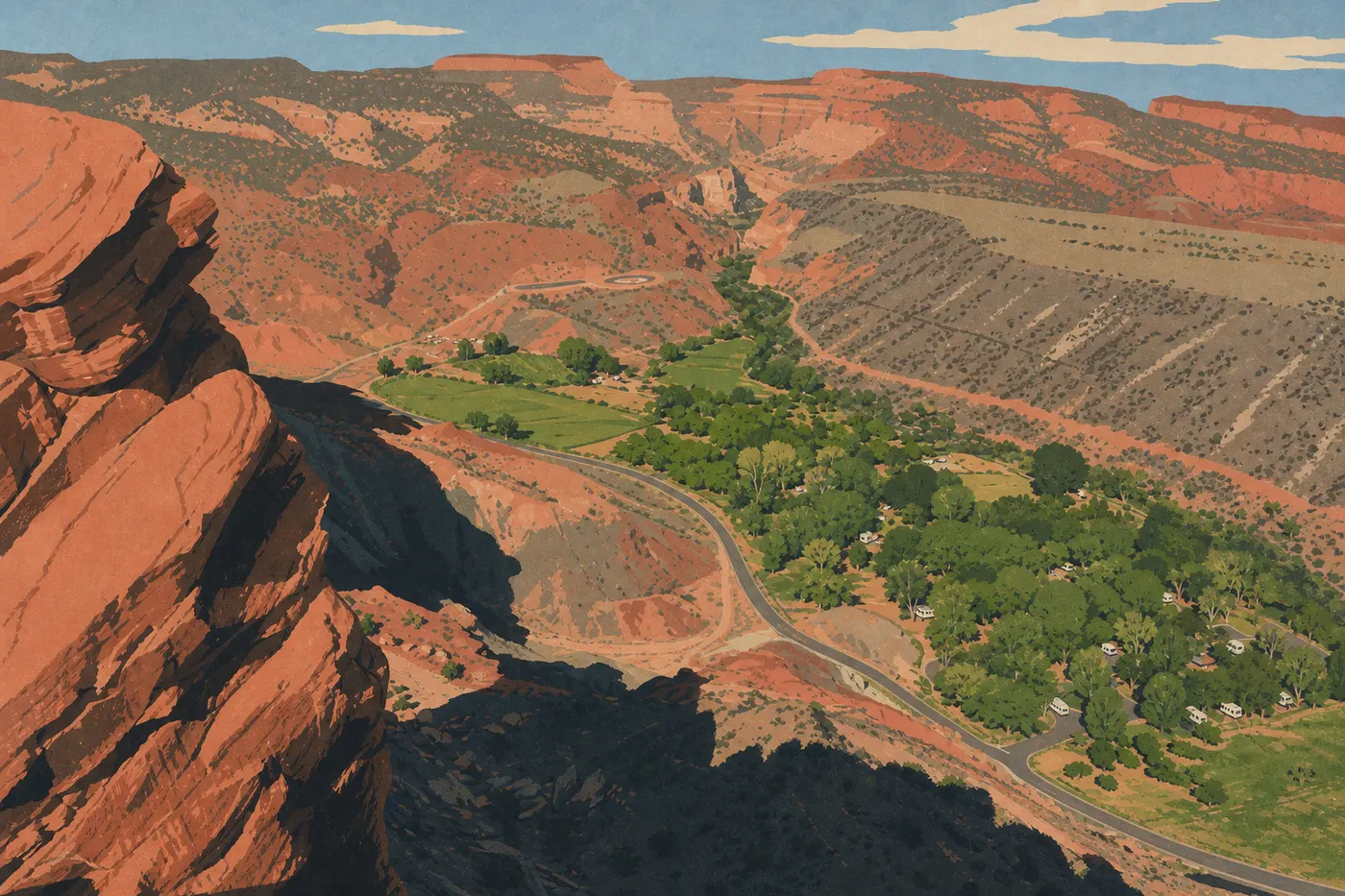
Fruita is the park's largest campground and the only one with full services, with 71 sites. Located 1 mile from the visitor center in the historic valley of the same name, it offers an unusual setting. Centuries-old orchards planted by the first Mormon pioneers surround some of the sites, and the Fremont River flows just steps away. In season, the NPS allows visitors to pick fruit freely in these orchards, a unique practice in America's national parks.
Fruita has running water, flush toilets, a dump station, firewood available on-site, and internet access. It's open and reservable year-round through recreation.gov. Reservations open six months in advance. The busy season runs from mid-March through October, and sites go within hours of each booking window opening.
Cathedral Valley Campground
In the park's northern section, Cathedral Valley has six primitive sites. You'll need a high-clearance vehicle to get there. After rain, four-wheel drive is strongly recommended because the dirt roads quickly become impassable. The only facilities are pit toilets, and there's no water. The setting more than makes up for it: Cathedral Valley's red sandstone monoliths rank among the most photogenic geological formations on the Colorado Plateau.
First come, first served. There is no site fee.
Cedar Mesa Campground
South of the park, Cedar Mesa has five primitive sites with no water or electricity. You reach it via Burr Trail Road, which is paved at first and then turns to gravel. Pit toilets are the only facilities. The site looks directly out over Waterpocket Fold, the long curtain of folded sandstone that defines the park geologically.
First come, first served. There is no site fee.
The park also has a Group Campsite, reservable through recreation.gov. It accommodates up to 40 people for $125 a night, with access to water, a dump station, firewood, and toilets.
RV vs. Tent Camping: Which Site Should You Choose?
For RV campers, Fruita Campground is the only developed campground inside the park. Check the maximum vehicle length for your site on recreation.gov when you book. The dump station is available on-site. The primitive campgrounds at Cathedral Valley and Cedar Mesa aren't suitable for RVs because the dirt roads make them inaccessible.
For tent campers, Fruita offers shade, water, and direct access to trails from the campground. If you want more solitude, Cathedral Valley and Cedar Mesa are your only options inside the park.
Our Capitol Reef RV camping guide explores RV park options around Torrey for travelers looking for more services.
Camping Near the Park: Campgrounds Outside Capitol Reef
Torrey, a small town about 7 miles west of the visitor center, has several private campgrounds and RV resorts. It's the natural choice when Fruita is full, which happens regularly in spring and fall. Some properties offer sites with water, electricity, and dump stations; others focus on luxury tent camping.
For a complete overview of places to stay in the area, see our Capitol Reef lodging overview and our Hotels and lodges guide.
Backcountry and Dispersed Camping
Capitol Reef's backcountry is open to self-sufficient campers with a free permit, available at the visitor center or certain trailheads. A few rules apply: camp at least 1,300 feet from a water source, stay away from trails and archaeological sites, and leave no trace. Pack it in, pack it out.
The backcountry covers thousands of acres, from Fremont Canyon to the remote reaches of Waterpocket Fold. Our Hiking guide details the multi-day routes and permit requirements.
How and When to Reserve a Campsite in Capitol Reef
Fruita Campground can be reserved through recreation.gov. The booking window opens six months in advance. The busy season runs from mid-March through October, and sites go within hours of each booking window opening. In summer, heat often topping 100°F in the valley keeps some campers away and can occasionally free up last-minute sites. The park stays open in winter, but nighttime temperatures regularly drop below 32°F.
The Group Campsite can also be reserved through recreation.gov, with the same six-month booking window.
Cathedral Valley and Cedar Mesa don't accept reservations. During peak season, arrive in the early afternoon to secure a site.
To choose the best time to visit, check the Capitol Reef weather forecast and our guide to the best times to go.
Fees: How Much Does a Night of Camping Cost in Capitol Reef?
Fruita Campground costs $25 per night per site. The Group Campsite costs $125 per night for the entire site, for up to 40 people.
The primitive campgrounds at Cathedral Valley and Cedar Mesa don't charge a site fee. You still have to pay the park entrance fee: $20 per vehicle or $10 on foot or by bicycle. If you're visiting several parks on the same road trip, the America the Beautiful pass ($80 per year) covers admission to all federal recreation sites. Capitol Reef also offers a park-specific annual pass ($35), which is useful if you return to this part of Utah often.
For entrance fees and annual passes, the National Parks Fees and Passes page provides an overview of admission charges and passes.
Camping Safety and Best Practices
Flash floods. This is Capitol Reef's number-one hazard. A storm that breaks miles upstream can turn a narrow canyon into a torrent within minutes, even when the sky above you is clear. Check the weather forecast at the visitor center before every outing. Never enter a slot canyon when you can see storm clouds on the horizon, and don't underestimate a distant sky that's darkening.
Dirt roads. Rain and snow make the roads to Cathedral Valley and Cedar Mesa impassable for ordinary vehicles. Check road conditions before you leave.
Heat and hydration. In July and August, temperatures regularly exceed 100°F in the valley. Bring at least 3 to 4 liters of water per person for each day of hiking. Running water is available at Fruita. At the primitive campgrounds and in the backcountry, you need to carry every liter with you.
Wildlife. Capitol Reef has no bears, unlike Yellowstone or Great Smoky Mountains, but scorpions and rattlesnakes are common in this desert environment. Shake out your shoes every morning before putting them on, and never reach blindly into a crack in the rocks. Store food in your vehicle's trunk or in the airtight containers available at some sites so you don't attract ravens and other opportunistic visitors.
Backcountry waste. Leave No Trace principles are mandatory. Carry a sanitation kit with a small trowel and bags, bury waste 6 inches deep, and stay at least 200 feet from any water source.
Which Campground Is Right for You?
Families and first-time campers: Fruita Campground is the obvious choice. It has water, toilets, firewood, internet access, proximity to the visitor center and orchards, and trails you can reach on foot from the campground.
RV campers: Fruita, with its on-site dump station, or private campgrounds in Torrey. Our RV camping page covers the full-service options.
Groups: The Group Campsite, reservable through recreation.gov, accommodates up to 40 people for $125 a night, with water, a dump station, firewood, and toilets.
Solitude seekers: Cathedral Valley for the spectacular geological formations in the north, or Cedar Mesa for views of Waterpocket Fold in the south. A suitable vehicle is essential for both.
Multi-day hikers: Capitol Reef's backcountry is available with a simple free permit. Find the routes in our Hiking guide.
For an overview of your trip, see our complete Capitol Reef guide.
Frequently Asked Questions
Can you camp inside Capitol Reef?
Yes. Capitol Reef has five NPS-managed campgrounds with 83 sites total. Fruita Campground is the largest, with 71 sites, and the only one with water and full services. Cathedral Valley and Cedar Mesa operate on a first-come, first-served basis with no site fee. Backcountry camping is available with a free permit.
Which campground should you choose in Capitol Reef?
It depends on how self-sufficient you are. Fruita ($25 a night) works for families and RV campers, with water, full services, and online reservations. Cathedral Valley, with six sites, and Cedar Mesa, with five, are free and first come, first served, and best for experienced campers with a high-clearance vehicle. Groups can reserve the Group Campsite for up to 40 people at $125 a night.
When should you reserve a campground in Capitol Reef?
For Fruita Campground, log on to recreation.gov as soon as the six-month booking window opens. The busy season runs from mid-March through October, and sites go within hours. The Group Campsite can also be reserved through recreation.gov during the same six-month window.
How do you camp in Capitol Reef?
Reserve a site at Fruita or the Group Campsite through recreation.gov. For Cathedral Valley or Cedar Mesa, arrive early in the day on a first-come, first-served basis. For backcountry camping, pick up a free permit at the visitor center or certain trailheads before setting out.
How much does a night of camping cost in Capitol Reef?
Fruita Campground costs $25 per night per site. The Group Campsite costs $125 per night for the entire site. Cathedral Valley and Cedar Mesa are free, but you still owe the park entrance fee: $20 per vehicle, or $80 per year with the America the Beautiful pass. For entrance fees, see the National Parks Fees and Passes page.
Are there dangerous animals at Capitol Reef campgrounds?
Capitol Reef has no bears. The main wildlife risks are rattlesnakes and scorpions, which live throughout Utah's desert. The most serious danger is still flash flooding in narrow canyons. Never enter one when rain threatens, even if the storm is far away.