
Hotels and Lodges in Capitol Reef: Where to Stay Around the Park
Capitol Reef is one of the few American national parks without a lodge within its boundaries. There’s no hotel facing the sandstone formations and no cabin tucked into the canyons. All the lodging is in gateway towns, especially Torrey, just 7 miles west of the visitor center.
The short answer is to stay in Torrey. This town on UT-24 has most of the area’s hotels, lodges, and B&Bs, with prices to suit a wide range of budgets. Expect to pay between $80 and $300 per night, depending on the property and the season.
Park lodges and gateway towns (5)
- Gateway town Torrey entrance West Entrance (UT-24 / Visitor Center) · hotels, gas station, restaurants Directions ↗
- Gateway town Bicknell entrance West Entrance (UT-24 / Visitor Center) · hotels, gas station, restaurants Directions ↗
- Gateway town Loa entrance West Entrance (UT-24 / Visitor Center) · hotels, supermarket, gas station Directions ↗
- Gateway town Hanksville entrance East Entrance (UT-24 east / Notom Rd) · hotels, gas station, restaurants Directions ↗
- Gateway town Richfield entrance West Entrance (UT-24 / Visitor Center) · hotels, supermarket, gas station Directions ↗
 Base map © OpenStreetMap · © CARTO
 ⚠ Lodge & Gateway town data is undergoing editorial review.
No Lodge in the Park: One Point to Clarify Up Front
Unlike Yellowstone, Zion, and the Grand Canyon, Capitol Reef has no hotel lodging inside the park. Camping is the only way to sleep in the park: Fruita Campground in the heart of the historic oasis, or primitive sites accessible on foot or by 4WD. If you’re deciding between the comfort of a lodge in Torrey and a night under a tent, our Where to Stay page compares both options in detail.
Hotels and Lodges Around Capitol Reef: Gateway Towns
Three areas account for most of the lodging. The geography is straightforward. Torrey lies to the west at the park’s main entrance, Bicknell and Loa are farther west for budget travelers, and Hanksville is to the east for road trippers arriving from Lake Powell or Natural Bridges.
Torrey: The Essential Base
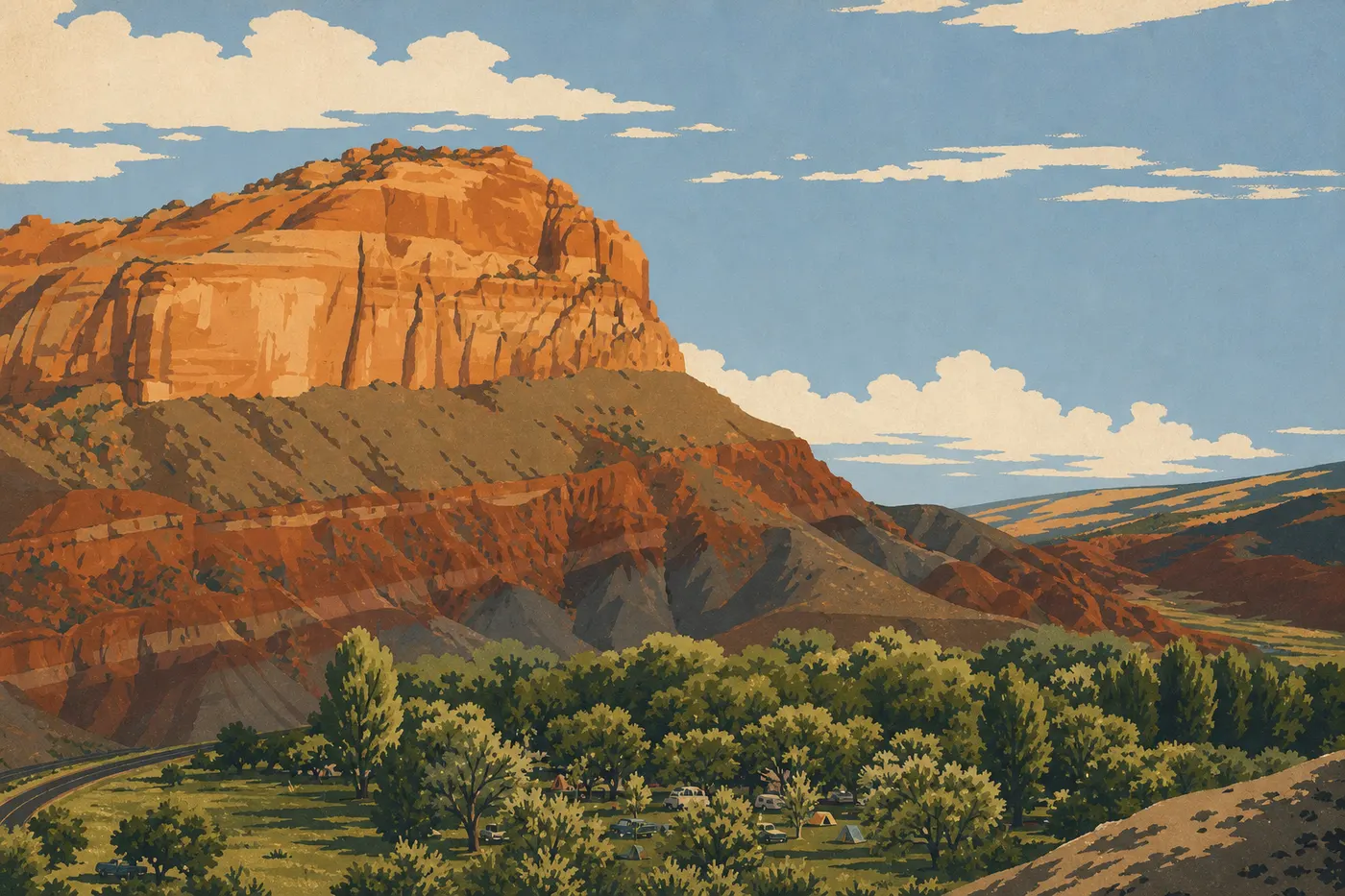
Torrey is Capitol Reef’s main gateway town, and its barely 200 residents support a surprisingly good range of lodging for a place this size. The town sits along UT-24, 7 miles from the visitor center, amid blood-red cliffs and mesas stretching to the horizon. For the best mix of proximity and comfort, it’s hard to do better anywhere in the region.
The property that comes up again and again in conversations about Capitol Reef is Capitol Reef Resort. The resort offers well-equipped standard rooms and suites, as well as glamping options such as Mongolian yurts and converted pioneer wagons that add just the right touch of the West to your stay. Its location along UT-24 at the park entrance is especially convenient: you can head straight onto Scenic Drive without losing a minute. I remember watching the sunrise from the resort’s terrace as the sandstone formations shifted from purple to orange within minutes. Those are the kinds of mornings you don’t forget.
Next to the resort, Torrey has several charming B&Bs and well-kept family-run hotels. The rooms often have fewer amenities, but the value is fair and the town’s atmosphere more than makes up for it. Torrey also has a few decent restaurants, including one or two that are genuinely worth a detour in peak season, a small grocery store for essentials, and a gas station. For a stay in Capitol Reef, that’s everything you need.
One useful note: several Torrey properties close between November and March or reduce their hours. Check availability before planning a winter stay.
Bicknell and Loa: Budget-Friendly Alternatives
Located 12 miles west of Torrey along UT-24, Bicknell has a few affordable motels in a quiet setting. The properties are basic, and the prices reflect that. It’s a valid option if Torrey is full or if you’d rather save on lodging and put the money toward something else, such as the America the Beautiful pass ($80), which covers all national parks instead of paying the $20 vehicle entrance fee each time. Loa, a little farther west, offers similar options.
From Bicknell, allow 25 to 35 minutes to reach the park entrance. That’s manageable if you have a vehicle and a flexible morning schedule.
Hanksville: The Eastern Option for Road Trippers in Transit
Hanksville is about 40 miles east of the visitor center along UT-24, on the Hanksville side. Lodging is limited to a few roadside motels, a gas station, and a diner. It’s mainly a logistical stop, useful if you’re combining Capitol Reef with Natural Bridges National Monument, the Henry Mountains, or Lake Powell. For a stay focused on Capitol Reef, Torrey is much more convenient.
How Many Nights Should You Plan for Capitol Reef?
Two nights are the reasonable minimum for covering the essentials: Scenic Drive, the historic Fruita orchard, the Hickman Bridge trail, and the main viewpoints over Waterpocket Fold. With three nights, you can add Cathedral Valley to the north, reached by a 4WD road or a high-clearance vehicle, or the park’s remote southern canyons.
Four nights or more are for experienced hikers and photographers chasing the light at both ends of the day. Capitol Reef rewards time: the longer you stay, the more hidden corners it reveals.
On a classic Utah road trip through Zion, Bryce Canyon, Capitol Reef, Canyonlands, and Arches, two nights are usually enough. For combinations tailored to your pace and interests, the Capitol Reef itinerary guide lays out different plans.
When to Book and What Budget to Plan For
Capitol Reef is less crowded than Arches or Zion, but don’t rely on that too much. Torrey is a town of 200 people with limited lodging capacity. During the busy season, from May through September, with a peak from mid-June through late August, properties fill up several weeks ahead. At Capitol Reef Resort in particular, some dates sell out several months before summer. Book at least two to three months before arrival if you’re targeting this period. Memorial Day and Labor Day weekends are especially busy.
The shoulder seasons, April through May and September through October, offer a good compromise. Prices drop, crowds thin out, and the park is often at its best, with softer light in the morning and evening. In winter, from November through March, prices fall by 30% to 50%, last-minute bookings become possible again, and the park takes on a completely different character. Keep in mind that nighttime temperatures drop well below freezing, and some dirt roads become impassable after rain or snow.
For lodging costs, here are the typical peak-season ranges: a basic motel in Bicknell or Hanksville costs $70 to $100 per night; a comfortable hotel in Torrey costs $110 to $180; and an upscale resort or premium glamping stay costs $200 to $300 or more. To plan your full trip budget and compare rates month by month, the Capitol Reef seasons guide compares prices throughout the year.
Our Recommendations Based on Your Travel Style
Comfortable trip for a couple: Capitol Reef Resort in Torrey is the local benchmark. The location and experience are worth the price if your budget allows. Book early, especially for the glamping options.
Family with kids: A standard hotel in Torrey is the right choice. Close to the park, adequate amenities, and a manageable budget make this a proven formula.
Road trip on a tight budget: A motel in Bicknell or a basic room in Torrey will do the job. Save money by buying the America the Beautiful pass ($80). It pays for itself as soon as you visit your second or third park in a row.
Passing through quickly: One night in Hanksville is enough if you arrive late and leave early. As soon as you plan to stay two nights or more, move your base to Torrey without hesitation.
For an overview that includes camping and RV camping, the Capitol Reef overview and our Where to Stay page cover lodging options for every type of traveler.
Frequently Asked Questions
How long should you stay in Capitol Reef?
Two nights in Capitol Reef let you see the park’s highlights. Three nights open up remote areas such as Cathedral Valley to the north and the canyons of Waterpocket Fold to the south. Our Itinerary & Length page lays out plans based on your pace and priorities.
Is there a hotel or lodge inside Capitol Reef?
There is no lodge or hotel inside Capitol Reef National Park. The only lodging in the park is camping, at Fruita Campground and primitive sites. All hotels and lodges are outside the park, mainly in Torrey, 7 miles west of the visitor center.
What’s the closest town for staying near Capitol Reef?
The closest town is Torrey, Utah, 7 miles west of the visitor center along UT-24. That’s where you’ll find most of the area’s lodging, restaurants, and services.
How much does lodging in Capitol Reef cost?
A night near Capitol Reef costs about $70 for a basic motel in Bicknell to $300 or more during peak season for a resort or glamping stay in Torrey. The most common range for a comfortable hotel in Torrey is $110 to $180. Our When to Visit page compares rates by month and property type.