Biscayne National Park: The Complete Visitor Guide
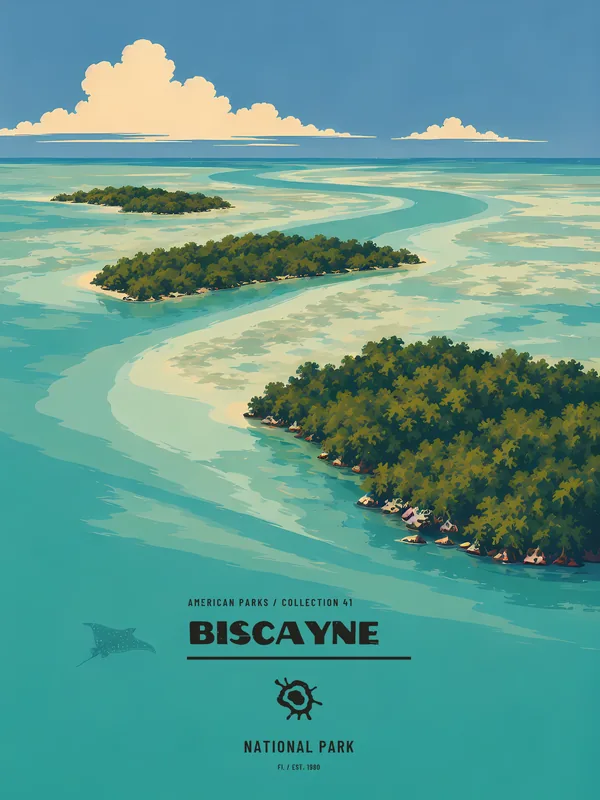
Biscayne is the nation's most water-dominated national park: about 95% of it is covered by water. You don't come here to hike. You come to boat, dive, and paddle in Biscayne Bay, about 19 miles south of Miami. Allow half a day if you're staying on land at the visitor center, a full day as soon as you get on a boat, and two days if you want to camp on an island and combine snorkeling with reef time. Be careful not to confuse this national park with Key Biscayne, the residential island lined with beaches and connected to Miami by a toll bridge. We'll come back to that below, because the mix-up is the first trap in this part of Florida.
Biscayne at a Glance: Where the Park Is and How to Get There
The park stretches south of Miami, between the city of Homestead and the northern Keys. It protects four interconnected environments: the coastal mangrove fringe, the shallow waters of Biscayne Bay, a chain of coral islands, and the northern part of the Florida Reef. That layering is what makes this place so interesting.
The land entrance is the Dante Fascell Visitor Center at Convoy Point, the only part you can reach by car from the Florida Turnpike. You'll arrive at a waterfront parking lot, and that's where your visit begins. The rest of the park is accessible only by boat.
The visitor center houses a small museum, an art gallery, a theater, and a terrace overlooking the bay. It's the right place to plan your day, fill a water bottle, and check marine conditions with the rangers before you head out on the water.
Entrance Fees, Passes, and Reservations
Good news for your budget: admission to Biscayne National Park is free. There is no entrance booth or fee to visit the visitor center, unlike many of the major parks in the West. What costs money are the services on the water: guided boat trips, scuba diving, snorkeling, kayak or paddleboard rentals, and island campsites.
Don't confuse this park with Key Biscayne. The toll often mentioned online, the Rickenbacker Causeway, concerns the residential island of the same name, not the national park. You won't pay a toll to reach the visitor center.
If your Florida road trip includes several parks, an America the Beautiful pass still makes sense for nearby Everglades or Dry Tortugas, even though Biscayne doesn't require one. Our Fees & Passes page explains entrance fees and annual passes, while anyone collecting cancellation stamps will find what they need on our Passport & Stamps page.
Reservations, Permits, and Rules to Follow
Do You Need a Reservation?
Organized tours: Reservations are strongly recommended, especially from December through April. Weekend trips often sell out several weeks in advance.
Island camping: Campsites at Elliott Key and Boca Chita Key can be reserved through Recreation.gov. Demand far exceeds supply on weekends from January through March.
Self-guided kayaking from Convoy Point: No reservation is required. Arrive early to make sure you find a parking spot.
Specific Permits
Fishing in park waters requires a valid Florida fishing license. No-take zones cover parts of the reef, and the relevant maps are available free at the visitor center.
Scuba diving doesn't require a specific park permit, but you'll need a recognized certification, such as PADI, NAUI, or an equivalent, to dive independently with official operators.
Rules to Follow
- No anchoring on coral: Use only designated mooring buoys. An anchor dropped on the reef can destroy decades of growth and lead to a hefty fine.
- Idle-speed-only zones in the bay: Follow the slow-speed limits to protect manatees year-round.
- Don't collect coral, sponges, or shells at dive and snorkeling sites.
- Don't feed wildlife, including birds, rays, and fish, even accidentally through leftover food.
- Pack out all your trash, including when you're offshore. Leave No Trace applies on the water, too.
How to Get Around Biscayne
This is the question that changes everything at Biscayne. Since the park is almost entirely aquatic, how you get around determines what you'll see.
You have three options. First, stay on land at Convoy Point, where you'll find a pier, a bayside trail, and a launch area for your own canoe. It's free, but you'll see only the edge of the park. Second, join a guided trip, whether that's a sightseeing cruise, a snorkeling excursion to the reefs, or a scuba outing to the shipwrecks. This is the simplest option if you don't have a boat. Third, paddle a kayak or paddleboard from Convoy Point along the mangroves. It's an ideal way to see the shallow-water wildlife without an engine.
Here's the straightforward truth: without a boat, you won't reach the islands or reefs. Plan your on-the-water logistics before you arrive, especially outside the tourist season, when guided departures become less frequent.
How Much Time Do You Need to Visit Biscayne?
It all depends on how much time you want to spend on the water. For a land-based introduction at the visitor center, including the pier and bayside trail, half a day is enough. For a full park day, plan a boat or kayak trip in the morning, a picnic on an island at lunchtime, and a snorkeling session in the afternoon. To get a real feel for the place, spend two days with one night camping on Boca Chita Key or Elliott Key. You'll get a sunset over the bay, a starry sky, and a morning beside the water.
Many visitors pair Biscayne with the Everglades, less than an hour away by car. One day per park makes a good pace. See our Biscayne itineraries for the details.
Plan your visit
What to See and Do in Biscayne
The heart of the park breaks down geographically into four areas. Each has its own character and access method. We present them from the easiest to the most remote.
Road trip journal · 4 areas
Convoy Point and the Mangrove Fringe
This is the gateway, and the only part you can reach by car. Along the pier, you may see herons, fish, and sometimes manatees in the shallow water. You can walk the bayside trail in a few minutes. When we visited on a weekday morning, the low light on the mangroves was worth the trip on its own, even without getting on a boat.
Biscayne Bay
A broad stretch of shallow turquoise water, the bay serves as a nursery for abundant marine life. You cross it by kayak, paddleboard, or boat to reach the islands. Dolphins and sea turtles live here, and, if you're lucky, you may spot the elusive American crocodile that frequents these brackish waters.
The Coral Islands
Boca Chita Key is the park's postcard view, recognizable by its ornamental lighthouse built in the 1930s. You can dock, picnic, and camp there. Larger Elliott Key offers a wooded trail and a second campground. You can reach these islands only by boat, which is the price of their quiet.
Reefs and Shipwrecks
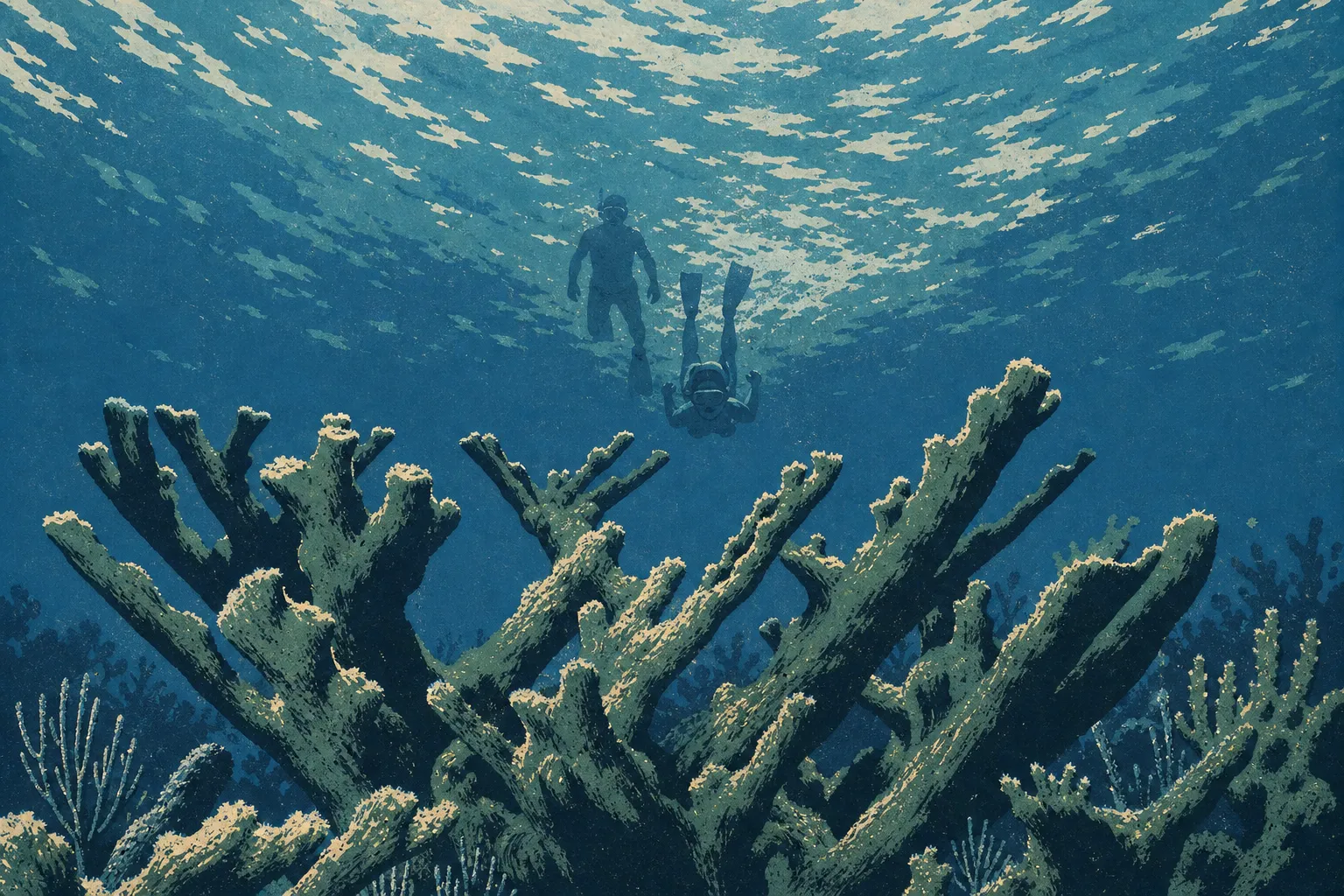
Offshore, the northern part of the Florida Reef shelters corals and tropical fish just a few feet below the surface, making it perfect for snorkeling. Divers head for the Maritime Heritage Trail, an underwater route linking several historic shipwrecks. This is where Biscayne truly comes into its own.
Our guide What to See and Do in Biscayne covers the full range of activities, including guided trips, snorkeling, scuba diving, kayaking, and fishing.
Explore the park
Hiking in Biscayne
Let's be honest: Biscayne isn't a hiking destination. You can count its trails on one hand, and they're short. On land, the pier trail at Convoy Point follows the bay for a modest distance. On Elliott Key, a path crosses the island's tropical vegetation, but you can use it only after arriving by boat.
Most of this park's “routes” take place in the water, with fins on your feet or a paddle in your hands. Our Hikes page gives the details on the few land walks, including distances and difficulty levels.
Wildlife and Plants to Look For
Below the surface, Biscayne teems with life. Hundreds of fish species, corals, sponges, lobsters, and rays inhabit the reefs. In the bay, you'll see dolphins, sea turtles, and manatees, especially in the calm, shallow water. The protected American crocodile hides in the mangrove areas.
On land, the mangroves and islands support abundant birdlife, including herons, egrets, ospreys, and migratory birds depending on the season. The vegetation includes mangroves, Keys pines, and tropical island plants. Keep your distance from all wildlife and never feed it. Our guide to Biscayne wildlife profiles the species and the best viewing spots.
The detailed guide Biscayne Wildlife: What Animals to See and Where to Find Them Manatees, American crocodiles, sea turtles, dolphins, and nurse sharks Read the guide →When to Visit Biscayne
The park has a sunny subtropical climate year-round. In January, the average temperature is about 68°F, with mild, dry weather interrupted by windy fronts. In July, it rises to around 82°F, with high humidity and scattered late-afternoon thunderstorms. Winter brings little rain, about 2.2 inches in January, while summer brings more, nearly 3.9 inches in July.
This matters for safety and logistics: hurricane season runs from June through November. It's also the hottest and most humid time of year. The November-to-April window is drier and more stable, offering the best conditions for boating and diving. Our When to Visit page covers each month, and our Weather page has complete temperature, rainfall, and wind averages.
The detailed guide When to Visit Biscayne: Best Time, Weather, and Seasons The best time to visit Biscayne is December through March, with dry weather and… Read the guide →Where to Stay in Biscayne
The park itself has no hotels. The only lodging within its boundaries consists of two island campgrounds on Boca Chita Key and Elliott Key. You can reach them only by boat, and they have no electricity or potable running water. A night under the stars beside the bay is a memorable experience, as long as you're self-sufficient.
For a real bed, stay in Homestead or Florida City, a few miles from the visitor center. You'll find motels and reasonably priced chain hotels there. Miami is farther away and more expensive, but it works if you're combining the park with the beach and the city. We cover the options on our Where to Stay page, with dedicated guides to Hotels & Lodges, Camping on the islands, and RV Camping at sites around the park.
Stay in the park
Where to Eat in Biscayne
Food options are sparse in the park. There is no restaurant, only picnic tables at Convoy Point and on the islands. Bring your own provisions and plenty of water, especially if you're heading out to sea. The closest restaurants are in Homestead and Florida City. You'll find our tried-and-tested recommendations on our Where to Eat page.
Around Biscayne: Things to Do Nearby
The big neighbor is Everglades National Park, less than an hour west by car, with its alligators and boardwalk trails. Farther south, US 1 heads toward the Keys and, at the very end, Dry Tortugas National Park, reachable by ferry or seaplane from Key West. Homestead is a convenient base for this Florida trio.
To build a coherent road trip, our future road trip guides and our overview of South Florida will be useful. Families will find ideas suited to them, including beaches and wildlife, on our Family Travel page.
Our Take: Is Biscayne Worth the Trip?
Yes, as long as you accept its aquatic identity. If you're expecting scenic trails and roadside viewpoints, you'll be disappointed. This park won't reveal itself to anyone who stays on the pavement. But if you get on a boat, put on a mask, or pick up a paddle, Biscayne offers a wild, underwater side of Florida that few visitors take the time to discover. This is a park of patience and water, the opposite of the classic Western parks. We recommend it as a one- or two-day addition to the Everglades, rather than as a destination on its own.
Frequently Asked Questions
What Should You See in Biscayne?
In Biscayne, see the bay and its mangroves from Convoy Point, the coral islands such as Boca Chita Key and its lighthouse, the reefs for snorkeling, and the Maritime Heritage Trail shipwrecks for scuba diving. Most of the park lies on the water, accessible by boat or kayak.
What Activities Can You Do in Biscayne?
Activities in Biscayne are mainly water-based: guided boat trips, reef snorkeling, scuba diving on shipwrecks, kayaking and paddleboarding along the mangroves, fishing, and picnicking on the islands. On land, the visitor center and Convoy Point pier are open to explore.
How Much Does It Cost to Enter Biscayne?
Admission to Biscayne costs nothing. Access to the park and visitor center is free. You pay only for services such as boat trips, snorkeling, scuba diving, kayak rentals, and island camping. The toll often mentioned concerns Key Biscayne, a separate residential island, not the national park.
How Much Time Do You Need to Visit Biscayne?
Allow half a day for a land-based visit to Convoy Point, a full day as soon as you head to the islands or reefs, and two days if you add a night of island camping. Many visitors combine Biscayne with the nearby Everglades.
Can You Visit Biscayne Without a Boat?
You can visit Biscayne without a boat, but only along its landward edge: the Dante Fascell Visitor Center, the pier, and the short bayside trail at Convoy Point. You can reach the islands and reefs only by boat, either on a guided trip or in your own vessel.
The American Parks shop
Bring Biscayne home
Our park-inspired creations, made to order and shipped to your door.