
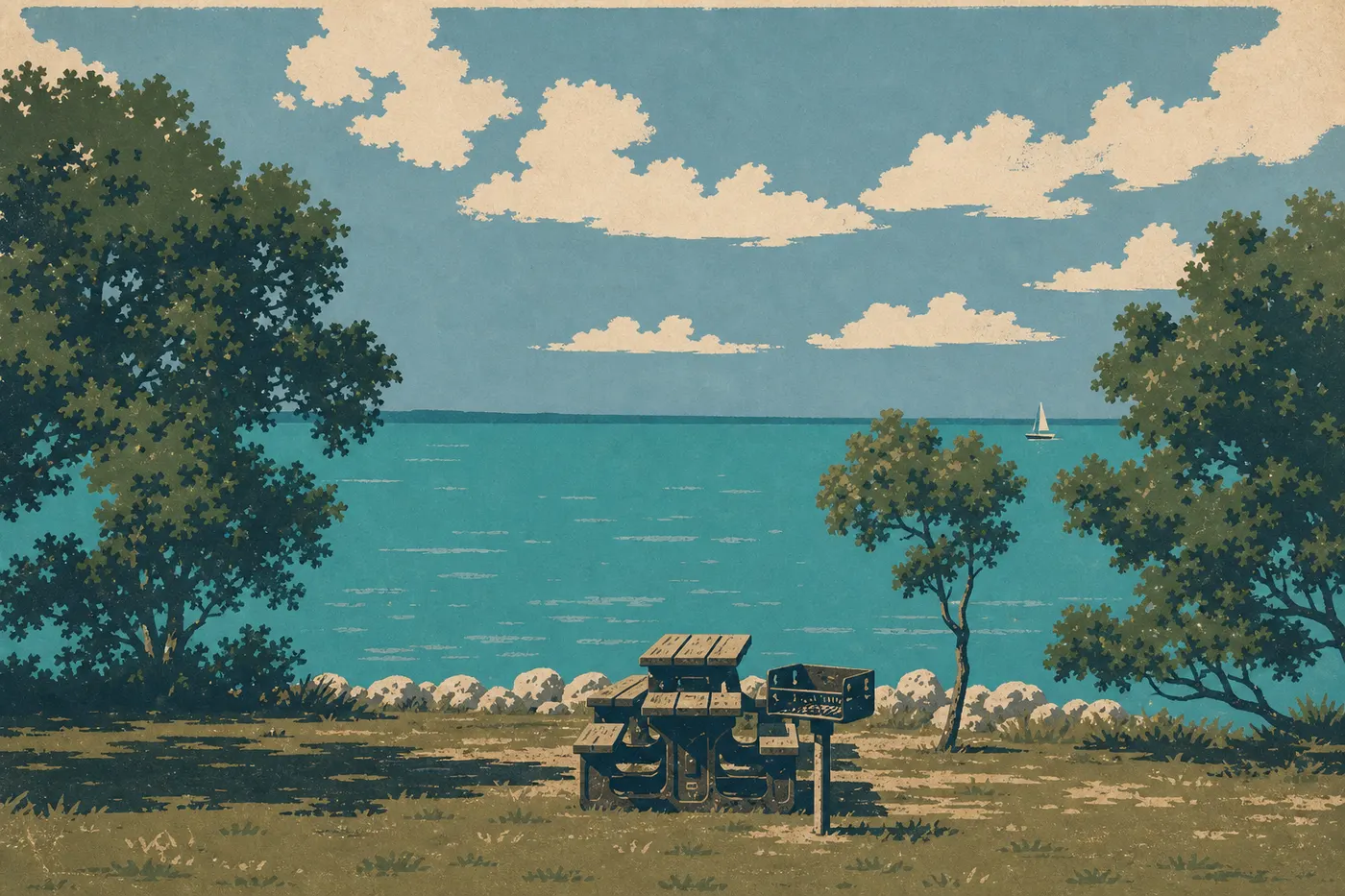
Camping in Biscayne: Which Campground to Choose, Reservations and Fees
Biscayne has two official campgrounds, and you can reach both only by boat. There are no roads and no drive-up check-in. Your adventure starts at the dock. The park has 80 tent sites spread across two islands, all at the same rate of $35 per night. The two options are quite different. Boca Chita Campground is the larger one, with 60 sites, and operates on a first-come, first-served basis. Elliott Key Campground has 20 sites, but its current policies still need to be confirmed.
Campgrounds in the park (2)
- Campground Boca Chita Campground first come, first served · 60 sites Directions ↗
- Campground Elliott Key Campground see NPS · 20 sites Directions ↗
 Base map © OpenStreetMap · © CARTO
 Biscayne campgrounds by the numbers
2 official campgrounds inside the park, 80 campsites in total, 0 of them reservable.
| Campground | Sites | Booking | Fee / night | Open | Amenities |
|---|---|---|---|---|---|
| Boca Chita Campground | 60 (60 tent only) | First come, first served | from $35 | Seasonal | toilets, showers*, potable water |
| Elliott Key Campground | 20 (20 tent only, 1 group) | from $35 | Year round |
Source: National Park Service (NPS API), retrieved October 6, 2026. Fees and dates change: check the campground page before you go.
Can You Camp Inside Biscayne?
Yes, but the setting is completely different from that of most national parks. Water covers 95% of the park, including the bay, coral reefs, and mangroves. The campgrounds sit on Elliott Key and Boca Chita Key. You can get there by private boat or commercial ferry from the Dante Fascell Visitor Center at Convoy Point. Camping outside designated sites is strictly prohibited.
Campgrounds in the Park
Elliott Key
Elliott Key Campground has 20 tent sites and one group site. It is the park's smallest campground, but it opens directly onto the Atlantic-facing beach, with immediate access to seagrass beds for snorkeling. Check the table above for available services. Current NPS data does not provide details. The pier lets you moor your boat. One thing to know: mosquitoes are fierce on every island in the park after dark, so effective repellent is essential.
In short: 20 tent sites plus one group site · services to be confirmed · open 24 hours · $35 per night
Boca Chita Key
Boca Chita Campground is the park's largest, with 60 tent sites. It is strictly first-come, first-served. Reservations are not available, so you arrive and set up. Facilities include restrooms, showers, and drinking water, which is a notable level of service for an island campground. The setting centers on a historic 1930 lighthouse surrounded by tropical vegetation, at the back of a natural cove.
In short: 60 tent sites · first-come, first-served · restrooms, showers, water · $35 per night
RV vs. Tent Camping: Which Site to Choose
The answer is simple: Biscayne has no RV sites. There are no roads, hookups, or dump stations on the islands. RV travelers stay outside the park and take a boat to the campgrounds for the day. You'll find RV campgrounds around Biscayne, especially near Homestead and Florida City.
Camping Nearby: Campgrounds Outside the Park
Homestead and Florida City, 6 to 12 miles from the visitor center, have most of the private camping options near the park. Tents and RVs are welcome, electrical hookups are available, and the location makes it easy to combine Biscayne and Everglades National Park in one trip. To compare non-camping accommodations such as hotels and motels, see our Where to Stay guide.
Dispersed Camping and Backcountry Camping
The park issues wilderness permits for remote sites accessible by sea kayak or shallow-draft boat. This type of trip is for self-sufficient visitors who can navigate without fixed landmarks and independently manage water, food, and weather safety. Request permits directly from the park before you leave. For kayak routes and access conditions at these remote sites, see hikes and boating in Biscayne.
How and When to Reserve a Campsite in Biscayne
There are no reservations for Boca Chita Campground. It operates strictly on a first-come, first-served basis. The current NPS data does not publish policies for Elliott Key Campground, so check directly with the park before planning your crossing. Demand peaks on weekends from November through April, the dry season when conditions are best. Arrive early on Friday. In summer, humid heat and afternoon thunderstorms make crossings more difficult. To choose your travel window and avoid hurricane season, which runs from June through November, see when to visit Biscayne.
Fees: How Much Does a Night of Camping Cost in Biscayne?
The fee is $35 per site per night at both Elliott Key and Boca Chita Key. If you don't have your own boat, add the commercial ferry from Convoy Point to your budget. Check the operator's current rates before booking. Park entrance fees are separate from camping fees. For information on entrance fees and annual passes, see the National Park Fees and Passes page.
Safety and Good Practices
American crocodiles. Biscayne is home to a population of American crocodiles, a protected species found in the park's waters and along its shores. Keep at least 50 feet away, avoid swimming in areas with dense vegetation, and never feed wildlife. To learn more about species found in the park, see our guide to Biscayne wildlife.
Food storage. Raccoons are resourceful and do most of their work at night. Store all food and scented items such as toothpaste, sunscreen, and soap in a closed, rigid container. No exceptions, even for packaging that looks "sturdy."
Weather and thunderstorms. In summer, thunderstorms regularly develop between 2 p.m. and 5 p.m. On exposed islands and while boating, lightning poses a real risk. Stay at the dock if the sky starts clouding over quickly. Always check the marine forecast before crossing the bay.
Sun and mosquitoes. The subtropical climate can burn you year-round. SPF 50+, a wide-brimmed hat, and DEET repellent at 30% or higher are essential in winter and summer alike.
Which Campground Should You Choose?
Choose Boca Chita Key if you want the most space, with 60 sites, plus restrooms, showers, and water on-site, and the freedom to arrive without a reservation. Choose Elliott Key if you're traveling with a group, since one group site is available, or if you want to camp right beside the Atlantic-facing seagrass beds. Either way, you'll need the ferry if you don't have your own boat, so arrange your crossing before committing to a date. Our complete Biscayne guide has everything you need to plan the rest of your trip.
Frequently Asked Questions
Does Biscayne National Park have campgrounds?
Yes. The park operates two campgrounds on islands accessible only by boat: Boca Chita Campground, with 60 sites and first-come, first-served camping, and Elliott Key Campground, with 20 tent sites plus one group site. No site is accessible by car.
Which campground should you choose in Biscayne?
Boca Chita Campground is the larger option, with 60 sites, restrooms, showers, and water on-site. It is first-come, first-served, with no reservations. Elliott Key Campground has 20 tent sites and one group site, with direct access to seagrass beds for snorkeling.
When should you reserve a campsite in Biscayne?
Boca Chita does not take reservations, so arrive early, especially during the dry season from November through April. Check directly with the park for Elliott Key's current policies. Demand peaks during the dry season, and crossings are safer than they are in summer.
How do you camp in Biscayne National Park?
Take a private boat or commercial ferry from the Dante Fascell Visitor Center at Convoy Point in Homestead. For Boca Chita, arrive without a reservation. For Elliott Key, check the park's current policies in advance.
How much does a night of camping cost in Biscayne?
$35 per site per night at both campgrounds in the park, not including the ferry if you don't have your own boat.
Are there crocodiles or alligators in the park?
Biscayne is home to American crocodiles, a protected species. Always keep at least 50 feet away and avoid swimming in areas with dense vegetation.