
What to Do in Biscayne: Must-See Spots and Activities
Biscayne is an extraordinary national park: 95% of it is water. The three top priorities are snorkeling the Florida Reef, taking a boat to Boca Chita Key and its 1930s lighthouse, and kayaking in the bay from Convoy Point. Without access to a boat or kayak, you'll stay on the mainland and miss the heart of the park. Biscayne takes a little effort, and it's well worth it.
Biscayne at a Glance: Areas, Access, and Getting Around
Biscayne National Park stretches south of Miami, between Biscayne Bay and the Atlantic Ocean. It covers about 270 square miles in total, almost all of it underwater or on the water. That makes visiting this park very different from visiting a typical land-based park.
The park breaks down into four distinct areas.
Convoy Point is the only area accessible by car from the mainland. This is where you'll find the Dante Fascell Visitor Center, the departure point for excursions, and the launch ramp for kayaks.
Biscayne Bay is the park's central area, with shallow water that rarely exceeds 10 feet, mangroves, and seagrass beds. It's the place for kayaking, paddleboarding, and watching aquatic wildlife.
The keys form the inner archipelago: Boca Chita Key, Adams Key, and Elliott Key, the largest of the three. None is connected to the mainland by road. You need a boat.
The reef runs east of the islands along the Atlantic. It supports exceptional marine biodiversity and is the park's most spectacular diving and snorkeling area.
To reach Convoy Point from Miami, take the Florida Turnpike, exit at Exit 6 (Speedway Boulevard), turn south to SW 328th Street (North Canal Drive), then drive east for about 4 miles. The options for getting to Biscayne, including public transportation, operator schedules, and launch conditions, are covered in the access guide.
How Much Time Do You Need to Visit Biscayne?
Plan on at least one full day, or ideally two if you'd like to spend a night on an island. The Biscayne itineraries for 1, 2, or 3 days take your available time and access to the water into account.
Biscayne's Must-See Spots, Area by Area
Convoy Point: The Mainland Gateway

Convoy Point is where everything begins. Don't rush through it assuming the “real” park is somewhere else. The Dante Fascell Visitor Center is worth an hour on its own. Inside, you'll find a museum about the park's ecosystem, an art gallery, introductory films, and an unobstructed view of Biscayne Bay from the terrace that immediately gives you a sense of the park's scale.
The Jetty Trail follows the concrete jetty for about 1 mile round-trip to the mouth of the bay. It's flat and accessible to everyone, and it's remarkably effective for spotting brown pelicans, egrets, and magnificent frigatebirds early in the morning. Arrive early to have the jetty to yourself.
The launch ramp lets you put your own canoe or kayak directly into the bay. A shaded lawn with picnic tables rounds out the site's amenities. The official boat tour and kayak rental operator works out of this same location.
Biscayne Bay: An Expansive Sense of Calm

The bay stretches for about 12 miles between Convoy Point and the islands. Its shallow water makes it ideal for small watercraft. The seagrass beds covering the bottom shelter stingrays, sea turtles, and, from November through March, manatees seeking refuge in the bay's warm water.
By kayak, plan on 1.5 to 2 hours of paddling to reach Boca Chita Key from Convoy Point under normal conditions. The golden rule is to leave early in the morning and return before 2 p.m. Summer afternoon thunderstorms, from June through October, can develop over the bay in less than 30 minutes and make the return trip exhausting or even dangerous.
If you'd rather use a motorized boat, guided excursions take you across the bay while explaining the ecosystem. It's a very good option for a first visit.
Boca Chita Key: The Lighthouse Island

Boca Chita Key is the park's most photographed island, and the reason is obvious as soon as you step ashore: an ornate stone lighthouse built in the 1930s by a private owner with a passion for architecture. The lighthouse was never used for navigation. It exists for the pleasure of looking at it, and that shows.
You can explore the island on foot in an hour or less. It has a protected natural lagoon on the bay side, a picnic area, restrooms, and a dock for sailboats and motorboats. Camping is allowed, with tents only and reservations through Recreation.gov. Spending a night here under dark skies less than 25 miles from Miami feels almost unreal. I did it in November, and I understand why it becomes a habit for local boaters.
From Convoy Point by motorboat, plan on 30 to 45 minutes depending on wind conditions.
Elliott Key: The Wild Island

Elliott Key is the park's largest island. It has dense tropical forest, natural sandy beaches, and a noticeably wilder atmosphere than Boca Chita Key. You go from a picturesque island to a truly wild one.
The island's main route is Spite Highway, a 6-mile dirt track laid out in the 1960s by landowners who opposed creating the park and wanted to make the property unusable. The irony is that this road is now the island's most heavily used trail. The forest along it shelters tropical plant species that are rare in the United States.
The island has a marina with fresh water and showers, a campground, and restrooms. It's lightly visited during the week, which is both its charm and a reminder that you need to be completely self-sufficient. From Convoy Point, the crossing takes about 1 hour by motorboat.
The Reef: Beneath the Surface
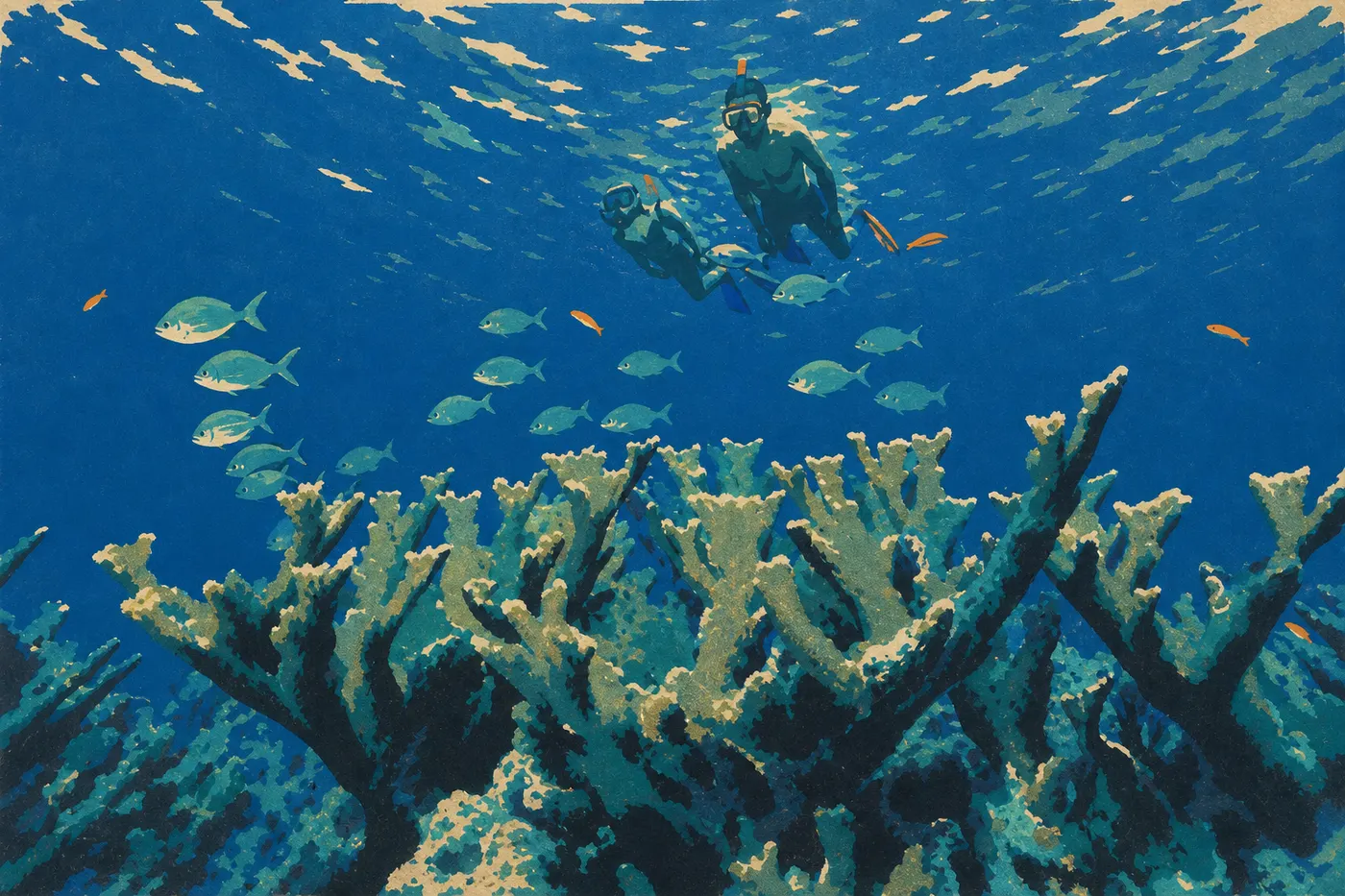
Biscayne's reef is part of the Florida Reef Tract, one of the longest coral reef systems in North America. It follows the eastern side of the park's keys at depths ranging from 3 to 49 feet, depending on the site.
This is the main attraction for divers and snorkelers. You'll see groupers, parrotfish, barracuda, triggerfish, and, if you're lucky, hawksbill sea turtles. Visibility generally ranges from 33 to 49 feet during the best season. Shipwrecks are popular sites, and some can be reached with a basic Open Water certification.
Snorkeling and diving tours leave from Convoy Point with the official operator. For independent divers, the park's rule is simple and nonnegotiable: take nothing and never touch the coral. The Biscayne underwater trails and snorkel trails are described site by site, along with the required experience levels.
The Best Hikes in Biscayne
Biscayne has few land trails. Most exploration takes place beneath the surface along marked snorkel trails. You'll find complete routes, required experience levels, and visibility conditions in our Biscayne hiking guide.
Other Activities by Interest
Wildlife and Nature Watching

Biscayne is a sanctuary for aquatic and coastal wildlife. From November through March, manatees gather in the bay's warm water. From a kayak, you can sometimes get within a few yards without disturbing them, as long as you don't suddenly change course. Dolphins visit the bay year-round. Stingrays glide along the bottom beneath kayaks without warning, which is impressive the first time it happens.
The bird list is long: brown pelicans, tricolored herons, roseate spoonbills, ospreys, and magnificent frigatebirds. At dawn, the Jetty Trail remains one of the best places to watch wildlife without special equipment. The Biscayne wildlife-watching calendar covers the species and best times to visit month by month.
Kayaking and Paddleboarding

This is the top activity for anyone who wants to reach the bay without a guided motorboat tour. Rentals are available from the official operator at Convoy Point. Routes along the mainland mangroves are suitable for beginners. Crossing to the islands requires a reasonable level of fitness and checking the weather conditions beforehand.
A practical rule is to check the wind forecast before setting out. A 15-knot wind, or 17 mph, on the bay turns the return trip into a sustained workout. With a favorable wind, crossing to Boca Chita Key by kayak remains a memorable experience.
Photography and Stargazing

Boca Chita Key and Elliott Key offer one of the few places to observe the night sky within 37 miles of Miami. The islands' low light pollution makes it possible to see the Milky Way on moonless nights, a rare anomaly in this part of the country.
For wildlife photography, late-afternoon light over the bay, from about 5 to 7 p.m. depending on the season, works well for coastal birds. Sunrise over the Atlantic from Elliott Key is worth spending the night for.
Visiting with Kids

Families can enjoy the park if they plan the logistics carefully. Bring plenty of water, since the Florida sun dehydrates you quickly, along with sun protection and kids who are comfortable on the water. The Jetty Trail and Convoy Point picnic area work well for younger children. For kids 8 and older, an official boat excursion to Boca Chita Key is well suited to them. The crossing is short, the island is easy to explore, and you'll be back before naptime. The Biscayne family guide covers activities by age group.
Camping on the Islands
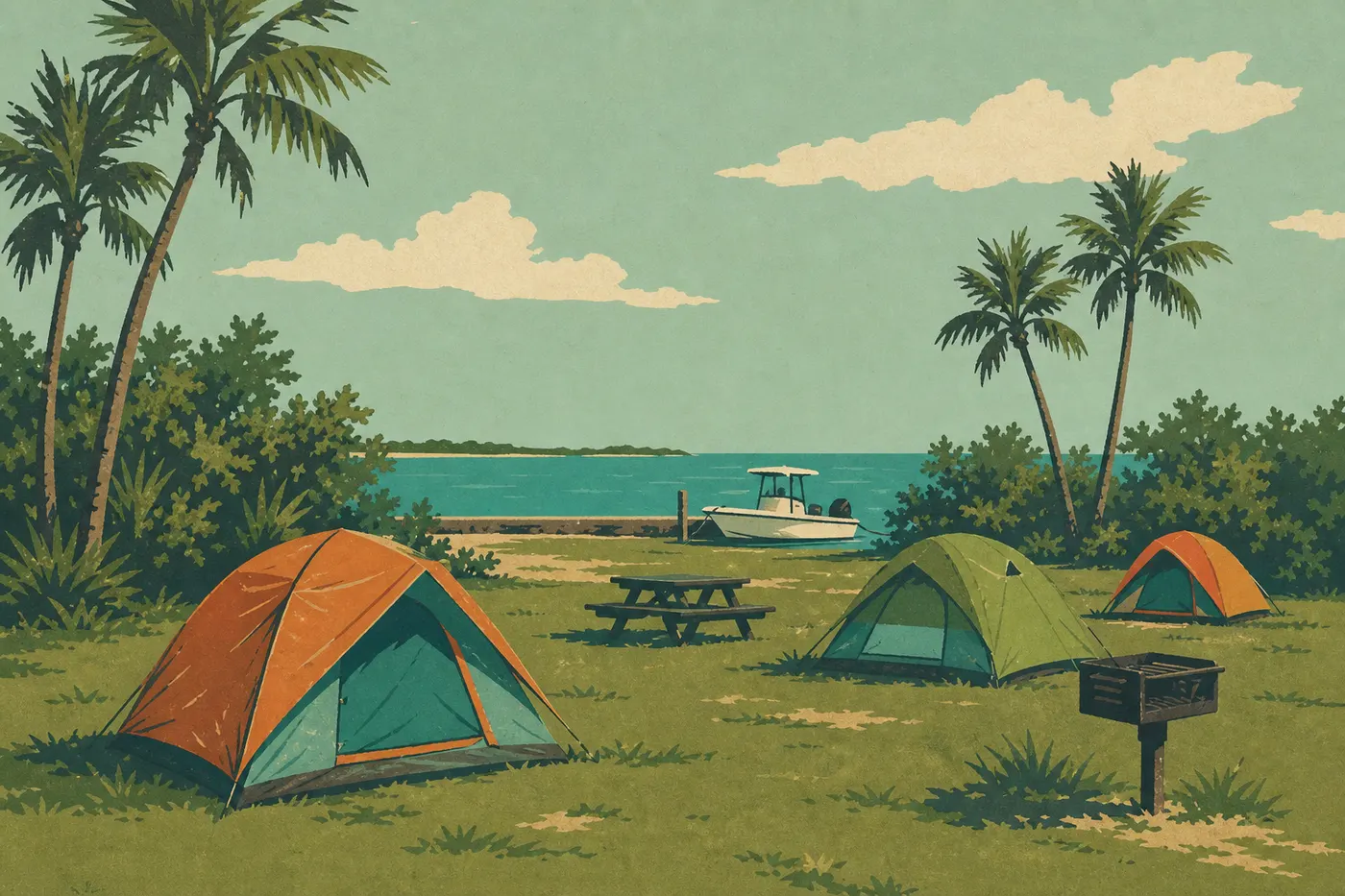
Spending a night on Boca Chita Key or Elliott Key adds a sense of adventure within easy reach of Miami, something few national parks can offer so close to a major city. For reservation details, required gear, and mistakes to avoid, see the Biscayne camping guide.
Things to Do Around Biscayne
Biscayne pairs naturally with two major destinations nearby.
Everglades National Park is less than 19 miles west of Convoy Point. Both parks share the same subtropical ecosystem, but the Everglades are explored from land, with sawgrass prairies, cypress hammocks, water holes, and occasional airboat rides. One extra day is enough for a first visit to the park's eastern section, around Ernest Coe.
The Florida Keys stretch south from Homestead along U.S. 1. Key Largo, less than an hour away, is home to John Pennekamp Coral Reef State Park, a dive destination that complements Biscayne, with underwater statues including Christ of the Abyss. Continue south to Marathon and then Key West for one of the most celebrated coastal road trips in the United States.
Miami, 25 miles north, is a convenient base. Key Biscayne, which isn't to be confused with Biscayne National Park, is a beach-oriented residential island popular with locals, with beautiful public beaches and a slower pace than South Beach.
Our South Florida region guide and Florida road trip itineraries will give you the bearings you need to plan a route through this region.
The Essentials: What to See First in Biscayne
Biscayne is worth the trip, but you need to arrive with the right expectations. This isn't a park of geysers or canyons viewed from the road. It's an aquatic park, understated from the mainland and spectacular from the water.
With one day, book a snorkeling excursion on the reef. Arrive early at Convoy Point for the Jetty Trail, get on the boat in midmorning, and spend the afternoon in the water. It's compact and efficient.
With two days, add a night of camping on Boca Chita Key. Island life 25 miles from Miami is an experience few travelers anticipate, and it stays with you.
If you're an experienced diver, combine Biscayne's reef with Key Largo's sites. Along 50 miles of coast, you'll find some of the country's best accessible dive spots.
For help planning your visit from start to finish, see all the park sections through our Biscayne overview.
Frequently Asked Questions
What is there to do in Biscayne?
At Biscayne National Park, the main activities are snorkeling and diving on the reef, boat excursions to Boca Chita Key and Elliott Key, kayaking and paddleboarding in the bay, and wildlife watching, including manatees, dolphins, and coastal birds. Since almost the entire park is aquatic, you'll need access to a boat or kayak to experience the best of it.
Do you need a boat to visit Biscayne National Park?
Without a boat or kayak, your visit is limited to Convoy Point, the visitor center, the Jetty Trail, and the picnic tables. That's still worthwhile, but you can only reach the islands, reef, and bay by boat. Guided excursions leave from Convoy Point with the park's official operator, which is the simplest option if you don't have your own boat.
Can you swim in Biscayne?
Swimming is allowed in the park. There is no developed sandy beach accessible by car from the mainland. To swim at the reef or around the islands, you'll need to reach the sites by boat. Elliott Key has a small natural beach on the Atlantic side, accessible from the island marina.
What are the must-see things to do in Miami that include Biscayne?
Biscayne National Park is one of the most unusual nature outings from Miami, along with Everglades National Park. For a complete list focused on the city, including Wynwood, South Beach, and the Art Deco District, our South Florida region guide covers the city and its surroundings.
What is Miami's most idyllic spot?
Boca Chita Key in Biscayne National Park often comes up in answer to this question. It's a nearly deserted island less than 25 miles from downtown Miami, with a 1930s lighthouse, turquoise water, and remarkable night skies. The only catch is getting there by boat.
When should you visit Biscayne?
The best time is from November through April, with dry weather, comfortable temperatures around 68 to 75°F, and clear water that makes for good snorkeling. Summer is hot and humid, averaging 82°F in July, with almost daily late-afternoon thunderstorms and hurricane season from June through November. Our When to Go page explains the advantages and challenges of each season.