
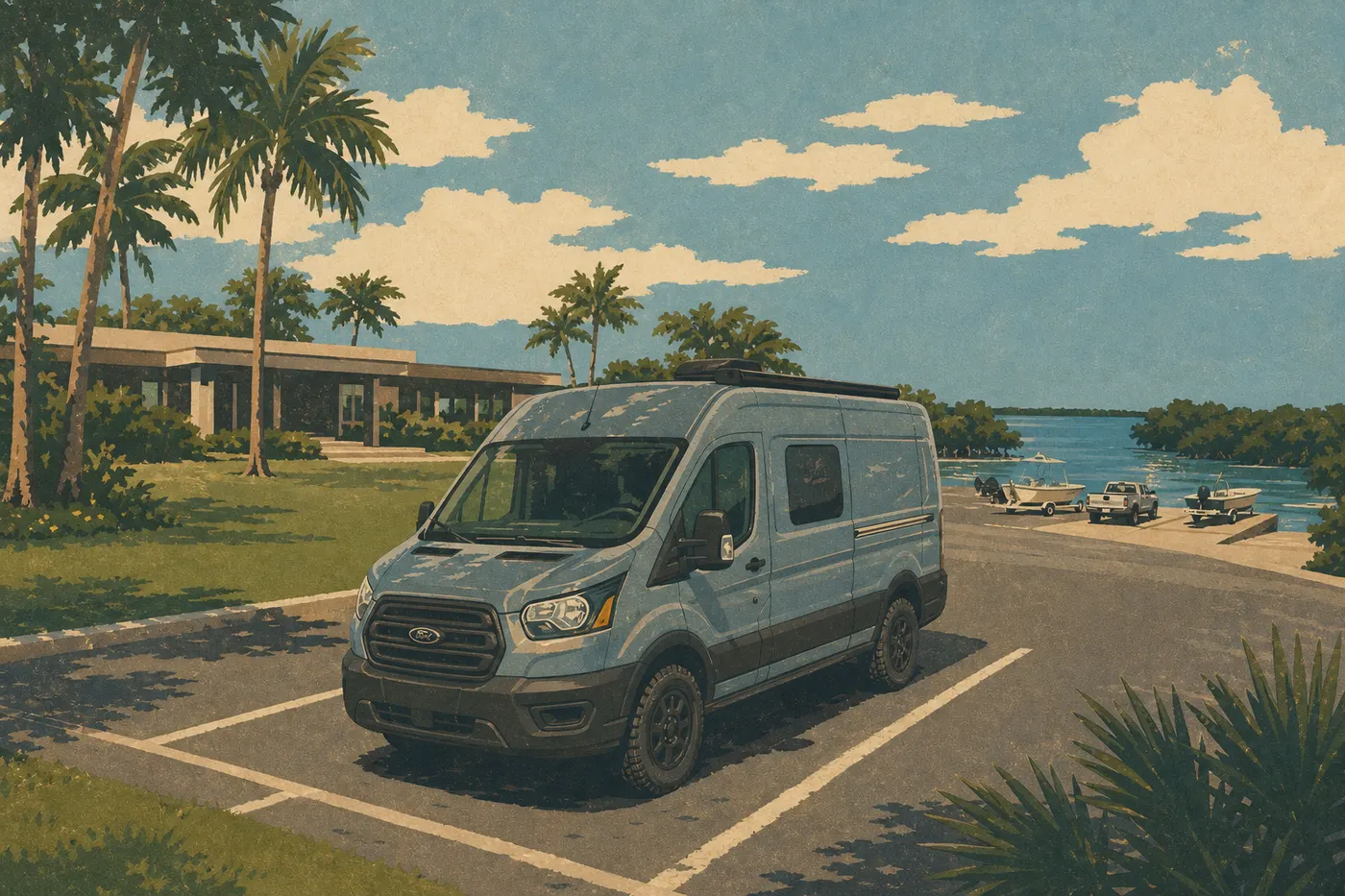
Biscayne by RV: Campgrounds, Rules, and Tips
The short answer: You can absolutely reach Biscayne by RV, but the park's main constraint is unlike anything else in the national park system. The park is 95% water. Biscayne Bay, the coral reefs, and the islands are accessible only by boat. There are no RV sites inside the park, so your vehicle stays on the mainland while you head out on the water. That fact shapes this entire guide.
Can you drive and camp at Biscayne by RV?
You can reach the park by RV without any trouble, but "driving around the park" doesn't mean the same thing here as it does at Yellowstone or Everglades National Park. The only area accessible by road is Convoy Point on the mainland coast, where you'll find the Dante Fascell Visitor Center. The parking lot is wide and level, with no particular length restriction for standard-size vehicles.
Once you're there, land-based activities are limited to walking along the pier, having a picnic on the lawn, and launching a kayak or canoe from the boat ramp. To explore the park in depth, whether you're snorkeling the reefs or visiting the historic islands, you'll need to join a boat excursion from Convoy Point or bring your own vessel.
The practical takeaway: Biscayne works very well as a road-trip stop. Set up your base in the Homestead/Florida City area for the night, then head to the park during the day.
RV restrictions and access
There are no low-clearance tunnels or low bridges along the way. From the Florida Turnpike, take Exit 6, Speedway Boulevard, then follow SW 328th Street east for about 3.7 miles. This straight, level road poses no particular problem, even for large motorhomes.
Here are the restrictions to know before you arrive:
- Speed: 35 mph on the local roads leading to Convoy Point. Stay alert. Turtles and raccoons cross regularly.
- Parking: Convoy Point is the only parking area intended for motorized visitors. Parking along the road or outside designated areas isn't allowed.
- Generators: Standard NPS rules apply. Avoid running them in picnic areas or near other visitors.
One thing to note: admission to Biscayne National Park is free. There is no entrance fee or booth. The America the Beautiful pass doesn't apply here, although it can still be useful if your itinerary includes Everglades National Park.
The park's official campgrounds
Biscayne has two official NPS campgrounds. Here's the detail that changes everything: both are accessible only by boat.
Boca Chita Key
This iconic little island is home to a historic 19th-century lighthouse and primitive campsites for tents and hammocks. There is no electricity or potable water on the island, so bring everything you'll need. There are no hookups for an RV or trailer. You can reach it from the Convoy Point marina or from a private marina in the area.
Reservations through Recreation.gov are recommended during the busy season. Mooring fees are charged separately from the camping fee.
Elliott Key
Larger and better equipped, Elliott Key has restrooms, cold-water showers, and potable water. Camping is still primitive, with no hookups and no sites for an RV. It's a good option for travelers who want to sleep in the park while leaving their RV on the mainland for a night or two.
Keep in mind: Neither Boca Chita nor Elliott Key can accommodate an RV. These campgrounds are reserved exclusively for campers arriving by boat with portable gear. If you want to sleep in your vehicle, you'll need to stay outside the park.
Dispersed camping and areas around Biscayne (boondocking)
Boondocking is prohibited in the park and its immediate surroundings. The nearest BLM lands are much farther north in Florida, so forget about overnight free parking within an hour of Biscayne.
The Homestead/Florida City area does have several private campgrounds and RV parks with very reasonable rates for the Miami area. This is the natural base for exploring the park during the day.
For a stay that captures the spirit of the park, here's a good combination: park your RV in Homestead, then spend one night in a tent on Elliott Key after taking a rental boat or organized excursion. You get two experiences in one.
If Biscayne is part of a larger circuit, the site's Road Trips section explores combinations of stops between Miami, the Keys, and Everglades National Park.
Dump stations, water, and services
Convoy Point has no RV dump station. Full RV services, including a dump station, water, and electricity, are available at private campgrounds in Homestead and Florida City, 15 to 20 minutes from the park.
Before heading out for a day on the water, keep a few useful habits in mind:
- Fill your potable water tank at your campground. The islands don't always guarantee a reliable supply.
- Plan to dump your tanks the day before or the day after your day in the park.
- Make sure your gray-water tank has enough capacity, especially if the weather leads you to extend your stay.
Choosing a campground for your travel style
You want to sleep in your RV with full services: Choose an RV park in the Homestead area with water, electric, and sewer hookups, and sometimes a pool. It's an ideal base for exploring both Biscayne and Everglades National Park, each less than an hour away.
You're looking for an immersive park experience: Spend your RV nights on the mainland, then add one night in a tent on Boca Chita Key. I've never met anyone who regretted watching the sunset over the bay from the lighthouse.
You're traveling with kids: A day trip to Convoy Point works very well without an overnight stay on the islands. Calm-water kayaking, a picnic by the bay, and views of herons are all on the agenda. Our Family Travel page details activities suited to different ages.
Renting an RV to visit Biscayne
Miami is one of the country's major RV rental hubs. Several agencies offer vehicles in a range of categories, from Class B camper vans, which are easier to handle in the city, to Class A motorhomes measuring 30 to 40 feet, which are more comfortable for longer family trips.
Here are a few guidelines for choosing the right one:
- Class B or Class C (20 to 26 feet): ideal for South Florida. Easier to maneuver in Miami and park at Convoy Point.
- Class A (30 feet and up): comfortable for several weeks, but check the maximum dimensions accepted at private campgrounds in Homestead before booking.
- Mileage: Figure on about 37 miles round-trip from Miami to Convoy Point. If you're combining it with Everglades National Park, add roughly 60 miles.
Book your vehicle at least 4 to 6 weeks ahead between November and April. For entrance fees and annual passes, the National Parks Fees and Passes page has the key information.
Budget, pets, and reservations: what to know
Site budget: Private RV campgrounds in the Homestead area generally charge $40 to $80 per night with hookups, depending on the season and amenities. Tent campsites on the park's islands run around $25, not including mooring fees.
Pets: Dogs are allowed at Convoy Point and on trails accessible by car, as long as they're kept on a leash no longer than 6 feet. They aren't allowed on beaches or in swimming areas. Check with the visitor center before boarding an NPS boat.
When to book: The busy season, from November through April, brings the best boating conditions and underwater visibility. Book your RV site and boat excursions 4 to 6 weeks ahead. Our guide to the best times to visit Biscayne explains the month-by-month climate differences.
In summary: our RV plan for Biscayne
Biscayne is unlike any other park in the national system. You experience it from land and water, and it rewards travelers who are willing to get out of their RV in the most literal sense.
Here's the RV plan that works best:
- Set up a base in Homestead or Florida City at an RV park with full hookups.
- Spend a day at Convoy Point: kayak, snorkel along the coast, walk the pier, and visit the Dante Fascell Visitor Center.
- Add an island overnight: If you have access to a boat, one night in a tent on Boca Chita or Elliott Key rounds out the experience perfectly.
- Combine it with Everglades National Park: The two parks are less than an hour apart and make a logical loop for a weeklong trip.
For everything related to organizing your overall trip, our complete Biscayne guide is the place to start.
Frequently asked questions
How do you camp at Biscayne National Park?
Camping at Biscayne is possible at two official campgrounds, Boca Chita Key and Elliott Key. Both are accessible only by boat and offer primitive tent camping. RV travelers stay at private campgrounds in the Homestead area and visit the park during the day from Convoy Point.
Can you visit Biscayne by RV?
Yes. You can reach the Convoy Point parking lot on the mainland coast by RV. The interior of the park, including the islands and reefs, isn't accessible by road. You'll need a boat or a water excursion from the park marina.
Can you park an RV anywhere at Biscayne?
No. Convoy Point is the only parking area intended for motorized visitors. Parking outside designated areas is prohibited in the park.
How much does a campsite cost at Biscayne?
Primitive campsites on the park's islands, Boca Chita Key and Elliott Key, cost about $25 per night, not including mooring fees, with reservations through Recreation.gov. RV parks in the Homestead area offer sites with hookups for $40 to $80, depending on the season.
What's the best time to visit Biscayne by RV?
From November through April, the weather is dry and mild, around 64 to 79°F, underwater visibility is excellent, and boating conditions are ideal. If possible, avoid hurricane season, from June through November, or check real-time weather alerts before setting out. Our When to Go page explains the month-by-month climate differences.
What RV brand should you avoid?
For a trip to Biscayne, what matters is choosing a reasonably sized vehicle. A Class B or C, 20 to 26 feet long, will be easier to handle around Miami and Homestead.