
Mesa Verde Wildlife: Which Animals to See and Where to Find Them
Mesa Verde is famous for its ancestral cliff dwellings, but its plateaus covered in piñon and juniper are home to abundant wildlife that many visitors overlook. The five species to know are mule deer, wild turkey, black bear, mountain lion, and coyote. Mule deer are the animals you'll see most often, sometimes just a few feet from the ruins. Wild turkeys roam in flocks across the Chapin Mesa meadows, and coyotes can be heard every evening without fail.
Mesa Verde's Signature Wildlife
The piñon-juniper forest covering the mesas between 6,600 and 8,500 feet in elevation creates a compact habitat rich in berries, acorns, and rocky shelter. This vegetation, unique to the Colorado Plateau, explains Mesa Verde's distinctive wildlife, which differs greatly from that of Colorado's alpine parks.
Mule Deer (Odocoileus hemionus)
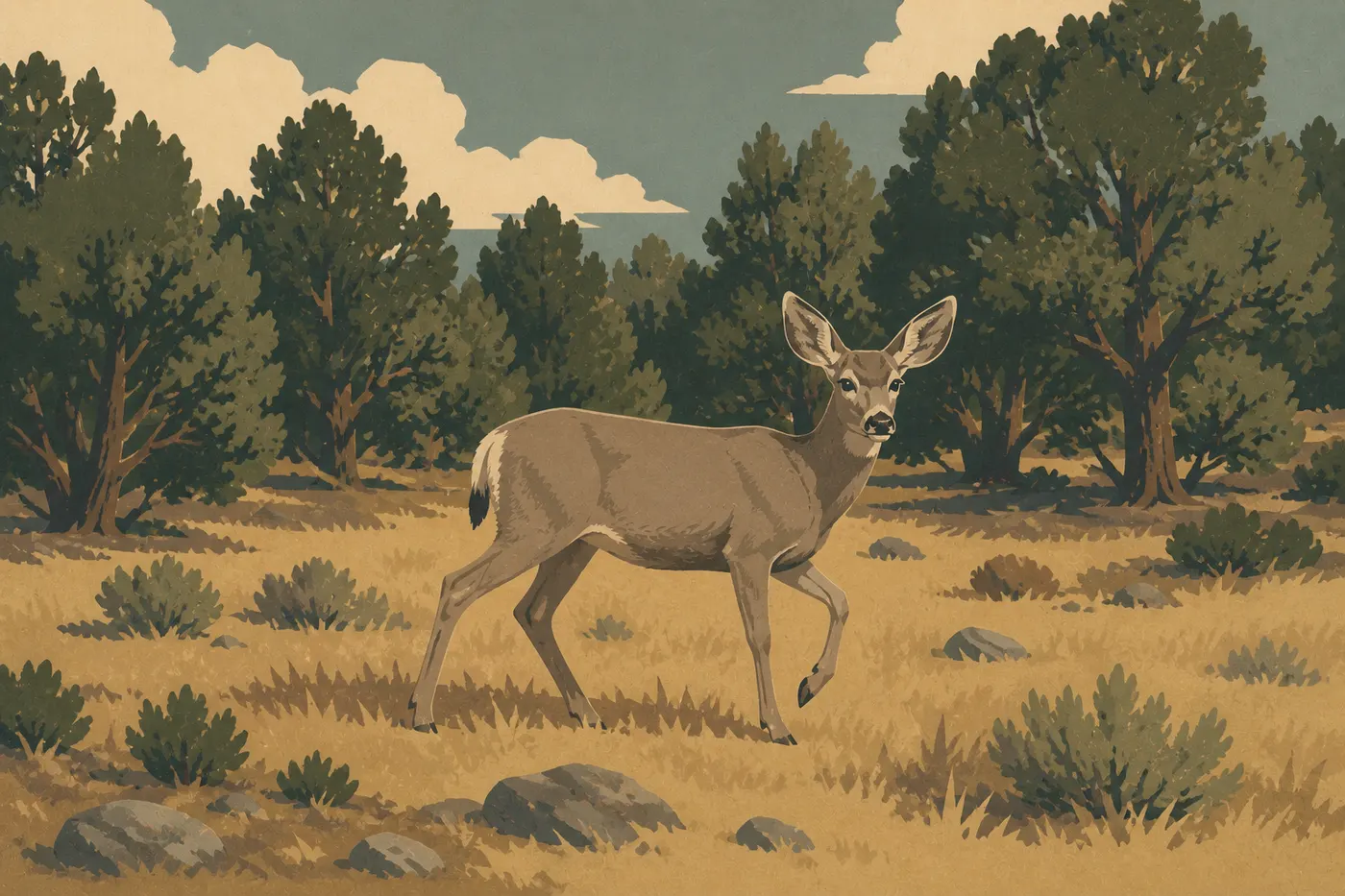
Mule deer get their name from their large, mobile ears, which resemble a mule's. They're the park's most visible animals. You'll encounter them at dawn along the roadside, especially along Mesa Top Loop Road, or grazing on the lawns near the ruins. Bucks carry their antlers roughly from May through January. In the fall, their head-on clashes are noisy and dramatic, even from a safe distance. Stay at least 100 feet away. A doe with a fawn may charge without warning.
Wild Turkey (Meleagris gallopavo)
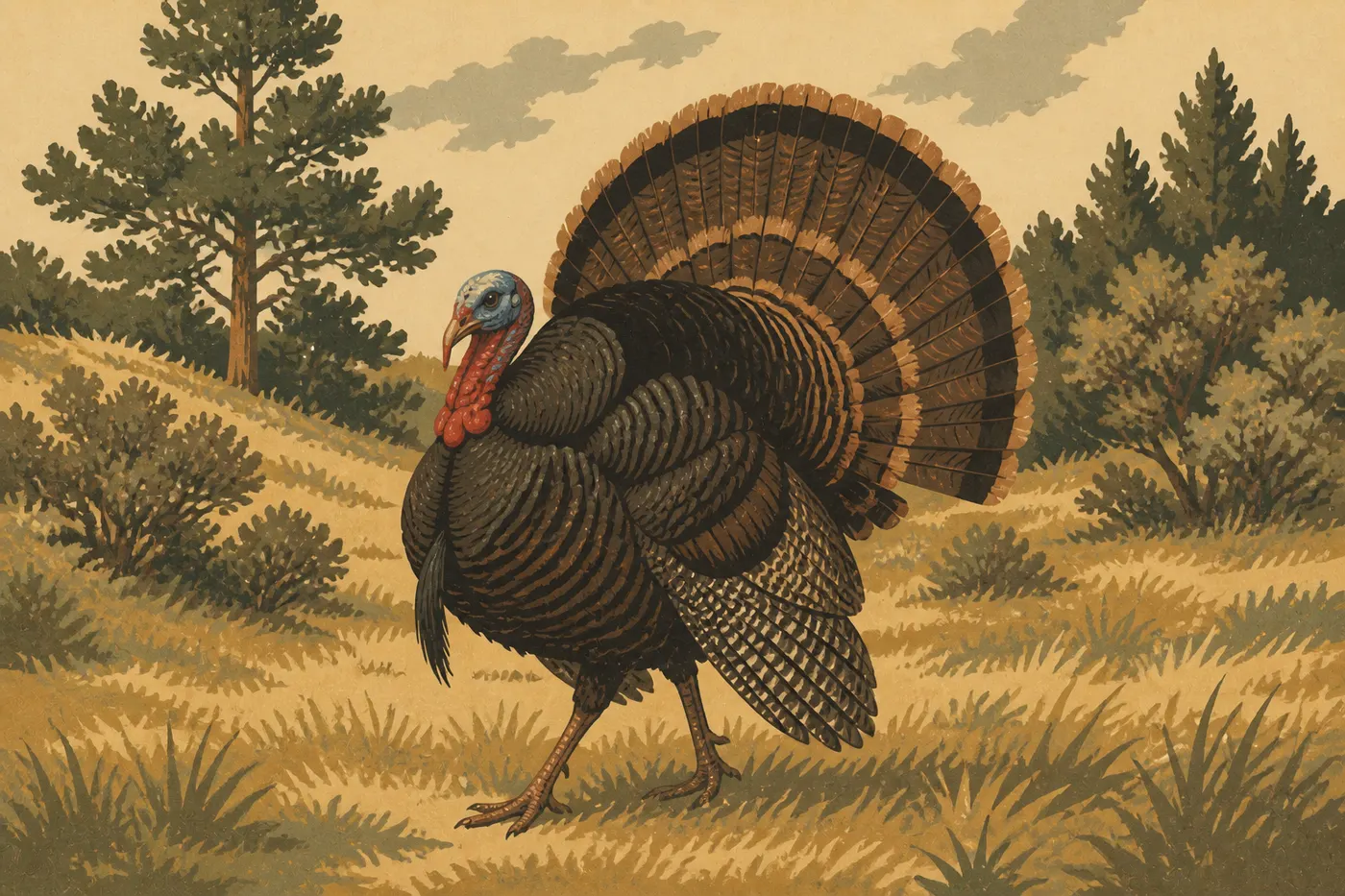
Wild turkeys are almost as common as mule deer on the mesas. You'll see groups of five to twenty birds, often pecking around parking lots or crossing trails at their own pace. In spring, males fan their tails to court females. Their iridescent brown-bronze plumage catches the golden morning light beautifully.
Black Bear (Ursus americanus)
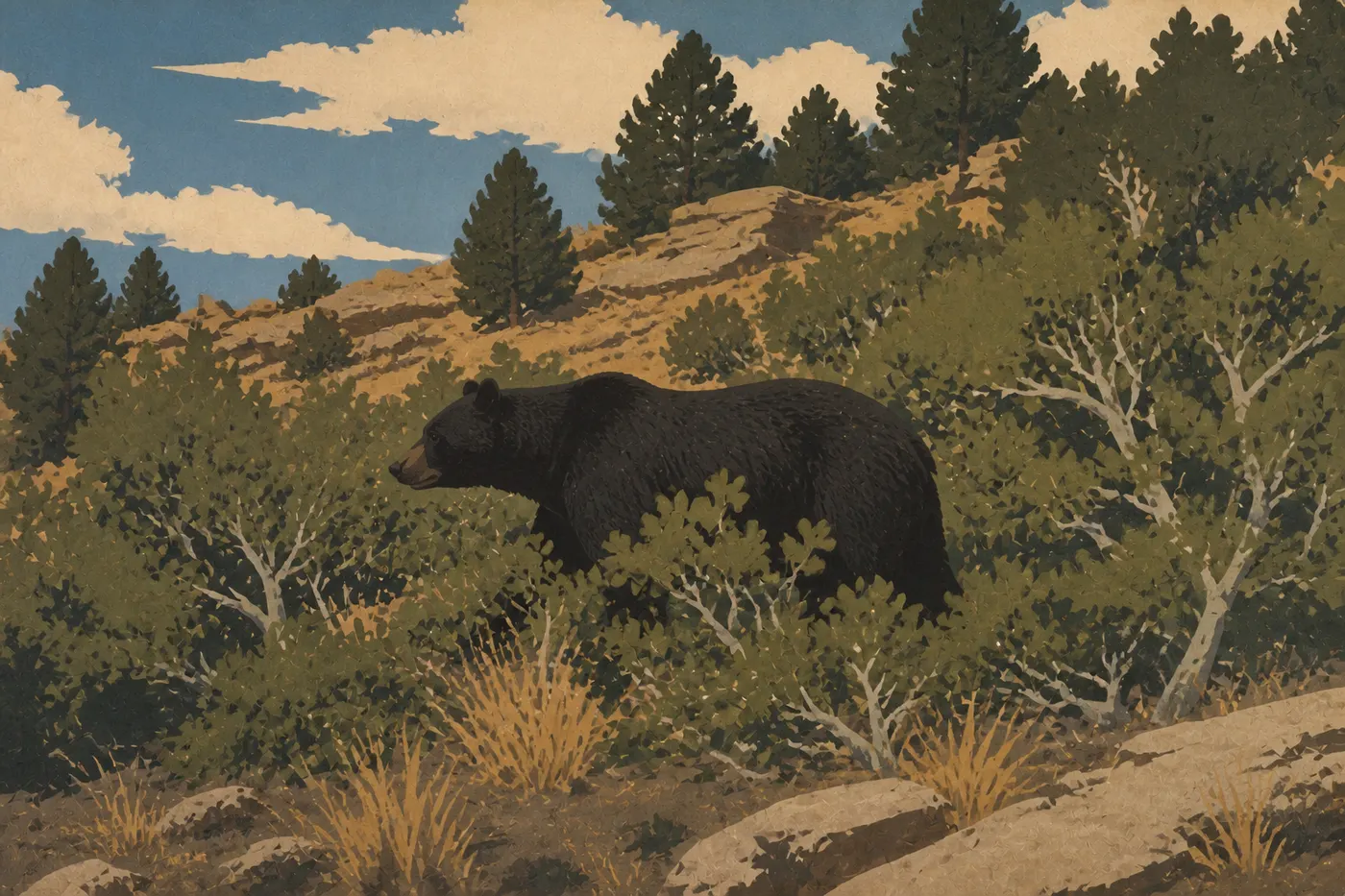
Black bears live in the park, but they keep a low profile. Their coats can range from black to cinnamon brown, which sometimes confuses visitors. They spend most of their time in wooded areas rich in acorns and berries during summer and fall, when they build up fat reserves for winter. Direct encounters remain rare. Bears do regularly damage trash cans and poorly secured vehicles, however, so the park strictly enforces food-storage rules.
Black Bear or Grizzly: Which One Lives in Mesa Verde?
In Mesa Verde, and throughout Colorado, only black bears (Ursus americanus) remain. Grizzlies (Ursus arctos horribilis) disappeared from the state in the early twentieth century. If you're unsure how to tell them apart, look for the grizzly's pronounced muscular shoulder hump and slightly concave, dish-shaped muzzle. Black bears don't have that hump, and their muzzles are straight. In either case, respond the same way: back away slowly and don't run.
Mountain Lion (Puma concolor)
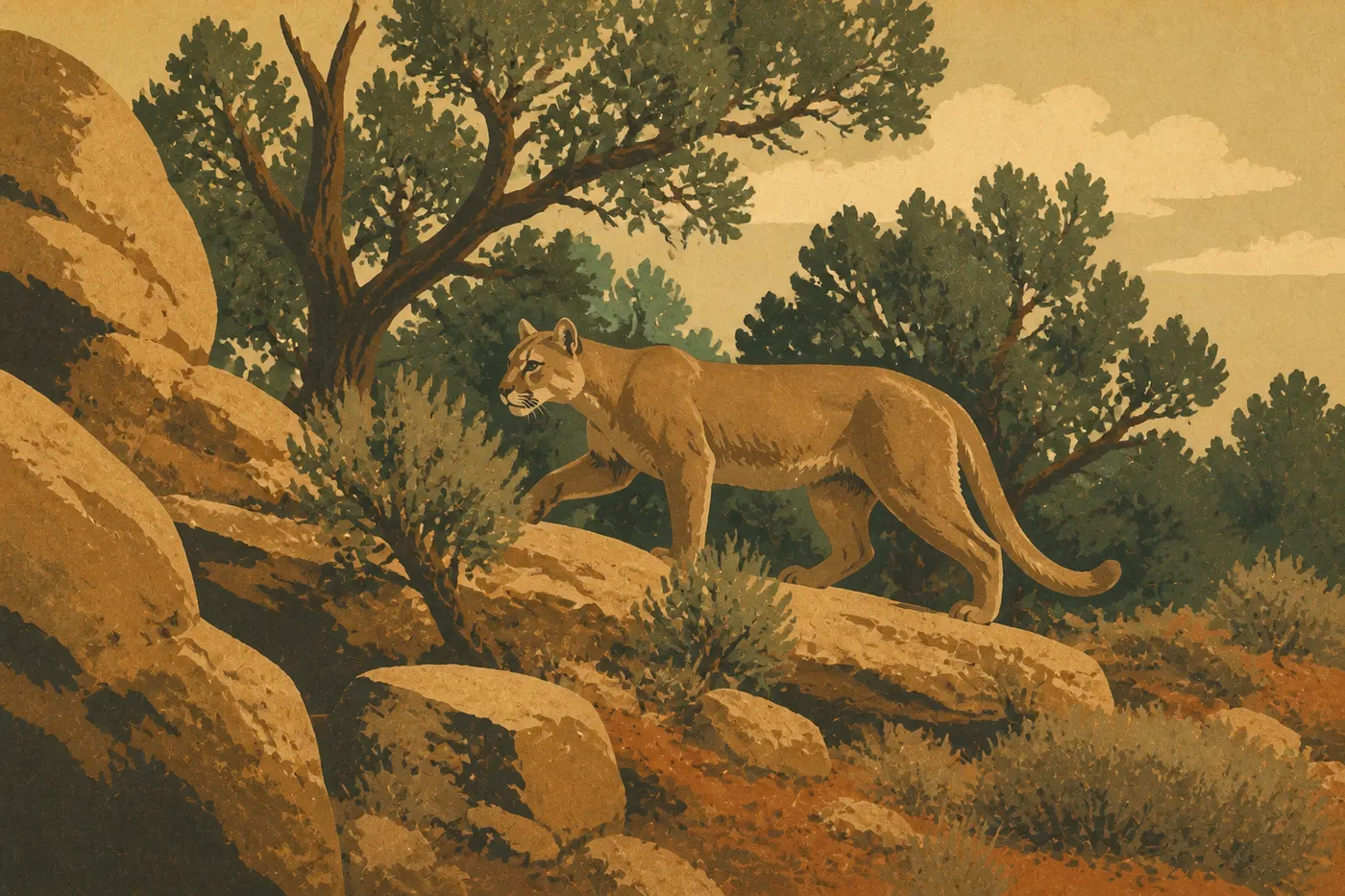
The mountain lion is the park's top predator. Crepuscular and nocturnal, it actively avoids people, and the vast majority of visitors never see one. Rangers document its presence with motion-activated cameras placed along the canyons. If you do encounter one during the day, a rare occurrence, make yourself look larger by raising your arms and opening your jacket. Speak firmly and back away slowly without turning your back.
Coyote (Canis latrans)
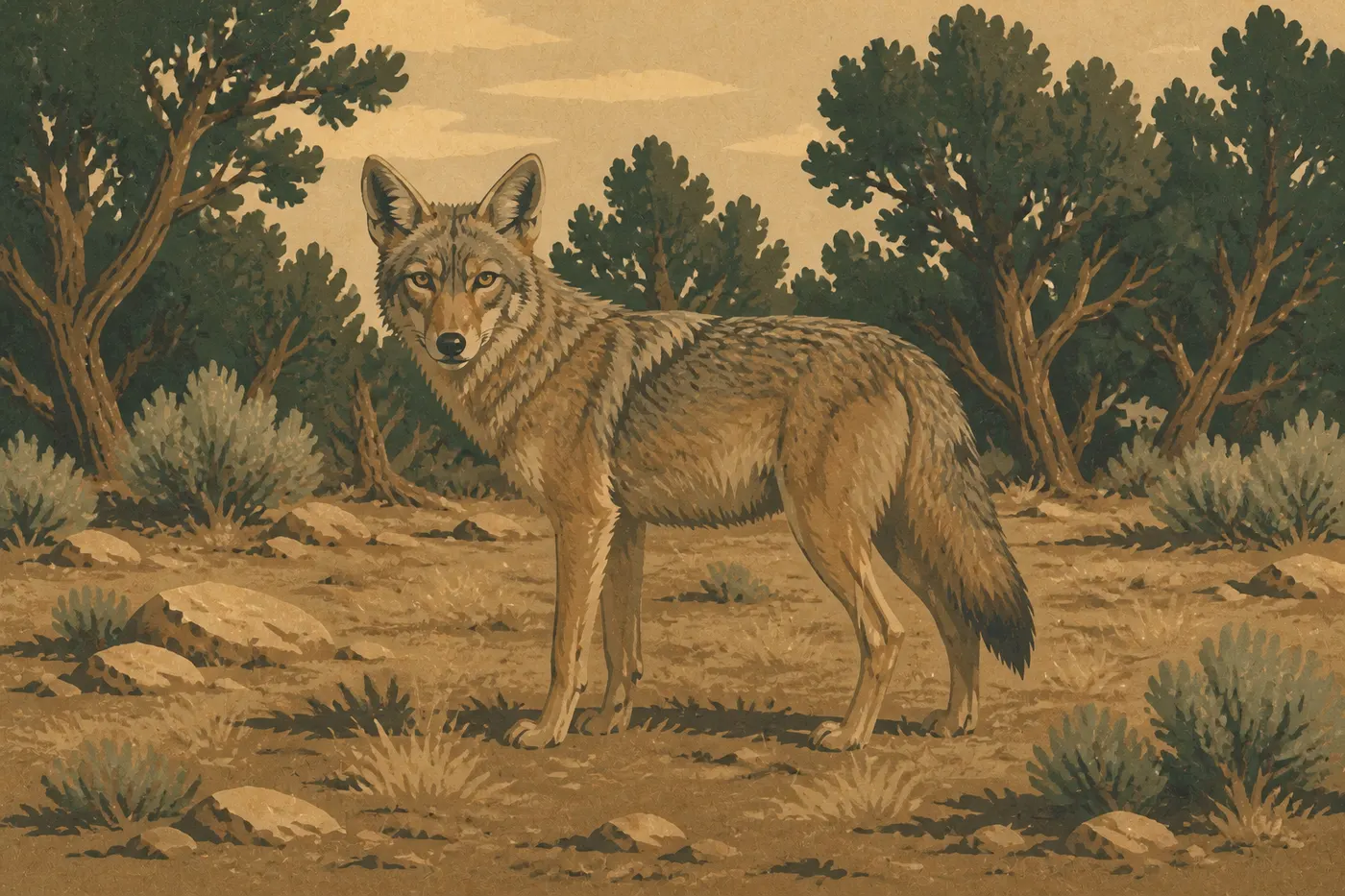
The coyote is Mesa Verde's most visible canid. You'll hear it howl every evening, alone or in chorus. You may also spot one trotting across a clearing with its tail held low. Never feed it. A coyote that learns to seek food from people quickly becomes aggressive and eventually has to be relocated or euthanized.
Raptors: Golden Eagles and More
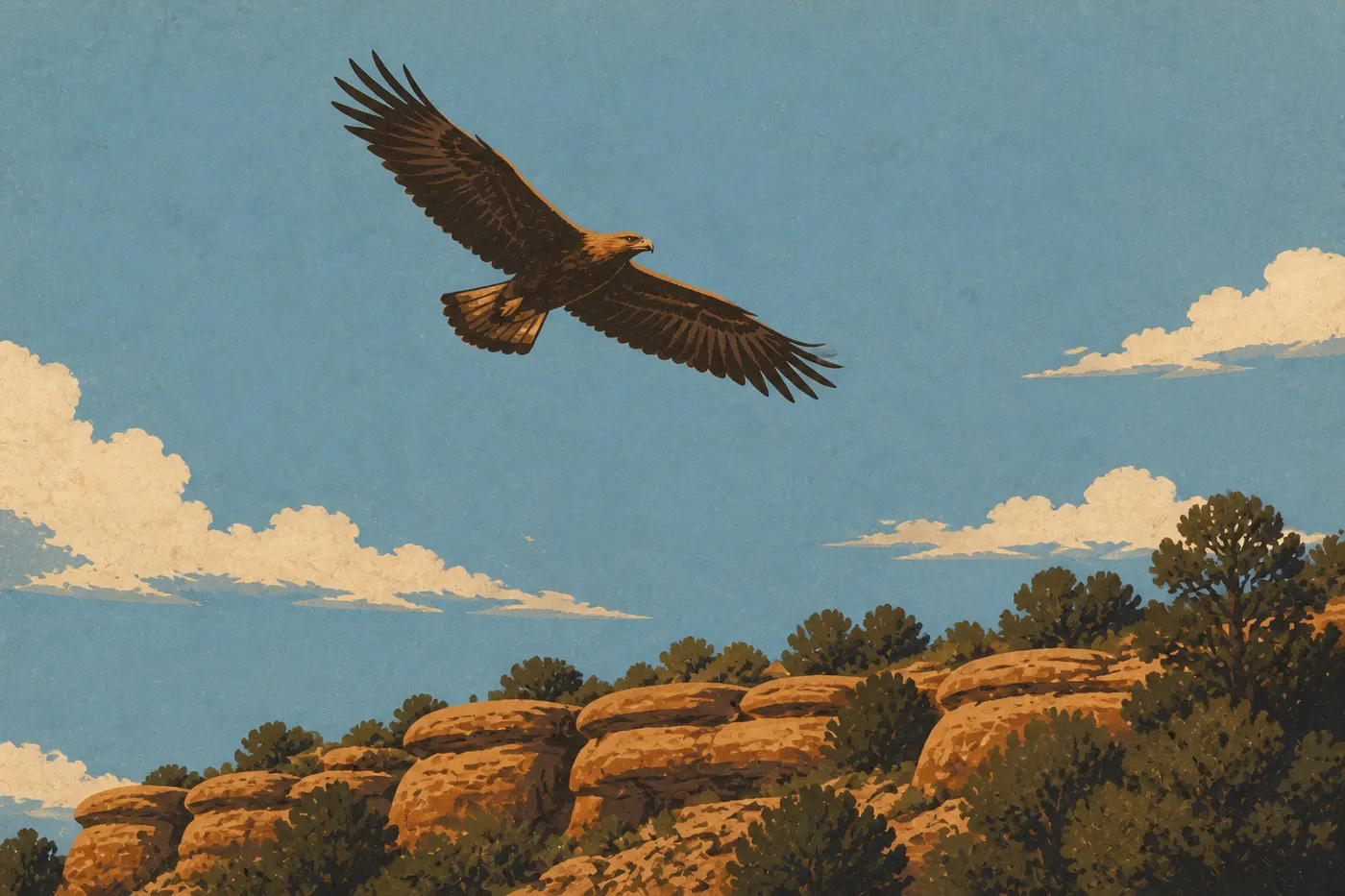
Open plateaus and canyon walls attract several raptors. Golden eagles (Aquila chrysaetos) nest on the cliffs and ride thermals late in the morning. Red-tailed hawks (Buteo jamaicensis) are the most common. You'll see them perched on utility wires along the road. American kestrels (Falco sparverius), the smallest falcons in North America, hunt insects and small rodents across open meadows. At dawn, ravens and Steller's jays noisily animate the wooded areas.
Where to See Wildlife in Mesa Verde
Chapin Mesa draws most of the visitors, but it also offers most of the easy wildlife sightings. Arrive before 8 a.m. and you'll often see mule deer on the lawns and wild turkeys along Mesa Top Loop Road, before traffic picks up.
Wetherill Mesa, which sees fewer visitors, is our recommendation if you've got a half day to spare. The animals are less accustomed to cars, so sightings feel more peaceful. This is also where bears are reported most often.
Park Point, the park's highest point at 8,583 feet, offers a 360-degree panorama. From the fire lookout tower, eagles and hawks glide at eye level on the afternoon thermals. It's the best place to watch the larger raptors.
Canyon rims, especially the Soda Canyon Overlook Trail, serve as travel corridors for predators. Rangers regularly find fresh mountain lion tracks there.
For trails that combine archaeological sites with the best wildlife corridors, the Mesa Verde hiking guide lays out the practical options, including distances and difficulty levels.
When to Watch Wildlife
Dawn and dusk are still the golden hours. Mule deer, wild turkeys, and coyotes are active before full sun and become active again one to two hours before sunset. In midsummer, midday is unproductive. Animals retreat into the shade by 10 a.m. when temperatures climb above 90°F.
Fall, from September through November, is the best season. Mule deer are in the rut, bears are in a pre-winter feeding frenzy, and thinner vegetation makes animals easier to spot. One mid-October morning, I came across a buck in the rut about 165 feet from the Chapin Mesa ruins. It was an unexpected sight that captured the park's distinctive feel at that time of year.
Winter limits access because Wetherill Mesa closes, but fresh tracks in the snow reveal movements that stay hidden during the rest of the year.
Nocturnal wildlife deserves a section of its own. The ringtail (Bassariscus astutus), a small carnivore with large almond-shaped eyes and a long tail ringed in black and white, hunts at night in rocky canyons. Several bat species emerge at sunset and chase insects above the ruins. Rattlesnakes may also move around at night in midsummer, when temperatures remain high. The Mesa Verde trip-planning calendar breaks down the best times to visit based on your priorities.
Predators and Large Animals of Mesa Verde
The black bear is the park's largest mammal. A healthy adult can weigh between 130 and 440 pounds before winter. It's an omnivore. Depending on the season, its diet includes berries, acorns, insects, carrion, and small mammals.
The mountain lion sits at the top of the food chain. An adult male can weigh more than 155 pounds and range across a vast territory extending well beyond the park's boundaries. It helps regulate mule deer populations.
The coyote is a mid-level predator. It regulates populations of white-tailed jackrabbits, black-tailed jackrabbits, and rodents. Its calls are what bring the park's nights to life.
The Great Basin rattlesnake (Crotalus oreganus lutosus) is Mesa Verde's only venomous snake. It frequents sunny rocky trails and south-facing slopes between April and October. It isn't looking for a fight. If you hear its distinctive rattle, stop moving, locate the snake visually, and go around it at a distance.
Staying Safe While Watching Wildlife
Required minimum distance: 100 feet from any wild animal, without exception. If the animal changes its behavior because of you, such as raising its ears, fixing its gaze on you, or moving toward you, you're too close. Double that distance for females with young, including does with fawns and hens with chicks.
Don't feed wildlife: the feeding ban isn't a matter of convenience. It's a matter of survival for the animal. A bear or coyote that learns to seek food from people is likely to be condemned in the near future.
Food storage: put all food in your vehicle's trunk or an approved bear-resistant container as soon as you leave the picnic table. Backpacks left on the ground won't deter a bear that's used to people.
If you're bitten by a snake: call 911 immediately. Stay calm to slow the spread of venom through your body, and keep the injured limb below heart level. Don't cut the wound, suck out the venom, or apply a tourniquet.
If you encounter a mountain lion: make yourself look larger by raising your arms and opening your jacket. Speak firmly and back away slowly while facing the animal. Never run. That triggers its chase instinct.
In Brief: Species You Shouldn't Miss and Where to Look for Them
| Species | Best spot | Best time |
|---|---|---|
| Mule deer | Mesa Top Loop Road, Chapin Mesa | Dawn, dusk |
| Wild turkey | Chapin Mesa parking lots and meadows | Morning |
| Black bear | Wetherill Mesa wooded areas | Fall, dawn |
| Mountain lion | Canyon rims, Soda Canyon Overlook Trail | Night (rarely seen during the day) |
| Coyote | Clearings, roadsides | Dusk, night |
| Golden eagle | Park Point, canyon walls | Afternoon (thermals) |
| Rattlesnake | Sunny rocky trails | April through October, midday |
| Ringtail | Rocky canyons | Night |
To plan your trip around these sightings, the Mesa Verde guide explains the park's layout, access areas, and essentials to know before you arrive.
Frequently Asked Questions
What animals live in a mesa biome?
Semi-arid mesa biomes support species adapted to wide temperature swings and dry conditions, including mule deer, coyotes, wild turkeys, mountain lions, black bears, raptors, and rattlesnakes. Mesa Verde's piñon-juniper forest is a characteristic example of this Colorado Plateau habitat.
Are there bears in Mesa Verde?
Yes, black bears (Ursus americanus) live in the park. They mainly inhabit piñon-juniper woodlands in summer and fall. Direct encounters remain rare, but secure food storage is mandatory throughout the park.
Are there mountain lions in Mesa Verde National Park?
Yes, mountain lions (Puma concolor) live in Mesa Verde. Nocturnal and secretive, they're rarely seen during the day. Rangers regularly document their presence with motion-activated cameras placed in the park's canyons.
What is the most common animal in Mesa Verde?
Mule deer are the most frequently observed animals. You'll see them along roadsides, on trails, and near the ruins, mainly at dawn and dusk.
What is the largest animal in Mesa Verde?
The black bear is the largest mammal in the park. A well-fed adult can weigh up to 440 pounds before going into hibernation.
What animals come out at night in Mesa Verde?
Mountain lions, coyotes, ringtails, and several bat species are active after sunset. Rattlesnakes may also move around at night in midsummer. Don't use unmarked trails after sunset without suitable lighting.