
Isle Royale Wildlife: Animals to See and Where to Find Them
Isle Royale is a happy biological anomaly. This 209-square-mile island in the middle of Lake Superior is accessible only by boat or seaplane, and that isolation has shaped a distinctive wildlife community. There are fewer species than in a mainland forest, but wildlife sightings are far more concentrated than what most parks in the Midwest can offer. The five signature animals you're likely to see or hear during your stay are moose, gray wolves, bald eagles, common loons, and red foxes. The island has another notable distinction: no bears, snakes, or raccoons. The water decided who made the cut.
Isle Royale's Signature Animals
Moose (Alces alces)
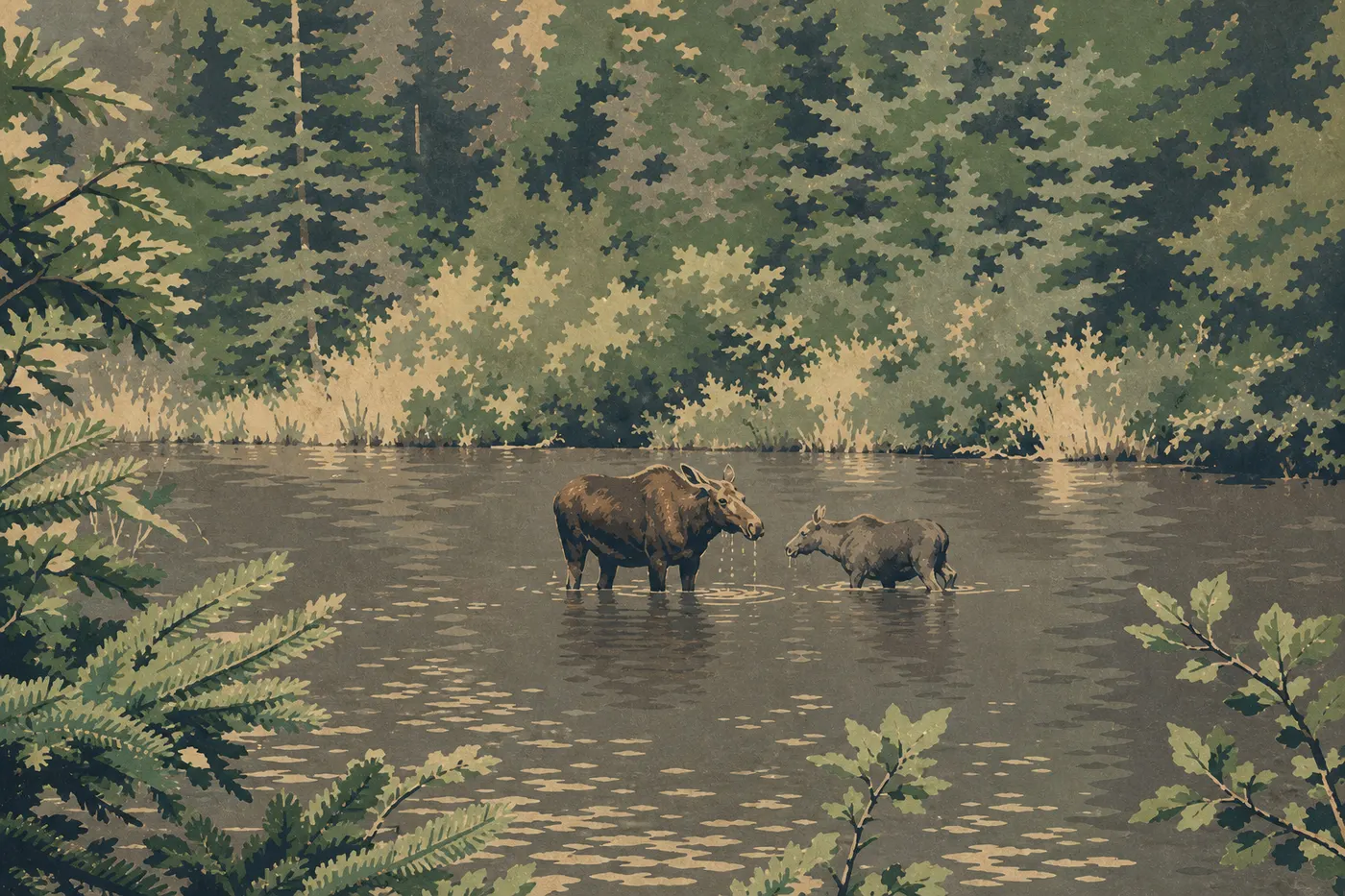
Moose are the park's main attraction. Their population rises and falls with the predator-prey cycles that have made Isle Royale famous, but you'll have no trouble coming across one. Island conditions concentrate the animals within a contained landscape. An adult male can easily weigh more than 1,100 pounds and stand about 6 feet at the shoulder. You'll often spot one with its head underwater, grazing on aquatic plants such as water lilies. That posture is both comical and majestic, and it's the image most people associate with Isle Royale.
Females give birth in spring, usually in May. Calves follow their mothers within their first few days and stay by their side for much of the summer. In July and August, look for moose at dawn in the coves of Lake Richie and Lake Harvey or along the shoreline near Rock Harbor.
Gray Wolf (Canis lupus)
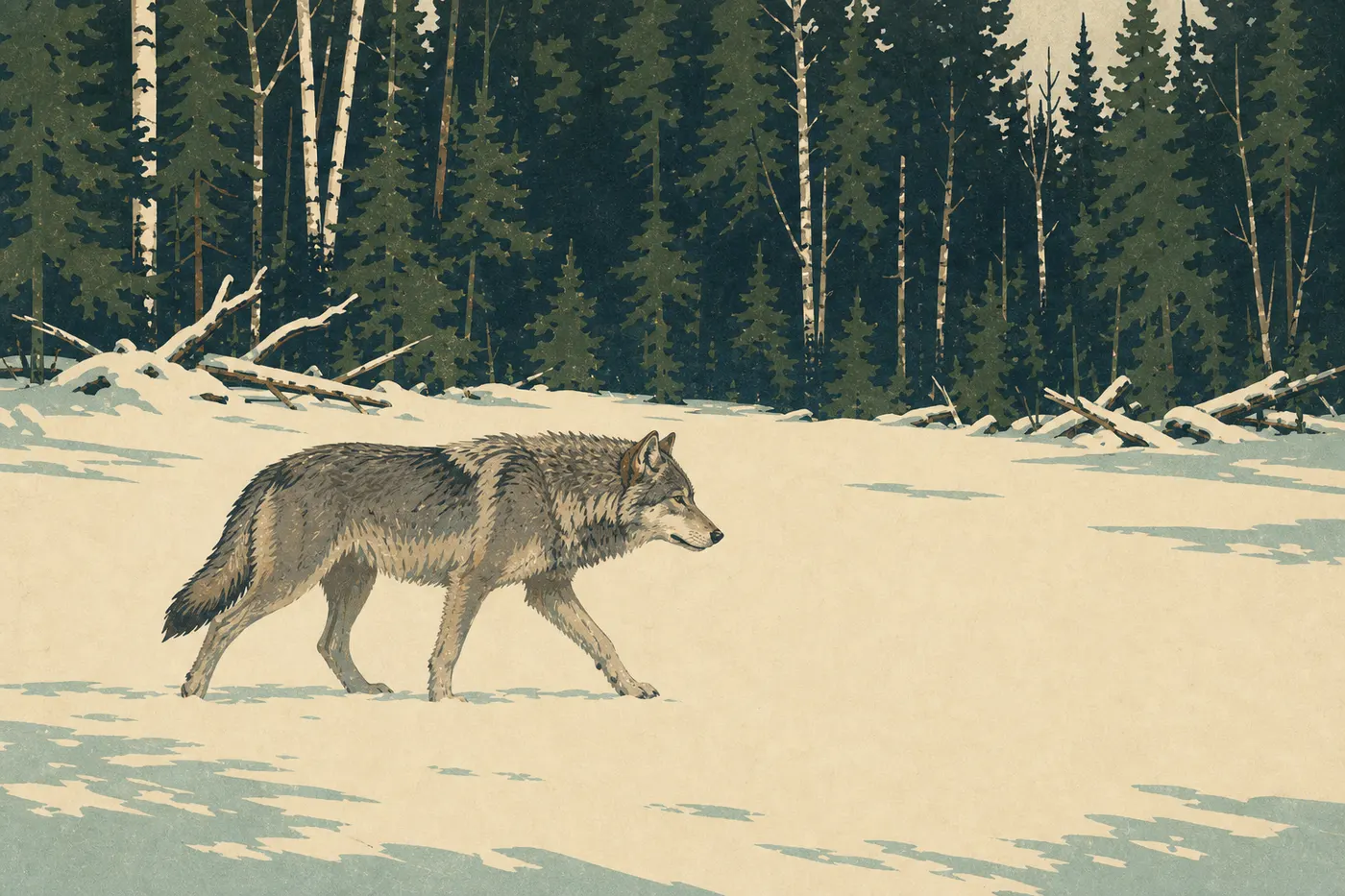
Isle Royale's wolves are famous in scientific circles. Research on the island's predator-prey dynamics has continued without interruption since 1958, making it the world's longest-running study of a coevolving wolf and moose population.
The recent history is dramatic, but it has a good ending. In the mid-2010s, inbreeding and disease reduced the pack to just two individuals in 2018. The NPS then launched a relocation and genetic rescue program. Between 2018 and 2019, several wolves from Minnesota and Ontario were moved to the island, and the population has since climbed back to around 15 animals.
Spotting a wolf is still a rare stroke of luck, not something to count on. Hearing their howls at dusk from a campsite, though, is an experience you'll remember.
Bald Eagle (Haliaeetus leucocephalus)
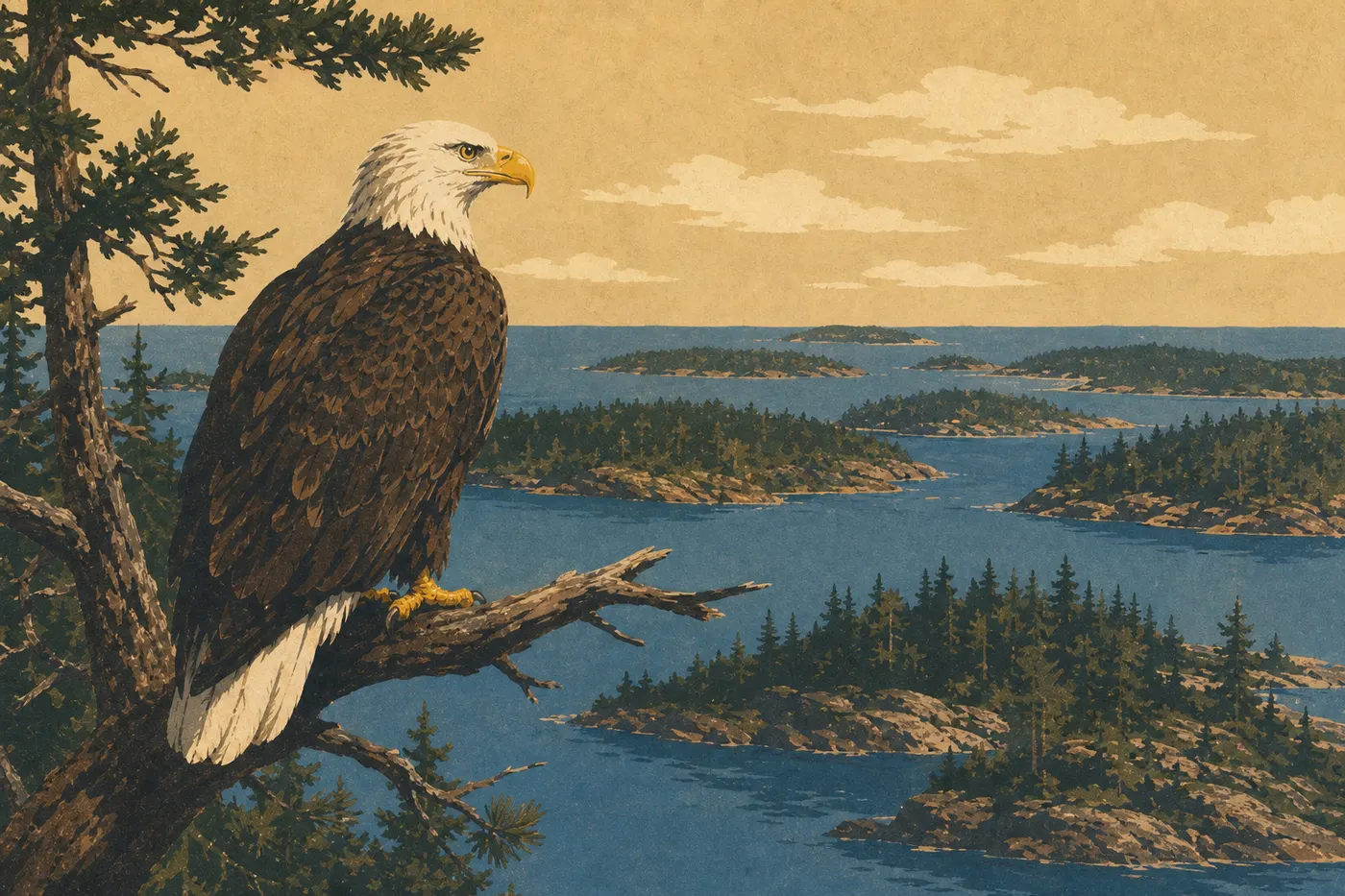
Several nesting pairs of bald eagles live on the island and nearby islets. You'll often see one perched on a dead tree along the shoreline or soaring above the lake. Young eagles have mottled brown plumage for four to five years before developing the adult's characteristic white head, which can surprise visitors who don't immediately recognize them. You'll have an easier time getting close from a kayak or boat than on foot.
Common Loon (Gavia immer)
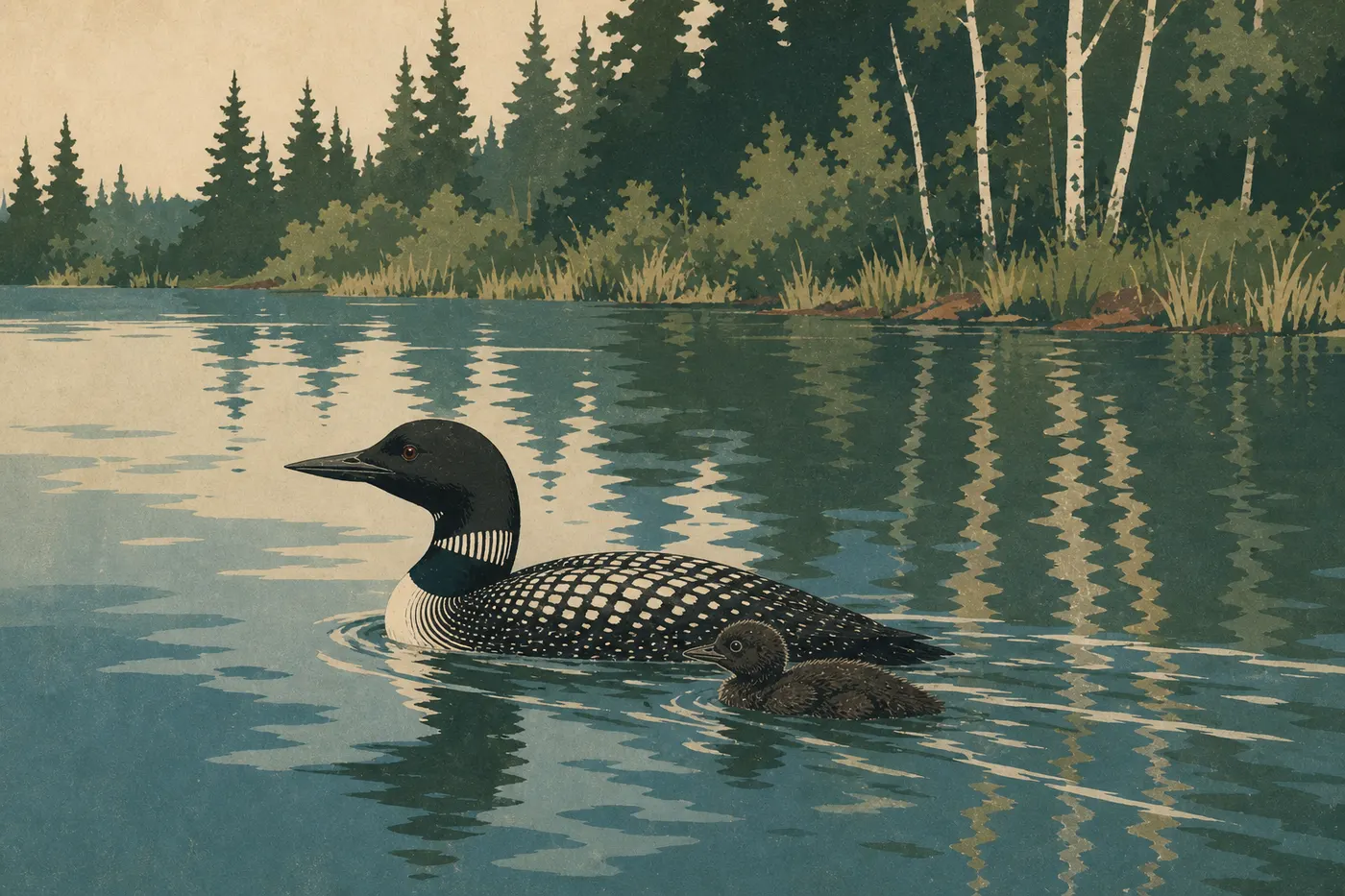
If you spend a night on the island, you'll hear it before you see it. The common loon's call is a plaintive, powerful trill that carries a long way across the water, and it's one of Isle Royale's signature sounds. The species nests on inland lakes and dives dozens of feet to catch fish. Identify it by its black-and-white striped collar and checkerboard back. In May and June, keep a respectful distance from nesting areas.
Red Fox (Vulpes vulpes)
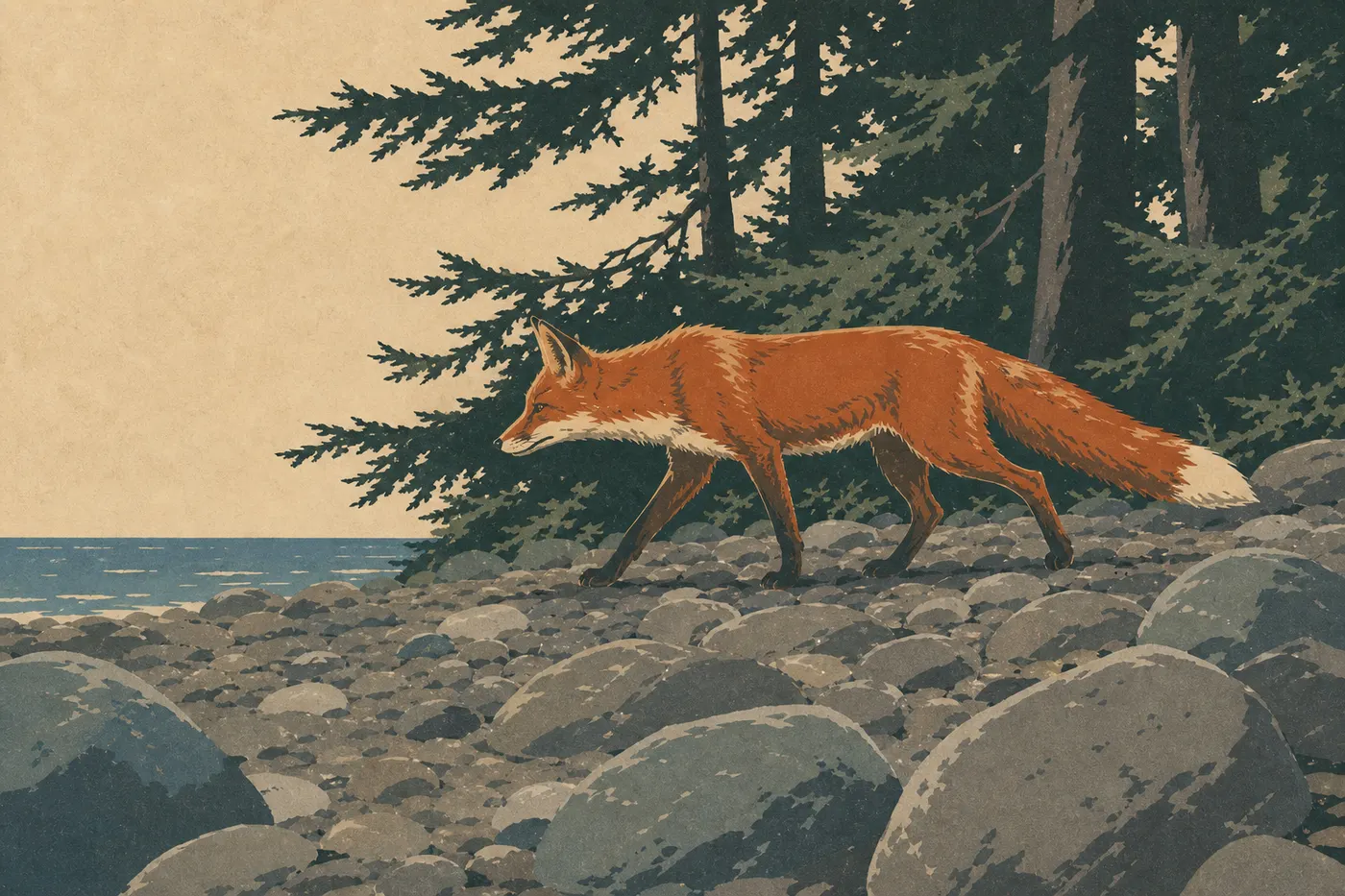
The red fox is probably the animal you'll encounter most often, including on trails in the middle of the afternoon. It has adapted to human presence and may approach campsites. Don't feed it. It may seem harmless, but every visitor who gives it something gradually changes its natural behavior. Watch it hunt voles in a meadow instead, and you'll have your video.
Other Residents to Know
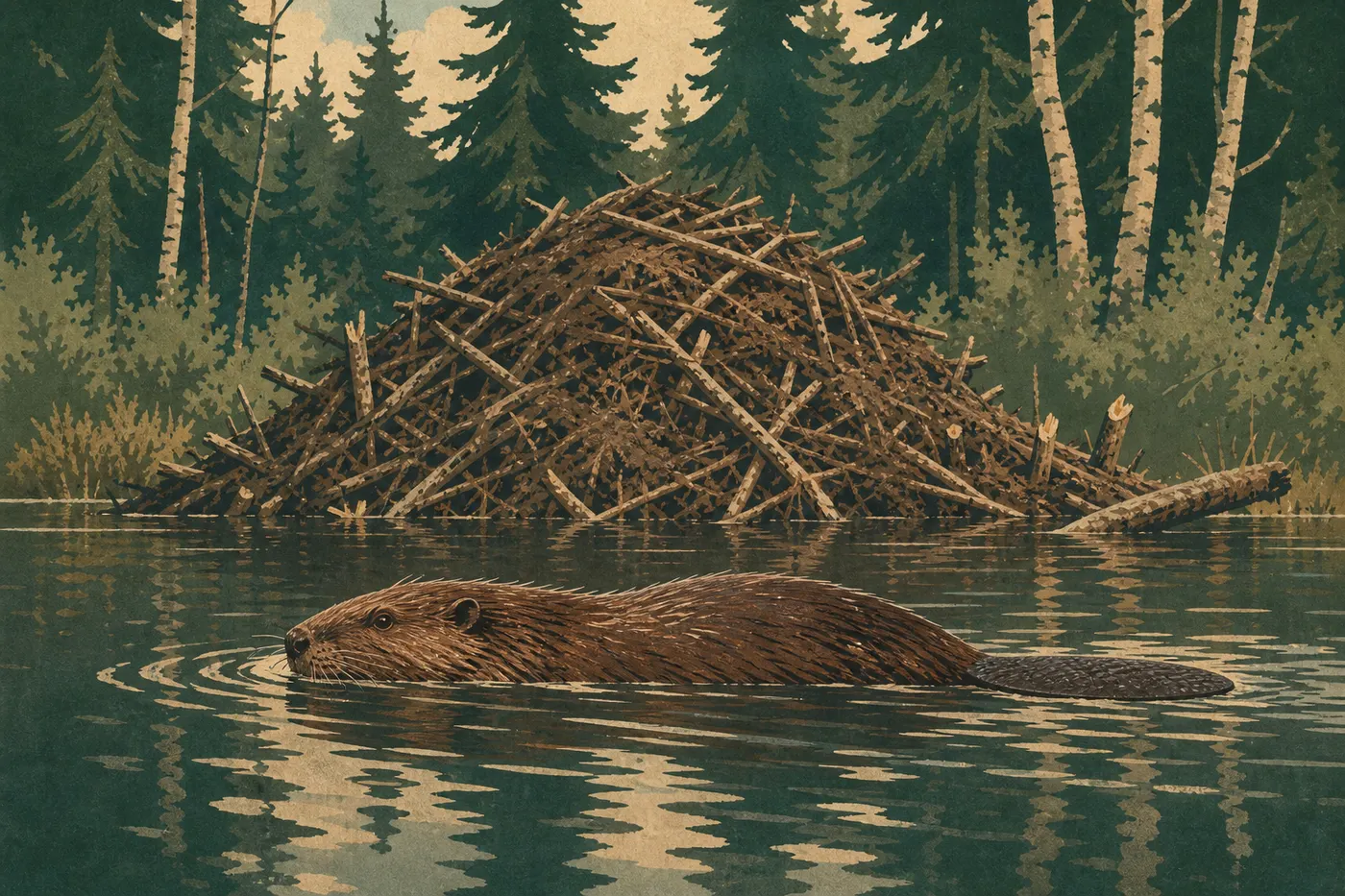
The island's mammal list includes more than 20 species, compared with 40 to 50 in a comparable mainland forest. It also has beavers, which are common along inland waterways, river otters, American mink, snowshoe hares, and red squirrels. Common ravens are everywhere. Ospreys, peregrine falcons, and migratory shorebirds swell the list in May and September.
Where to See Wildlife on Isle Royale
The island has no dedicated wildlife-viewing infrastructure. There are no observation towers and no roads open to cars. You'll look for wildlife on foot, by kayak, or by boat.
Rock Harbor and its surroundings are the main entry point on the east side. Bald eagles are common here, ravens are everywhere, and moose emerge at the forest edge at dawn and dusk.
Lake Richie (a 2- to 3-hour hike from Moskey Basin) is the island's best place to spot moose. The low shorelines offer open sightlines and cover. Get there early in the morning.
Tobin Harbor and Duncan Bay, near Rock Harbor, attract river otters late in the day. Beavers have established dens along several inland tributaries.
Washington Harbor (on the west side, near Windigo) is another active area, with moose along the water's edge, regular bald eagle sightings, and sometimes wolf tracks in the muddy shoreline.
By kayak or boat along the island's rugged shores, you'll get closer to waterbirds, otters, and bald eagles than you will from the trails. The Isle Royale hiking guide covers the inland trails and their difficulty levels for reaching the best wildlife-viewing areas.
When to Watch Wildlife on Isle Royale
The park is open from April 16 through October 31. Most visitors arrive between June and September.
May and early June: Migratory birds arrive, and moose cows have recently given birth to their calves. Black flies are intense, so bring serious protection, including a head net and repellent.
July and August: This is peak season. Moose enter the lakes to feed and escape insects, making them especially easy to see from shore or from the water. Bald eagles are active all day. This is also the best time to hear loons at night.
September: Visitor numbers drop, and the light gets better. The moose rut begins toward the end of the month. Bulls vocalize, move around more, and are easier to spot, but they're also more unpredictable. Wolves are more active in fall as well.
Details on the best times to visit month by month, Lake Superior weather, and boating constraints from the mainland can be found in the When to Visit Isle Royale guide.
Predators and Large Animals on Isle Royale
The moose is by far the park's largest animal. The gray wolf is its only large land predator.
No bears: Neither black bears nor grizzlies live on Isle Royale. Crossing from the mainland means swimming more than 12 miles through very cold water, which discourages even the toughest swimmers. Hikers who arrive with bear-country habits can save them for another park. Still, secure your food from foxes and small mammals.
No snakes: No snake species has been documented on the island. Lake Superior's climate and the island's geographic isolation keep them away.
The wolf-moose relationship remains at the heart of the park's ecology. When the pack is healthy, it regulates the moose population and protects the birch and aspen forests from overgrazing. Researchers have monitored this dynamic continuously since 1958, making Isle Royale a worldwide reference point for wildlife ecology.
How to Watch Wildlife Safely
Minimum distance: The NPS recommends staying at least 75 feet from any wild animal. Here's the practical rule to remember: if an animal changes its behavior because it has noticed you, you're too close. Back away slowly without turning your back.
Never feed wildlife: Feeding a wild animal is prohibited in all national parks and can result in a fine. Foxes and birds accustomed to people eventually lose their ability to feed themselves.
Moose rut (late September and early October): Bulls can charge without warning. Never get between a cow and her calf. If one charges, put a solid object between you and the animal, such as a tree or rock, and back away slowly.
Food storage: Use the metal food lockers at official campgrounds, or hang your provisions at least 10 feet off the ground and 5 feet from the trunk.
By kayak or canoe: Keep a respectful distance from nesting loons. Don't make sudden noises near a moose that's drinking. The animal could panic and endanger a small boat.
For camping permits and fire restrictions, the Isle Royale camping guide has the practical details.
In Short: Species Not to Miss and Where to Find Them
| Species | Best area | Best time |
|---|---|---|
| Moose | Lake Richie and Lake Harvey, Rock Harbor | Dawn, July through September |
| Gray wolf | Throughout the island (elusive) | Dusk, fall |
| Bald eagle | Shorelines, Rock Harbor, Washington Harbor | All day |
| Common loon | Inland lakes | Night and early morning |
| Red fox | Trails and campgrounds | Dusk and dawn |
To plan your full visit, our Isle Royale guide brings together everything you need to know, from access to lodging.
Frequently Asked Questions
What animals live on Isle Royale?
The most visible residents of Isle Royale are moose, gray wolves, red foxes, beavers, river otters, American mink, snowshoe hares, and red squirrels. Among the birds, common loons, bald eagles, ospreys, and common ravens stand out. The island's total mammal list includes more than 20 species.
Are there snakes on Isle Royale?
No snake species has been documented on Isle Royale. The island's geographic isolation and Lake Superior's cold climate prevent them from becoming established.
What predators live on Isle Royale?
The gray wolf is Isle Royale's only large predator. There are no bears, black or brown, no coyotes, and no mountain lions. Red foxes are small predators that hunt rodents and hares. Bald eagles and ospreys hunt fish. This simplified food chain makes Isle Royale an exceptional field laboratory for conservation biology.
Are there bears on Isle Royale?
No. Isle Royale has no bears, black or brown. The more than 12 miles of cold water separating the island from the mainland form a natural barrier that bears don't cross. You can camp without the precautions normally associated with bears, but still secure your food from foxes and small mammals that frequent the campgrounds.