
Isle Royale by RV: Campgrounds, Rules, and Tips
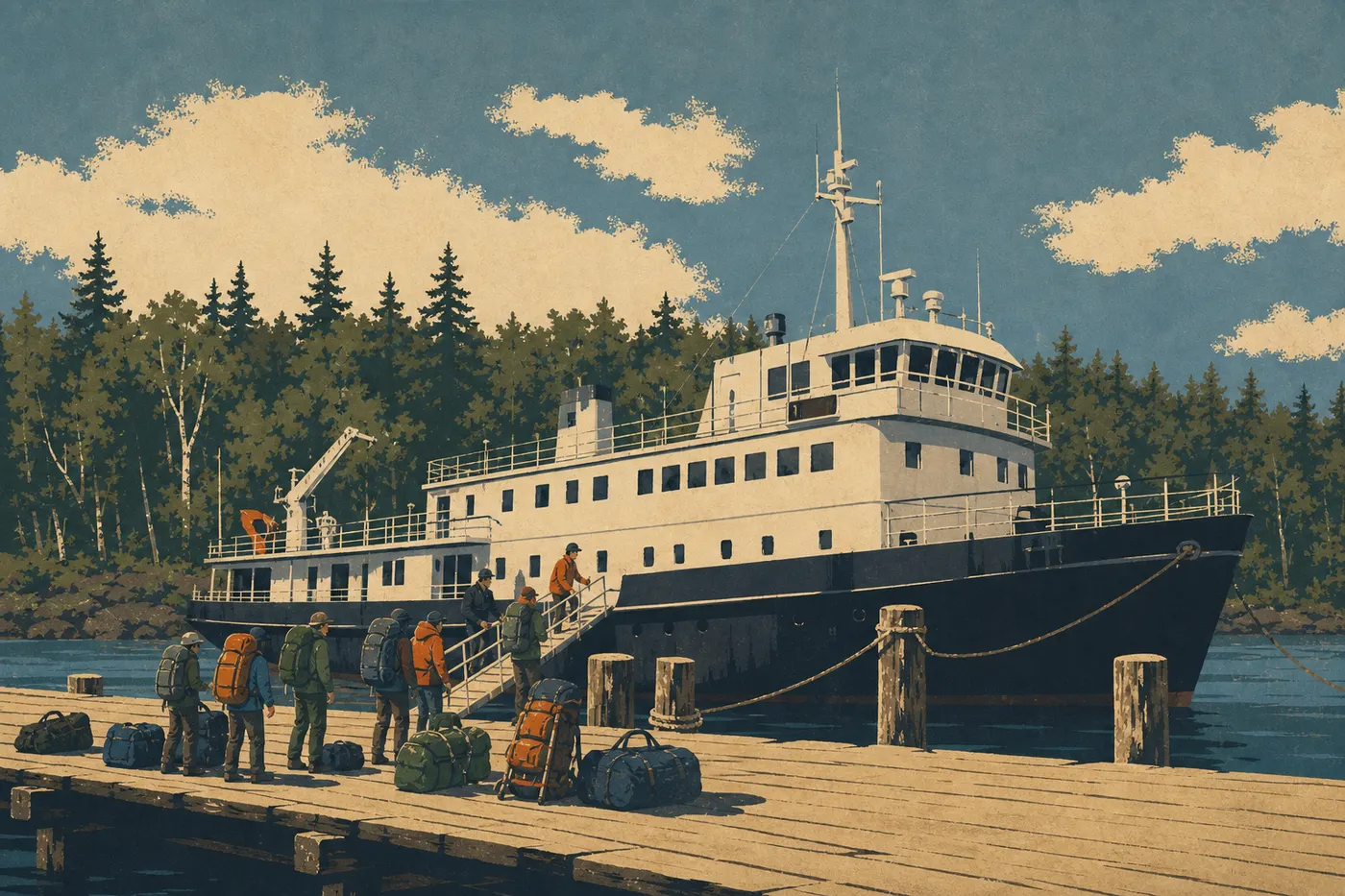
Isle Royale isn't an ordinary national park. It's an island in the middle of Lake Superior, dozens of miles from the nearest shore. No road reaches it, and no bridge crosses it. No matter how well-equipped your RV is, it'll stay on the mainland while you cross the lake by ferry or seaplane.
That's the number-one constraint, and it changes the whole logistics of the trip. The good news is that dozens of RV travelers visit Isle Royale every summer using the same basic strategy. Park your rig at a full-service mainland campground, cross the lake by boat, explore the island on foot or by kayak, then return a few days later to pick up your home on wheels.
The short answer: you can't bring an RV onto the island. The number-one priority is finding a safe place to park your RV on the mainland for the length of your island stay. The best strategy is to choose a state campground with hookups near your departure port.
Can you drive and camp in an RV at Isle Royale?
No, and there's no exception to this rule: no motorized vehicles are allowed within Isle Royale National Park. The island has no roads suitable for vehicles. You can get around only on foot, by canoe, or by kayak. The rule applies to cars, motorcycles, scooters, e-bikes, and drones.
On the mainland, though, RV travelers are right at home. The departure towns and villages (Houghton and Copper Harbor on the Michigan side, and Grand Portage on the Minnesota side) have campgrounds with hookups within a few miles of the docks.
The trip's logic changes completely: your RV becomes your starting and ending point, a comfortable base before and after your wilderness experience on the island.
Restrictions and access: Isle Royale's specific rules
The season is short. The park is open from April 16 through October 31. Ferries and seaplanes operate only from May through September. Outside that window, access to the island is closed, with no exceptions.
The entrance fee is per person, not per vehicle. Plan on $7 per person for each day you're on the island. The America the Beautiful pass ($80 per year) covers admission. That's unusual for a U.S. national park, and it changes the math for families.
The crossing isn't guaranteed. Lake Superior is the world's largest freshwater lake, and its weather can be severe. Crossings are sometimes canceled without notice. Plan at least one extra day on each side of your island stay.
Pets can't travel to the island. Dogs and cats aren't allowed on the island. If you're traveling with a pet, arrange care on the mainland.
For itineraries from Detroit, Chicago, or Minneapolis to the departure ports, see the routes and access options for Isle Royale.
The island's official campgrounds: what you need to know
Camping on the island is strictly wilderness camping: wooden tent platforms, pit toilets, no electrical hookups, no dump station, and no running water (you must filter your water). That's not a limitation. It's the essence of the park.
Rock Harbor
Rock Harbor, at the eastern end of the island, is the main gateway and the island's liveliest hub. You'll find a lodge, a general store, and kayaks for rent. The campsites, set on wooden platforms along the shore, can be reserved through Recreation.gov. This is also where the ferry from Copper Harbor arrives.
Windigo
Windigo, at the western end, is much wilder and less crowded. It's the arrival point for crossings from Grand Portage, Minnesota, and the shortest option at about 2 hours. A ranger station, limited supplies, and sites with wooden platforms await you. The atmosphere is thoroughly remote.
The intermediate campgrounds
About 30 other sites line the trails between the two hubs, including Moskey Basin, Chickenbone Lake, and Intermediate Lake. Each site offers tent platforms, pit toilets, and water that must be filtered. These campgrounds are for backpackers crossing the island over several days, not for RV travelers. We mention them because the confusion is common: “camping” at Isle Royale doesn't mean an RV site.
For details on Rock Harbor Lodge, the cottages, and tent camping, see lodging at Isle Royale and the island camping guide.
Mainland bases and options around the island
This is the heart of the RV strategy at Isle Royale.
From Houghton, Michigan: the crossing takes about 6 hours on the Isle Royale Queen IV. Several campgrounds near town offer sites with electrical hookups. Houghton is also a pleasant college town where you can stock up on supplies before heading to the island.
From Copper Harbor, Michigan: this is our recommendation for a first visit. The crossing is shorter, at about 3 hours, and Fort Wilkins Historic State Park, less than a 5-minute drive from the dock, accommodates RVs with hookups among pine trees beside the lake. The village is tiny and charming.
From Grand Portage, Minnesota: this port sits at Minnesota's northern tip, on the Canadian border. The crossing to Windigo takes about 2 hours. It's ideal for travelers coming from Minneapolis or Canada, and for anyone who wants to cross the island from west to east.
For forest camping spots and BLM areas suitable for camping around the Keweenaw Peninsula, our Great Lakes guide gives you the key locations for dispersed camping in the region.
Dump stations, water, and services
On the island: no RV services are available. It's a wilderness area.
In Houghton: the town offers decent RV services, especially at state campgrounds and some gas stations. This is where you should fill your water tank and dump your gray water before leaving your rig in the parking lot.
In Copper Harbor: the village is small, and RV services are limited. Fort Wilkins Historic State Park has a dump station. Check the hours before arriving in the off-season.
In Grand Portage: services are scarce. Stock up in Duluth or Thunder Bay if you're coming from the north.
A practical rule: manage your tanks before you board. Your RV will often sit alone in the port parking lot for 3 to 7 days. Leave with an empty black tank and a full fresh water tank.
Which base is best for each type of traveler?
Families with kids: Copper Harbor plus Fort Wilkins Historic State Park. Kids handle the 3-hour crossing better than the 6-hour trip, and Fort Wilkins Historic State Park gives younger children something to do in the evening.
Hikers who want to cross the island end to end: combine Copper Harbor (arrive at Rock Harbor) with Grand Portage (depart from Windigo), or do it in reverse. Plan to have a vehicle on each side, or choose a ferry return trip.
Anglers: Houghton gives you access to good spots on Lake Superior. Fishing is allowed on the island with a Michigan state fishing license.
First visit on a budget: Grand Portage plus Windigo. You get the shortest crossing, less expensive mainland campgrounds, and an immediate wilderness experience at Windigo.
To choose the best time of year for your travel style, the Isle Royale seasons guide breaks down the best windows month by month.
Renting an RV to visit Isle Royale
Renting an RV as a mainland base makes sense if you're coming from Detroit, Chicago, or Minneapolis. The drive from those cities to the departure ports takes between 8 and 11 hours, depending on where you start.
Vehicle types that work well:
- Camper van: the most agile option on the narrow roads of the Keweenaw Peninsula. Easy to park in the small port lots.
- Class C motorhome, 20 to 23 feet long: the best balance of comfort and maneuverability. Accepted at the vast majority of Michigan state campgrounds.
- Class A motorhome or fifth wheel: possible, but check Michigan DNR campground length restrictions before booking. Some sites are limited to 30 feet.
Weekly rental rates generally run from $150 to $250 per day, depending on the season and vehicle size. If you combine Isle Royale with a Great Lakes road trip or the Upper Peninsula waterfalls, allow 10 to 14 days to make the drive from a major city worthwhile.
Pets, budget, and reservations: the essentials
Pets: not allowed on the island, either on the ferry or within the park. They're allowed at mainland campgrounds, subject to each site's own policy. Check before booking.
Site costs: Michigan state campgrounds charge $20 to $40 per night, depending on the hookup type (electric only, water and electric, or full hookup). On the island, the entrance fee ($7 per person per day) covers access to the wilderness campgrounds.
Reservations: essential. Reserve your ferry and mainland campground at the same time, starting in January for July and August weekends. On the island, Rock Harbor sites can be reserved through Recreation.gov. Intermediate sites operate on a first-come, first-served basis.
When to book the ferry: crossings from Copper Harbor and Houghton fill up early. Book your boat and campground together. Leave one extra day on each side, since Lake Superior can delay departures without warning.
For entrance fees and annual passes, see the National Parks Fees & Passes page.
In summary: our Isle Royale RV plan
Isle Royale may be the only U.S. national park where your RV can't make it past the gate. That constraint is also the park's signature: a truly wild island with no cars, engine noise, or cell service. The strategy that works is simple: use Copper Harbor for the short crossing, Fort Wilkins Historic State Park for comfortable RV parking, and spend a few days exploring the island on foot to understand what wilderness really means. When you return from the ferry, your home on wheels will be waiting with coffee and a bed.
Frequently asked questions
Do you need reservations for Isle Royale?
Yes, reservations are essential for Isle Royale. Ferry crossings, especially from Copper Harbor and Houghton, start filling in spring for July and August. Sites with hookups at Michigan state campgrounds also book up very early. Reserve your ferry and campground together, ideally in January for peak season.
When does Isle Royale open?
Isle Royale is open from April 16 through October 31. Transportation services (ferries and seaplanes) operate only from May through September. Outside that window, the island is inaccessible.
How can I get to Isle Royale from Michigan?
There are two departure ports on the Michigan side: Houghton (Isle Royale Queen IV, about a 6-hour crossing) and Copper Harbor (about 3 hours). Royale Air Service offers a seaplane from Houghton if you'd rather get there faster. On the Minnesota side, the ferry leaves from Grand Portage and takes about 2 hours to reach Windigo.
Can you park an RV at Isle Royale?
No. No motorized vehicles are allowed on the island. Your RV stays on the mainland, at a campground or secure lot near the departure port, for the entire length of your island stay.
Can you sleep in your RV on the island?
No. Lodging on the island is limited to Rock Harbor Lodge (rooms and cottages) and wilderness campgrounds (wooden tent platforms only). There are no RV sites within the park.
How much does a campsite at Isle Royale cost?
On the island, access to the wilderness campgrounds is included with the entrance fee ($7 per person per day). On the mainland, Michigan state campgrounds charge $20 to $40 per night, depending on the hookup type. The National Parks Fees & Passes page has the details on entrance fees and passes.
What makes Isle Royale different for an RV trip?
Isle Royale is one of the least-visited national parks in the United States, making it a refuge for anyone looking to escape the crowds. The island has no cell service or Wi-Fi. It is home to a population of wolves and moose that researchers have studied continuously since the 1950s, in one of the world's longest-running predator-prey studies. For RV travelers, the defining feature remains this: it's the only major U.S. national park where your RV stays on the shore.
{ "@context": "https://schema.org", "@graph": [ { "@type": "Article", "headline": "Isle Royale by RV: Campgrounds, Rules, and Tips", "author": { "@type": "Person", "name": "Jocelyn Pion" }, "about": { "@type": "LandmarksOrHistoricalBuildings", "name": "Isle Royale National Park" } }, { "@type": "FAQPage", "mainEntity": [ { "@type": "Question", "name": "Do you need reservations for Isle Royale?", "acceptedAnswer": { "@type": "Answer", "text": "Yes, reservations are essential. Ferry crossings fill up in spring for July and August. Reserve your ferry and campground together, ideally in January for peak season." } }, { "@type": "Question", "name": "When does Isle Royale open?", "acceptedAnswer": { "@type": "Answer", "text": "The park is open from April 16 through October 31. Transportation services (ferries and seaplanes) operate only from May through September." } }, { "@type": "Question", "name": "How can I get to Isle Royale from Michigan?", "acceptedAnswer": { "@type": "Answer", "text": "There are two departure ports on the Michigan side: Houghton (about a 6-hour crossing) and Copper Harbor (about 3 hours). A seaplane is available from Houghton. On the Minnesota side, the ferry leaves from Grand Portage and takes about 2 hours to reach Windigo." } }, { "@type": "Question", "name": "Can you park an RV at Isle Royale?", "acceptedAnswer": { "@type": "Answer", "text": "No. No motorized vehicles are allowed on the island. Your RV stays on the mainland for the entire length of your island stay." } }, { "@type": "Question", "name": "How much does a campsite at Isle Royale cost?", "acceptedAnswer": { "@type": "Answer", "text": "On the island, access to the wilderness campgrounds is included with the entrance fee ($7 per person per day). On the mainland, Michigan state campgrounds charge $20 to $40 per night, depending on the hookup type." } } ] } ] }