
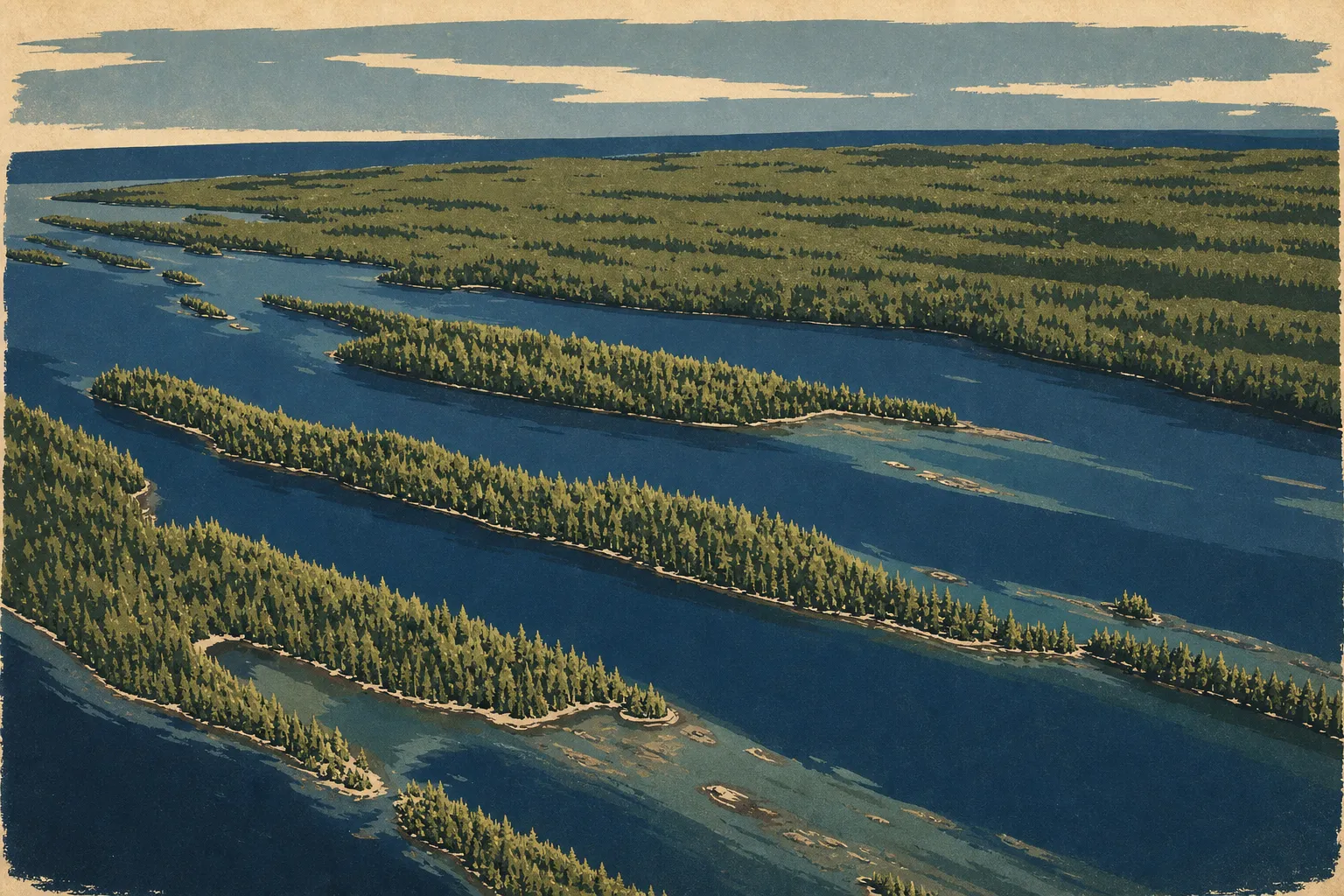
Isle Royale National Park: The Complete Visitor Guide
Isle Royale is a wilderness island in the middle of Lake Superior. It belongs to Michigan but lies closer to the shores of Minnesota and Canada. There are no roads and no cars. You can reach the island only by boat or seaplane, then get around on foot or by canoe. It’s one of the least-visited national parks in the United States, precisely because getting there takes effort. Plan on at least 3 days on the island to make the journey worthwhile, and closer to 4 to 6 days if you want to cross it. This isn’t a destination for an improvised weekend trip. It’s an expedition, and that changes everything about how you prepare.
Here’s what you need to know to lay the groundwork for your trip, sector by sector, with links to our detailed pages whenever a topic deserves a closer look.
Isle Royale at a Glance: Where the Park Is and How to Get There
The park covers one large island and an archipelago of more than 400 islets in the northwestern part of Lake Superior. The administrative headquarters and visitor center are in Houghton, on Michigan’s Keweenaw Peninsula, on the mainland. That’s where you prepare for your trip, not on the island itself.
Two gateways shape every stay:
- Rock Harbor, at the island’s northeastern tip, is the main arrival point. It has the park’s only lodging and a small cluster of services.
- Windigo, at the southwestern tip, is smaller and geared toward hiking and canoeing.
You can reach either one by ferry or seaplane from three towns: Houghton and Copper Harbor in Michigan, and Grand Portage in Minnesota. Your departure port determines your arrival point, crossing time, and therefore the organization of your entire trip. Since logistics genuinely shape your stay, we break them down step by step in our Getting to Isle Royale guide, including schedules, crossing reservations, gear transportation, and how to connect the different legs of the journey.
Good to know: Lake Superior calls the shots. Crossings can be delayed or canceled because of weather, even in midsummer. Build in a one-day buffer for both the outbound and return trips.
Entrance Fees, Passes, and Reservations
Entrance to Isle Royale costs $7 per person per day. Unlike most parks, there’s no entrance booth. The fee is charged per person rather than per vehicle, which makes sense when no car can cross the lake. A $60 annual park pass covers the pass holder for the season, so it quickly pays off if you’re staying several days.
This entrance fee is separate from the cost of ferry or seaplane transportation, which you pay to the operators, and also separate from overnight camping permits. Our National Park Fees and Passes page explains entrance fees and passes. You can collect park stamps at the Rock Harbor and Windigo visitor centers. If you collect them, see our Passport and Stamps page.
Reservations: you don’t need to reserve an entrance ticket in advance, but crossings and the few lodging options fill up quickly during peak season. That’s what determines whether your trip happens, not a park gate.
Reservations, Permits, and Rules to Follow
Transportation reservations: essential during peak season. Book directly with the ferry or seaplane operators (see our Getting There & Transportation page).
Camping permits: every camping stay on the island requires a permit. You can get one from the rangers when you arrive at Rock Harbor or Windigo, or through Recreation.gov for some sites. The permit lists the areas assigned for each night, and rangers conduct checks.
Campfires: prohibited except in the metal fire grates provided in designated areas. Complete restrictions may apply if drought conditions develop during the season.
Wildlife: the island is home to moose and wolves. Keep at least 100 feet from moose, and give them more space if an animal shows signs of agitation. Bulls in rut and cows with calves can be unpredictable. Never get between a mother and her calf. See our Wildlife page for guidance on how to behave around each species.
Trash: the park follows a strict Leave No Trace policy. Everything you bring into the park must leave with you. Store food in the bear boxes available at every campground, even though there are no bears on the island (see the FAQ below).
Drones: prohibited throughout the park.
Fishing: allowed with a Michigan state permit. No additional federal permit is required in the park’s inland waters.
Getting Around Isle Royale
Forget the car, shuttle, and scenic road. None of them exists here. On Isle Royale, you’ll travel on foot along a network of trails, by canoe or kayak across a chain of inland lakes and along sheltered shorelines, and on small water shuttles that connect some points along the coast.
The island’s backbone is the Greenstone Ridge Trail, a ridge trail that runs its full length from Rock Harbor to Windigo. Hiking the entire trail takes several days and requires self-sufficiency. Around this backbone, a web of shorter trails leads to bays, lakes, and overlooks.
In practical terms, your itinerary depends on your arrival point and how you plan to get around. You can use Rock Harbor as a base for day hikes without venturing far, or cross the island from one end to the other. We explain these transportation patterns, internal shuttles, and possible combinations in our Getting Around page, then map them out day by day in our Itineraries and Trip Length page.
How Long Do You Need to Visit Isle Royale?
Plan on at least 3 days, and ideally 4 to 6 days. The reason is simple: getting to the island and back takes a substantial part of two days once you factor in the drive to the port, the crossing, and possible weather delays. A quick out-and-back doesn’t make sense.
Here are the time frames we recommend:
- 3 days: arrive at Rock Harbor, spend two nights on the island, take day hikes in the northeastern sector, and return. This is the introductory option.
- 4 to 5 days: enough time to combine several sectors, string together a few backcountry camps, and settle into the island’s real rhythm.
- 6 days or more: cross the island via the Greenstone Ridge Trail from end to end, with drop-off and pickup at two different ports.
This trip length shapes everything else: reservations, how much food you’ll carry, and your choice of ports. We lay out several detailed options on our Itineraries and Trip Length page.
Plan your visit
What to See and Do on Isle Royale
The heart of Isle Royale is immersion: a motor-free, crowd-free wilderness where you move at your own pace. Here are the main areas and activities.
Road trip journal · 4 areas
Rock Harbor and the Northeastern Tip
The main arrival point, Rock Harbor has most of the island’s limited services: a visitor center, the park’s only lodge, and a dock. It’s an ideal base for a first visit. Short trails lead to views of Lake Superior, remnants of the island’s copper-mining history, and the lighthouse guarding the entrance. You can easily observe shoreline wildlife without committing to a long expedition.
Windigo and the Southwestern Sector
At the opposite end of the island, Windigo is a quieter, wilder gateway favored by hikers and canoeists. Trails quickly plunge into the boreal forest and follow quiet bays. It’s also a natural starting point for crossing toward the northeast.
The Greenstone Ridge and the Island’s Interior
This is the main event for hikers. The ridge trail running the length of the island offers the fullest experience: forests, inland lakes, and views of Lake Superior on both sides. Nearby, fish-filled lakes and a maze of waterways delight paddlers. This is backcountry country, where self-sufficiency matters.
On the Water: Canoeing, Kayaking, and Shipwrecks
Isle Royale isn’t just about trails. The cold, clear waters of Lake Superior hold several famous shipwrecks, making the park a recognized wreck-diving destination for experienced divers properly equipped for cold water. On the surface, sea kayaking and canoeing open up routes that hiking alone can’t reach.
To choose activities that fit your experience and schedule, our Things to Do page covers everything. Our dedicated Hiking page compares trails, from short out-and-back hikes to a full island crossing.
Explore the park
Isle Royale’s Best Hikes
Hiking is the reason to come to this park. The network ranges from a short loop accessible from Rock Harbor to the multi-day Greenstone Ridge crossing, with coastal trails and connections to inland lakes in between. Elevation gain stays moderate, but the commitment comes from self-sufficiency. There’s no resupply along the way, so you carry everything.
Our Hiking page covers every trail, including distance in miles, duration, difficulty, backcountry camps along the route, and the recommended direction of travel.
The detailed guide Hiking on Isle Royale: The Best Trails for Every Skill Level The best Isle Royale trails by skill level and area, with permits, wildlife,… Read the guide →Wildlife and Plants to See
Isle Royale is known around the world for a scientific reason: the island is home to one of the longest-running continuous studies of a predator-prey relationship, involving wolves and moose. This natural closed system on an isolated island makes it a unique living laboratory.
Seeing a wolf is a rare stroke of luck because these animals are so elusive. Moose, on the other hand, are easier to spot near lakes and wetlands, especially during the cooler hours of the day. You may also see foxes, beavers, flying squirrels, and abundant birdlife among boreal forests, bogs, and rocky shorelines. Always keep a respectful distance, and never feed wildlife.
Our Wildlife page covers the species, the best times for wildlife viewing, and the rules for encounters with wild animals.
The detailed guide Isle Royale Wildlife: Animals to See and Where to Find Them Moose, wolves, and bald eagles Read the guide →When to Visit Isle Royale
The calendar is straightforward: the park is open only from April 16 through October 31. For the rest of the year, from November 1 through April 15, the island is completely closed to visitors because of extreme winter conditions. The closure extends about 4.5 miles offshore. Transportation services generally operate only from May through September, so the useful travel window is shorter than the open season.
In practice, summer, from June through early September, offers the most reliable crossing conditions and the longest days. Spring and fall require more flexibility when dealing with weather. We break down the advantages and drawbacks month by month on our When to Visit page, and cover Lake Superior’s often-temperamental climate on our Weather page.
The detailed guide When to Visit Isle Royale: Best Seasons, Weather, and Access The best time to visit Isle Royale, from summer ferry access and full services… Read the guide →Where to Stay on Isle Royale
Lodging falls into two categories.
- Indoors: the park’s only lodge is at Rock Harbor. Space is limited, and you’ll need to reserve well in advance. It’s the comfortable option if you’re not camping.
- In a tent: a network of campgrounds spread across the island, the classic way to stay here. Backcountry camping follows specific rules and a permit system.
Depending on whether you’re bringing a tent, leaving an RV on the mainland because it obviously can’t come aboard, or spending the night at the lodge, the logistics differ. We compare every option in our Lodging Guide, with details on Hotels and Lodges, Camping, and RV options on the mainland before you board.
Stay in the park
Around Isle Royale: Things to Do Nearby
Since you’ll necessarily pass through the mainland, you might as well make the most of it. On the Michigan side, the Keweenaw Peninsula and Houghton tell the story of the copper boom and provide access to other Lake Superior shorelines. On the Minnesota side, Grand Portage and the surrounding area open onto the North Shore and its chain of natural sites.
These extensions fit well with an island stay, before or after your crossing. We include them in our broader itineraries. Our Regions guides and Road Trips help you build a complete trip around Lake Superior.
Our Take: Is Isle Royale Worth the Trip?
Yes, but not for everyone, and that’s exactly what makes it special. Isle Royale rewards people willing to handle the logistics and be self-sufficient: organizing the crossing, carrying their gear, and working around the weather. In return, you get something that has nearly disappeared elsewhere: a park where you hear neither cars nor horns, walk for hours without seeing anyone, and watch a moose browse 100 yards away in the quiet beside the lake.
If you’re looking for a drive-through visit with parking lots and marked viewpoints, this isn’t the place. If you want a genuine wilderness experience that’s structured but demanding, the island delivers. During our scouting trips, what stayed with us most was the feeling of being at the ends of the earth, even though the Great Lakes are only a few hours away.
Before you leave, do two things. Read our Practical Information, Rules, and Safety page, which covers water and food self-sufficiency, waste management, and safety in a remote environment. If you’re traveling with kids, read our With Kids page to adjust the pace. The park Map shows ports, trails, and campgrounds at a glance. Finally, for supplies, our Where to Eat page covers the island’s limited services and what you absolutely need to bring.
Frequently Asked Questions
How long do you need to visit Isle Royale?
Plan on at least 3 days, and ideally 4 to 6 days. The round trip to the island takes a substantial part of two days by itself, once you factor in the drive, crossing, and possible weather delays. A complete crossing of the island via the Greenstone Ridge Trail takes closer to 5 to 6 days.
How much does it cost to enter Isle Royale?
The entrance fee for Isle Royale is $7 per person per day. A $60 annual park pass covers the entire season. These amounts are separate from the cost of ferry or seaplane transportation, which you pay to the operators.
How do you visit Isle Royale, and can you drive there?
You can’t visit Isle Royale by car. There are no roads or vehicles on the island. You can reach it only by ferry or seaplane from Houghton, Copper Harbor, Michigan, or Grand Portage, Minnesota, then travel on foot or by canoe.
What’s the best time to visit Isle Royale?
The best time to visit Isle Royale is from June through early September, when crossings are most reliable and days are longest. The park is open only from April 16 through October 31, with transportation services limited to May through September. See our When to Visit page for a month-by-month breakdown.
Which area is best for exploring Isle Royale?
Rock Harbor, at the northeastern tip, is the best area for a first visit. It’s the main arrival point, has most of the services, and allows you to take day hikes without committing to a long expedition. Windigo, in the southwest, is better for hikers and paddlers looking for solitude.
Is Isle Royale worth it?
Isle Royale is worth it if you’re looking for wilderness and genuine self-sufficiency, not a comfortable drive-through visit. In exchange for a real logistical effort, the park offers a crowd-free, car-free immersion that’s rare among U.S. national parks.
The American Parks shop
Bring Isle Royale home
Our park-inspired creations, made to order and shipped to your door.
Latest park news
- Isle Royale: 37 Wolves Counted, a Rebounding but Still Fragile PopulationThe latest winter count found 37 wolves on Isle Royale, AP reports, an uptick that inbreeding still threatens.
- Isle Royale: No Boat Fuel Until October 31, Bring Your Own ReservesAt Isle Royale, boat fuel is unavailable on-site through October 31, except for emergencies. Here's how to adjust your crossing.
- Isle Royale Closes Campsites Over Wolf ActivityAs of August 28, 2026, four Isle Royale campgrounds are banning tents, group camps, and hammocks because of wolf activity.