
Dry Tortugas Wildlife: What Animals to See and Where to Find Them
Dry Tortugas is a coral archipelago 68 miles west of Key West, accessible only by ferry, private boat, or seaplane. This extreme isolation makes it one of the least disturbed wildlife refuges in the United States. Five species capture what the park has to offer: the loggerhead sea turtle, which gave the archipelago its name, the magnificent frigatebird, the brown booby, the barracuda, and the southern stingray. The crystal-clear waters and nearly deserted beaches make wildlife sightings both easy and memorable.
Dry Tortugas' Signature Wildlife
Loggerhead Sea Turtle (Caretta caretta)
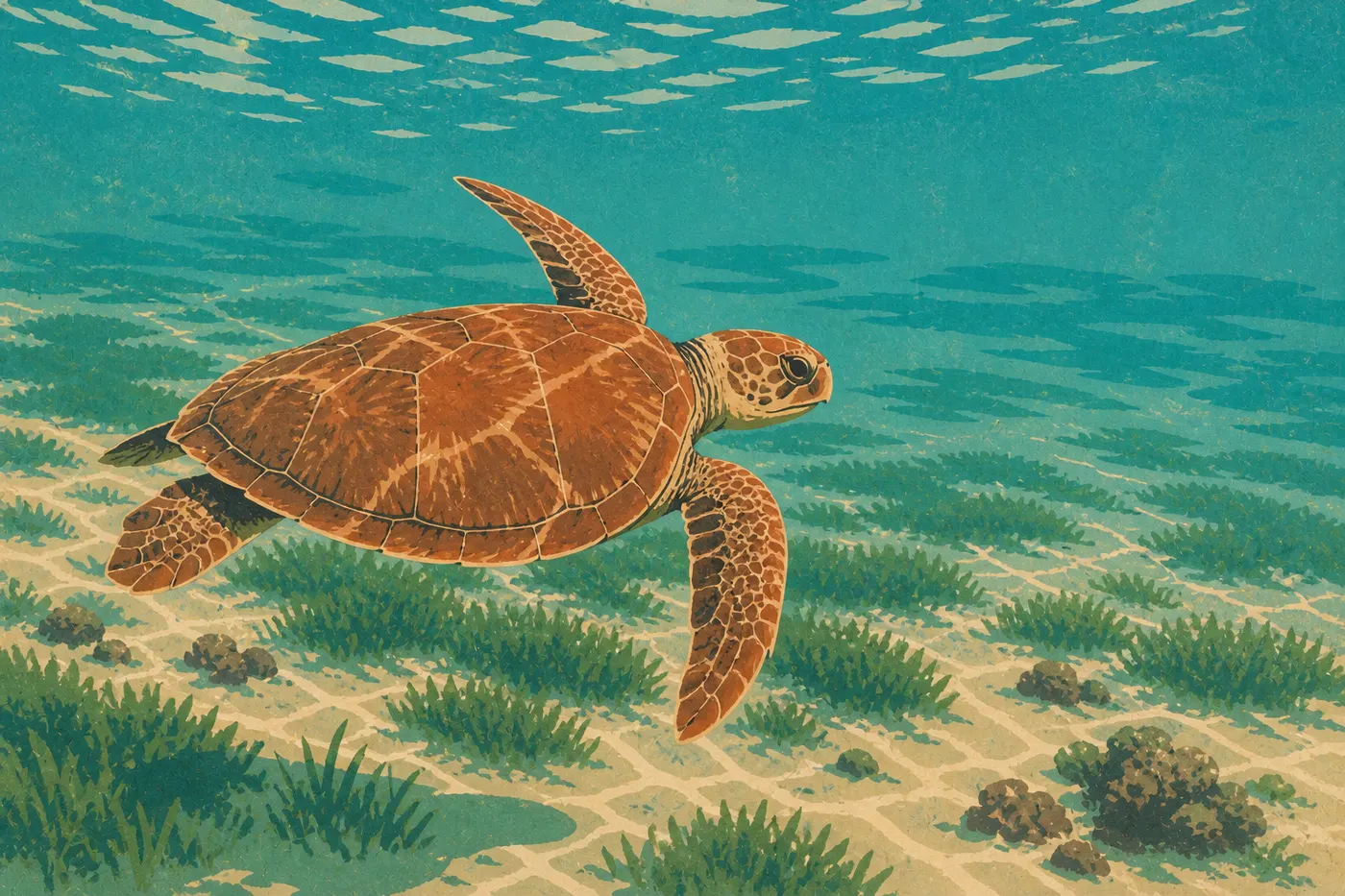
The loggerhead sea turtle is the park's signature animal. In fact, Spanish conquistadors named the archipelago “Las Tortugas” after finding hundreds of turtles on its beaches. It measures 31 to 43 inches long and often weighs more than 220 pounds. Its massive head and powerful jaws let it crush mollusks and crustaceans.
You may encounter loggerheads while snorkeling around the coral reefs. They tend to be unfazed by divers who keep their distance. Nesting sites are concentrated on the beaches of Garden Key and Loggerhead Key from May through August. At night, females emerge from the water, dig a nest, and lay up to 120 eggs. The sight is unforgettable if you're camping on the island.
Magnificent Frigatebird (Fregata magnificens)
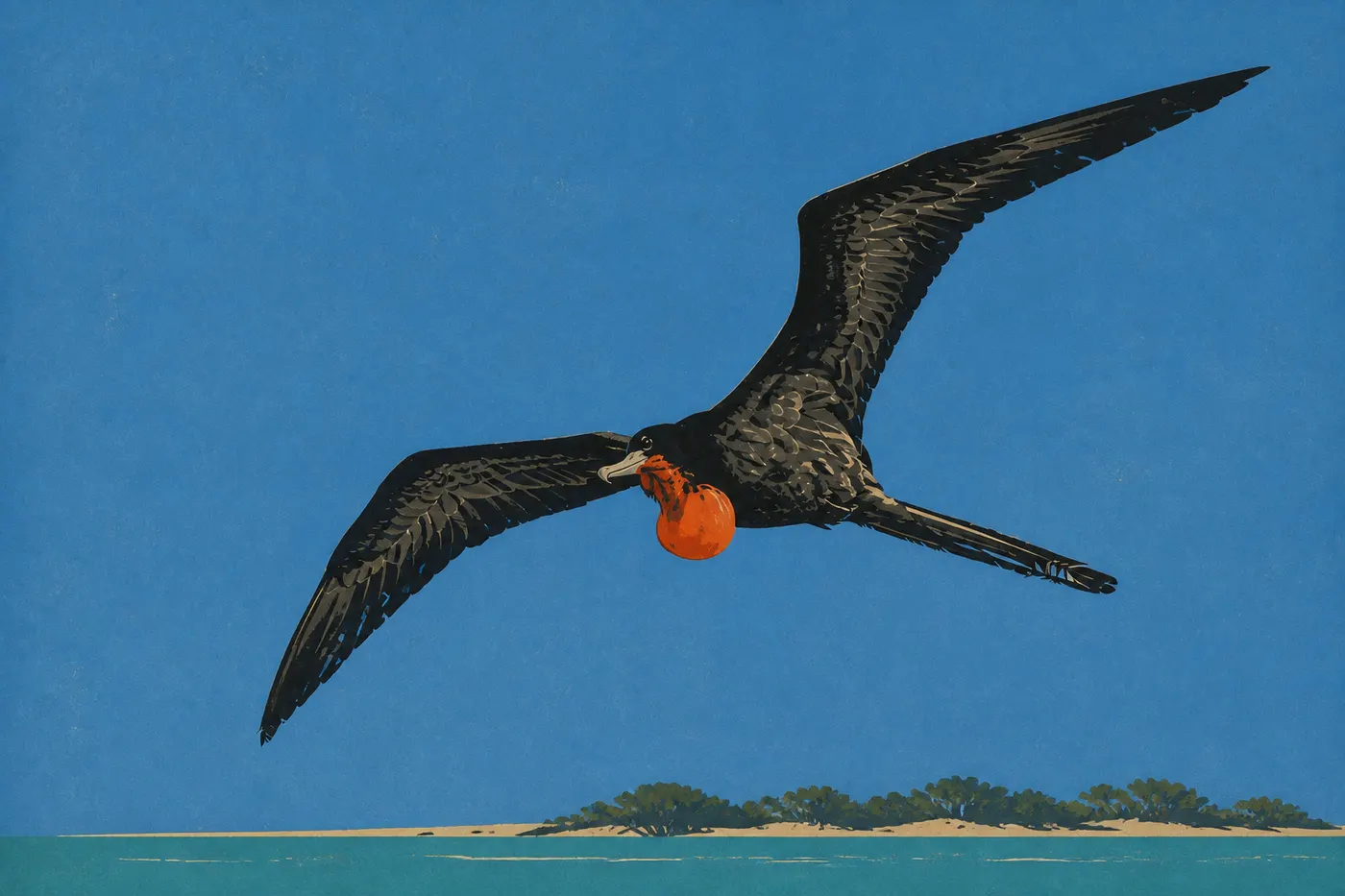
Recognizable by its cross-shaped silhouette, long pointed wings, and forked tail, the magnificent frigatebird glides over the park without ever landing on the water because its feathers aren't waterproof. It flies like a pirate, chasing other birds to steal their catch in midair. Ornithologists call this technique kleptoparasitism. During mating season, the male inflates a bright red throat pouch that's visible from a long way off.
Frigatebirds nest in colonies on Bush Key, an island closed to the public from January through September to protect the nests. From Fort Jefferson or the ferry dock, you can watch them flying overhead throughout the day.
Brown Booby (Sula leucogaster)
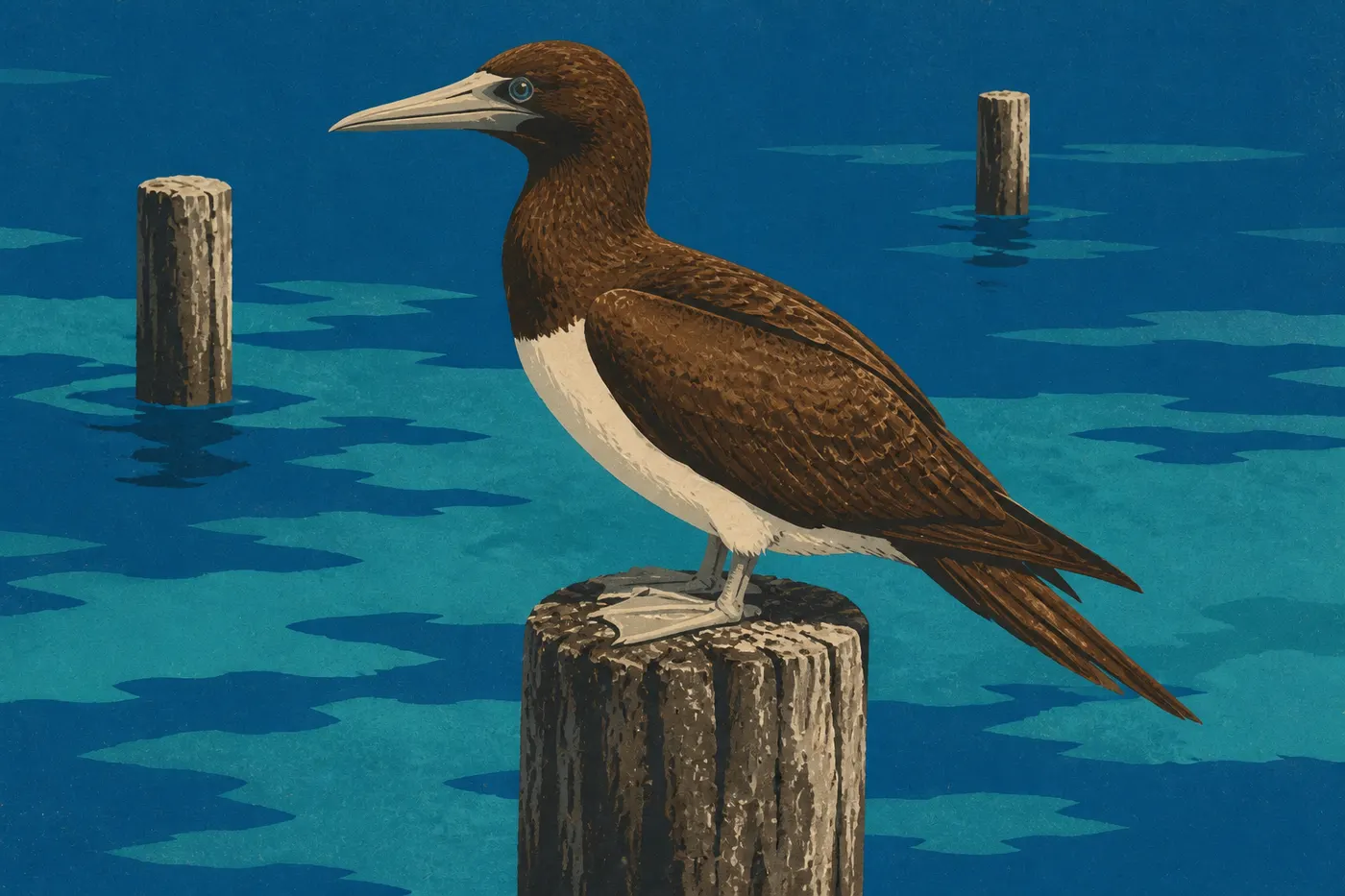
The brown booby is the park's most abundant bird. With its high-speed vertical dives, chocolate-brown body, and off-white belly, it's impossible to mistake for anything else. Thousands nest on Bush Key, making Dry Tortugas one of the largest breeding colonies for this species in the United States.
It hunts in groups offshore, diving 33 to 49 feet deep and surfacing with fish in its bill. In the morning and evening, you'll see brown boobies heading out to fish or returning in tight formations just above the water.
Barracuda (Sphyraena barracuda)
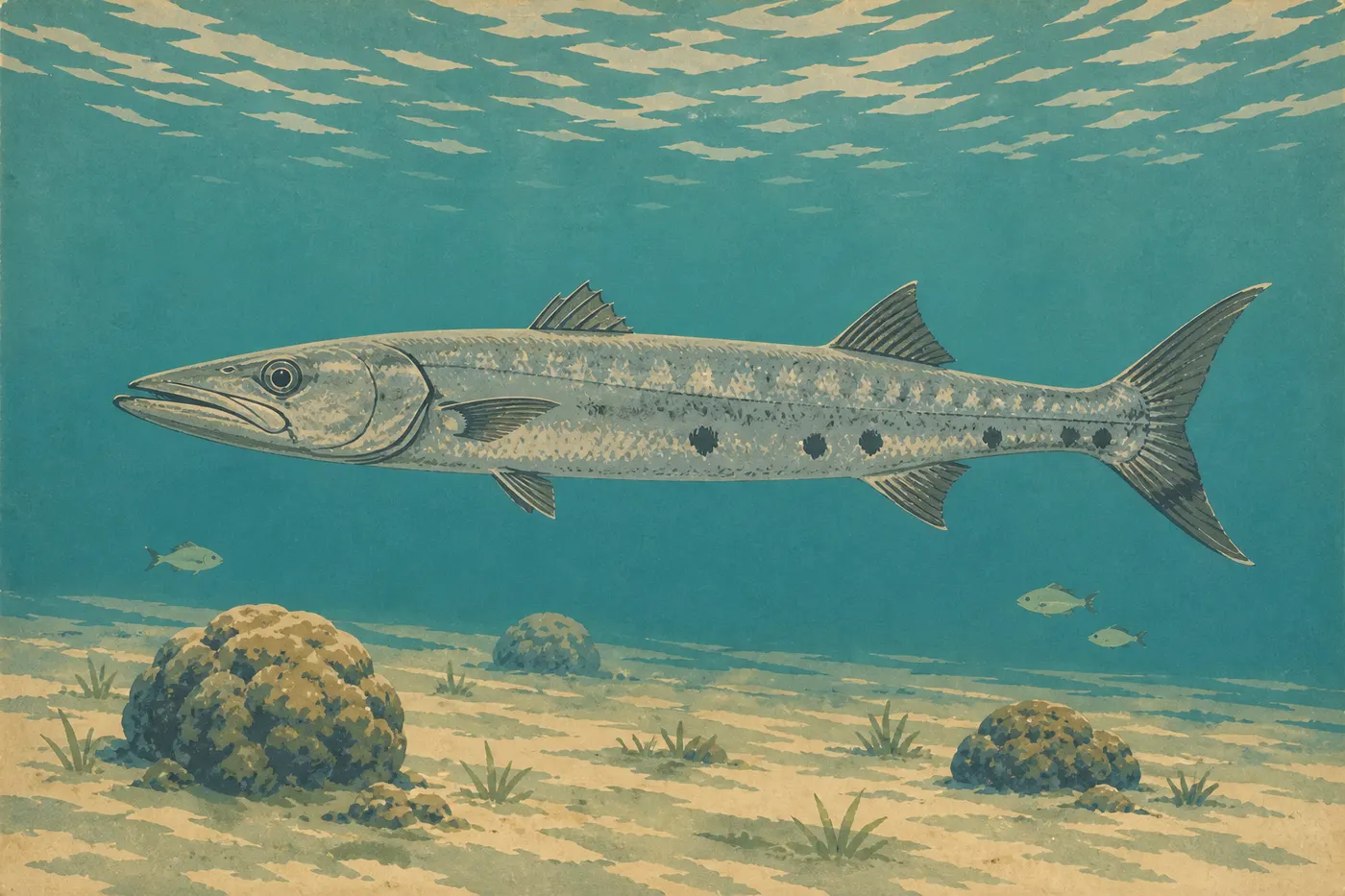
Barracudas fascinate people as much as they intimidate them. This silvery predator can exceed 5 feet in length, and its mouth full of sharp teeth has earned it a fearsome reputation. In practice, attacks on divers are extremely rare. Barracudas are curious, not aggressive. While snorkeling, you may well encounter one circling you, motionless and staring.
Barracudas favor the shallow waters around Garden Key's reefs, where they wait for schools of small fish. Avoid wearing shiny jewelry while snorkeling. Its reflection can look like a silvery fish and attract the animal.
Southern Stingray (Hypanus americanus)
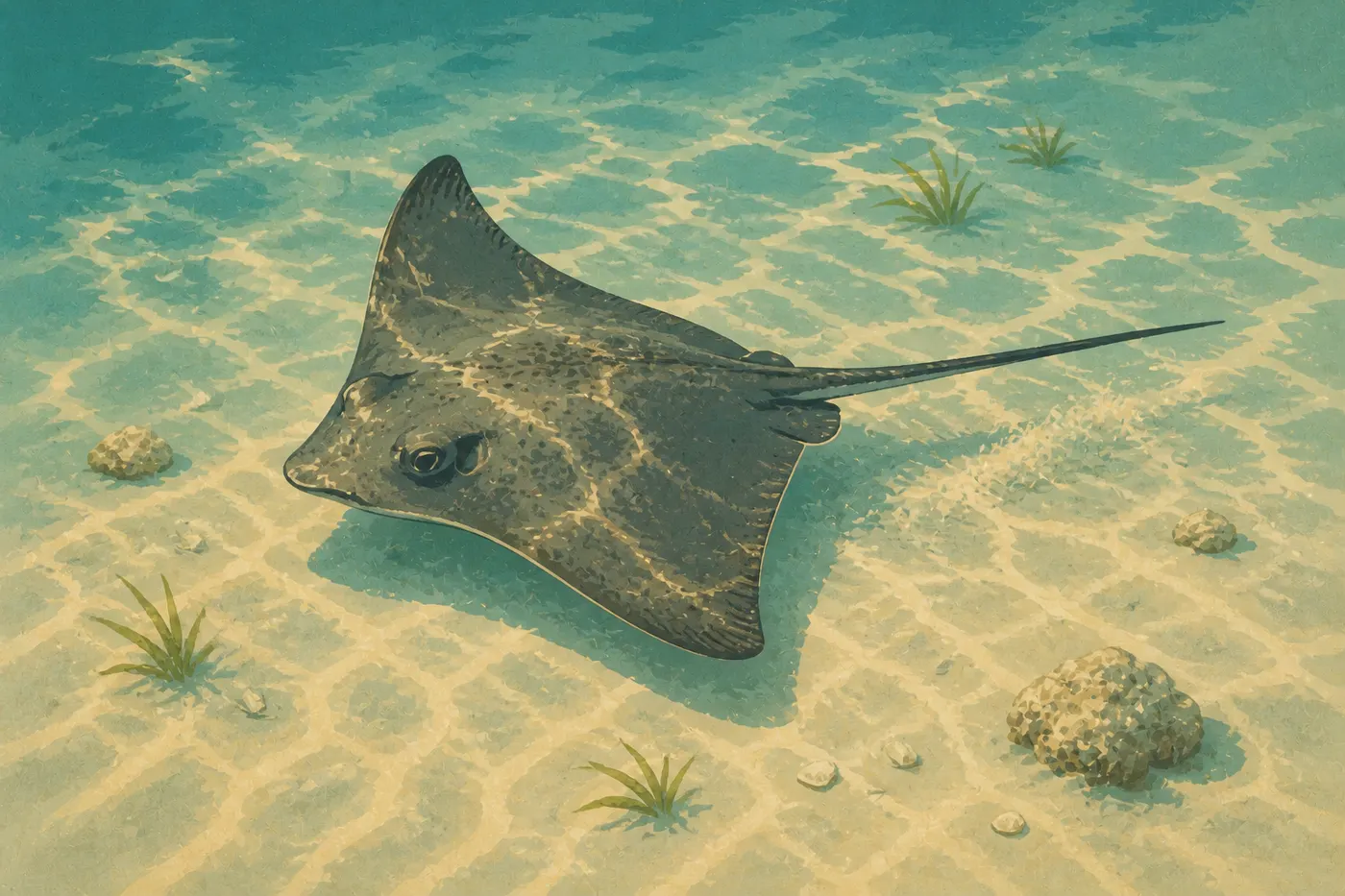
The southern stingray glides over the sandy bottoms of shallow water, between 3 and 16 feet deep, its pectoral fins rippling silently. It can reach 35 inches across. The venomous barb at the tip of its tail is strictly defensive. It uses it only if someone accidentally steps on it.
The best way to avoid one while walking in shallow water is to shuffle your feet instead of lifting your knees. That sends the ray moving before you put your foot down. While snorkeling, you'll often see one partly buried in the sand with only its eyes showing.
Telling Apart the Park's Two Sea Turtles
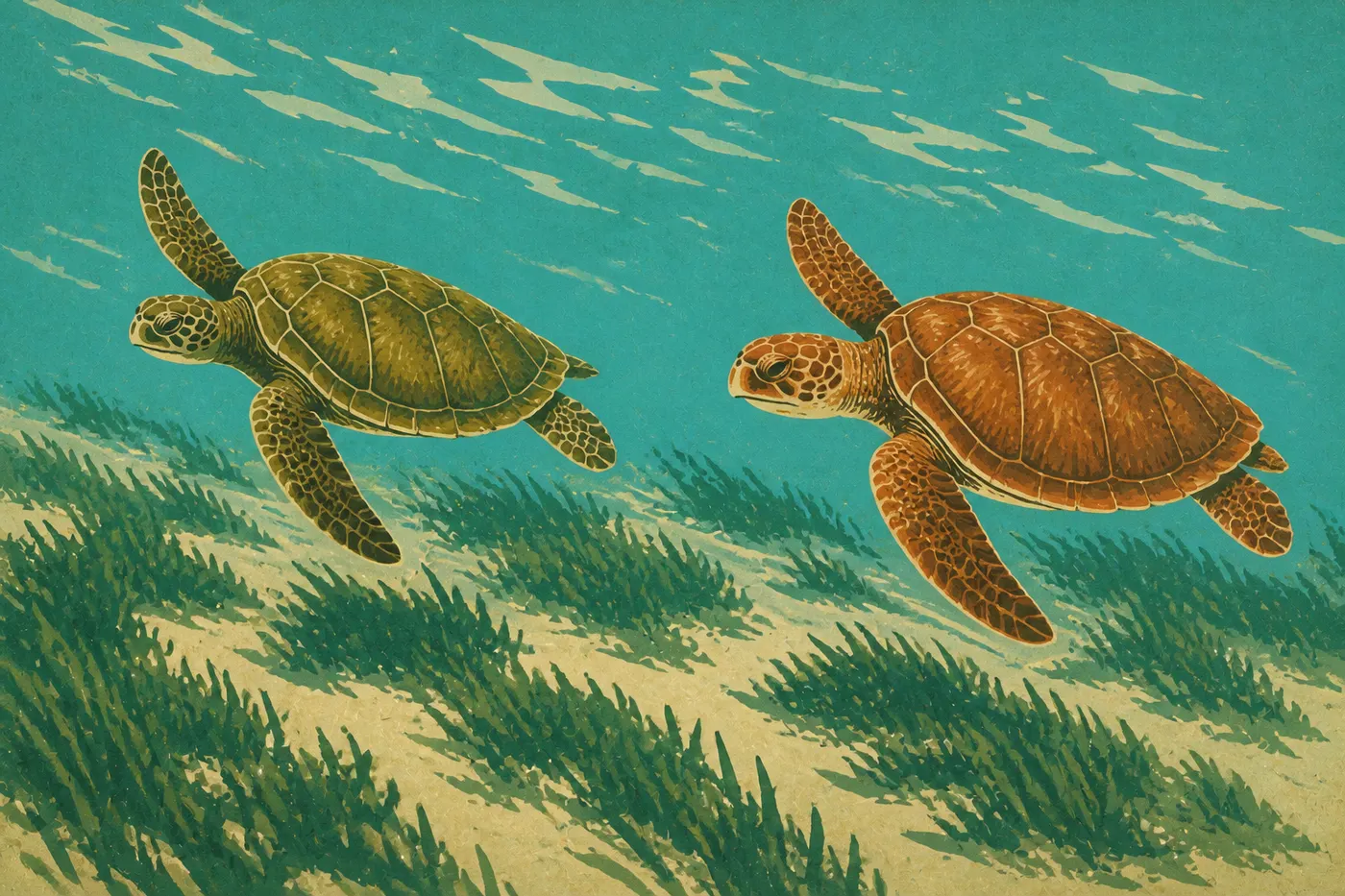
Two sea turtle species frequent Dry Tortugas waters: the loggerhead, with its broad head, reddish-brown scales, and bulky body, and the green sea turtle (Chelonia mydas), which has a more streamlined profile and a smaller head. Green sea turtles are herbivores and tend to graze on seagrass rather than reefs. Loggerheads, by contrast, often remain above the coral. If you're not sure, look at the head: large and rounded means loggerhead; small and streamlined means green turtle.
Where to See Wildlife in Dry Tortugas
The park revolves around a handful of access points, all close to Garden Key.
The reefs around Fort Jefferson are the top snorkeling spot. Put your head underwater 33 feet from shore and you'll already find barracudas, sea turtles, parrotfish, moray eels, and schools of snapper. The water is clear and the shallow depths, 7 to 16 feet, make exploring easy even for first-time snorkelers.
Bush Key, next to Garden Key, is visible from the fort but closed to the public for much of the year. You can still watch its brown booby and frigatebird colony with binoculars from shore, while the birds constantly pass over the accessible area.
Loggerhead Key, 3.1 miles from Garden Key and accessible by kayak or private boat, is the park's largest island. Its lighthouse and lightly visited beaches make it an excellent place to observe coastal wildlife, including turtles.
The open water between the islands is hunting territory for frigatebirds and brown boobies. If you arrive by ferry early in the morning, keep your binoculars handy. The crossing itself sometimes offers sightings of dolphins, manta rays, or tuna leaping out of the water.
When to Watch Wildlife (Seasons and Times)
Wildlife activity in Dry Tortugas follows two broad patterns: bird migration and the sea turtles' breeding cycle.
Spring (March through May): This is the richest season for birds. Dozens of migratory songbird species stop on the islands as they head north. Tired from crossing the Gulf, they let people approach easily. This is also when frigatebirds begin their courtship displays.
Summer (June through August): Loggerheads lay their eggs on the beaches. If you're camping on Garden Key, you have a real chance of witnessing a nighttime nesting. The heat is intense, around 90°F, and humidity is high, but marine wildlife is at its most active around the reefs.
Fall (September through November): A new migration wave heads south this time. Bird activity remains strong. Hurricane season means you should check the Dry Tortugas weather forecast and official advisories before setting out.
Winter (December through February): Frigatebirds and brown boobies are here year-round. Sea turtles are harder to spot while snorkeling because the water cools slightly, to around 72°F. On the other hand, this is the most comfortable season to visit, with temperatures around 68°F and calmer seas most of the time.
For daily wildlife viewing, dawn and dusk are the golden windows. Seabird activity peaks when they head out to fish and return. At night, beneath a sky free of light pollution, turtles move quietly along the beaches.
For the complete calendar, the Dry Tortugas seasonal guide also covers sea conditions, weather, and crowds.
Predators and Large Animals in the Park
The magnificent frigatebird is the archipelago's dominant aerial predator. It rules over other seabirds and can force a brown booby to regurgitate its meal in midair. Beneath the surface, the barracuda and the Caribbean reef shark (Carcharhinus perezi) fill that role.
Reef sharks live in park waters, especially around deep coral formations. Snorkel sightings are occasional. These sharks are wary of humans and generally move away when people approach. Incidents are extremely rare in this area.
The bottlenose dolphin (Tursiops truncatus) isn't technically a predator of visitors, but it's the most charismatic large animal in the park's open waters. You can regularly spot one from the ferry or during a private-boat crossing. Groups of 3 to 10 sometimes play in the wake of boats.
How to Watch Wildlife Safely
Dry Tortugas is a national monument and protected area, so wildlife protection rules are strictly enforced.
Minimum distances to keep:
- Sea turtles: Stay at least 10 feet away while snorkeling. Never touch a turtle, hold onto its flippers, or get in its path. If a turtle nests on the beach at night, watch without a flashlight, or use a red filter, from at least 33 feet away.
- Nesting birds: Respect the Bush Key closure from January through September. Markers and signs clearly show the boundaries. Don't cross them, even to take a photograph.
- Rays and barracudas: Don't interact physically. Don't reach toward a barracuda or suddenly put your foot down on a buried ray.
Never feed wildlife. An animal that gets used to human food changes its natural behavior, becomes aggressive or dependent, and often eventually dies. The federal fine for feeding wildlife in a national park can reach $5,000.
Avoid shiny objects while snorkeling, including rings, bracelets, and shiny watches. Several species mistake them for prey.
From a private boat: Slow down to less than 5.6 mph in marked seagrass areas to avoid colliding with sea turtles at the surface.
For general island safety guidance, including waves, currents, and sun exposure, see the Dry Tortugas overview.
In Brief: Species You Shouldn't Miss and Where to Find Them
| Species | Where to look | When |
|---|---|---|
| Loggerhead sea turtle | Garden Key reefs (snorkeling), beaches (at night) | Year-round; nesting May through August |
| Magnificent frigatebird | Sky above the fort, Bush Key (viewed from shore) | Year-round |
| Brown booby | Sky, Bush Key | Year-round |
| Barracuda | Shallow reefs, Garden Key | Year-round |
| Southern stingray | Sandy bottoms, 3 to 16 feet deep | Year-round |
| Bottlenose dolphin | Open water, ferry crossing | Year-round |
| Migratory songbirds | Anywhere on the island | March through May, September through November |
The park's golden rule is simple: bring binoculars, fins, a mask, and respect for viewing distances. Dry Tortugas is one of the few places in the United States where you can snorkel alongside sea turtles in clear water, with frigatebirds flying overhead. It's worth taking care of.
Frequently Asked Questions
What animals live in Dry Tortugas National Park?
Dry Tortugas' most representative animals are sea turtles, including loggerheads and green turtles, magnificent frigatebirds, brown boobies, barracudas, and southern stingrays. The coral reefs also shelter moray eels, parrotfish, snapper, and octopuses. Bottlenose dolphins frequent the park's open waters.
What is the most common animal in Dry Tortugas?
The brown booby is the most abundant bird. Thousands nest on Bush Key and constantly fly over the archipelago. In the water, reef fish such as snapper, parrotfish, and surgeonfish are everywhere around the coral formations near Garden Key.
What is the largest animal in Dry Tortugas?
The loggerhead sea turtle is the largest animal commonly seen. It can weigh more than 220 pounds. The reef shark, which appears less often, can exceed 6 feet in length. The bottlenose dolphin rivals the turtle in size, but you're more likely to see it offshore than while snorkeling.
What are the predators in Dry Tortugas?
Underwater, the barracuda and reef shark are the main predators. In the air, the magnificent frigatebird kleptoparasitizes other seabirds. None of these predators poses a serious danger to visitors who follow basic rules, such as not touching animals and avoiding shiny jewelry.
What animals are out at night in Dry Tortugas?
Female loggerheads come ashore at night to lay eggs on the beaches from May through August. Some crustaceans and mollusks are also active along the shore at night. The light-pollution-free night sky also offers a chance to see petrels or shearwaters passing through during migration, birds that are hard to spot during the day.
How do you get to Dry Tortugas to see wildlife?
The Yankee Freedom III ferry leaves Key West every morning for the roughly two-hour trip to Garden Key. Once there, you can see turtles and barracudas by snorkeling from the beach. Reaching Loggerhead Key and more remote areas requires a private boat or charter. The Dry Tortugas access guide covers all the options.