
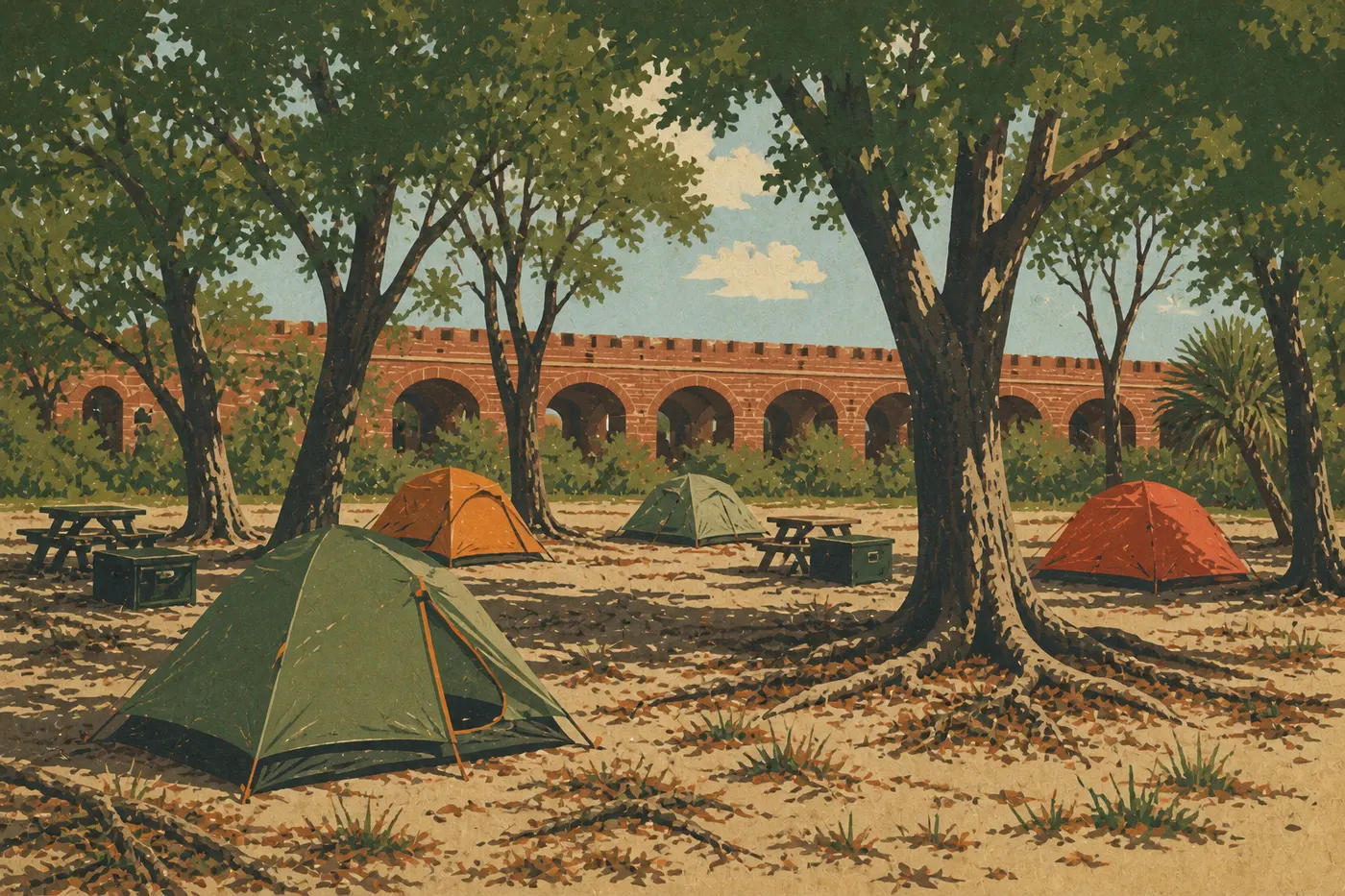
Camping at Dry Tortugas: Garden Key's 8 first-come, first-served sites
Sleep under the stars 70 miles off Key West, beside a 19th-century fort surrounded by turquoise water, with no light pollution and frigate calls for your alarm clock... Dry Tortugas National Park has just one campground: Garden Key, a short walk from Fort Jefferson, with 8 tent sites at $8 a night. Sites are first-come, first-served, with no online reservations. And no, there is no drinking water or electricity on the island. This is primitive camping, and you need to be prepared for it.
Campgrounds in the park (1)
- Campground Garden Key Campground see NPS · 8 sites Directions ↗
 Base map © OpenStreetMap · © CARTO
 Dry Tortugas campgrounds by the numbers
1 official campgrounds inside the park, 8 campsites in total, 0 of them reservable.
| Campground | Sites | Booking | Fee / night | Open | Amenities |
|---|---|---|---|---|---|
| Garden Key Campground | 8 (8 tent only, 1 group) | First come, first served | from $7.50 | Year round | toilets |
Source: National Park Service (NPS API), retrieved October 6, 2026. Fees and dates change: check the campground page before you go.
Can you camp inside Dry Tortugas?
Yes, camping is allowed in the park, but only on Garden Key. Free camping outside the 8 designated sites is not permitted. None of the other islands in the archipelago offers regulated overnight camping.
What sets Dry Tortugas apart from any other NPS campground is its complete isolation. The park is accessible only by sea or air from Key West, by concession-operated ferry, charter seaplane, private boat, or boat charter. The Yankee Freedom ferry, the most common option, takes about two and a half hours to cross the Gulf of Mexico. Once you're on the island, you're there. Plan accordingly.
Garden Key Campground
Garden Key is home to the park's only campground, with 8 sites, all for tents. There is no lodge, glamping, or utility hookup. Sites are first-come, first-served, with no online reservations.
Garden Key Campground
- Sites: 8 tent sites, including 1 group site, in an open area facing Fort Jefferson's ramparts
- Facilities: restrooms on site; no drinking water, showers, or electricity
- Fires: prohibited without exception; wood and charcoal are not allowed, so use a gas or alcohol stove only
- Water: bring everything you need; plan on at least 4 liters per person per day, and more in summer
- Trash: strict pack-in, pack-out rule; whatever you bring in, you take back out
- Hours: open year-round, 7 days a week, 24 hours a day
The campground's location is what makes it so hard to forget. The 8 sites sit just a few feet from Fort Jefferson's outer wall, facing shallow, lagoon-colored water. Watching the sunset from your sleeping pad can hold its own against any upscale lodge. At night, with the Florida peninsula more than 60 miles behind you, the Milky Way is breathtakingly clear.
RVs at Dry Tortugas: an option to rule out
RVs cannot get to Dry Tortugas. There is no road, bridge, or terminal. The archipelago lies 70 miles offshore, so you arrive by boat or seaplane, while your vehicle stays on the mainland.
If you're traveling by RV, the strategy is simple. Park your vehicle in Key West, where private campgrounds and county-run sites accommodate RVs, then reach Garden Key with your compact gear packed in a bag. It adds a logistical step, but it's entirely doable if you plan ahead. Our RV camping guide for Dry Tortugas summarizes the long-term parking options around Key West.
Camping nearby: mainland alternatives
If Garden Key's 8 sites are full or you'd rather use a mainland base, Key West and the Florida Keys offer private campgrounds and county-run sites with running water, showers, and electricity. Some accept tents, while others are exclusively for RVs.
Keep in mind what you give up by staying on land. Dry Tortugas' magic happens mostly before 8 a.m., before the ferry arrives. Sunrise snorkeling over empty reefs, fortifications glowing pink in the early light, absolute silence... A day trip, with the ferry's 4.5 hours on the island, captures only a fraction of that atmosphere. For lodging around the Key West terminal, see our overview of places to stay at Dry Tortugas and our general park guide.
Wild camping and overnight stays outside Garden Key
Dry Tortugas includes several islands, including Loggerhead Key, Bush Key, Long Key, and Middle Key, but camping is allowed only on Garden Key, at its 8 designated sites. The other keys are closed to overnight camping.
Bush Key, next to Garden Key, hosts the largest nesting colony of sooty terns in the United States in spring and summer. Access is closed during that period to protect the nests. Loggerhead Key, with its historic lighthouse, is for day visits only, with no overnight stays allowed.
There is no backcountry permit for camping on the other keys in the archipelago. The idea of paddling from Garden Key to a nearby island by kayak is tempting, but these crossings take place in open water, sometimes with wind and currents. They are suitable only for experienced paddlers who understand how remote help can be. Our guide to hikes and water crossings at Dry Tortugas covers access and distances between the islands.
How and when to reserve camping at Dry Tortugas
Garden Key operates on a first-come, first-served basis. There is no online reservation system for the sites. With only 8 sites and access tied to the ferry schedule, they fill up quickly during the busy season.
A few practical tips:
- Arrive early: the Yankee Freedom reaches Garden Key in the morning. Campers getting off the boat effectively have first shot at the available sites. If the boat is full and all 8 sites are already occupied, there will be nowhere to camp.
- Book the crossing ahead of time: the Yankee Freedom has limited capacity. Reserve your ferry passage even though you cannot reserve the campsite itself.
- Arrive by seaplane or private boat: this is possible, but the 8 sites are still first-come, first-served. Overnight camping outside the designated sites is not permitted.
- Have a backup plan: if all 8 sites are taken when you arrive, you'll either leave on the same ferry or wait until the next day. Planning a night in Key West as a backup is more comfortable than sleeping on the deck.
Seasonally, winter, from December through March, brings stronger winds and rougher seas, but mild temperatures from 59°F to 68°F and skies that are often perfect for snorkeling. Summer, from June through November, is hot and humid, with highs around 90°F and a risk of isolated tropical thunderstorms. Our Dry Tortugas seasonal guide compares the two periods and helps you choose the right window.
Rates: how much does a night of camping at Dry Tortugas cost?
Camping at Dry Tortugas involves several separate expenses.
| Item | Typical rate |
|---|---|
| Park entrance fee | $15 per person |
| Campsite at Garden Key | $8 per night |
| Yankee Freedom ferry, round-trip | ~$195 per adult |
| Seaplane charter from Key West | from ~$350 per person |
Important: ferry and seaplane prices change regularly. Check directly with the operators before booking. The ferry usually includes the entrance fee in its package, but confirm when you make your reservation.
The America the Beautiful pass covers the $15 entrance fee, but not camping fees or transportation. Our National Parks entrance fees and passes page explains the basics of entrance fees and passes.
Safety and good practices on Garden Key
Dry Tortugas has no bears or venomous snakes. The island's isolation and marine environment do come with their own rules, and they are not negotiable.
Water. This is your number-one constraint. Garden Key has no source of drinking water. Plan on at least 4 liters per person per day, and increase that amount if you're snorkeling or kayaking in the heat from June through October. Dehydration on an isolated island two and a half hours from Key West is a medical emergency. Bring more than you think you'll need.
Sun. Glare off the water increases your UV exposure. SPF 50+ sunscreen, a brimmed hat, and UV400 sunglasses are essential, not optional. You can burn twice as fast on the water as you might expect.
Marine life. The archipelago's waters are home to nurse sharks, stingrays, and barracuda. None of these animals is aggressive under normal conditions. Keep your distance, never feed fish, and get out of the water if you're bleeding. From May through October, green and loggerhead sea turtles (Chelonia mydas and Caretta caretta) nest on the beaches. Stay at least 6 feet away and never shine a flashlight at the nests.
Food. There is no bear-box rule like the one found in mountain parks. Still, protect your food from magnificent frigatebirds and other opportunistic birds. A frigatebird can snatch a sandwich in midair. It's documented and amusing, right up until it happens during your dinner. The island has no organic-waste bins, so everything leaves with you.
Fires. No wood fires and no charcoal grills. Use a gas or alcohol stove only. Rangers enforce this rule without exceptions.
Weather. The ferry may be canceled during a hurricane watch or severe tropical storm. If that happens, you'll remain on the island longer than planned. Always carry an extra day's supply of food and water in case bad weather delays evacuation. Our general Dry Tortugas guide also covers the park's rules.
Which camping option fits your travel style?
Garden Key is the park's only campground, with 8 first-come, first-served sites. The logistics are straightforward. The real question is whether this kind of camping fits the way you travel.
- Primitive camping and complete self-sufficiency: Garden Key is for you. Plan your water and meals precisely, and you'll have an experience that's hard to match anywhere in the NPS system.
- Families with young children: doable, but demanding. The ferry ride takes 2.5 hours, children need to be comfortable on the water, and water management is nonnegotiable. The possibility that all 8 sites will be occupied when you arrive adds another variable to manage.
- RVers: Garden Key is inaccessible to vehicles. Park your RV in Key West and reach the park with the essentials in a backpack.
- Travelers who want comfort: take a day trip by ferry and sleep in Key West. Our Where to stay page lists lodging near the terminal, from guesthouses to hotels.
Frequently asked questions
Can you camp at Dry Tortugas?
Yes, you can camp at Dry Tortugas National Park. Garden Key Campground, on the same island as Fort Jefferson, is open year-round, 24 hours a day, and accommodates campers on a first-come, first-served basis at 8 sites. It is the park's only camping option.
Is camping at Dry Tortugas worth it?
Camping at Dry Tortugas is worth it if you can handle the complete lack of comforts, including no water on site, no electricity, and no showers, along with the first-come, first-served system for just 8 sites. In return, you get access to the reefs before the ferry's day-trippers arrive, nights without light pollution, and a setting unlike any other in the U.S. national park system, with Fort Jefferson's ramparts in the background and a turquoise lagoon.
How much does camping at Dry Tortugas cost?
Camping at Dry Tortugas costs $8 a night for the site, plus the $15 park entrance fee. Transportation remains the biggest expense. The Yankee Freedom ferry costs about $195 round-trip per adult, while a charter seaplane costs considerably more, starting at around $350 per person. The ferry often includes the entrance fee in its package. Confirm that when you book your crossing.
How long can you camp at Dry Tortugas?
Garden Key Campground is open year-round, 24 hours a day. Check the maximum consecutive stay directly with the park before you leave, since conditions can change. In any case, bring an extra day's supply of food and water in case weather delays your evacuation.