
Dry Tortugas Itinerary: What to See in 1, 2, or 3 Days
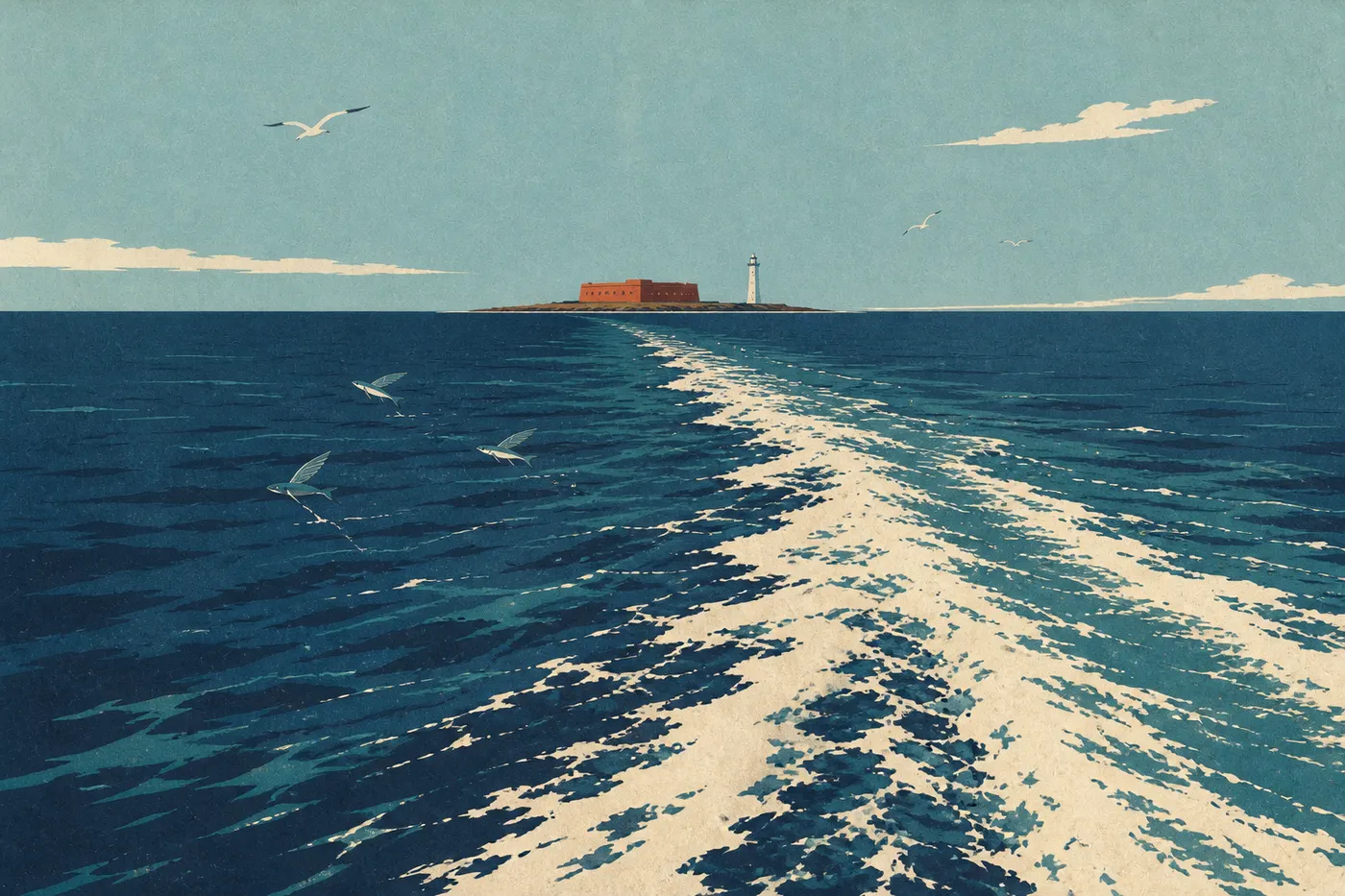
Dry Tortugas lies 70 miles west of Key West in the middle of the Gulf of Mexico, with no road or bridge connecting it to the mainland. You can get there by ferry or seaplane, and once there you'll find Fort Jefferson, a Civil War fortress surrounded by turquoise water, pristine coral reefs, and night skies untouched by light pollution. It's one of the least-visited national parks in the United States, precisely because getting there takes some effort.
The quick answer: one day is enough to see Fort Jefferson and snorkel around the moat. A night of camping on Garden Key lets you explore without rushing and experience the park at your own pace. Two nights or more are for boaters and serious birders.
How Much Time Do You Need to Visit Dry Tortugas?
The question isn't “How many hikes do you need to fit in?” It's “How much time can you devote to the crossing and the isolation?”
The vast majority of visitors come on a day trip. The ferry leaves Key West early in the morning, reaches Garden Key two hours later, and heads back in the middle of the afternoon. You'll have four to five hours on the island. That's enough time to visit Fort Jefferson, swim in the moat, and make a round trip to the north reef.
Visitors who stay overnight have a different experience. I spent one night in a tent on Garden Key in April. The return ferry carries the day-trippers away around 3:30 p.m., and as soon as its engine disappears over the horizon, the silence is complete. At dawn, you have the water to yourself. That's when the park reveals what it's really like.
After two nights, you're in boating territory: exploring the outlying islands, fishing the seagrass beds, and birding during migration. You'll need a private boat or a charter from Key West for this kind of trip.
Getting There, the Gateway, and Getting Around the Park
Three options connect Key West with Garden Key: the Yankee Freedom III ferry (a two-hour crossing, early-morning departure, and return in the middle of the afternoon), a seaplane (a 40-minute flight, with a possible stop at Loggerhead Key), and a private boat or charter for exploring the outlying islands over several days. Once you're on the island, you get around on foot or by swimming. There are no vehicles or shuttles. To book your trip and check current schedules, the guide to getting to Dry Tortugas brings together all the contacts and practical information.
Dry Tortugas Areas
The park encompasses seven small islands, or keys, and the surrounding waters. Three areas account for most visits.
Garden Key: Fort Jefferson and the Heart of the Park
Garden Key is the main island. It's where the ferry docks, where Fort Jefferson stands, and where the park's only campground is located.
Fort Jefferson is a red-brick fortress begun in 1846 and never completed. Sixteen million bricks, six star-shaped bastions, and a hexagonal seawall surrounded on every side by the sea. It never saw combat, but it served as a military prison during and after the Civil War. Dr. Samuel Mudd, who was convicted of conspiring in Lincoln's assassination, was imprisoned here. A self-guided walk along the ramparts is free and takes about an hour.
The outer moat offers easy snorkeling from the dock. You'll see parrotfish, juvenile barracuda, healthy corals, and moray eels in the crevices. You don't need to go far from shore.
Loggerhead Key: The Lighthouse and Untouched Waters
About 2.5 miles northwest of Garden Key, Loggerhead Key is accessible by private boat or on the full-day seaplane option. It's the largest island in the park. A lighthouse that has been in service since 1858 stands there. It's closed to the public but visible from the beach.
The waters around Loggerhead are known for their high-quality reef and underwater visibility. Hawksbill and green sea turtles are regularly spotted there. If you're coming by boat, bring a mask, snorkel, and fins. You snorkel from your anchorage.
Bush Key and the Outlying Islands
Bush Key lies next to Garden Key but is closed to visitors from March through September during nesting season. Magnificent frigatebirds and brown boobies breed there by the tens of thousands. Outside that period, you can walk there from Garden Key at low tide.
Hospital Key, East Key, Middle Key, and Long Key are small islands with no facilities, accessible only by boat. They're of greatest interest to birders. The park sits along North America's main bird migration route, and April and May offer the richest viewing window.
Day-by-Day Itinerary
One Day: The Ferry Excursion
7–9 a.m. Board the ferry at the Key West terminal. Breakfast is served aboard during the crossing. Enjoy it, because once you're on the island, there's nowhere to buy food.
9–10 a.m. Arrive at Garden Key. Pay the $15 entrance fee on-site or online. Head straight to Fort Jefferson. The ramparts are more comfortable before the full sun sets in and before the visitor flow picks up.
10 a.m.–noon. Snorkel in the moat or at Garden Key's north reef. The water is clear and warm. Bring your own gear if possible. The ferry rents equipment, but supplies are limited. Visibility can easily reach 33 to 49 feet in good weather.
Noon–1 p.m. Have lunch on the beach or in the shade inside the fort. Bring everything with you. There are no food services on the island. Bring more water than you think you'll need because of the heat, salt, and sun.
1–2:30 p.m. Make a second visit to Fort Jefferson to explore the cells, the rainwater cistern, and the interpretive panels about the fort's history and prisoners.
2:30–3 p.m. Head back to the dock. The ferry leaves in the middle of the afternoon and takes two hours to reach Key West.
Two Days / One Night: The Camping Plan
Day 1. Follow the day-trip itinerary through 3 p.m. When the boat leaves with the day's visitors, you stay behind. The atmosphere changes immediately. The noise stops, the birds return, and the slanting light turns the fort's red brick a deep orange. Climb the ramparts at sunset.
Evening. Set up at one of the 13 primitive campsites. You need to bring everything: drinking water for at least 48 hours (plan on at least 3 liters per person per day in this climate), food, a trash bag, mosquito repellent, and a freestanding tent. You can't drive stakes into the coral ground. The night is completely dark, with no artificial light anywhere nearby. You can see the Milky Way with the naked eye.
Day 2. Wake up before dawn. Go snorkeling at 6 a.m. in the moat or from the north beach. Marine life is more active early in the morning, the water is calm, and you'll have it to yourselves. Have breakfast on the beach. Take a second, in-depth tour of Fort Jefferson or explore Bush Key if the season allows. The ferry arrives in the morning with the day's visitors. Take the return boat in the early afternoon.
Three Days or More: The Boating Option
With three days and a private boat or a multi-day charter, you can reach Loggerhead Key, fly-fish the seagrass beds (a Florida fishing license is required), and spend a full morning watching migratory birds from the outlying islands. This itinerary is for travelers who arrange a maritime expedition from Key West.
Options Based on Your Time
Half-day by seaplane. The fastest option is a 40-minute flight, four hours on Garden Key, and a return trip by air. It's ideal if your schedule can't accommodate the two-hour ferry crossing. The reef views from above are worth the extra cost on their own.
Day trip by ferry. This is the recommended format for the vast majority of visitors. One free day from Key West is enough. The logistics are simple: book the ferry, pack a picnic, and bring snorkeling gear.
One night of camping. This is the option we recommend for anyone with two days to spare. Reserve your site well in advance on Recreation.gov. The 13 sites fill up early, especially from November through April.
Several nights. For boaters only. This gives you access to the islands beyond the ferry route and an authentic maritime experience.
A word of caution: crossings can be canceled at short notice during tropical storm season, from June through November. Build a buffer day into your itinerary if you're visiting during this period.
Itinerary Map
The NPS publishes an official Unigrid map as a PDF, available for free on the park website. It shows the seven islands, authorized anchorage areas, access to the Garden Key landing, and recommended snorkeling areas around Fort Jefferson. Paper copies are also handed out when the ferry arrives.
Our annotated Dry Tortugas map highlights the landmarks you need to find your way from the dock.
Where to Stay Along the Itinerary
Inside the park, there's only one option: primitive camping on Garden Key (13 sites, reservations through Recreation.gov). There are no facilities, you need to bring everything, and stays are limited to five nights.
Before and after your visit, Key West is the natural logistical base. It has plenty of lodging, from old-town bed-and-breakfasts to coastal resorts. Our Where to Stay guide covers the neighborhoods, price ranges, and hotels near the ferry terminal.
Extend Your Trip: What to See Around Dry Tortugas
Dry Tortugas is almost always visited from Key West, which deserves two or three days of its own. Explore the historic old town, watch the sunset at Mallory Square, and try the Creole food and oyster bars. It's an essential stop in any case.
Heading north on US-1, the Florida Keys offer a string of stops: Bahia Honda State Park for reef snorkeling, Marathon for scuba diving, and Key Largo for John Pennekamp Coral Reef State Park. Our Florida Road Trip guide lays out the complete route if you're considering a loop from Miami.
Biscayne National Park, north of Miami, shares Dry Tortugas' world of coral reefs and maritime history. You can combine the two parks in a week from Miami.
The Ideal Itinerary for Your Time
You have one day: take the ferry in the morning, visit Fort Jefferson, snorkel in the moat, and return to Key West that evening. Simple, practical, memorable.
You have two days: add a night of camping. Dawn on Garden Key without the day's visitors is an experience very few visitors get to have. Reserve your site early.
You have more time: spend two nights in Key West first, continue on to Dry Tortugas, then head north through the Keys toward Miami. Our complete Dry Tortugas guide provides the park's overall context, and our When to Go page helps you choose the best weather window for your itinerary.
Frequently Asked Questions
How do you get to Dry Tortugas?
Dry Tortugas is accessible only by water or air. The concession-operated Yankee Freedom III ferry connects Key West with Garden Key in about two hours. A seaplane makes the same trip in 40 minutes. Boaters can also get there by private boat or charter. No road or bridge connects the park to the mainland.
How many days do you need to visit Dry Tortugas?
A full day is enough to see Fort Jefferson and snorkel around Garden Key. Two days with a night of camping allow for a deeper visit without the ferry's schedule constraints. Beyond that, you'll need a private boat to explore the outlying islands.
What itinerary should you follow to visit Dry Tortugas?
The natural sequence is to arrive at Garden Key by ferry or seaplane, tour Fort Jefferson on foot for about an hour, snorkel in the moat and at the north reef for two hours, and then explore Bush Key if the season allows. Visitors arriving by boat can add a stop at Loggerhead Key.
How much is admission to Dry Tortugas?
The entrance fee is $15 per person. It's separate from the ferry or seaplane fare, since those are private operators independent of the NPS. For entrance fees and annual passes, see the National Parks Fees & Passes page.
Can you camp at Dry Tortugas?
Yes, but only on Garden Key, and only primitive camping. The 13 sites are reserved through Recreation.gov. There is no drinking water or electricity on-site, so you must bring all equipment and provisions aboard the ferry and take everything back with you when you leave.
When is the best time to visit Dry Tortugas?
November through April brings cooler temperatures, from 59°F to 81°F, and calmer crossings. Summer is hot and humid, with a risk of tropical storms from June through November. Our When to Go page breaks down the weather month by month, including periods to avoid.
Is Dry Tortugas worth the trip?
Dry Tortugas is difficult to reach, and that's exactly what makes it exceptional. The fort is unique within the U.S. national park system, the waters are among the clearest in Florida, and the complete isolation protects an unspoiled experience. If you're traveling through the Florida Keys, the answer is yes.