
Things to Do in Dry Tortugas: The Must-See Sights
Three experiences sum up Dry Tortugas. Visiting Fort Jefferson, an ocean fortress made of 8 million red bricks, is the highlight of any trip. Snorkeling or diving around the coral reefs that ring the islands comes next. If you're staying overnight, camping on Garden Key beneath a light-pollution-free sky, 70 miles from the nearest coast, is an experience in its own right. Nothing else feels quite like Dry Tortugas, and that's exactly why people come.
Dry Tortugas at a Glance: Islands, Access, and Getting Around
The Dry Tortugas archipelago includes seven small coral islands and about 100 square miles of marine waters in the Gulf of Mexico, 70 miles west of Key West. It's one of the most remote national parks in the country, with no road leading there. You can reach the park by daily ferry, seaplane, private boat, or charter.
The name “Tortugas,” Spanish for turtles, comes from explorer Juan Ponce de León, who noted the large numbers of sea turtles on the beaches in 1513. Later sailors added “Dry” to signal the complete lack of fresh water, vital information for mariners at the time.
In practical terms, two islands hold most of the visitor activity:
- Garden Key: This is where the ferry docks and where you'll find Fort Jefferson. It's the park's hub.
- Loggerhead Key: The largest island, with its lighthouse, accessible only by private boat or charter.
The other islands, Bush Key, Long Key, East Key, Hospital Key, and Middle Key, are mainly bird sanctuaries or protected marine areas.
Admission is $15 per person. The park is open 24 hours a day, 7 days a week, including holidays. For trip logistics, including ferry and seaplane operators, schedules, reservations, and sea conditions, our guide to getting to Dry Tortugas covers everything you need to know.
How Long Do You Need to Visit Dry Tortugas?
A day covers the essentials: a tour of Fort Jefferson, which takes at least two hours, an hour and a half to two hours of snorkeling around the walls depending on how long you want to stay in the water, lunch on Garden Key beach, and some birdwatching in the late afternoon before the ferry leaves. That's the schedule followed by the vast majority of visitors.
Staying overnight changes the experience completely. The park empties out after the last ferry leaves. You'll be there with the campers, rangers, and frigatebirds. Sunrise over the fort, turquoise water in the soft morning light, and a star-filled sky at night are among the most memorable moments you can have in an American national park. Two nights give you time to add an excursion to Loggerhead Key.
Our Dry Tortugas itinerary guide offers plans for different time and budget constraints.
The Must-See Sights, Area by Area
Garden Key and Fort Jefferson: The Fortress in the Ocean

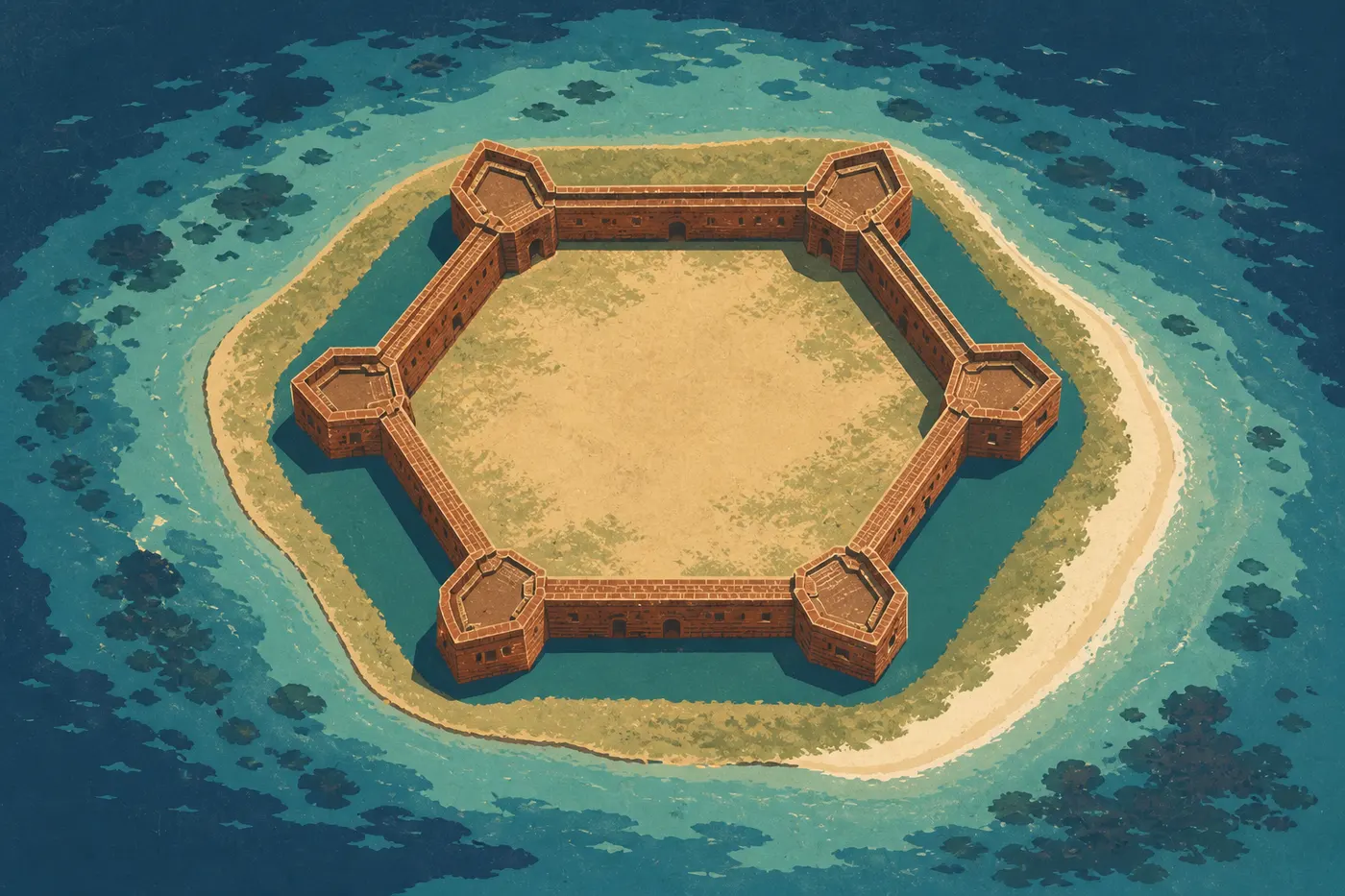
Fort Jefferson is the park's central attraction, and it delivers. Construction began in 1846 under the direction of the U.S. Army Corps of Engineers. The goal was to build a fortification capable of controlling the Florida Straits, a strategic passage for maritime trade between the East Coast and the Gulf of Mexico. The project was never completed because the invention of armor-piercing shells made masonry fortifications obsolete before the fort was finished.
The result is still striking. Six hexagonal bastions made of red brick rise three stories high, a seawater moat surrounds the complex, and the fort had a theoretical capacity of 450 cannons. It's one of the largest brick structures in North America.
You explore the fort on your own with an audio guide handed out aboard the ferry. Walk through the vaulted corridors, climb onto the walls for 360-degree views of the lagoon and ocean, and stop in the central courtyard to imagine life for the roughly 1,500 soldiers who lived there. On a clear day, the water around the fort shifts from turquoise to jade green with the depth. It's some of the most beautiful water I've seen anywhere in the park.
Fort Jefferson also served as a military prison from 1863 to 1873. Its most famous prisoner was Dr. Samuel Mudd, a physician convicted of treating John Wilkes Booth's fractured leg after Lincoln's assassination (see FAQ). A plaque inside the fort tells his story.
Safety. Some sections of the walls are closed because the brickwork is unstable. Barriers and warning signs clearly mark them. Don't cross them. Falling masonry can cause serious injuries.
The white-sand beach at the foot of the fort is the perfect place to eat lunch before getting in the water. A few picnic tables are available, some partially shaded.
Bush Key: A Seabird Sanctuary
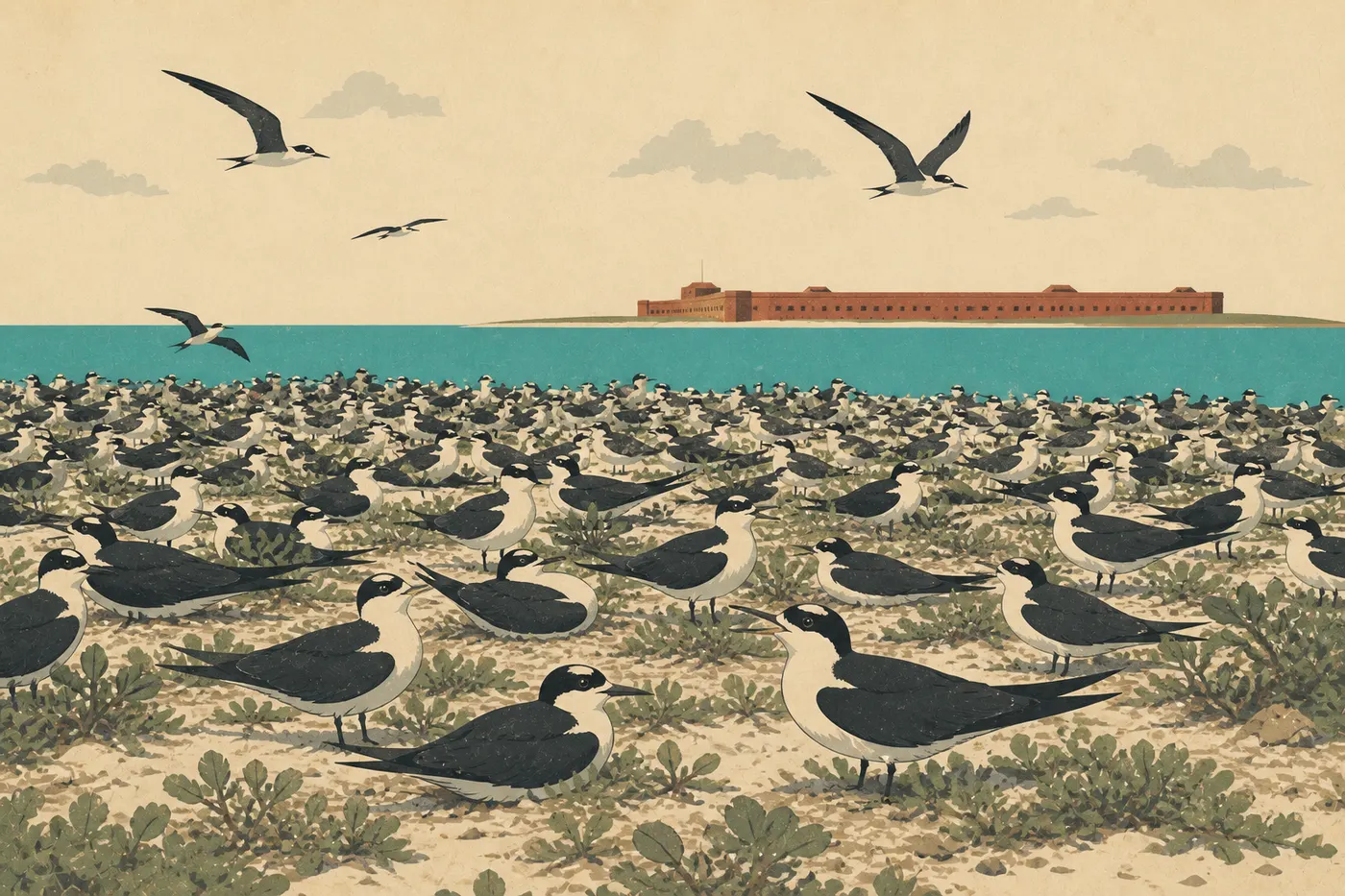
Bush Key is separated from Garden Key by a narrow channel that you can cross on foot at low tide. Access to the island's interior is closed from January through September, however, during nesting season for sooty terns and brown noddies, two seabird species that breed there by the tens of thousands.
You can watch the spectacle from the Garden Key shoreline without ever setting foot on Bush Key. A cloud of black-and-white birds flies in and out constantly, creating a steady din that carries to the fort walls. At the height of nesting season, from April through June, the island's population is estimated at several tens of thousands. It's one of the largest sooty tern colonies in the Northern Hemisphere.
From the beach, you can also spot magnificent frigatebirds, easily recognized by their forked tails and, in displaying males, their red throat pouches inflated like balloons. These birds soar above the fort and lagoon all day.
Outside nesting season, from October through December, visitors may walk onto Bush Key. The vegetation is low and the ground is flat, so you'll find yourself in a primitive coastal habitat with no facilities. That alone makes for a singular experience in an American national park. Our Dry Tortugas wildlife guide covers the park's species throughout the year.
Loggerhead Key: The Lighthouse at the End of the World
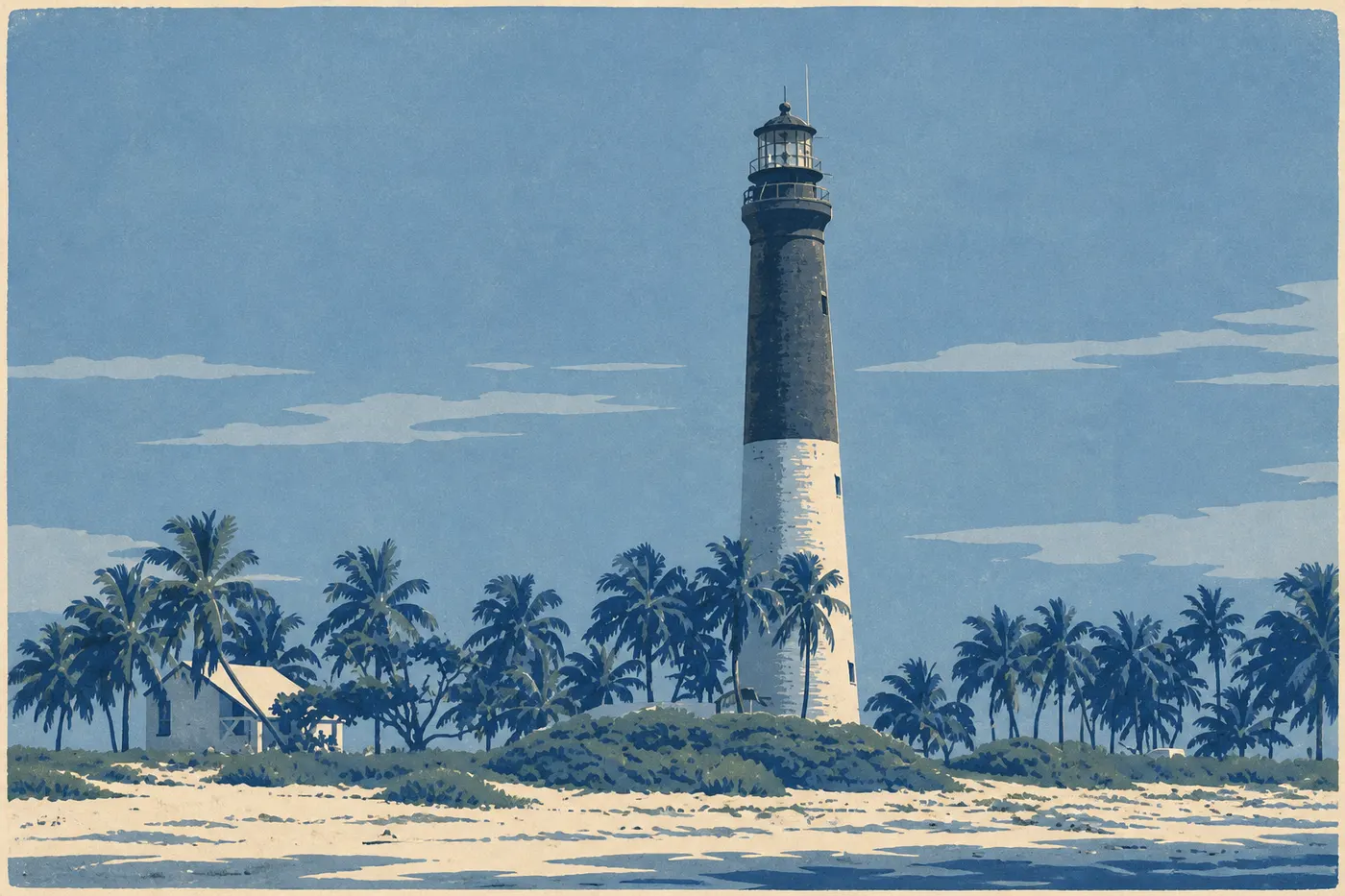
Loggerhead Key is the largest island in the archipelago and the only one with dense vegetation, including coconut palms and gumbo-limbos. It has been home to a lighthouse since 1858, and the light is still active today. You can reach it only by private boat or charter. The daily ferry doesn't stop there.
The waters around Loggerhead Key are among the richest in the park. The reefs are in better shape than those around Garden Key because they have seen less visitor impact. You may encounter groupers, barracuda, parrotfish, stingrays, and, if you're lucky, loggerhead turtles, which gave the island its name. These turtles lay their eggs on the beach from May through September at night. If you see one nesting, stay at least 50 feet away and never shine a light directly at the animal.
For divers, Loggerhead Key is the park's most appealing option. Several sites accessible through combined charter and dive trips let you explore healthy coral formations at depths ranging from 16 to 66 feet.
The Marine Zone: Snorkeling, Diving, and Shipwrecks
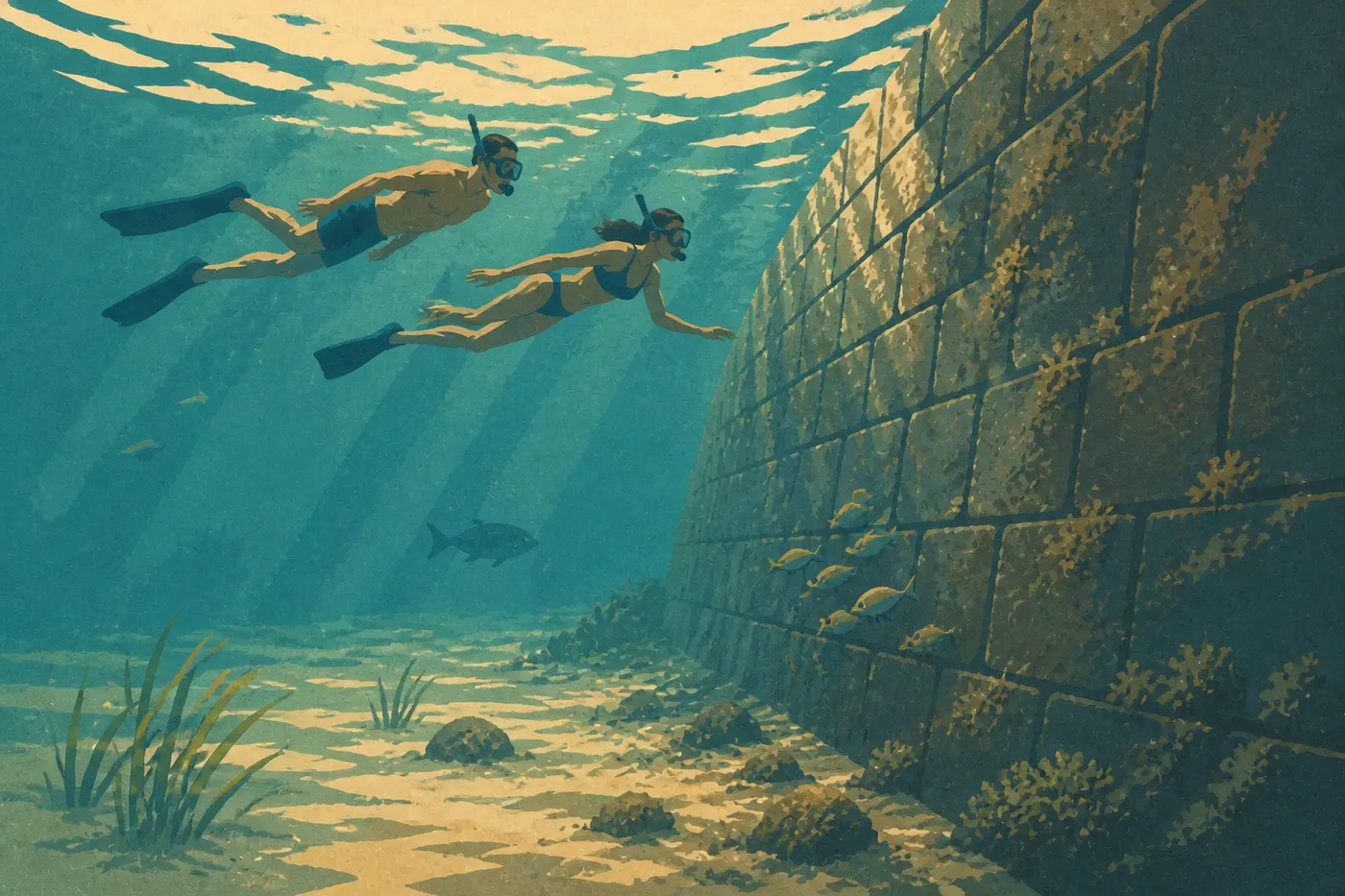
The park protects one of the best-preserved marine areas in the Gulf of Mexico. Dry Tortugas owes the richness of its waters to its isolation: few visitors, little chronic human pressure, and currents that replenish nutrients. Biodiversity is impressive, with groupers, rays, jacks, barracuda, sea turtles, and, in season, completely harmless nurse sharks patrolling the shallow seafloor.
For visitors arriving by ferry, the obvious place to start is snorkeling around Fort Jefferson's moat. The water is shallow, from 3 to 13 feet, calm, and clear. Coral grows right up against the fort's bricks, creating a unique combination of 19th-century architecture and marine life. You can see thousands of tropical fish just a few yards from shore, even if you're not a strong swimmer.
For a deeper dive, the Windjammer wreck, a steam-powered sailing ship that sank around the turn of the 20th century, is the most accessible site from Garden Key. An open-water certification is enough to explore it. Specialized charters from Key West offer dive trips that include access to the park.
Gear. The Yankee Freedom ferry rents fins, masks, and snorkels on board. If you have your own gear, bring it. Rental sizes are limited. The ferry doesn't offer scuba tanks, so divers must arrange them separately through a specialized charter.
Hiking in Dry Tortugas
Dry Tortugas isn't a land-hiking park. The islands are small and flat. Garden Key is less than 1,640 feet across at its widest point. Hiking takes a different form here.
On Garden Key, a complete loop of the accessible Fort Jefferson walls takes about 30 to 40 minutes on foot. It's pleasant and informative, with varied views of the archipelago. No athleticism required, but it's an efficient way to understand the geography from higher ground.
Loggerhead Key gives you a little more room to walk along its beaches. From the landing point, you can follow the shoreline to the lighthouse, a walk of about 30 minutes one way.
The real exploration happens on and under the water, through snorkeling, diving, and sea kayaking. That's where Dry Tortugas offers the most for active visitors. Our guide to walking routes in Dry Tortugas presents the official trails available in the park.
Other Activities for Different Travelers
Birdwatching
Dry Tortugas ranks among the Southeast's most renowned birdwatching sites. The park is especially popular during spring migration, from March through May. The archipelago is the first solid ground migrating birds encounter after crossing the Gulf of Mexico from Central America. Exhausted birds land here in large numbers, sometimes representing dozens of species in a single day. Rare or unusual species for the region are reported regularly.
Frigatebirds and brown boobies are present year-round. In April and May, warblers in breeding plumage put on a spectacular show. Bring binoculars of at least 8x42.
Sea Kayaking
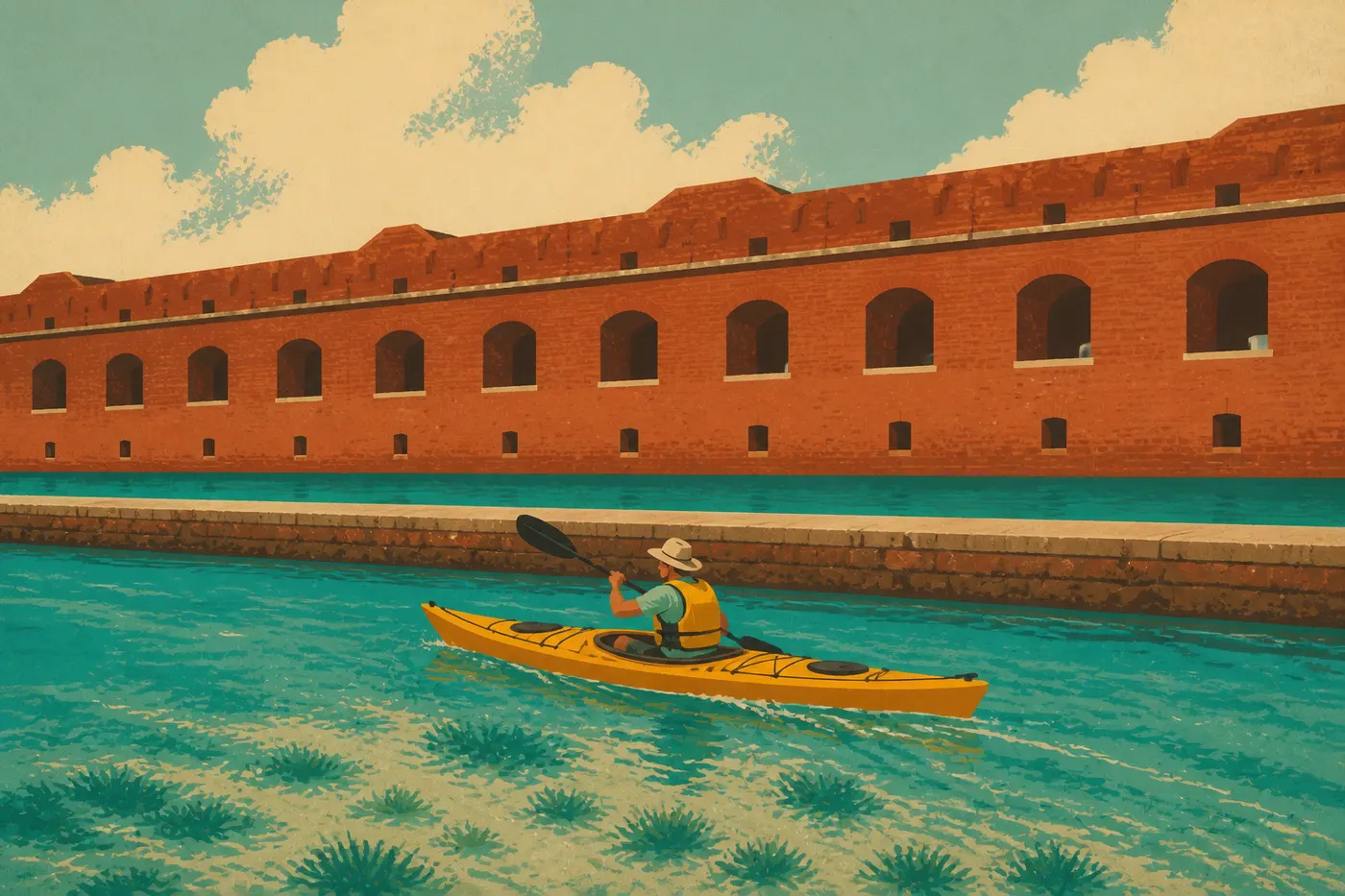
You can bring your own sea kayak into the park. Rangers explain the mooring rules when you arrive. You can also rent a kayak through charter operators from Key West. From Garden Key, paddle across an emerald lagoon toward the neighboring islands.
Watch the wind. The archipelago is completely exposed, and a steady breeze can turn the return trip into a challenge, especially if you paddled downwind on the way out. Check the forecast the day before and ask the rangers about conditions before you leave.
Primitive Camping Under the Stars

The Garden Key campground has about a dozen sites with shelters and picnic tables, but no running water, showers, or electricity. Every camper must bring everything they need, including water, at least 4 liters per person per day in the subtropical heat, food, and sleeping gear. There's no resupply on site, and the ferry doesn't sell enough water for extended stays.
Reservations are required, and sites fill quickly, especially on spring weekends. Plan to book several weeks ahead.
In return for the logistical effort, you'll have the park almost to yourself once the ferry leaves. With no light pollution 70 miles from Key West, the night sky is exceptional. You can see the Milky Way with the naked eye on moonless nights. Our Dry Tortugas camping guide explains reservations, recommended gear, and the specific rules for the Garden Key campground.
Photography
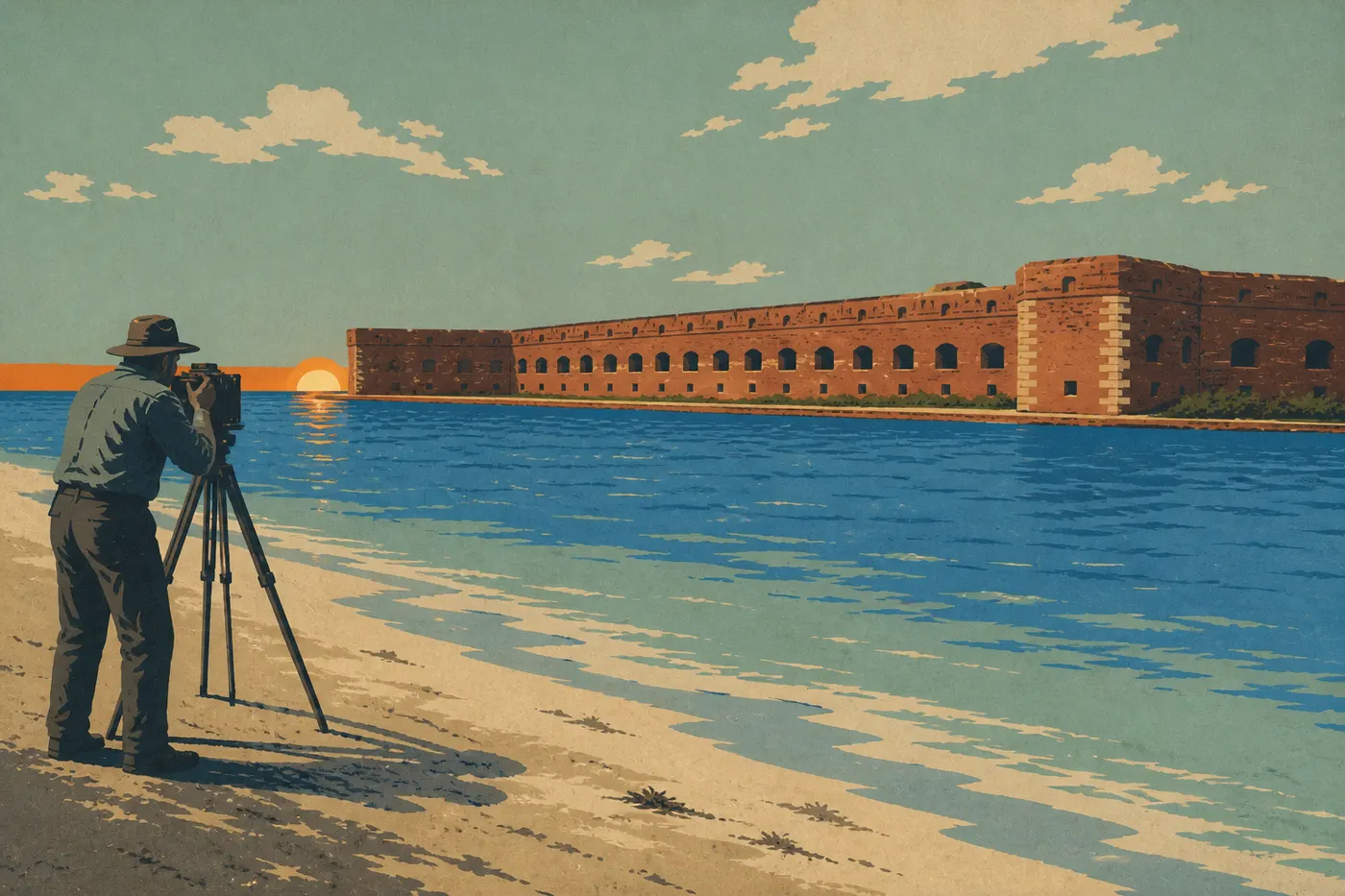
The morning light on Fort Jefferson's red bricks, with turquoise water in the foreground, creates one of the park's most photographed compositions. Arrive on the morning ferry and take time to walk the walls before the groups settle in. In the evening, if you're camping, the low light on the walls and lagoon creates especially favorable conditions. Wildlife photographers will find plenty to work with during Bush Key's nesting season and spring migration.
Visiting with Kids

Kids as young as 6 can snorkel around the fort without difficulty. The water is shallow and calm, and the tropical fish colors grab their attention right away. The Fort Jefferson tour works well for children too. The fort's cannons, prison, and famous prisoner are easy to understand, and the vaulted corridors are impressive in their own way. The ferry offers an onboard presentation program for families with children. Our guide to visiting Dry Tortugas with kids brings together the practical information you need to plan the trip.
Things to Do Around Dry Tortugas
Key West is the essential departure point for Dry Tortugas. Ferries board there, and seaplanes take off there. The city deserves at least one night so you can explore the historic Duval Street district, watch sunset from Mallory Square, visit the Ernest Hemingway Home and Museum, where he lived for ten years, and wander the colorful lanes of the old port.
The Florida Keys offer a string of marine activities all the way from Key Largo to Key West. Snorkel at John Pennekamp Coral Reef State Park, watch marine mammals in Islamorada, and visit the white-sand beaches at Bahia Honda. The Overseas Highway, or US-1, links Miami to Key West across 150 miles of elevated roadway over the ocean, with stops on every island. Dry Tortugas fits naturally as the final, and most spectacular, stop on a road trip along this route. Our Road Trips section offers guidance for travelers who want to combine the Florida Keys and Dry Tortugas in one itinerary.
The Bottom Line: What Should You See First in Dry Tortugas?
Dry Tortugas is worth the trip if you understand what kind of place it is. This isn't a big-hiking park or a beach resort. It's a remote, lightly touched archipelago whose appeal rests on three pillars. Fort Jefferson offers a one-of-a-kind historical and architectural experience in the national park system. The coral reefs form one of Florida's best-preserved marine areas. The number and variety of seabirds make the islands a leading destination for birders on the continent.
If you have just one day, spend two hours at Fort Jefferson, two hours snorkeling, and save some time for birdwatching before the ferry leaves. If you can stay overnight, a single night is enough to experience a different side of the park, when you'll have it almost to yourself at sunrise. Our complete Dry Tortugas guide brings together everything you need to plan your trip.
Frequently Asked Questions
How can I get to Dry Tortugas?
You can reach Dry Tortugas only from Key West, by daily ferry, seaplane, private boat, or charter. No road reaches the archipelago. The Yankee Freedom III ferry runs daily from Key West Harbor, and the crossing takes about two hours. The seaplane takes about 35 minutes and offers remarkable views over the archipelago and reefs. Our Access & Transportation page covers operators, prices, and reservation requirements.
Which famous person was imprisoned in Dry Tortugas?
Dr. Samuel Mudd is Fort Jefferson's best-known prisoner. A Maryland physician, he was convicted in 1865 as a conspirator in Abraham Lincoln's assassination for treating John Wilkes Booth's fractured ankle on the night of the attack. Transferred to Fort Jefferson, he was pardoned in 1869 by President Andrew Johnson in recognition of his medical work during a yellow fever epidemic that devastated the garrison. The fort served as a military prison from 1863 to 1873.
How can I get to Fort Jefferson?
Fort Jefferson is on Garden Key, accessible only by water or air. The daily ferry from Key West drops visitors directly at the foot of the fort walls. The seaplane lands in the nearby lagoon. Boaters can anchor in the lagoon and come ashore by dinghy. Admission to the fort is included in the ferry ticket. Visitors arriving on their own must pay the $15-per-person entrance fee.
What can I do with Florida turtles?
Dry Tortugas is one of the best places in Florida to see sea turtles. Loggerhead turtles lay their eggs on the beaches of Loggerhead Key from May through September. Green turtles frequent the lagoon and are regularly seen while snorkeling around Fort Jefferson. Our Wildlife page covers the species found here and the best times to see them.
When is the best time to visit Dry Tortugas?
The most comfortable season runs from mid-November through April, with calmer seas, mild temperatures from 59°F to 79°F, and no risk of tropical storms. Summer is hot and humid, with a higher risk of rough seas from June through October. Spring, from March through May, is ideal for watching migrating birds. Our When to Go page offers a month-by-month calendar of each season's advantages and drawbacks.