

What to Do in Channel Islands: Must-See Experiences
Channel Islands is made up of five wild islands off the coast of Los Angeles. You can reach them only by boat, and there are no cars or supermarkets, let alone crowds of tourists. What you'll find instead are giant kelp forests where sea otters dive, sea caves large enough to kayak through for ten minutes without seeing the back, and cliffs where sea lions sleep in the sun without giving you so much as a glance. The park's essentials come down to five experiences: kayaking in Painted Cave on Santa Cruz, snorkeling through a kelp forest at Anacapa, watching for blue whales from June through September, hiking to Point Bennett on San Miguel, and camping under the stars on an island with no artificial light. One day will give you a taste of the park. A night on the island will stay with you.
Channel Islands at a Glance: Islands, Access, and Getting Around
Channel Islands National Park includes five islands: Anacapa, Santa Cruz, Santa Rosa, San Miguel, and Santa Barbara. Each has its own personality, scenery, and level of visitation. Together, they form an archipelago stretching about 100 miles off the Ventura and Santa Barbara coasts of California.
You can get there only by sea, except for flights to Santa Rosa. There are no bridges, no roads, and no express ferry from Los Angeles. The main operator is Island Packers, whose boats leave from the port of Ventura. Departures are also available from Santa Barbara. The crossing takes anywhere from 45 minutes to more than three hours, depending on the island. Once you're there, you get around on foot. No cars, no shuttles, no stores. You arrive with whatever you brought with you.
That's one of the park's greatest strengths. This logistical filter keeps visitation low and preserves a rare sense of wilderness just two hours from Los Angeles. For schedules, prices, and departure points by island, see the Channel Islands Access guide.
How Much Time Do You Need to Visit Channel Islands?
Half a day is enough for Anacapa, the closest island. A full day lets you explore Santa Cruz in depth with hiking, kayaking, and snorkeling. Seeing all five islands takes several separate trips because each boat departure serves a single island.
Our advice is to plan at least two visits to take in the park's variety. If you only make one, choose Santa Cruz. That's where the balance of activities and accessibility works best. If you're staying overnight at Scorpion Campground, reserve your site several weeks ahead. All our suggested itineraries by trip length are covered in the Channel Islands itineraries.
Channel Islands Highlights, Island by Island
Channel Islands isn't a park you visit in passing. Each island deserves its own landing rather than a twenty-minute stop from the boat deck. Here's what you'll find on each one.
Anacapa: The Lighthouse and the Park's Gateway

Anacapa is the closest island to the mainland, 45 minutes from Ventura, and the easiest to reach. It's actually made up of three aligned islets, and only East Anacapa is open to the public.
Arch Rock is the 50-foot natural arch photographed as boats approach the island. It's the park's signature image. On the plateau, the Lighthouse Loop Trail, about 1.6 miles and flat, offers 360-degree views of the Pacific and, on clear days, the California coast. The California sea lion colony on the rocks below the plateau makes itself heard before you see it. Don't miss the moment when you come ashore.
Offshore, Cathedral Cove is Anacapa's premier snorkeling spot, with giant kelp, purple sea urchins, and Garibaldi, California's bright-orange state marine fish. Water temperatures range from 54°F in winter to 64°F in August. A 5 to 7 mm wetsuit is essential year-round.
You can easily see Anacapa in a day. It's the island we recommend for a first look at the park, especially with young children (see how to plan a family visit to Channel Islands).
Santa Cruz: Sea Caves, an Endemic Jay, and a Big Hike
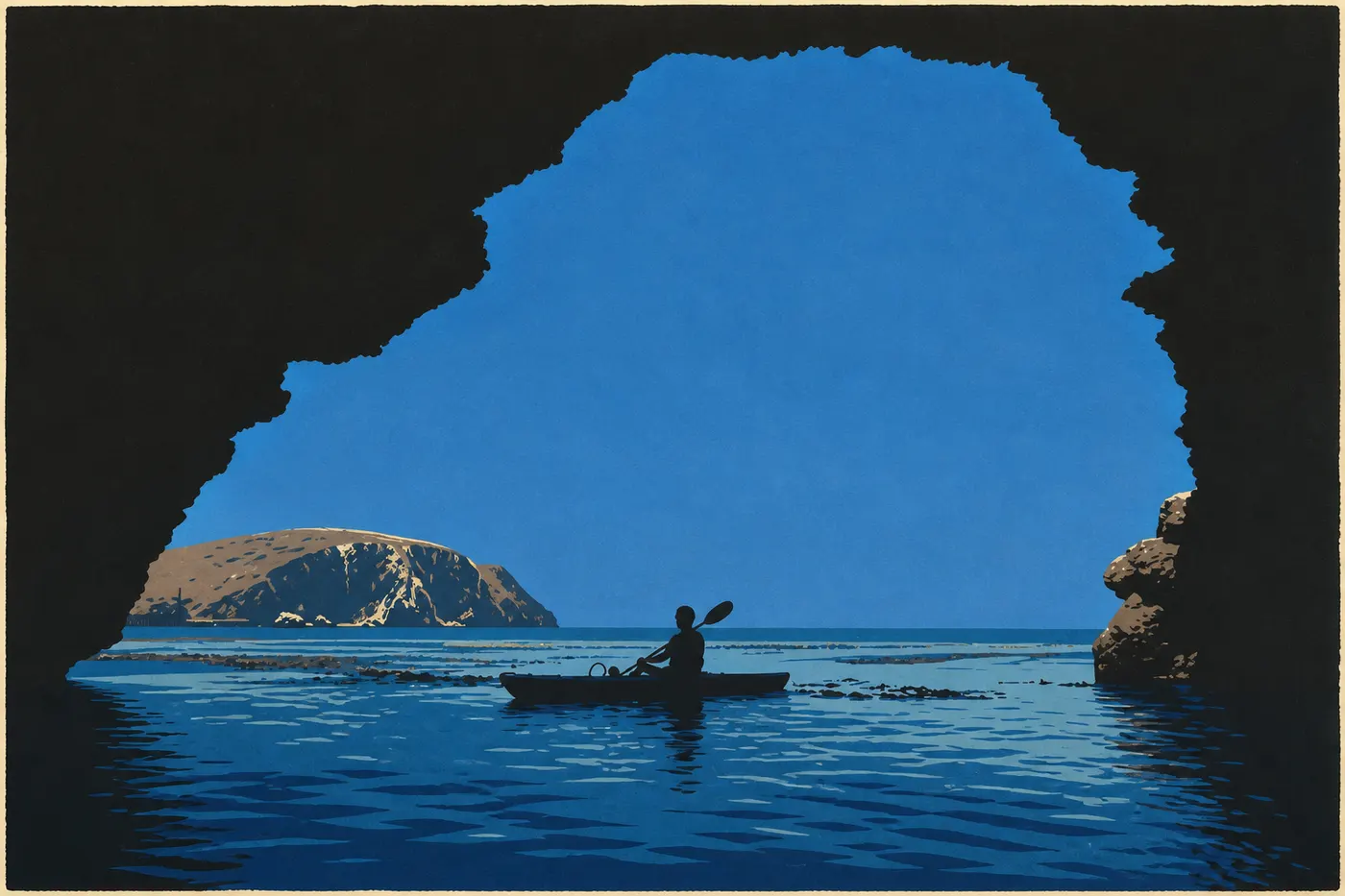
Santa Cruz is the largest of the five islands, covering about 96 square miles, and by far the richest in activities. The main landing is at Scorpion Anchorage, on the island's eastern end. The western part belongs to The Nature Conservancy and is explored separately.
Painted Cave is the main reason kayakers come from across the western United States. It's one of the world's largest sea caves, with an entrance about 100 feet high and a depth of more than 1,300 feet. Red, orange, and green algae color the inner walls, and light filtering through the opening creates an atmosphere found nowhere else along the Pacific Coast. When we visited in September, it took us twenty minutes to paddle to the back. You can enter only by kayak, and only when the sea is calm, with special authorization. Book early.
For hikers, Cavern Point Trail climbs from Scorpion Beach to the headland. The 2.8-mile, moderate hike takes about 1.5 hours and offers sweeping views over the bay, with dolphins often visible below. Scorpion Canyon Loop, a moderate 6.2-mile hike, is for anyone who wants to leave the shoreline and cross the island's interior.
The Island scrub-jay deserves a mention of its own. This deep-blue jay is endemic to Santa Cruz, and nowhere else on Earth. Aim your binoculars at the island's interior oak trees as soon as you land.
Camping at Scorpion Campground is available year-round with a reservation (reserve a campsite on Channel Islands). With no artificial light on the seaward horizon, nights on the island offer some of the darkest skies in Southern California.
Santa Rosa: Fossil Pines and Empty Beaches

Santa Rosa, covering about 84 square miles, sees fewer visitors than Santa Cruz but offers a wilder, more austere experience. The wind is nearly constant, the vegetation is low, and some areas have an almost lunar look.
The main draw is the Torrey pine grove. Santa Rosa is home to a relict population of Pinus torreyana, the rarest pine species in North America. Lobo Canyon has the most accessible specimens. Farther east, the beaches at Water Canyon and East Point are almost always deserted. The water is cold because of strong currents. Swimming is possible, but don't take it lightly: stay near shore and never dive alone.
Santa Rosa's land wildlife has surprises in store, too. Roosevelt elk, reintroduced to the island in the late 1980s, roam freely. Peregrine falcons nest on the southern cliffs. Santa Rosa suits self-sufficient hikers and wildlife photographers willing to pack an extra layer.
San Miguel: The End of the World and 30,000 Pinnipeds
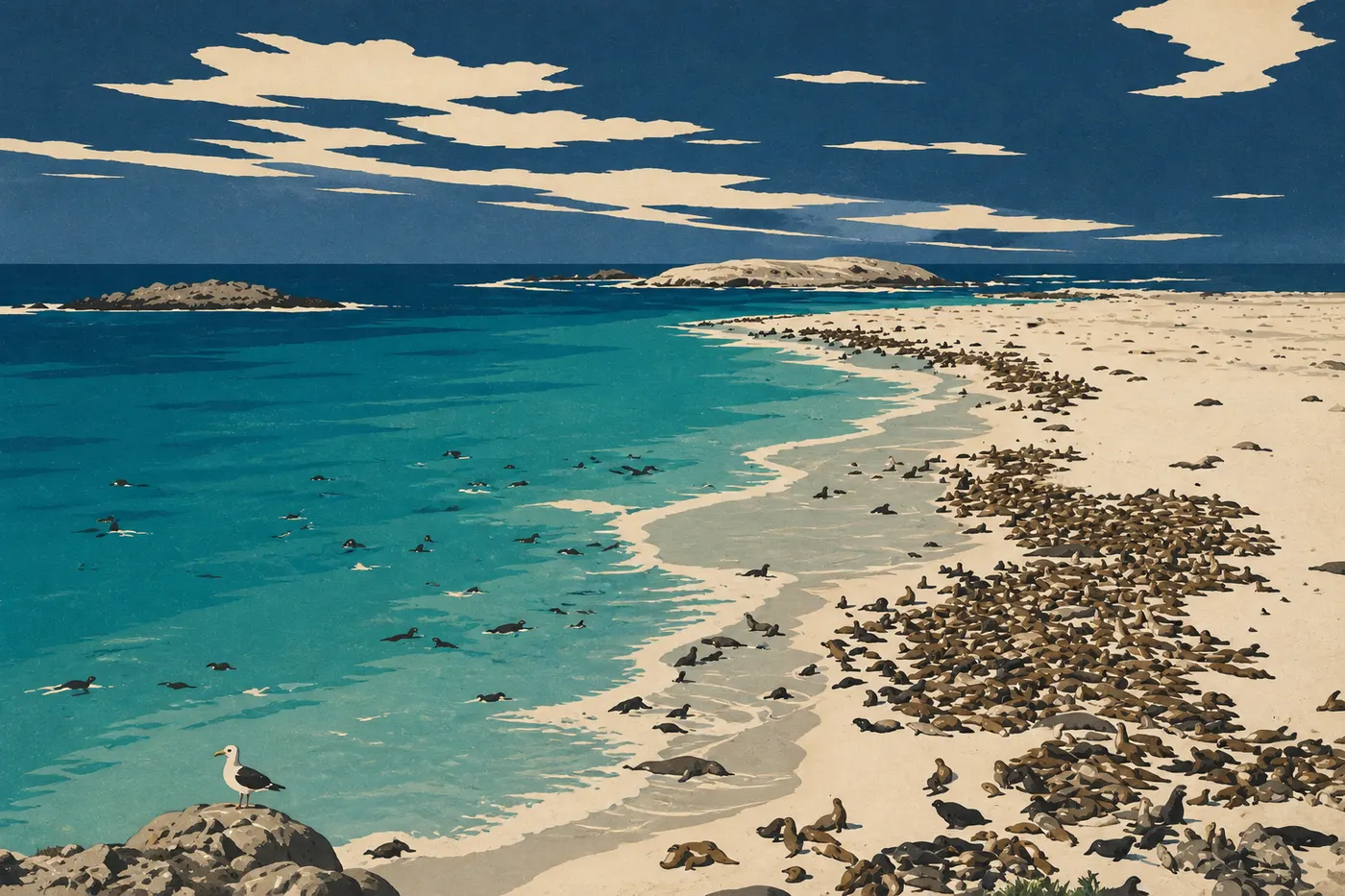
San Miguel is the farthest and most demanding of the five islands, more than three hours from Ventura by boat, often in rough seas. It's also the most spectacular island for anyone drawn to untamed nature.
Point Bennett is one of the most impressive natural sites in North America. During seasonal gatherings, as many as 30,000 pinnipeds crowd onto the beach: northern elephant seals, California sea lions, harbor seals, and Guadalupe fur seals. Six different species in a few hundred yards. You can reach it only on a ranger-guided hike, a 10-mile round trip that takes a full day. Leave early. Sturdy shoes and a windbreaker are essential.
The Caliche Forest is another San Miguel oddity. Calcified sand molds formed around the ancient roots of trees that disappeared thousands of years ago rise from the ground like bleached sculptures. The effect is striking, almost surreal.
San Miguel isn't a place for a casual visit. Reserve your spot on a boat several weeks ahead. Check the weather the day before because cancellations due to wind or heavy swells are common. Bring enough food and water for a full day, no exceptions.
Santa Barbara: The Smallest and Most Secluded
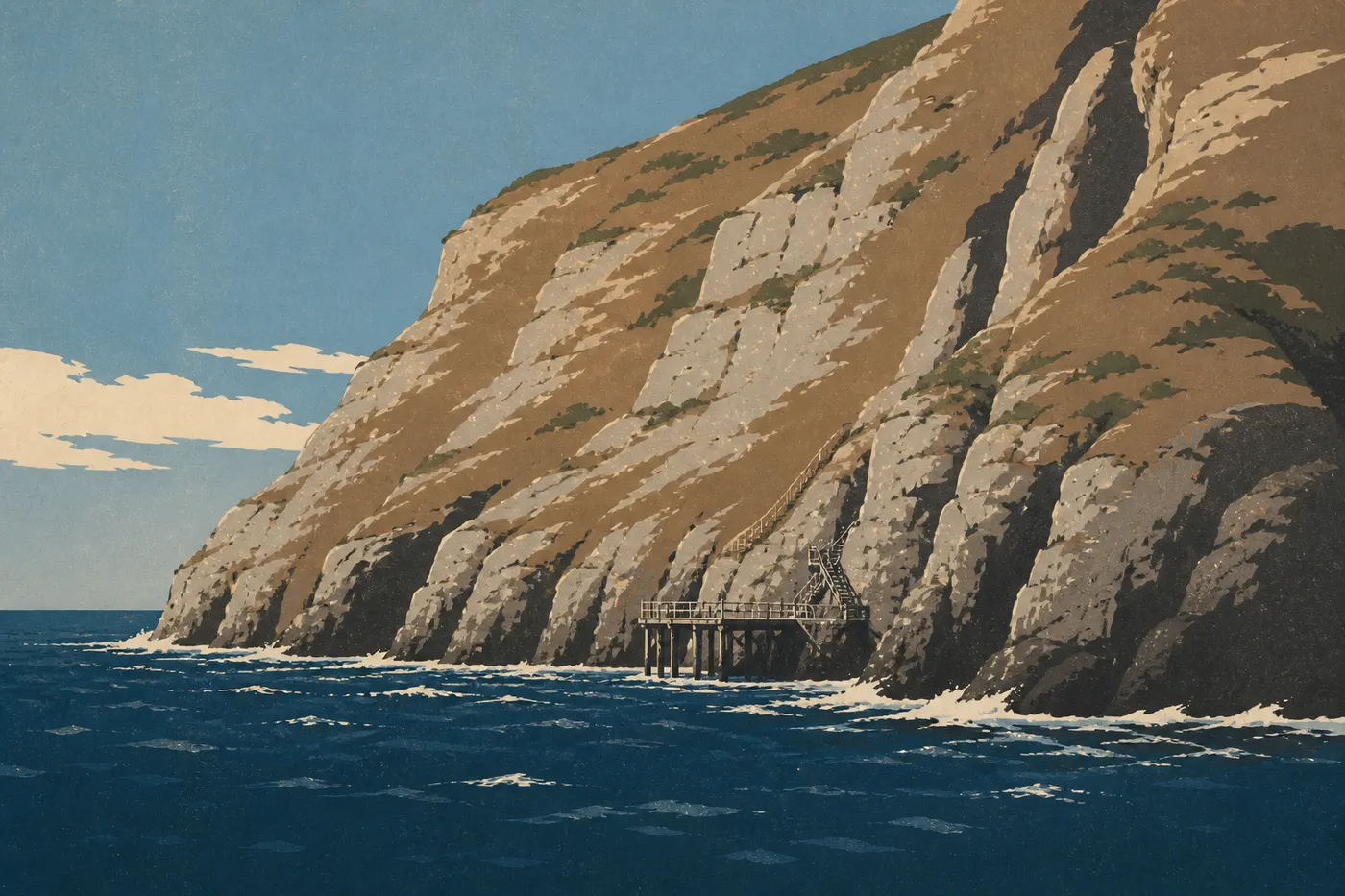
At 1 square mile, Santa Barbara is the park's smallest island and the farthest from the mainland, almost 56 miles southeast of Ventura. It's also the least visited.
In spring, from February through April, giant coreopsis, tree sunflowers that can grow more than 6.5 feet tall, turn the island into a yellow carpet visible from the boat as you approach. The rest of the year, seabirds rule the island: Brandt's cormorants, brown pelicans, and murrelets. The only trail, Signal Peak Loop, climbs about 1.9 miles to the island's high point for broad views of the archipelago and Pacific.
You can see Santa Barbara in half a day. Departures are less frequent than for the other islands, so check the Island Packers schedule well in advance.
The Best Hikes in Channel Islands
Channel Islands isn't a park of multiday trekking routes. Its trails are short to moderate, but the scenery, with cliffs, ocean in every direction, and wildlife close enough to see, more than makes up for it. Here are useful references by island:
- Lighthouse Loop Trail (Anacapa, 1.6 miles, easy): panoramic views, ideal for getting started.
- Cavern Point Trail (Santa Cruz, 2.8 miles, moderate): the view over Scorpion Bay is worth the effort.
- Del Norte Trail (western Santa Cruz, 10-mile round trip, strenuous): the island's big route, for experienced hikers.
- Point Bennett Trail (San Miguel, 10-mile round trip, moderate to strenuous): ranger-guided and essential for seeing the pinnipeds.
- Signal Peak Loop (Santa Barbara, 1.9 miles, easy): short, with wide-open 360-degree views.
The Channel Islands hiking guide covers every trail, including exact elevation gain, difficulty, access from the landing point, and the best seasons.
Other Activities by Interest
Wildlife Watching: Whales, Dolphins, and Eagles
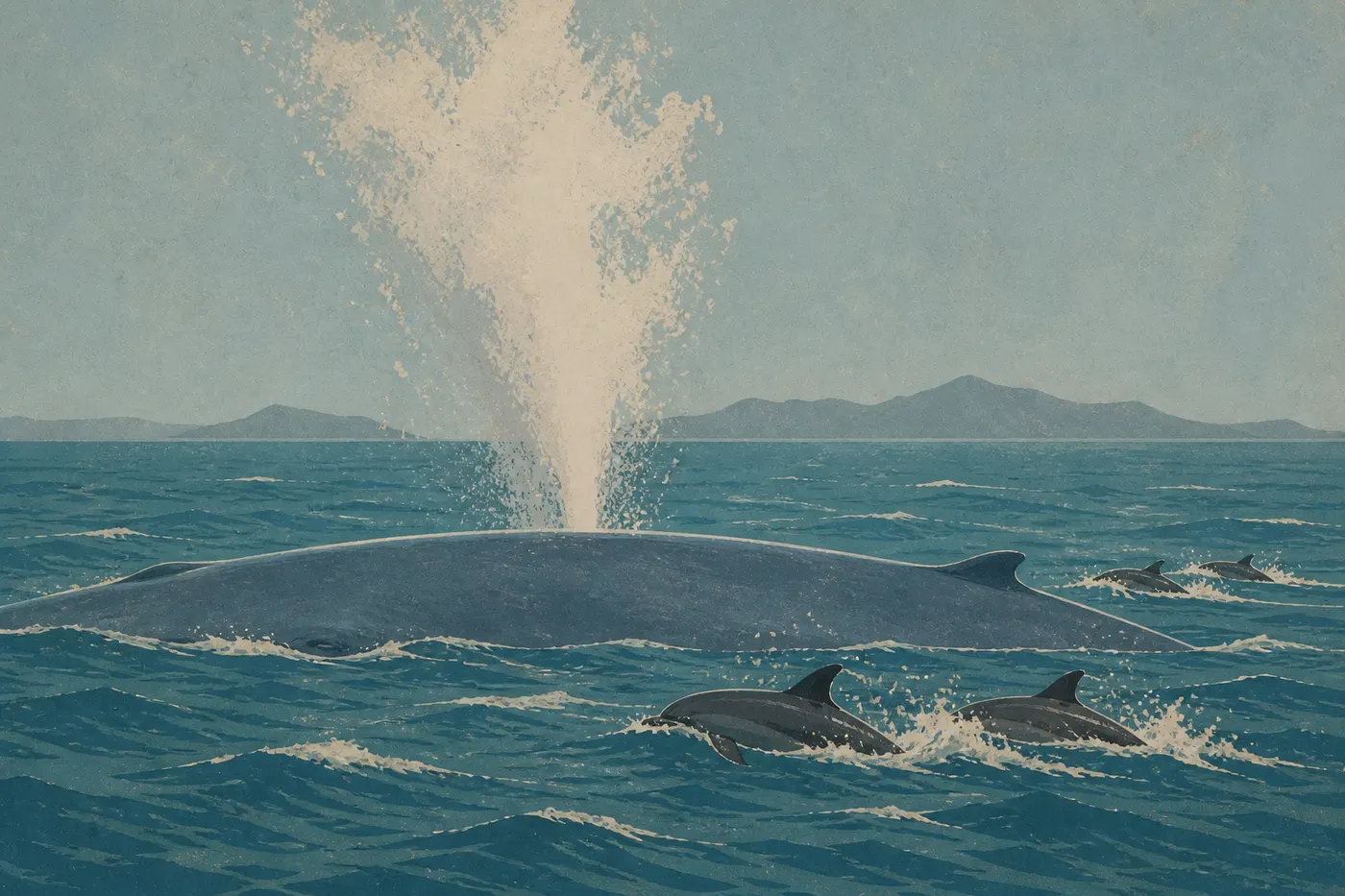
Channel Islands is sometimes called the “Galápagos of North America.” The comparison holds up.
From June through early September, an underwater canyon running along the islands concentrates a nutrient-rich upwelling that attracts blue whales, the largest animals ever to live on Earth. Humpback whales frequent park waters from December through May. Gray whales migrate along the coast from January through March. Island Packers offers dedicated whale-watching trips lasting 3 to 4 hours, with no landing. They're one of the best ways to watch marine mammals from the California coast.
Common dolphins sometimes gather in pods of several hundred in the channel. The view from the boat deck, with the islands in the background, rivals anything you'll find on land.
The bald eagle was successfully reintroduced to the islands in the 1980s after DDT eradicated it there. Today it nests on Anacapa and Santa Cruz, and rangers mark viewing areas. The brown pelican, another DDT casualty in the 1970s, has also made a full return to Channel Islands. Watching one plunge from 30 feet above the water remains one of the park's great spectacles.
Kayaking and Sea Caves
This is Channel Islands' signature activity. Sea caves carved into basalt and limestone cliffs are among the most accessible in North America.
Besides Painted Cave on Santa Cruz, mentioned above, about a dozen other caves can be reached from Scorpion Beach when the sea is calm. At Anacapa, smaller but highly photogenic caves open up just a few paddle strokes from the landing.
Ventura-based outfitters offer sea-kayak rentals and guided tours. Their guides know the tide and swell conditions that determine whether the caves are accessible, so go with one the first time. You can't enter Painted Cave outside authorized time slots. Follow the instructions, or you could end up facing rough water inside the cave itself with no room to maneuver.
Diving and Kelp-Forest Snorkeling

The Channel Islands National Marine Sanctuary is one of the best-protected areas in the northeastern Pacific. Below the surface, giant kelp forests, made up of Macrocystis pyrifera, can grow more than 100 feet tall and add several inches a day during the growing season. This is a complete ecosystem, home to parrotfish, octopuses, sea stars of every size, and nudibranchs. Wrecks lie on sandy bottoms in some areas.
A 5 to 7 mm wetsuit is essential. The water rarely rises above 64°F, and it feels significantly colder at 100 feet. Several dive clubs in Ventura and Santa Barbara run regular trips to the islands. Check the Channel Islands weather data to find the periods with the best underwater visibility, generally late summer and fall.
Stargazing and Astrophotography

There is no artificial lighting on the islands. The only light pollution comes from the mainland, well beyond the horizon. If you're camping, nights on Channel Islands give you access to a sky most Southern California residents never see from home: the Milky Way, frequent shooting stars, and crisp constellations. Bring a tripod and a fast lens. That's part of what makes camping and spending the night on the island worthwhile.
Families
Channel Islands takes some planning with young children. There are no medical services on the islands, the crossing can be rough, and you should bring motion-sickness medication. There are no stores on board or on the islands. That said, Anacapa works very well for families: a short crossing, a flat trail, guided snorkeling, and the chance to see sea lions from shore. The NPS Junior Ranger program starts at the Robert J. Lagomarsino Visitor Center in Ventura before departure. Our Family guide covers precautions, what to pack, and recommended ages for each island.
What to Do Around Channel Islands
Ventura and Santa Barbara deserve a stop before or after your crossing. Rangers at the Robert J. Lagomarsino Visitor Center can point you in the right direction.
The Bottom Line: What Should You See First in Channel Islands?
If your window is short and you have to choose:
- Start with Santa Cruz for kayaking at Painted Cave, snorkeling at Scorpion Beach, and the Cavern Point Trail. That's where Channel Islands packs the most accessible experiences into a single landing.
- Choose Anacapa for a quick alternative if your schedule is tight or you're traveling with children or people who don't hike. The crossing is short, and the island is easy to explore.
- Pick San Miguel for something truly exceptional. Point Bennett and its tens of thousands of pinnipeds have no equal anywhere in North America. Plan early, and accept that the weather may make the decision for you.
Channel Islands requires some logistics. That's exactly what preserves its wild character. What you'll experience there, you won't find on a Malibu beach. To plan your visit from start to finish, see all the Channel Islands guides.
Frequently Asked Questions
What is there to do at Channel Islands?
The main activities at Channel Islands are sea-cave kayaking, especially at Painted Cave on Santa Cruz; snorkeling and diving in giant kelp forests; coastal hikes on all five islands; and wildlife watching for blue whales, common dolphins, sea lions, and bald eagles. Each island has its own character: Anacapa for ease, Santa Cruz for variety, and San Miguel for raw wildlife encounters.
How many days do you need to visit Channel Islands?
How many days to spend at Channel Islands depends on which island you choose. One day is enough for Anacapa or Santa Cruz if you're only taking a day trip by boat. To enjoy camping and combine several activities, plan on two days. Seeing all five islands requires several separate trips. Our Itinerary & Trip Length guide suggests plans based on how much time you have.
Is Channel Islands worth visiting?
Channel Islands is worth it if you're willing to deal with the logistics: boat-only access, no services at all on the islands, and crossings that can get rough. In return, you get nearly untouched nature, some of the richest waters on the Pacific Coast, and true isolation just two hours from Los Angeles. For anyone who enjoys the outdoors, diving, or wildlife watching, it's one of the most underrated national parks in the United States.
What are the must-see sights at Channel Islands?
The essentials are kayaking at Painted Cave on Santa Cruz, kelp-forest snorkeling at Anacapa or Santa Cruz, seeing the pinniped gathering at Point Bennett on San Miguel, and taking a boat trip during blue-whale season from June through September. The view from Cavern Point over Scorpion Bay stays with you long after you return.
Which hike should you do at Channel Islands?
The most accessible hike with the biggest payoff is Cavern Point Trail, a moderate 2.8 miles on Santa Cruz. For beginners or families, the 1.6-mile Lighthouse Loop Trail on Anacapa is perfect. Experienced hikers will prefer Point Bennett Trail on San Miguel, a ranger-guided 10-mile round trip. Find all elevation-gain and difficulty details in our Hiking guide.
Do you need reservations to visit Channel Islands? Yes, reservations are essential. Island Packers boats fill quickly, especially on weekends from June through September and during whale-watching season. Camping is reserved separately through Recreation.gov. Guided activities, including Point Bennett and Painted Cave kayaking, also have limited time slots. Plan at least three to four weeks ahead for a peak-season weekend.
Can you swim at Channel Islands?
You can swim at Channel Islands, mainly at certain beaches on Santa Cruz and Santa Rosa, but the water stays cold year-round, ranging from 54°F in winter to 64°F in summer. Currents can be strong depending on the season and the beach's exposure. Never swim alone, stay in marked areas, and don't dive from the cliffs. Guided snorkeling with a guide and wetsuit is much more enjoyable and safer.