
Channel Islands Itinerary: What to See in 1, 2, or 3 Days
The short answer: One day is enough for Anacapa, the island closest to the mainland. Two to three days let you add Santa Cruz and its sea cliffs. To visit all five islands, plan on at least five days spread across several trips from Ventura.
Channel Islands isn't a park you drive through. There are no roads, bridges, or vehicles on the islands. Everything starts at Ventura Harbor on the California coast, and everything depends on the boat schedule. That logistical constraint shapes your itinerary from island to island.
How Much Time Do You Need to Visit Channel Islands?
The park includes five islands: Anacapa, Santa Cruz, Santa Rosa, San Miguel, and Santa Barbara. Each deserves a full day, or even two in the case of Santa Cruz.
In practice, most visitors choose one or two islands per trip:
- 1 day: Anacapa (a day trip and the most common option)
- 2 to 3 days: Anacapa followed by Santa Cruz (camping or back-to-back day trips)
- 5 days or more: all five islands, with several round trips from Ventura
Travel time varies considerably: about one hour to Anacapa, two hours to Santa Cruz, and three hours to Santa Rosa or San Miguel. That matters when your time on the island barely covers ten hours.
To choose the right season, see our When to Go page.
Access and Logistics at a Glance
The islands are accessible only by boat from Ventura Harbor or by plane from Camarillo, and flights serve Santa Rosa only. Once you're on the islands, all travel is on foot along marked trails. There are no vehicles or shuttles. These constraints directly shape your day. For departure points, operators, and reservations, see our Channel Islands access guide.
The Channel Islands
Five islands, five different moods. Here's how to tell them apart and choose the ones that fit your ability and interests.
Anacapa: The Introductory Island
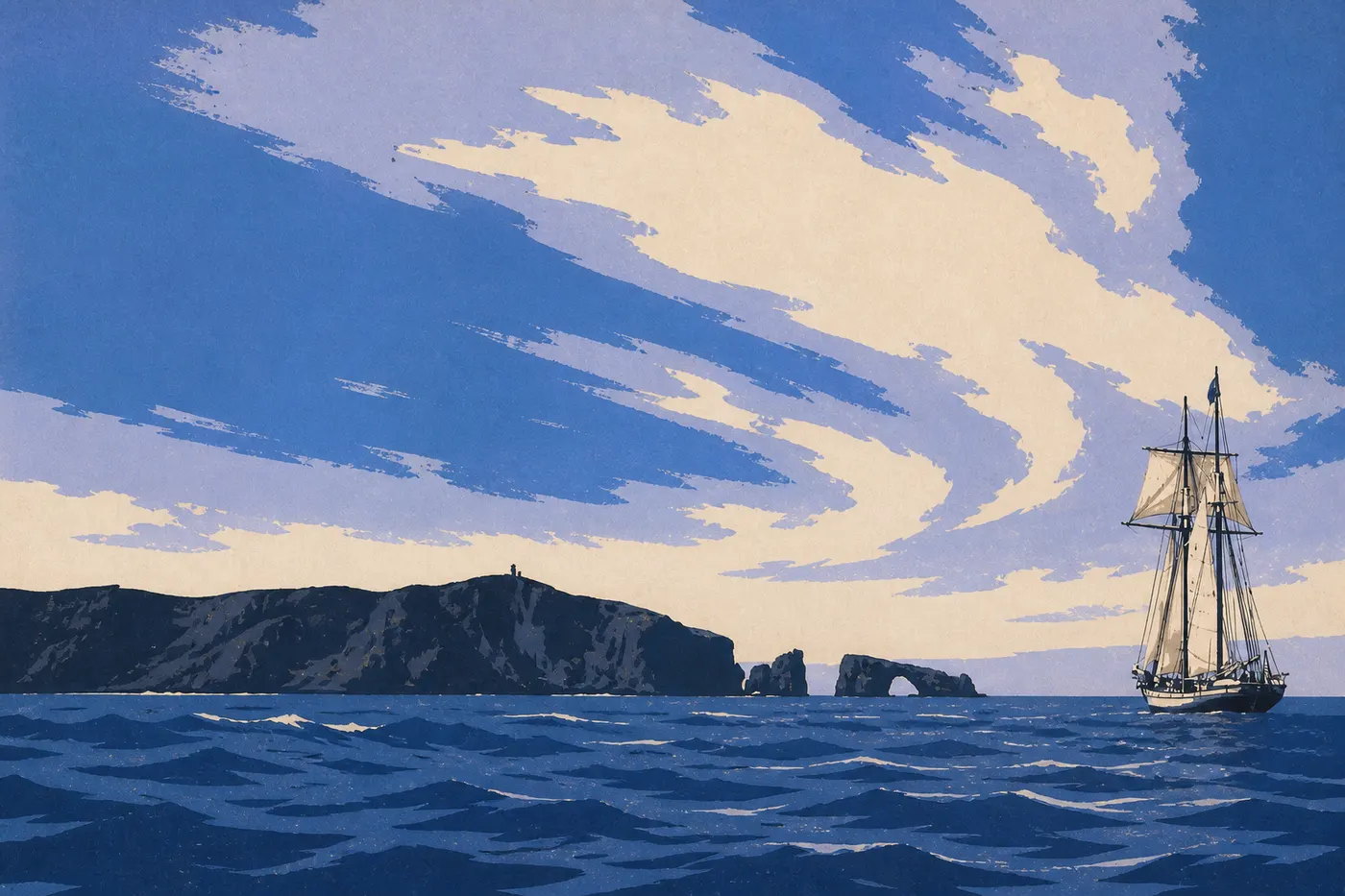
Anacapa is the closest island to the mainland, about 12.4 miles from Ventura, and the most visited. Technically made up of three islets, only East Anacapa is open to the public. An active lighthouse, a basalt arch photographed from every angle (Arch Rock), and colonies of cormorants and brown pelicans along the cliffs make for a full day even if you hike no more than 1.9 miles.
The main loop takes about 1.5 hours and connects the landing, campground, lighthouse, and coastal overlooks. It's an ideal first visit, including for families.
Santa Cruz: The All-Around Island
Santa Cruz is the largest island, covering about 97 square miles, and the most diverse. It has two distinct sections: the east side, which is open to visitors, and the west side, which is managed by the park with more regulated access.
Santa Cruz's highlight is Painted Cave, one of the world's largest sea caves, accessible only by kayak. On land, trails through Scorpion Canyon and to Smugglers Cove offer views of the cliffs and endemic chaparral vegetation. This is also the best island for camping. Scorpion Ranch Campground is among the best-protected in the park.
The island fox, an endemic species that was once threatened, is almost guaranteed to turn up around Scorpion Ranch Campground in the late afternoon.
Santa Rosa: The Wild, Windy Island
The second-largest island, Santa Rosa is often overlooked. It's known for its sandy beaches, rare in the park, its Torrey pine forests, a species found almost nowhere else in the world, and its mule deer. The wind blows hard and often, so bring an extra layer even in summer.
You can fly from Camarillo with Channel Islands Aviation, which cuts the travel time considerably.
San Miguel: The Pinniped Island
San Miguel is the island most exposed to Pacific winds and the hardest to reach, with a three-hour boat ride and unpredictable weather. It is home to Point Bennett, one of the world's largest pinniped gatherings. Depending on the season, up to 80,000 seals and sea lions converge here. A ranger must accompany visitors in this area.
Save this island for a second park visit. Boat trips are frequently canceled because of rough seas.
Santa Barbara: The Quiet Island
The smallest and southernmost island, Santa Barbara is popular with divers and snorkelers for its clear water and kelp forest. Its vegetation has made a remarkable recovery since invasive species were removed in the 1990s. It's one of the park's best ecological restoration stories.
Day-by-Day Itinerary
Day 1: Anacapa (Day Trip)
Leave Ventura Harbor aboard Island Packers. The crossing takes about an hour. When you arrive, take the metal staircase cut into the cliff, with 154 steps, to reach the plateau.
Typical itinerary:
- Plateau loop, about 1.9 miles and 1.5 hours: lighthouse, overlooks of Arch Rock, and nesting cormorants
- Picnic on the terrace overlooking the California coast
- Snorkel around the launch area at the foot of the cliffs, accessible from the boat's Zodiac depending on the Island Packers schedule
- Take the boat back in the early evening
There is no restaurant or store on the island, so bring everything you'll need.
Day 2: East Santa Cruz and Scorpion Canyon
Leave from Ventura or Oxnard, depending on the available schedule. The crossing takes about two hours.
Typical itinerary:
- Scorpion Canyon Loop, about 3.1 miles with little elevation gain: historic orchard, ranch ruins, and views of Scorpion Bay
- Snorkel in the bay. Water temperatures range from 57 to 63°F depending on the season, and a wetsuit is recommended.
- Look for island foxes around the campground in the late afternoon
- Return to Ventura in the evening. Check the last boat's departure time before you set out.
If you're camping at Scorpion Ranch, you can explore the canyon at dusk and dawn, when the wildlife and light are at their best.
Day 3: West Santa Cruz or Santa Rosa
Option A: Painted Cave by kayak
You need to book a Painted Cave tour separately with an authorized kayak operator. The cave is completely dark except at low tide in calm weather. Bring a headlamp and check the surf forecast. Access is canceled when waves exceed 3.3 feet. This is a full experience in its own right.
Option B: Santa Rosa
This is ideal if you've booked the flight from Camarillo. Spend the day at Water Canyon Beach and in the Torrey pine grove. The wind is almost constant, so don't underestimate its cooling effect even under bright sunshine.
Variations by Trip Length
Express: 1 day on Anacapa
This is the most common and realistic option for visitors based in Los Angeles or Santa Barbara. Book the boat early, since spots sell out as early as spring. Wear hiking shoes and bring water and snacks. Plan on about 8 hours from door to door starting in Ventura.
Classic: 2 to 3 days on Anacapa and Santa Cruz
The ideal pairing for a balanced introduction: the compact island of Anacapa contrasts with Santa Cruz's varied landscapes. Two nights of camping at Scorpion Ranch let you avoid the boat schedule and experience the island after the day-trippers leave.
Regional road trip: 5 days or more
To visit several islands in a row, use Ventura as your base and schedule your crossings over several days. This option fits naturally into a road trip along the California coast between Los Angeles and San Francisco. Our Region and Road Trip guides bring together cross-park extensions and regional itineraries.
Itinerary Map
The NPS publishes an official map in downloadable “Unigrid” format on the park website. It shows all five islands, the main trails, anchorage areas, and campground locations.
Print it before you leave. There is no cell service on the islands, and GPS is no substitute for a map in foggy weather. Our Map page brings together the available mapping resources for Channel Islands, including official NPS PDFs.
Where to Stay Along the Itinerary
Camping is available on all five islands, with tents only and reservations required through recreation.gov. Most islands have no running drinking water or electricity. You must bring water from the mainland or filter it on-site, and store food in airtight containers.
On the mainland, Ventura is the natural logistical base. Our Where to Stay guide and Camping page cover all the options, from island camping to waterfront hotels in Ventura.
Extend Your Trip: What to See Around Channel Islands
Channel Islands pairs naturally with other destinations along Southern California's coast. Los Angeles is about 62 miles east of Ventura. Santa Barbara, with its Spanish-style architecture and vineyards, is 31 miles to the north.
Farther north, the Big Sur coast and Pinnacles National Park fit naturally into a California road trip. Our Region and Road Trip guides include these cross-park extensions and organize the route along the Pacific Coast.
The Ideal Itinerary for Your Available Time
| Trip length | Itinerary | Highlights |
|---|---|---|
| 1 day | Anacapa | Lighthouse, Arch Rock, seabird colonies |
| 2 days | Anacapa + East Santa Cruz | Scorpion Canyon, island foxes |
| 3 days | + West Santa Cruz or Santa Rosa | Painted Cave by kayak or sandy beaches |
| 5 days or more | All five islands | The complete park experience |
Channel Islands takes more logistical planning than the average American national park. The boat requirement naturally limits visitation, and that's exactly what makes the place special. On Anacapa or San Miguel, you'll rarely encounter more than a few dozen visitors in a day. That's a rarity in a California national park.
Frequently Asked Questions
How many days do you need to visit Channel Islands?
Plan on one day per island for day trips. One day is enough for Anacapa, while two to three days let you add Santa Cruz. To visit all five islands, plan on at least five days spread across several outings.
How do you get to Channel Islands?
The islands are accessible only by boat or plane. The official operator is Island Packers, departing from Ventura Harbor. Channel Islands Aviation offers flights to Santa Rosa from Camarillo. There are no roads or bridges to the islands.
Can you drive across Channel Islands?
No. There are no roads or vehicles on the islands. All travel is on foot along marked trails. The only driving is the trip to Ventura Harbor on the mainland.
When is the best time to visit Channel Islands?
The park is open year-round. Spring, from March through May, is a good time for vegetation and wildflowers. Summer is peak boat season, but mornings are also the foggiest because of the marine layer. Fall often offers the best visibility at sea. Our Weather page details the island-by-island climate patterns.
Is Channel Islands worth visiting?
Yes, as long as you're willing to deal with the logistics. The park protects a unique island ecosystem in Southern California, with endemic species such as the island fox, kelp forests, and spectacular sea caves. The relative lack of crowds is almost guaranteed. Our complete Channel Islands guide gives you an overview before you plan your trip.
How much does it cost to enter Channel Islands?
Admission to the park is free. Island Packers boat tickets cost money, as do campground reservations, which are made through recreation.gov. For entrance fees and annual passes, see the National Parks Fees & Passes page.