
Canyonlands National Park Wildlife: What You'll See and Where to Look
Canyonlands National Park is more than a maze of red rock carved by the Colorado River and the Green River. It's a high-desert ecosystem where wildlife has adapted to extreme conditions: scorching summer heat, dry winter freezes, and scarce water sources. Five species capture much of its variety: desert bighorn sheep, mule deer, coyotes, peregrine falcons, and common ravens. You won't see all of them in the same place or at the same time, but adjust your schedule and where you explore, and sightings come fairly quickly.
Canyonlands National Park's Iconic Animals
Desert Bighorn Sheep
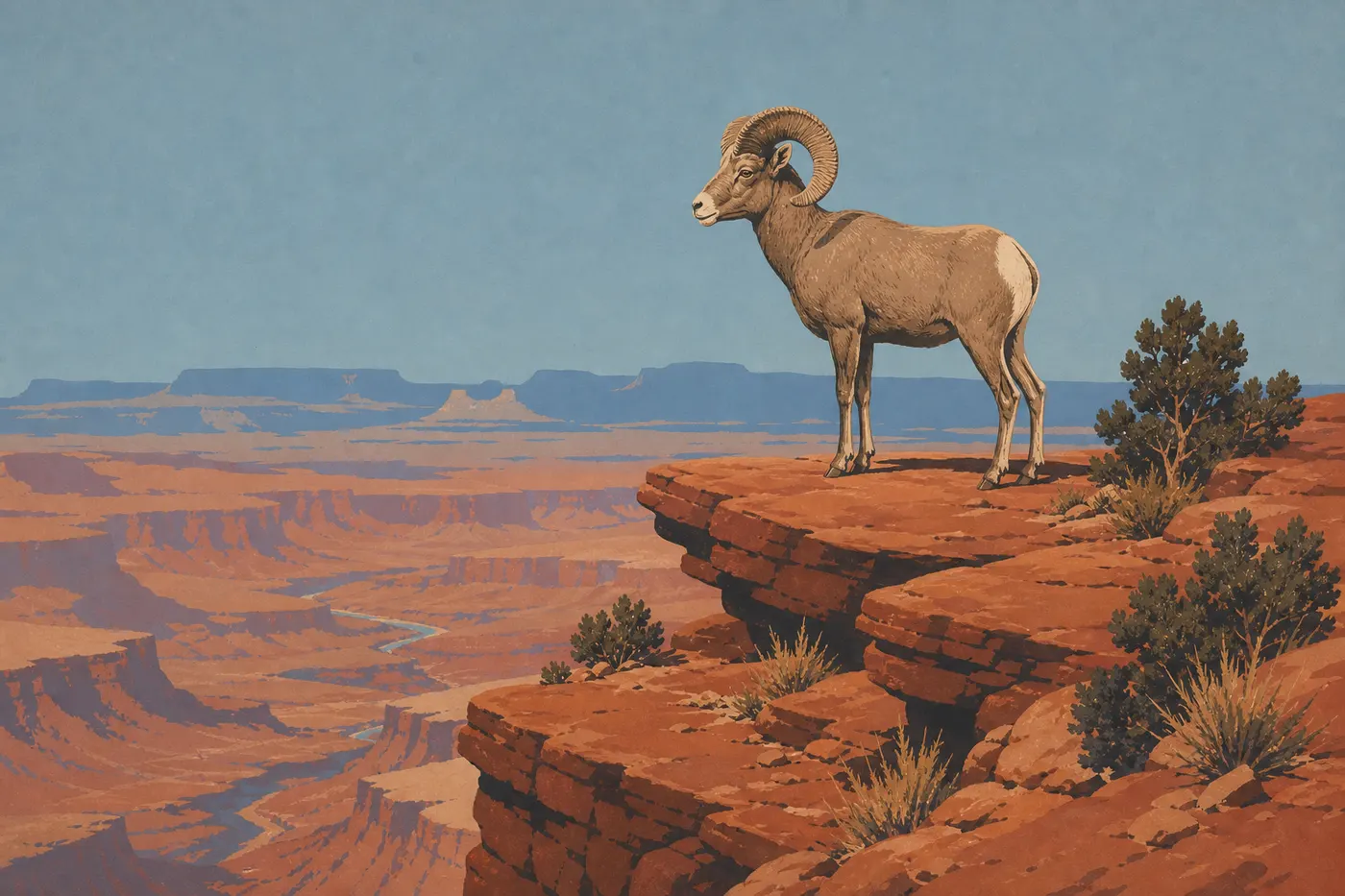
Desert bighorn sheep (Ovis canadensis nelsoni) are the park's signature species. Males are recognizable by their massive spiral horns, which can weigh more than 22 pounds on their own. Females have small, slightly curved horns and are noticeably smaller. What makes this species special is its split hoof, with a soft central pad that lets it move across nearly vertical walls with seemingly no effort.
You'll mostly see them in The Needles district and along the cliffs bordering the two rivers. Early in the morning, they head down toward springs and pools. Around midday, they rest beneath overhangs. During an April visit to The Needles, I came across a group of seven less than 165 feet from the trail, completely indifferent to our presence. Spring and fall are still the best times to look.
Mule Deer
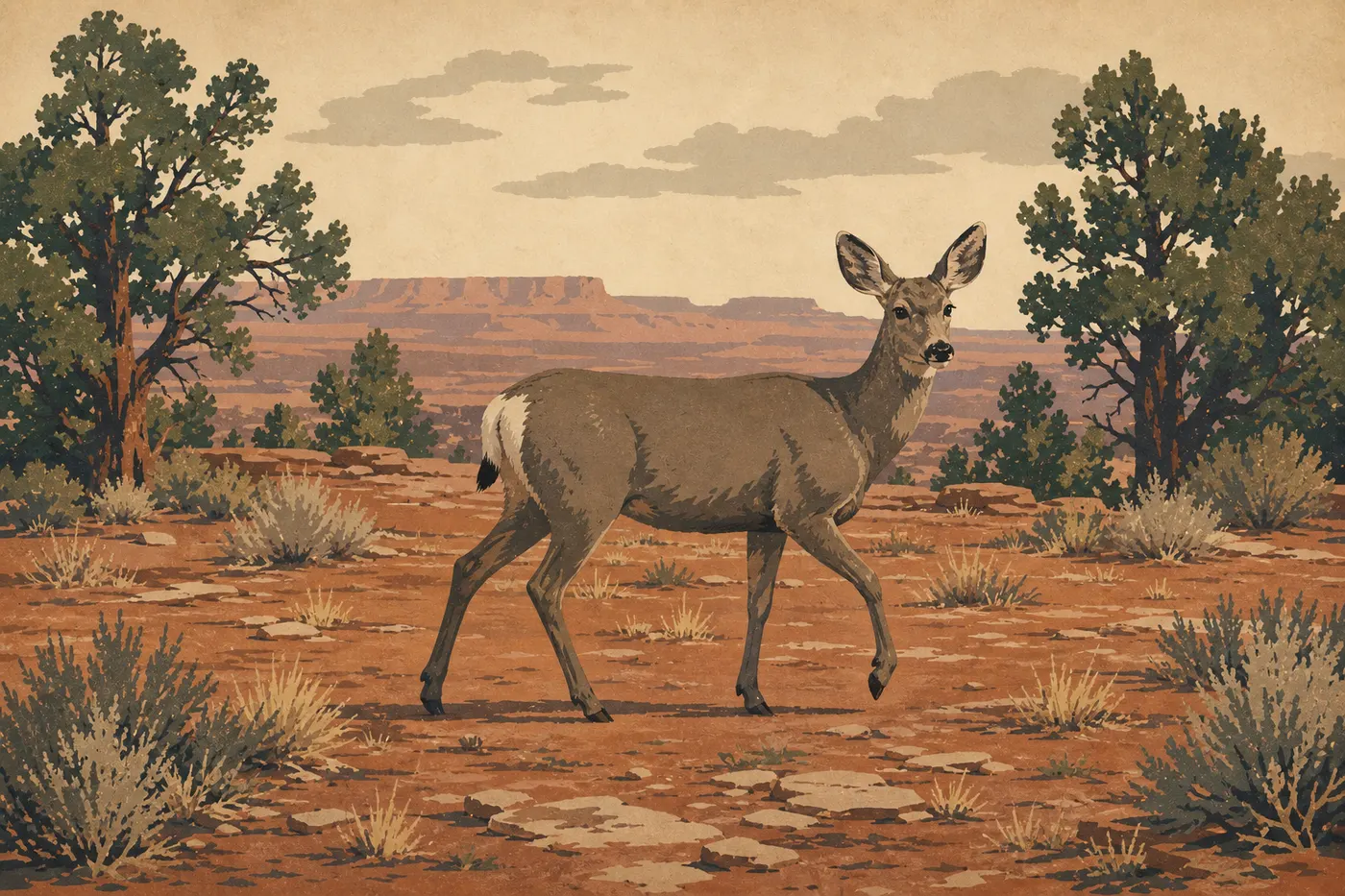
Mule deer (Odocoileus hemionus) are the park's most common animal. Their name comes from their oversized ears, much larger than those of white-tailed deer, which give them a slightly comic look. Their coat ranges from reddish brown in summer to gray-beige in winter. Males grow velvet-covered antlers from May through August, then shed them after the October-November rut.
You'll find them in every district, including near parking areas and picnic areas. Dawn and dusk are the best times to look. That's when they leave shaded cover to graze. If you come across a doe with fawns in spring, keep at least 100 feet away. She may charge if she feels cornered.
Coyote
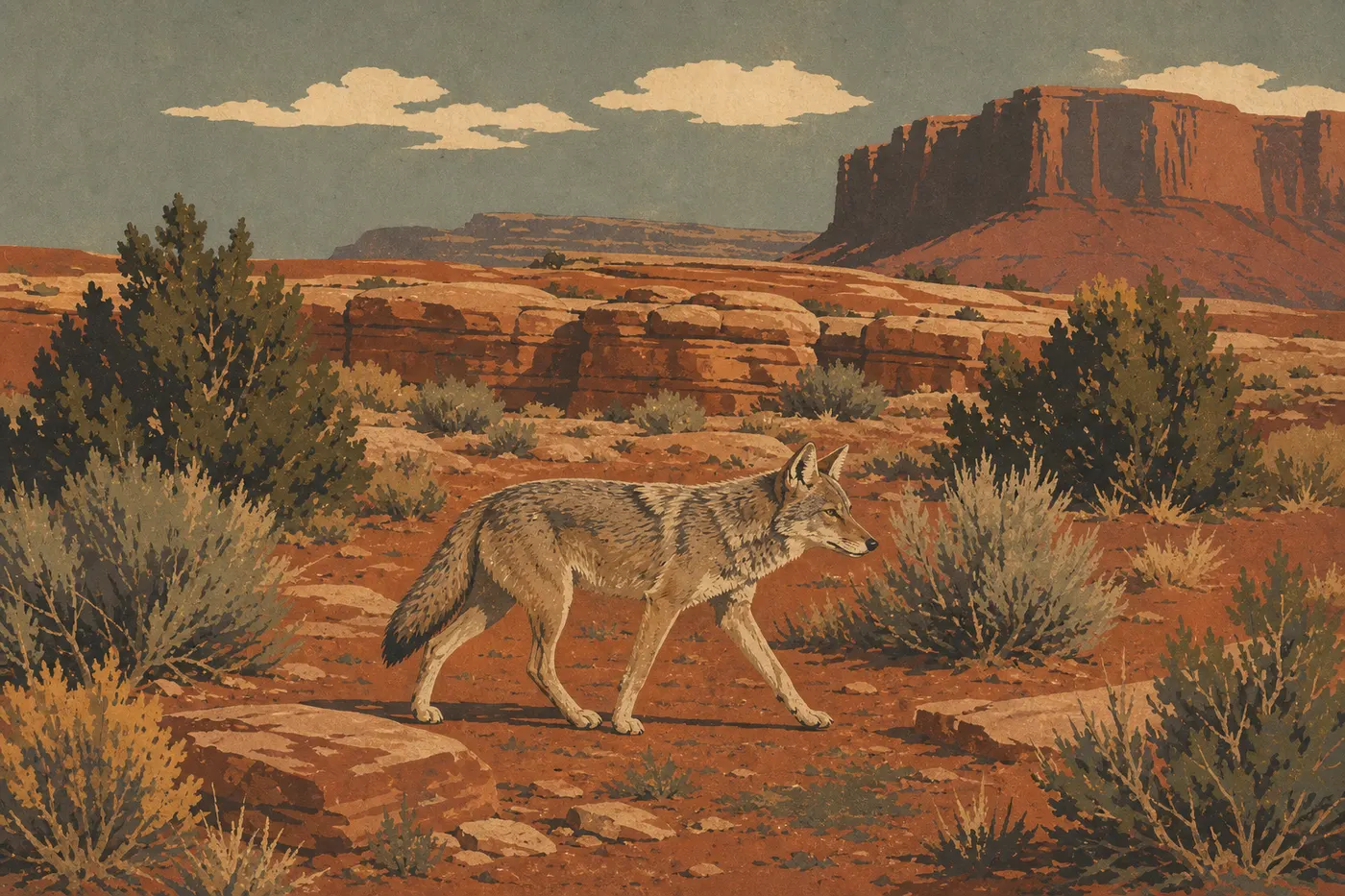
The coyote (Canis latrans) is the generalist predator of the American West. Slenderer than a wolf, it looks like a lean German shepherd, with a pointed muzzle and a low-held tail when running. Its role in Canyonlands National Park is essential. It keeps populations of rabbits, rodents, lizards, and scavengers in check.
There are no wolves or red foxes in this part of Utah. If you see a wild canine in the park, it's a coyote. You often hear it before you see it. Its howls at sunset are one of the defining soundtracks of nights in the desert. In daylight, it's most active at dawn and late in the day. Never feed it. A coyote that gets used to people will eventually be euthanized.
Peregrine Falcon
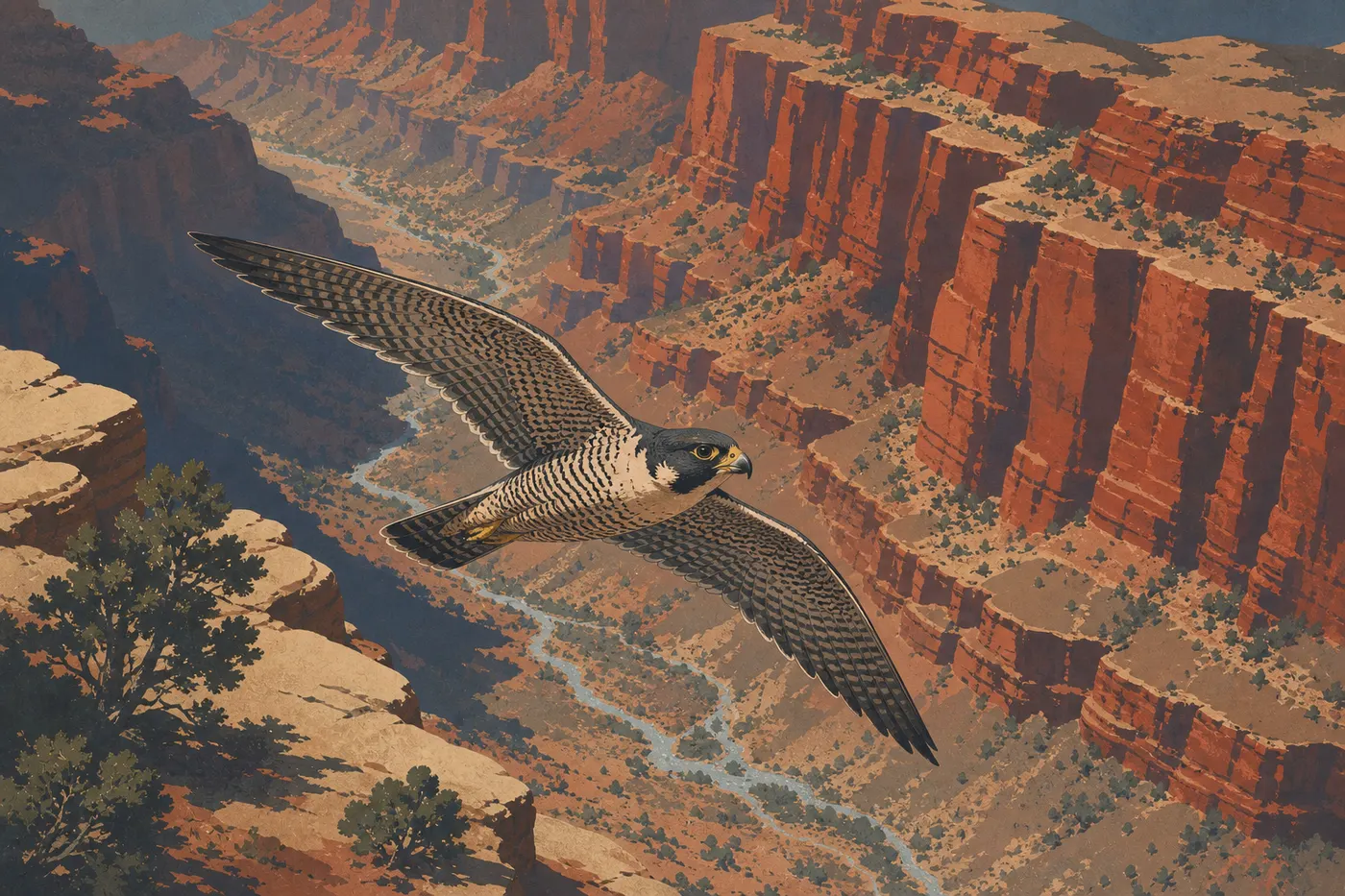
Peregrine falcons (Falco peregrinus) nest on the canyons' sheer cliffs, making Canyonlands National Park prime habitat. Their shape in flight is unmistakable: long, pointed wings, a dark cap contrasting with pale cheeks, and a breast marked with fine stripes. In a dive, they can reach documented speeds of more than 200 mph, making them the fastest birds during an attack.
Once devastated by DDT, their numbers have recovered significantly since the pesticide was banned in the 1970s. From the overlooks in Island in the Sky, scan the high cliffs with binoculars. You may be able to spot nesting ledges, or eyries. The best viewing window runs from March through July, during nesting season.
Common Raven
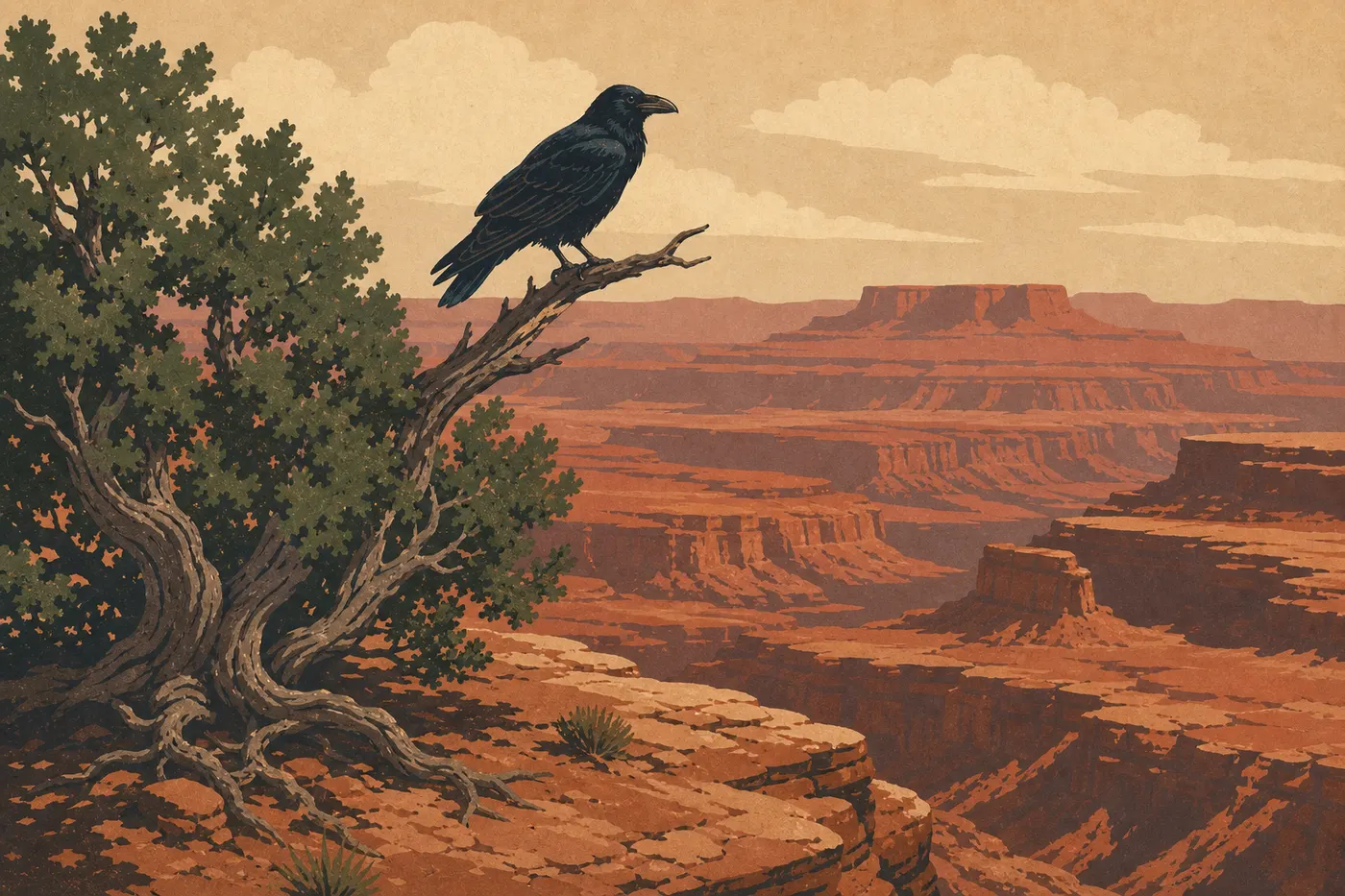
Common ravens (Corvus corax) are often underestimated, and that's a mistake. They're the most widespread birds in the entire park. All black and imposing, reaching up to 26 inches, they glide like raptors, which helps distinguish them from crows and jays at a distance. Their hoarse call is everywhere across the mesas of Island in the Sky.
They'll often follow hikers, hoping to snatch something during a break. Keep your bags closed. Ravens are also useful wildlife indicators. Several circling over the same area often signal a carcass or injured animal nearby.
Where to See Wildlife in Canyonlands National Park
The park is divided into three districts, and wildlife-watching opportunities vary by area.
Island in the Sky is the most accessible district from Moab, about 40 minutes away via UT 313. Overlooks above the Green River and the Colorado River offer views where bighorn sheep and mule deer regularly appear on exposed slopes. Raptors, including peregrine falcons, golden eagles, and turkey vultures, ride thermals throughout the day.
The Needles is wilder and far less visited. This is where bighorn sheep sightings are most common, especially along the Chesler Park and the Joint Trail. The Utah prairie dog (Cynomys parvidens), an endemic species listed as vulnerable, digs burrows in the area's open grasslands.
The riverbanks of the Green River and the Colorado River concentrate wildlife in the early morning. Great blue herons, kingfishers, and, for the lucky few, river otters use these wetlands. You can reach them only by boat or after several days of hiking. The Canyonlands hiking guide details the routes that let you get close to them.
When to Watch Wildlife
Dawn and dusk are always the best times, whatever the season. In the middle of the day, heat drives most mammals into the shade beneath overhangs.
Spring (April-May) is the most active season. Females give birth, birds nest, and reptiles emerge from brumation. Daytime temperatures stay comfortable, ranging from 59 to 79°F.
Summer (June-August) brings days that often top 100°F. Wildlife comes out very early, before 8 a.m., and again in the late afternoon, after 6 p.m. Reptiles are then fully active at night.
Fall (mid-September through October) is the second major viewing window. The mule deer rut makes males more visible and vocal in October. Temperatures have returned to ideal levels.
Winter (December-March) sends bighorn sheep down to less exposed elevations, sometimes very close to roads. Human visitation drops sharply, which makes wildlife watching easier. For a detailed season-by-season look, the Canyonlands trip-planning guide covers all the climate factors.
Nocturnal animals deserve a separate mention. Mountain lions hunt mostly at night. Scorpions are nocturnal too. A headlamp is essential as soon as darkness falls.
Predators and Large Animals in Canyonlands National Park
The largest mammal regularly seen in the park is the mule deer. Adult males can reach 330 pounds. But the predator that shapes the ecosystem is the mountain lion (Puma concolor). You'll rarely see one. It's elusive, active at dusk and night, and deliberately avoids busy areas. Still, the NPS regularly records tracks throughout the park. The prints are round, lack claw marks, and are about the size of a palm.
Are there bears in Canyonlands National Park? No. Black bears (Ursus americanus) live in some of Utah's wooded mountain ranges, but Canyonlands National Park isn't part of their usual range. Visitors arriving with bear-country habits can leave their bear canister in Moab.
The golden eagle (Aquila chrysaetos) rounds out the list of notable predators. It's a formidable hunter that can take young bighorn sheep. The peregrine falcon, described above, is the other hunting raptor to watch for.
How to Watch Wildlife Safely
The rules are simple and nonnegotiable.
Keep your distance. Stay 100 feet from deer and bighorn sheep. If an animal changes its behavior when you approach, such as standing up, changing direction, or calling, you're too close. Back away immediately. These distances aren't arbitrary. A stressed animal burns energy that can prove fatal during periods of heat or nursing.
Never feed wildlife, including squirrels and begging ravens. Federal regulations prohibit it, and it ultimately condemns the animal.
Reptiles and arthropods. Great Basin rattlesnakes (Crotalus oreganus lutosus) are present from March through October. Never turn over a rock or log with your bare hands. Look before placing your hands on a rock or ledge. Bark scorpions (Centruroides sculpturatus) crawl into shoes, clothing, and sleeping bags. Always shake out your gear before putting it on or going to bed. A sting warrants medical attention, especially for children.
If you encounter a mountain lion. It's extremely rare, but you should know the protocol. Make yourself look big, speak loudly, and don't run. If the animal attacks, fight back.
For broader park safety rules, Canyonlands' general practical information covers every situation.
In Brief: Which Species to Look For and Where
| Species | Best area | Best time |
|---|---|---|
| Desert bighorn sheep | The Needles, river cliffs | Dawn, spring, and fall |
| Mule deer | All districts | Dawn and dusk |
| Coyote | Near campgrounds and roads | Dusk and night |
| Peregrine falcon | Island in the Sky cliffs | March through July |
| Common raven | Across the mesas | All day |
| Mountain lion | Anywhere, but rarely seen | Night |
Our complete Canyonlands guide provides the park's broader context so you can plan your visit around the best wildlife-watching areas.
Frequently Asked Questions
What wild animals live in Canyonlands National Park?
Wildlife in Canyonlands National Park includes desert bighorn sheep, mule deer, coyotes, mountain lions, peregrine falcons, and common ravens. Reptiles are also well represented. Collared lizards, Great Basin rattlesnakes, and bark scorpions are all part of this high-desert ecosystem.
What is the most common animal in Canyonlands National Park?
Mule deer are the animals you're most likely to see, in nearly every area and in every season. Among birds, common ravens are everywhere around the mesas and overlooks.
Are there bears in Canyonlands National Park, Utah?
No. Black bears aren't established in Canyonlands National Park. Their Utah habitat is concentrated in the state's wooded interior mountain ranges. You don't need any bear-specific precautions, such as a canister or a food-hanging rope, in this park.
Are there scorpions in Canyonlands National Park?
Yes. Bark scorpions (Centruroides sculpturatus) live throughout the park. They're nocturnal and easily crawl into shoes, clothing, and sleeping bags. Always shake out your gear before putting it on or going to bed. A sting is painful and warrants medical attention if the reaction is severe or the victim is a child.
What is the largest animal in Canyonlands National Park?
Adult mule deer are the largest mammals regularly seen in the park, with males reaching up to 330 pounds. Mountain lions, although very rarely seen, are similarly built.
What predators live in Canyonlands National Park?
The mountain lion is the park's only large land predator. Coyotes hunt rabbits, rodents, and reptiles. Among raptors, golden eagles and peregrine falcons hunt mammals and birds in flight, respectively.
What animals are out at night in Canyonlands National Park?
Mountain lions and coyotes are the most active mammals at night. Scorpions and some reptiles also come out after sunset in summer, taking advantage of the heat radiating from the rocks. A headlamp is essential as soon as darkness falls, both for safety on the trail and for spotting these species.