
Canyonlands Weather: Forecasts, Climate, and Current Conditions
Canyonlands lies on the Colorado Plateau, a high desert where temperatures can swing by more than 72°F between sunrise and midafternoon. That's not an exaggeration. It's the norm, no matter the season. Always check the forecast before heading out. In short, spring (April-May) and fall (mid-September-October) offer the safest and most comfortable conditions. Summer requires constant attention to the heat, while winter calls for extra care with cold and road conditions.
Current readings are unavailable. See the seasonal averages farther down this page.
Open-Meteo readings · updating… · park time zone
Canyonlands Climate Month by Month
The table below shows approximate climate normals for the Island in the Sky district, the most visited area, at about 5,900 feet in elevation. The Needles and The Maze districts have similar figures. Canyon bottoms can be several degrees warmer in summer.
| Month | High (°F) | Low (°F) | Precip. (in.) |
|---|---|---|---|
| January | 41 | 16 | 0.6 |
| February | 48 | 19 | 0.6 |
| March | 57 | 27 | 0.7 |
| April | 68 | 37 | 0.6 |
| May | 79 | 46 | 0.5 |
| June | 91 | 57 | 0.4 |
| July | 99 | 64 | 0.9 |
| August | 95 | 63 | 1.1 |
| September | 82 | 52 | 0.8 |
| October | 68 | 37 | 0.7 |
| November | 52 | 23 | 0.5 |
| December | 41 | 16 | 0.6 |
Approximate climate normals. The July-August precipitation peak corresponds to the Southwest monsoon.
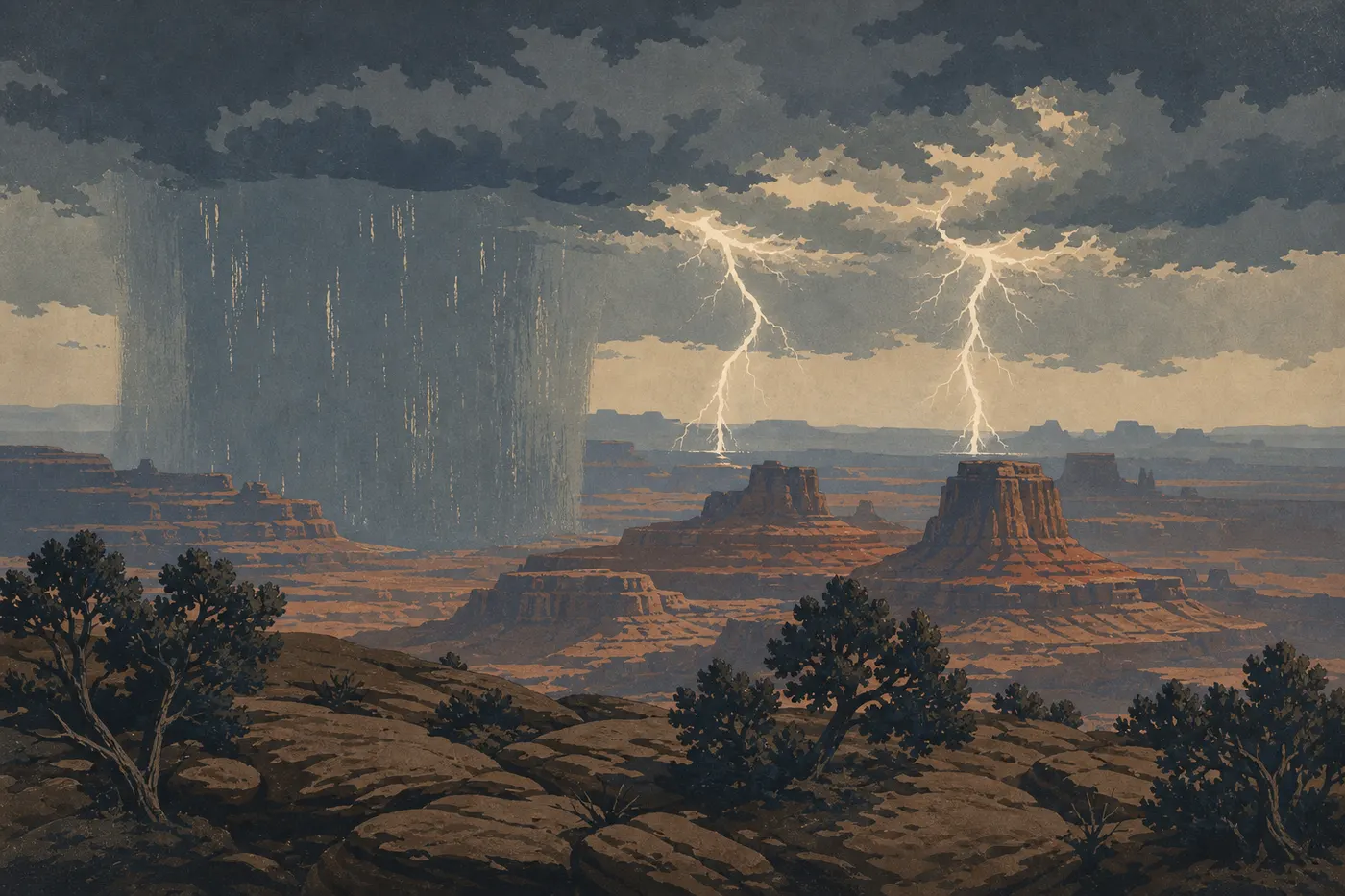
One thing stands out right away: July and August are both the hottest and wettest months. The monsoon doesn't bring a light, steady rain. It sends powerful thunderstorms, often in the late afternoon, with a risk of flash flooding in the canyons.
Is Canyonlands Cold or Hot? Records and Extremes
Both, sometimes on the same day. In winter, a canyon bottom can stay below 32°F all day while a sunlit plateau reaches 50°F just a few hundred feet higher. In summer, temperatures regularly exceed 100°F on the mesas and can approach 109°F to 113°F in narrow canyons that trap heat radiating from the red rock.
Yes, it snows in Canyonlands. Snow falls on the plateaus every winter, rarely for more than a week at a time, but long enough to make clay soils icy and roads impassable.
The 40°F daily temperature swing is the most useful figure to remember. No matter the season, always pack extra layers.
What to Wear and Pack by Season
The principle is the same year-round: use a layering system.
Spring and fall: a windbreaker and light fleece for the morning, a T-shirt during the day, and extra layers after 5 p.m. A light waterproof jacket is essential for spring thunderstorms.
Summer: lightweight, light-colored clothing, a wide-brimmed hat, and SPF 50 sunscreen at a minimum. Bring at least 4 liters of water per person for a half day of hiking in hot weather. Rangers repeat the rule of 1.5 liters per hour of exertion once temperatures reach 86°F.
Winter: thermal layers made of merino wool or synthetic fabric, an insulated jacket, gloves, and a warm hat. For camping from October through March, a four-season sleeping bag is the minimum. A three-season bag isn't enough at night.
Year-round, wear hiking shoes with stiff soles. Slickrock, or smooth sandstone slabs, becomes treacherous when wet.
Alerts and Conditions to Watch
Flash floods: the main risk from April through September. Rain 12 miles upstream can send a muddy surge through a canyon within minutes. Before any canyon descent or hike in a canyon bottom, check thunderstorm alerts on weather.gov and review the real-time conditions posted at the park entrance.
Road closures: White Rim Road, Elephant Hill, and Lavender Canyon can close without warning after heavy rain, often for 24 to 72 hours. Check the official park website's “Road Conditions” before every outing.
Wind and dust: spring is the windiest season. Gusts over 50 mph are possible on the mesas. Sunglasses and a dust mask come in handy on very windy days.
Heat and dehydration: the leading cause of rescues in the park during summer. Don't underestimate the dry air. You sweat without realizing it, and dehydration sets in quietly.
Frequently Asked Questions
Does it snow in Canyonlands?
Yes. Canyonlands gets snow every winter, mainly from December through February. It rarely stays for more than a week on the sunny plateaus, but it turns dirt roads into slippery ruts for 24 to 72 hours and can lead to temporary closures of unpaved roads.
What's the climate like in Utah?
Utah's climate varies widely by elevation and region. Canyonlands is a high desert on the Colorado Plateau, with hot summers that often exceed 100°F, cold winters with nighttime temperatures below 14°F, mild spring and fall days ranging from 59°F to 81°F, low annual precipitation, and large daily temperature swings.
When is the rainy season in Canyonlands?
The wettest period in Canyonlands is the Southwest monsoon, from mid-July through late August. It brings powerful late-afternoon thunderstorms and a risk of flash flooding in the canyons. The rest of the year is relatively dry, with precipitation spread fairly evenly across the months.
How much is admission to Canyonlands National Park?
Admission costs $30 per private vehicle, $25 for a motorcycle, and $15 per person entering on foot or by bicycle. An annual pass for the park costs $55. The America the Beautiful Pass costs $80 per year, covers all U.S. federal recreation sites, and pays for itself after two parks in a year. For admission fees and annual passes, see the National Parks Fees & Passes page.
What should I wear to visit Canyonlands?
Use a layering system year-round when visiting Canyonlands: a windbreaker and fleece for cool mornings, plus a T-shirt for the day. In summer, a wide-brimmed hat and at least 4 liters of water per half day of hiking are essential. In winter, bring thermal layers and a four-season sleeping bag if you're camping. In every season, choose shoes with stiff soles. Wet slickrock is slippery.