
When to Visit Canyonlands: Best Seasons, Weather, and Timing
The best times to visit Canyonlands are April, May, and October, when daytime temperatures are ideal for hiking in all three districts (59 to 81°F), the light on the red mesas is especially beautiful, and crowds remain manageable. Summer is scorching, with temperatures regularly topping 99°F, making hikes strenuous. Winter works if you're looking for solitude, but temperatures on the plateaus drop below 16°F at night, and some 4WD roads close because of ice.
Canyonlands Weather Month by Month
Canyonlands lies on the Colorado Plateau, a high desert with dramatic temperature swings. The difference between morning and afternoon can reach 40°F in a single day. Our Canyonlands Weather page breaks down the forecast hour by hour and includes an interactive widget.
| Month | High | Low | Precip. | What to expect |
|---|---|---|---|---|
| January | 45°F | 23°F | 13 mm | Bitterly cold, possible snow, virtually no crowds |
| February | 52°F | 27°F | 14 mm | Longer days, roads sometimes muddy |
| March | 61°F | 34°F | 17 mm | Season gets underway, strong winds on the plateaus |
| April | 72°F | 43°F | 15 mm | Ideal conditions, beautiful light |
| May | 81°F | 52°F | 12 mm | Peak season, beautiful evening light |
| June | 93°F | 63°F | 8 mm | Hot, hit the trail before 7 a.m. |
| July | 99°F | 70°F | 20 mm | Monsoon storms, extreme heat |
| August | 95°F | 68°F | 24 mm | Active monsoon, possible flash floods |
| September | 84°F | 55°F | 18 mm | Gradual change, still hot during the day |
| October | 70°F | 41°F | 18 mm | Ideal, exceptional fall light |
| November | 55°F | 30°F | 13 mm | Quiet and beautiful, cold evenings |
| December | 45°F | 21°F | 15 mm | Winter conditions, possible snow on the plateaus |
Approximate averages, from Open-Meteo.
Canyonlands in January
Days are cold, with temperatures around 41 to 45°F at midday, and freezing nights regularly fall below 16°F on the plateaus. Island in the Sky is usually accessible by car, but the Maze's 4WD roads often close because of ice or packed snow. Crowds are virtually nonexistent, so you may have the overlooks to yourself. January's low, slanting light late in the afternoon produces rare images that few visitors ever see.
Canyonlands in February
Days get longer and temperatures start to rise, reaching around 50 to 52°F at noon, but springlike comfort is still a long way off. Nights remain cold, around 23°F, and dirt roads can turn muddy after the snow melts. Visitor numbers are very low, making this a good time for well-equipped hikers who value solitude. Bring thermal layers and check road conditions on the NPS website before you head out.
Canyonlands in March
March marks the start of the main season, with pleasant daytime temperatures around 57 to 61°F and nights still cool, near 32°F. Wind can blow hard across Island in the Sky, making exposed hikes less comfortable. Visitation gradually picks up, especially on weekends in mid-March. The campgrounds in The Needles reopen for the season.
Canyonlands in April
Conditions are ideal, with temperatures ranging from 43 to 72°F, generally clear skies, and beautiful light on the red mesas. All three districts are accessible, wildflowers cover some slopes in The Needles, and trails are in excellent shape. Weekends are busy, so arrive early to secure parking at Grand View Point. Book a place to stay in Moab several weeks ahead.
Canyonlands in May
This is the park's busiest month. Everything lines up, with temperatures from 52 to 81°F, trails in excellent condition, and long days that let you stay out in golden light well into the evening. The park campgrounds, including Willow Flat and Squaw Flat, fill up on weekends. Aim for a weekday visit. Nights are still cool, so a fleece layer is essential for late sunsets.
Canyonlands in June
The heat settles in seriously, with daytime temperatures around 91 to 93°F, and exposed hikes become dangerous without enough water. Start before 7 a.m., or stick to overlooks and short morning walks. Visitation remains strong but drops slightly from May. June is still a good time for backcountry travel if you plan your water carefully. Most areas of the park have no reliable water source.
Canyonlands in July
July is the park's hottest month, with daytime temperatures around 99°F, and the month brings the greatest risks. The Southwest monsoon sends powerful storms through in the late afternoon, causing flash floods in the canyons. Check NPS advisories before any hike in a low-lying area or narrow canyon. Collared lizards and rattlesnakes are very active, so watch where you put your hands during scrambles. Visit Island in the Sky early in the morning, ideally from a campground in the park.
Canyonlands in August
August is slightly cooler than July, around 95°F, but the monsoon peaks. Rainfall is at its highest for the year, and flash floods are most frequent. The park remains open, but use caution in canyons and all low-lying areas. From the Island in the Sky overlooks, lightning over the mesas late in the day can make spectacular photographs. Crowds are lighter than in May, and some campgrounds still have spaces.
Canyonlands in September
The season gradually turns, with daytime temperatures dropping toward 82 to 84°F and the monsoon easing. Mid-September marks the start of the park's second ideal window. It's a good compromise between lingering early-month heat and a sharp drop in visitation compared with summer. The Needles takes on its warm light again, making this a good time to plan the Chesler Park Loop.
Canyonlands in October
October is the favorite month for landscape photographers, with warm light, red-orange canyons, deep blue skies, and ideal temperatures around 41 to 70°F. All services are open. Visitation rises in October but remains below the May peak. Nights get much colder, which is perfect for stargazing. Canyonlands is an International Dark Sky Park, and October, outside monsoon season, offers some of the best nights under the stars.
Canyonlands in November
November is quiet and beautiful, with highs from 52 to 55°F and already-cold nights around 23 to 30°F. Crowds drop sharply after mid-November. It's an ideal time for well-equipped hikers who want an almost empty park. Some secondary facilities, such as satellite kiosks and district shuttles, reduce their hours or close toward the end of the month.
Canyonlands in December
Winter settles in, with highs no warmer than 41 to 45°F and nights dropping below 16 to 21°F. Snow may fall on the plateaus, creating rare landscapes that few people photograph. Island in the Sky is usually accessible by car, but check road conditions before driving to The Maze. Solitude is virtually guaranteed, and the low midday light is especially beautiful on snow-covered canyons.
Canyonlands Season by Season
Winter (December-February)
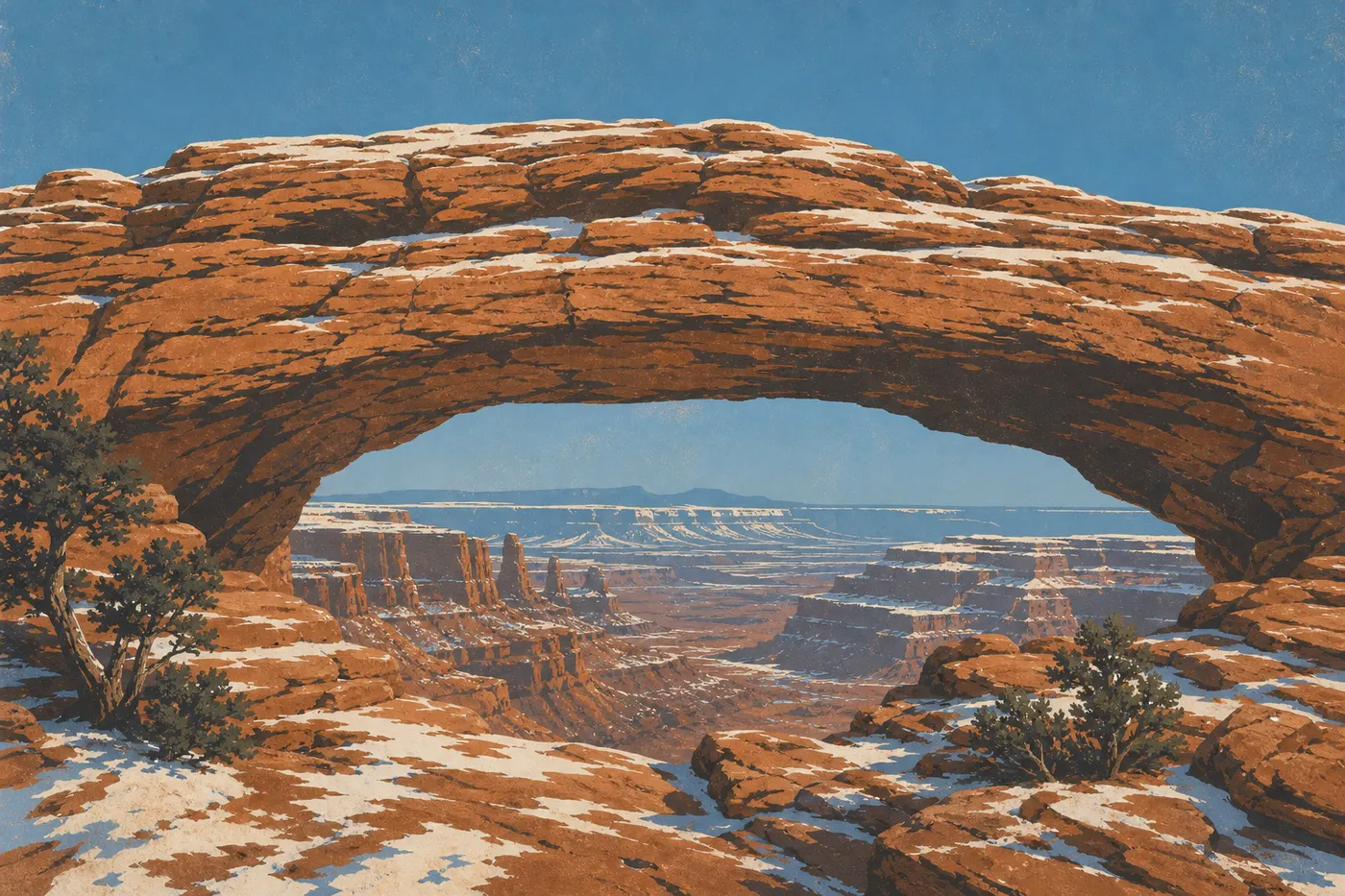
The park is nearly empty and almost Zen-like. Daytime temperatures range from 30 to 50°F, while nights can drop to 0°F on the plateaus. Access to Island in the Sky usually remains open, but 4WD roads in The Maze district regularly close because of ice or snow.
Wildlife stays out of sight. Mule deer and some rodents remain active in good weather. This is an ideal time for photographers who want empty canyons and especially flattering low light late in the afternoon. Bring substantial thermal layers and check road conditions on the NPS website before setting out.
Spring (March-May)
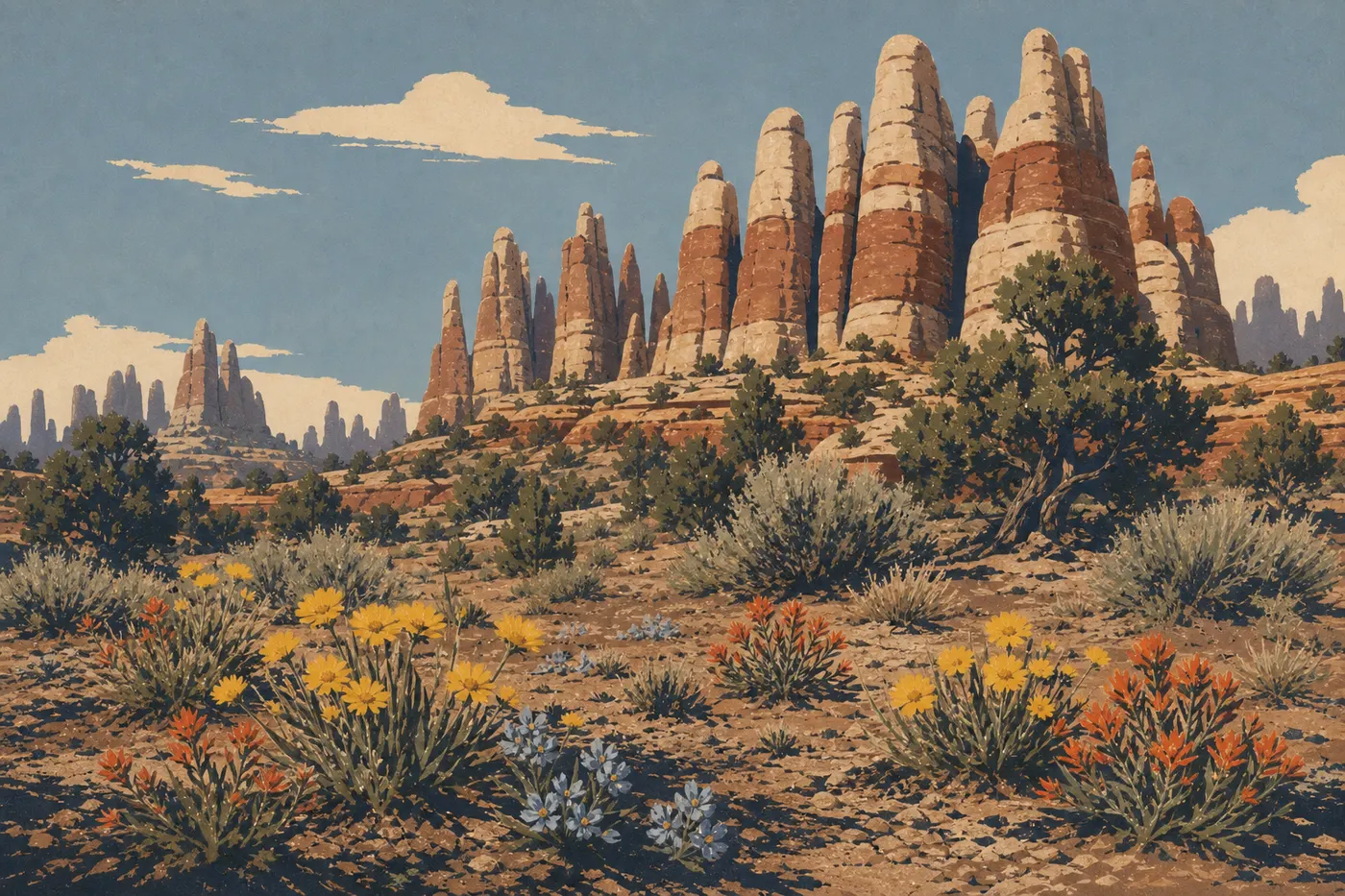
This is the park's signature season. April and May bring everything you could want: pleasant daytime temperatures from 59 to 81°F, generally clear skies, and accessible trails in all three districts. Wildflowers cover some slopes in April, especially in The Needles area.
Visitation rises sharply in May, particularly on weekends. If you're traveling with family or looking for peace and quiet, choose a weekday. Watch for wind in March. It can blow hard across Island in the Sky and make exposed hikes less comfortable. Nights remain cool, around 30 to 43°F, so a fleece layer in your pack is essential.
Summer (June-August)
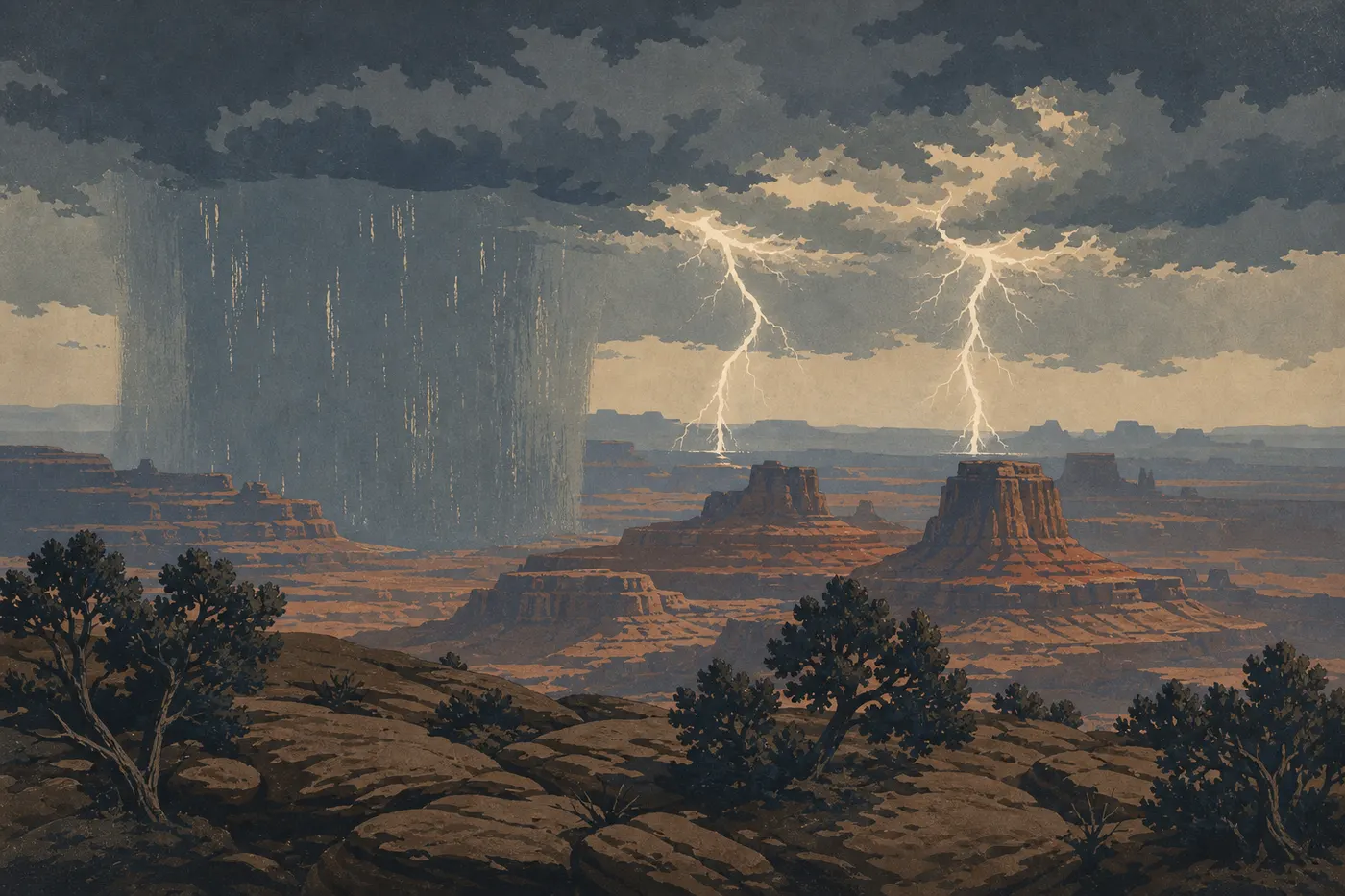
Summer in Canyonlands means starting at dawn. Daytime temperatures often climb above 100°F, and exposed hikes become dangerous without enough water. The NPS recommends at least 1 liter of water per hour of exertion. Dehydration and heatstroke are real risks, not just a line in a brochure.
July and August bring the Southwest monsoon. Powerful storms break out in the late afternoon, causing flash floods in the canyons. Floods can happen even when you can't see rain from where you are. Check the NPS weather advisories before descending into any canyon or hiking in a low-lying area. Collared lizards and rattlesnakes are active in summer, so watch where you put your hands during scrambles.
Fall (mid-September-November)
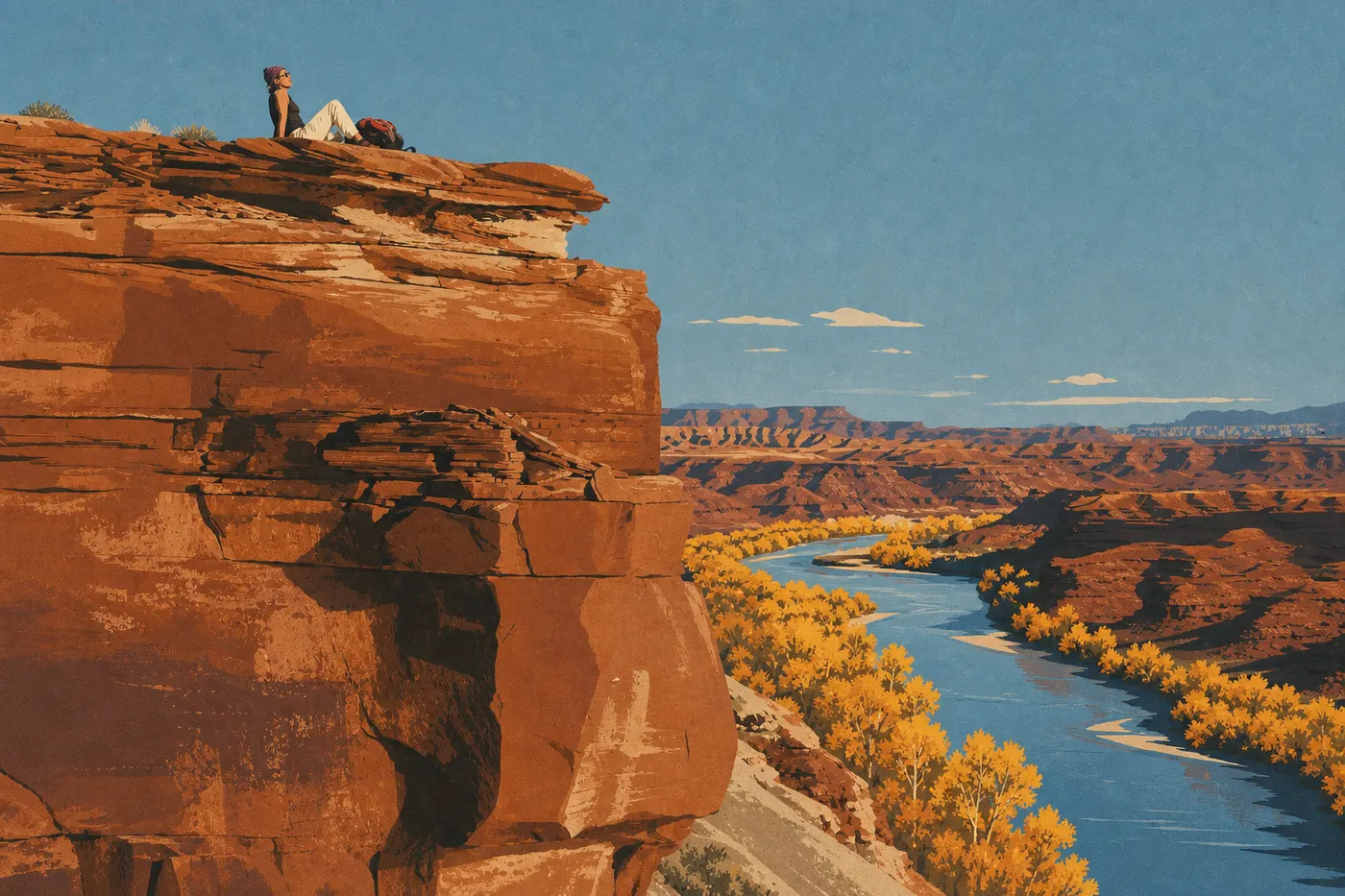
This is the second major window. From mid-September through October, moderate heat around 64 to 84°F, golden light, and sharply lower visitation make for excellent conditions. The Needles is particularly striking in October light. November cools down quickly but remains very manageable for well-equipped hikers.
This is also when nocturnal species such as coyotes and mountain lions become more active before winter. Fall skies are less crowded with clouds than during monsoon season, creating exceptional conditions for stargazing. Canyonlands holds International Dark Sky Park status, with officially protected night skies.
Crowds: When to Avoid the Rush
Canyonlands is still less crowded than neighboring Arches National Park, but pressure increases every year. Here's how visitation breaks down:
| Month | Crowds | Recommendation |
|---|---|---|
| January-February | Very low | Ideal for solitude |
| March | Moderate and rising | Weekdays recommended |
| April-May | High | Book your Moab lodging well ahead |
| June | Heavy | Hit the trails before 7 a.m. |
| July-August | Heavy | Choose shaded areas and morning outings |
| September | Easing | Good balance of heat and crowds |
| October | Moderate to high | The sweet spot |
| November-December | Low | Peace and quiet guaranteed |
The parking lot at Grand View Point Overlook in Island in the Sky fills up by 9 a.m. on some April and May weekends. Leaving before dawn from Moab or your campground gives you the best of everything: cooler temperatures, better light, and easy parking.
Reservations and Access by Season
The good news is that Canyonlands doesn't require a mandatory entry reservation, unlike nearby Arches National Park, which requires a paid timed entry reservation in spring and summer. You can enter directly through the entrance stations 24 hours a day, year-round. Admission costs $30 per vehicle or $15 per person on foot or by bicycle. The America the Beautiful Pass costs $80, covers all federal recreation sites for one year, and pays for itself after just two parks.
Backcountry roads in The Maze do require a permit, which you need to reserve in advance through Recreation.gov. Our guide to reaching each Canyonlands district explains the process for each district and the type of vehicle you'll need.
The Best Time to Visit on a Budget
Prices in Moab, the park's only real base town, closely track visitation.
Winter (December-February): Hotels and motels offer their lowest rates, sometimes 30 to 50% below peak-season prices. Some properties partially close in January, so check before booking.
Spring (March-May): Prices rise gradually. In April and May, lodging and park campgrounds, including Willow Flat in Island in the Sky and The Needles Campground, fill up several weeks ahead. Book early.
Summer (June-August): Rates stay high despite the heat, driven by American families on school vacation. This is one of the few times when some campgrounds still have last-minute availability.
Fall (September-November): Prices remain high in October, though below the May peak. November brings a clear drop. Our guide to where to stay around Canyonlands compares options by season, from rustic camping to Moab lodges.
The Best Time for Your Interests
Hiking and trekking: April-May or October. The major loops in The Needles, including Chesler Park and the Joint Trail, are comfortable without the heat. Avoid prolonged exertion in summer. Our Canyonlands hiking guide breaks down trails by difficulty and season.
Wildlife: Spring for newborns, pronghorns, mule deer, and migrating birds. Fall for nocturnal predators and rutting deer. Our Canyonlands wildlife guide lists the species you may see month by month.
Photography: October remains the favorite month for landscape photographers, with warm light, red-orange canyons, and deep blue skies. In winter, snow on the mesas creates rare contrasts that few people photograph.
Families with children: May or October. Temperatures are manageable, days are long, and starting early helps prevent heat-related illness. Our Canyonlands family guide lists age-appropriate activities.
Tight budget: January-February for the lowest lodging rates and a nearly empty park. Good winter gear is all you need to enjoy the area fully.
Stargazing: Fall and winter, preferably around the new moon. The best viewing spots are in Island in the Sky, away from Moab's lights. Dark Sky Park certification means the night sky is officially protected.
In Summary: The Best Time for Your Interests
| Interest | Best time |
|---|---|
| Hiking and trails | April-May · October |
| Families | May · October |
| Photography | October · Winter (snow) |
| Wildlife | Spring (newborns) · Fall (predators) |
| Stargazing | Fall-winter, new moon |
| Tight budget | January-February |
| Complete solitude | December-January |
If you can choose only one window, October checks nearly every box: ideal weather, exceptional light, fewer crowds, and lodging availability. To plan your complete trip, our Canyonlands guide brings together every section of the park.
The Worst Time to Visit Canyonlands
July and August concentrate the drawbacks: extreme heat around 95 to 99°F during the day, flash flood danger from the Southwest monsoon, and a constant need to monitor hydration. The NPS recommends at least 1 liter of water per hour of exertion, which limits long hikes to the first hours of the morning. Narrow canyons in The Maze and The Needles can turn distant rain into a flash flood with no warning visible from where you are.
June completes this difficult stretch. Heat is already approaching 91 to 93°F, and storms begin forming in the late afternoon. These three months still work for experienced photographers chasing monsoon light from safe viewpoints, or travelers who can't change their dates, as long as they keep hikes to the early morning. For everyone else, choose April-May or September-October.
Frequently Asked Questions
When is the best time to visit Canyonlands?
The best time to visit Canyonlands National Park is spring, from April through May, and fall, from mid-September through October. Daytime temperatures range from 59 to 81°F, trails are accessible in all three districts, and crowds remain manageable.
Is the park open year-round?
Yes. Canyonlands is open 24 hours a day, year-round, with no mandatory timed entry reservation or seasonal closure. The Island in the Sky district remains accessible by car in winter, but 4WD roads in The Maze may close temporarily because of ice or snow. Check road conditions on the NPS website before setting out in winter or after heavy rain.
Can you visit Canyonlands in winter?
Yes, and it's a good choice for travelers seeking solitude and unusual landscapes. Daytime temperatures stay above freezing, around 41 to 52°F, and Island in the Sky trails are often passable. Nights drop below 16°F on the plateaus, so proper thermal gear is essential. Some backcountry roads remain closed because of ice.
When is the best time to visit Utah?
Spring and fall are the best seasons for the Colorado Plateau parks, including Canyonlands, Arches, Zion, and Bryce Canyon. Summer works better at higher elevations. Our regional guides offer planning tips for a multi-park road trip.
When is the best time to visit the American West?
Fall, especially September and October, is the best season for visiting the American West, with moderate heat, fewer visitors, and colorful scenery. Spring, from April through May, offers the same advantages along with wildflowers. Summer still works on the Pacific Coast but is challenging in the inland deserts.
When is the best time to visit Monument Valley?
As with Canyonlands, spring and fall are the best seasons to visit Monument Valley. The two sites fit naturally into a Utah-Arizona road trip, just a few hours apart by car.
How long do you need to visit Canyonlands?
Plan on at least two days to explore Island in the Sky properly, or three to four days if you want to add The Needles district. Our Itinerary & Trip Length page offers detailed plans based on your available time and hiking experience.
How much does a trip to Canyonlands cost?
For entrance fees and annual passes, see the National Parks Fees & Passes page. Lodging and camping costs vary widely by season. Our lodging guide breaks down the options by time of year.