
Solo Travel in the United States: A Guide to Setting Off with Confidence
Which cities to choose, where to stay, how to get around and go out at night: everything you need to know for a safe, comfortable solo trip across the United States.
By Erika Müller · · 11 min read
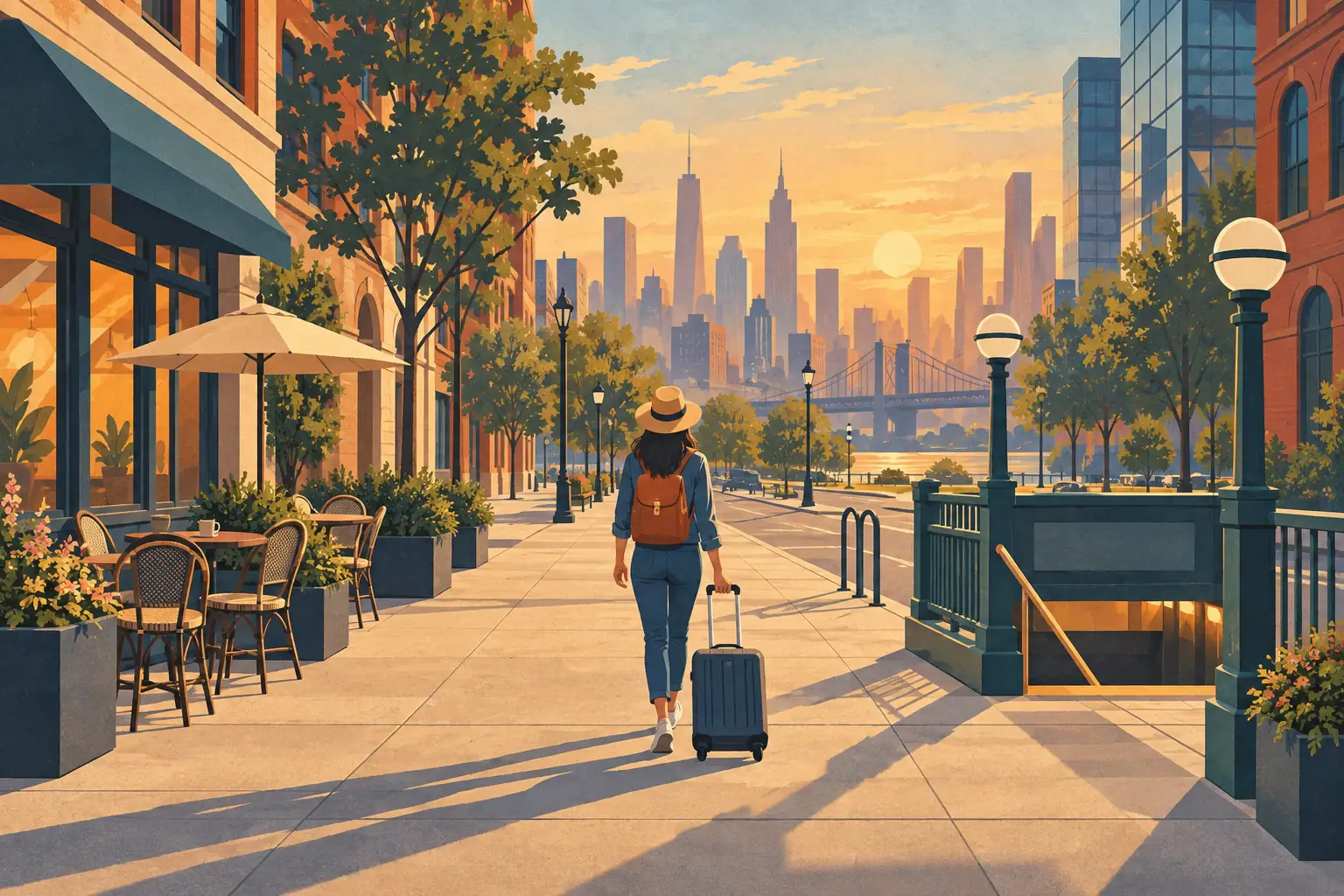
New York at dawn, a steaming coffee in hand; an impromptu concert in New Orleans; a brunch that stretches on in San Francisco because no one is waiting for you anywhere. Solo travel in the United States is first and foremost this: an enormous country, and the luxury of exploring it at your own pace.
It is also one of the easiest destinations for a first big solo trip. You speak at least some of the language already, everything can be booked from your phone, and eating alone at a restaurant counter is completely ordinary. That leaves the practical questions everyone asks before booking: where to go, where to stay, how to get back at night, and how much it costs. We answer them one by one.
The United States, a country made for solo travel
Americans have a "party of one" culture that Europe does not. Asking for a table for one attracts no attention, restaurant counters are made for it, and conversation starts within thirty seconds with the person on the next stool, the barista, or the woman walking her dog. This constant "small talk" has a real benefit for solo travelers: you are never truly isolated, and there is always someone to ask for directions or advice.
When it comes to safety, the country is much like any major Western destination: the overwhelming majority of trips take place without the slightest incident, and the useful precautions are the same ones you already take in Paris, Lyon, or Barcelona. The real difference is scale. Cities are sprawling, distances between neighborhoods are measured in miles, and the atmosphere can change from one block to the next. Feeling at ease therefore comes down mainly to two choices: the neighborhood where you stay and how you get back at night.
Where to go: seven cities that work well for solo travelers
For a first solo trip, choose cities where you can get around without a car. They bring together public transportation, hostels, guided tours, and plenty of chances to meet people.
| City | Why it works for solo travelers | Good to know |
|---|---|---|
| New York | Subway runs all night, everything is walkable, and there are a thousand things to do alone | Accommodation is expensive: book early or stay in Brooklyn or Queens |
| Boston | Compact, full of students, and easy to explore entirely on foot | Harsh winters, so May through October is best |
| Chicago | Elevated trains, architecture, a lake, and beaches in summer | Stick to downtown and the northern neighborhoods |
| San Francisco | Human-scale neighborhoods, streetcars, and a welcoming atmosphere | Avoid the Tenderloin and bring a jacket even in August |
| Seattle and Portland | Cafes, bookstores, nature an hour away, and a very solo-friendly culture | Frequent rain from October through April |
| New Orleans | Music everywhere, unique food, and easy conversation | At night, stay on busy streets and take a rideshare home |
| Washington | Free museums, simple Metro, and a calm tourist center | Little nightlife outside a few neighborhoods |
If New York is the start of your trip, our guides to your first night there and seeing the city in four days will help you avoid rookie mistakes. And if you quickly find yourself craving wide-open spaces, the national parks pair beautifully with one or two of these cities: you will meet plenty of solo female travelers on well-used trails supervised by rangers.
Where to stay: three options to mix and match
Accommodation is the expense that hits solo travelers hardest, since a hotel room costs the same for one person as it does for two. The solution is to alternate among three options throughout the trip.
Hostels. The HI USA network and independent hostels cover all the major cities, with women-only dorms, lockers, and often organized tours or evening events. Expect to pay 40 to 80 dollars per night for a dorm bed, depending on the city. By far, this is the easiest place to find company for the next day.
A well-located hotel. A chance to recharge between dorm stays. Prioritize location over luxury: a simple hotel in a central, lively neighborhood is better than a beautiful room beside a highway. Check that the front desk is open all night and read recent reviews from other solo female travelers.
Staying with a local woman. This is the least familiar option, and perhaps the most rewarding. NomadSister, a network founded in Bordeaux in 2019 under the name La Voyageuse, connects female travelers with women who host them in their homes for free. The platform lists more than 40,000 members in around one hundred countries, and its model rests on three rules: women only, a government-issued ID required at signup for every profile, and an annual membership fee paid by travelers to fund moderation. Stays are designed to be short, ideally one or two nights and no more than four, which works perfectly for a stop in an American city. In return, you get something no hotel can sell: a local who can point you toward the right diner, the streets to avoid, and the bus route tourists never take.
As with any homestay, requests should be prepared in advance: send them three to four weeks before departure, with a complete profile and a personal message. If you like the idea, our comparison of couchsurfing services and their alternatives reviews the other networks, which are mixed-gender this time.
Getting around without stress, day or night
In the seven cities listed above, public transportation is enough during the day. Between cities, Amtrak is comfortable along the East Coast, between Boston, New York, and Washington, while domestic flights take over elsewhere. For long-distance buses, choose daytime trips: bus stations are rarely the most welcoming places at midnight.
At night, rideshares are your best ally. A few habits are all it takes:
- Check the license plate, car model, and driver's photo before getting in, and let the driver say your name instead of giving it to them.
- Share the trip live with someone close to you through the app: both Uber and Lyft offer this feature.
- Wait for the car inside the bar or restaurant, not on the sidewalk.
- In the United States, Lyft offers an option that prioritizes matching female passengers with female drivers. You can turn it on in the app settings.
If your route leaves the cities, you will need a car. Our guide to renting a car in the United States explains the insurance you need. When you are driving alone, two habits make all the difference: fill up as soon as the gauge drops below half and reach your destination before dark.
Going out at night, and truly enjoying it
No one crosses the Atlantic to be in bed by 8 p.m. American evenings start early, which makes things easier: dinner is at 6:30 p.m., concerts start at 8 p.m., and you can enjoy a full evening while still being home before midnight.
Reliable solo options include the counter at a good restaurant, where staff naturally look out for women dining alone; concerts; baseball or basketball games; nighttime guided tours; and events organized by hostels. At a bar, keep your drink in your hand and order it yourself, as you would anywhere else. And never hesitate to say you are waiting for someone or that a friend is joining you: a harmless little lie that politely ends a conversation you do not want.
In the United States, bar and hotel staff take these situations seriously. If something makes you uncomfortable, tell the bartender, doorman, or front desk: they will call you a car and wait with you.
Phone, health, and documents: your safety net
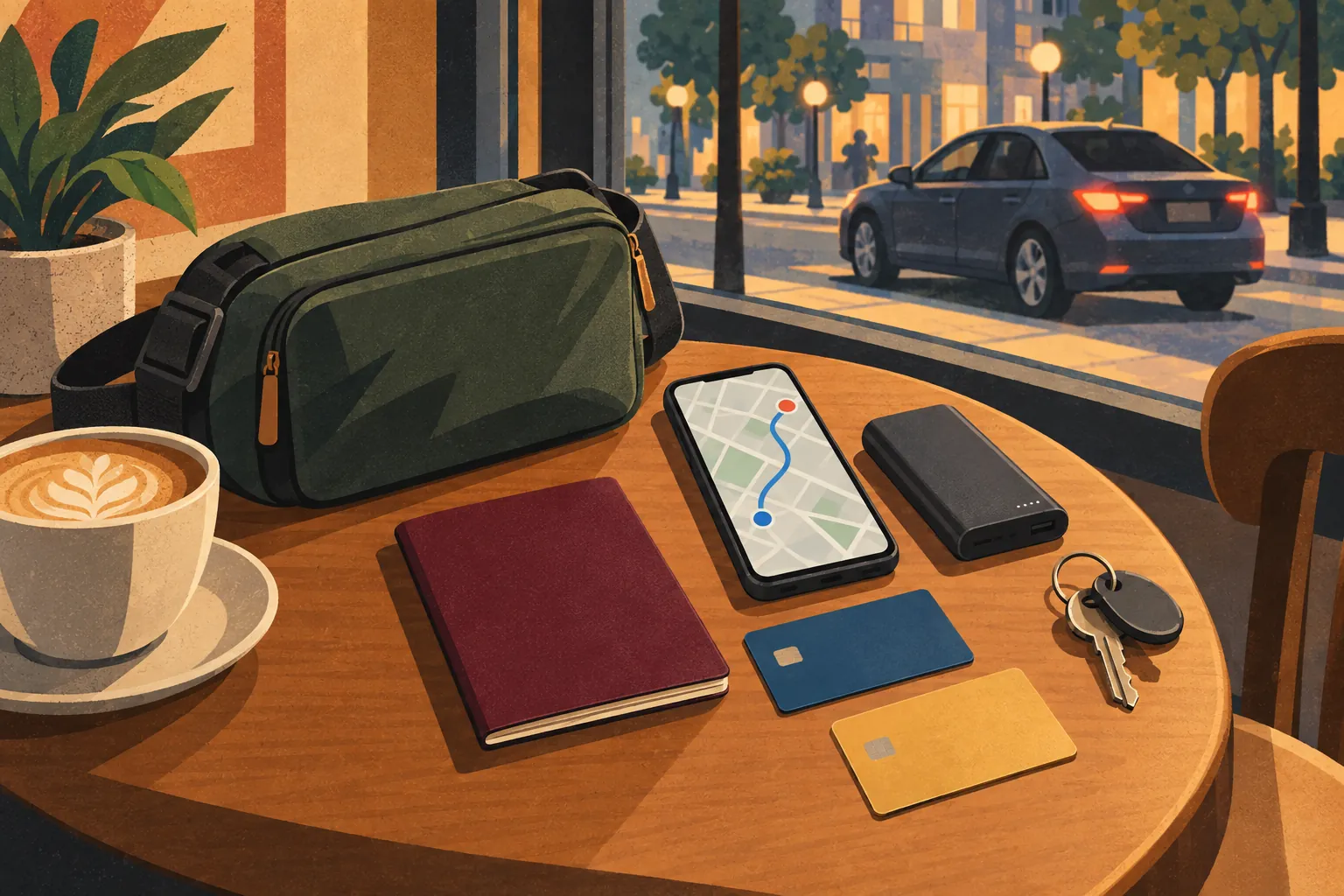
A connected phone takes care of half your worries by itself. Get an eSIM before you leave: maps, rideshares, translation, and location sharing all depend on it. Our guide to phones, payments, and tipping compares the options. The single emergency number is 911, free from any phone.
Healthcare is the trip's real financial risk: a simple visit to the emergency room can run into thousands of dollars. Travel insurance with high medical coverage in the United States is non-negotiable, especially when there is no one there to pay the costs upfront for you. Bring your usual medications with the prescription, and note that pharmacies in major chains stay open late, sometimes all night.
As for documents, apply for your ESTA online before departure. Keep a photo of your passport in your email, and store two bank cards in two different places.
The budget: how solo travel changes each expense
When you travel alone, you cannot split the room or the rides. In return, you decide everything, which often helps bring the total down.
| Expense | Per person when traveling as a pair | Solo | How to offset it |
|---|---|---|---|
| Nights | Half a room | The whole room | Women-only dorms, homestays, hotel nights as a treat |
| Getting around town | Same | Same | Weekly subway pass, walking |
| Evening rideshare | Half | The full fare | Stay in a neighborhood where you can go out too |
| Meals | Same | Same | Hearty lunch, dinner at the counter, supermarkets |
| Attractions | Same | Same | Free museums, tourist passes that pay off after three visits |
For a rough estimate, budget 120 to 180 dollars a day in a major city by mixing hostels, homestays, and a few hotels, excluding the transatlantic flight. New York and San Francisco are at the top of the range, while Chicago and New Orleans are at the bottom. Remember the tip, which is added almost everywhere: 18 to 20% at restaurants, and one to two dollars per drink at a bar.
The checklist before you close the door
- Share your itinerary with someone you trust, including the addresses of every place you are staying.
- Book your first night in a central neighborhood, and plan the route from the airport in advance.
- Send homestay requests three to four weeks before departure.
- Activate your eSIM, set up location sharing, install rideshare apps, and save your bank card.
- Get travel insurance with high medical coverage in the United States.
- Make sure your ESTA is valid, keep a photo of your passport online, and separate your two bank cards.
- Have someone to contact when you arrive in each new city: a ten-second message helps everyone sleep better.
Frequently asked questions
Is it dangerous to travel alone in the United States?
No more than in major European destinations. The overwhelming majority of trips are incident-free. The useful precautions are standard: choose a central neighborhood for your accommodation, take a rideshare home at night, and keep your phone charged and connected.
Which city is best for a first solo trip?
New York, Boston, or San Francisco. You can get around without a car, there are plenty of hostels, and you can find tours or activities to meet people every day.
How does free accommodation between women work?
Platforms such as NomadSister connect travelers with hosts. Hosting is free, profiles are verified with an ID, and the traveler pays an annual membership fee to the platform. Stays last one to four nights, mainly in cities, and requests should be made several weeks ahead.
Can you go out alone at night in the United States?
Yes, and it is common. Choose lively neighborhoods, restaurant counters, concerts, and events organized by hostels, then take a rideshare home instead of walking or using public transportation late at night.
Do you need a car when traveling alone in the United States?
Not in the major cities of the East Coast, Chicago, San Francisco, or Seattle. A car becomes essential when you want to explore wide-open spaces, national parks, or small towns.
How can you meet people when traveling alone?
Hostels, walking tours, cooking classes, restaurant counters, and homestays are the best places to start. In the United States, striking up a conversation with a stranger is about as normal as it gets.