
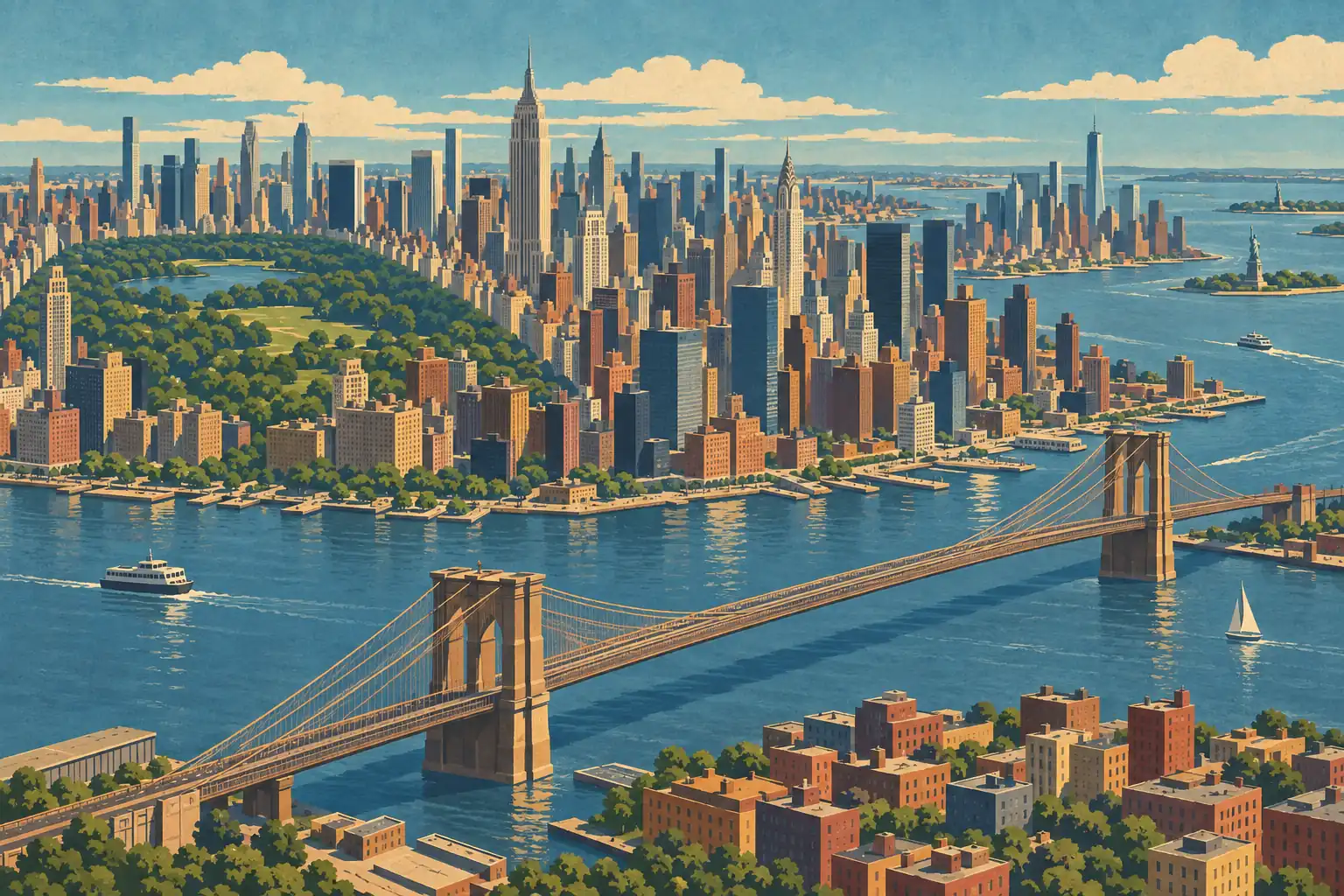
New York in 4 Days: A Realistic Neighborhood-by-Neighborhood Itinerary
Four days in New York without cramming too much in: a neighborhood-by-neighborhood plan, subway tips, tickets to book, lodging, and common first-trip mistakes.
By Jocelyn Pion · · 5 min read
Four days in New York is enough to see the essentials, as long as you do not try to do everything. We built this itinerary around geographic areas, with plenty of walking and one day left open to catch your breath. Here is how we would plan it, neighborhood by neighborhood.
Day 1: Midtown, the city's center of gravity
Manhattan is best discovered on foot. Start at Times Square early in the morning, before 9 a.m., while the crowds have not arrived yet. Head up to Rockefeller Center, go to the Top of the Rock for skyline views, which cost about $40 and are best booked in advance, then walk through Central Park to its southern end along the park paths.
In the afternoon, walk down the High Line, the former elevated railway turned landscaped park. Admission is free, there is no ticket line, and you can access it from 34th or 14th Street. Finish the evening in Chelsea or the Meatpacking District.
The Empire State Building and the Top of the Rock offer comparable views. Choose one, not both: you will save time and about $40.
Day 2: Downtown and Brooklyn, history by the water
Start in the Financial District with Wall Street, the Charging Bull, and the Stock Exchange facade. The main stop is still the 9/11 Memorial. The two reflecting pools are free to visit; the underground museum costs about $33 for adults and is worth half a day.
Walk across the Brooklyn Bridge from Manhattan to Brooklyn, which takes about 45 minutes, with the skyline behind you. On the other side, DUMBO packs some of the best views of Manhattan and the spots that made Brooklyn famous into just a few blocks. The Brooklyn Heights Promenade, just above it, offers a peaceful, unobstructed panorama in the late afternoon. Take the subway back from High Street station, served by the A and C lines.
Day 3: Uptown and the museums
The Metropolitan Museum of Art, known as the Met, is far too large to see in one visit. Give yourself three hours, choose two or three wings based on your interests, and leave before you reach museum overload. Admission is about $30 for adults who do not live in New York City.
In the afternoon, follow Fifth Avenue north. The Guggenheim is worth visiting for its architecture as much as for its collections, with admission around $25. If you prefer something more intimate, the Frick Collection, a former 19th-century baron's mansion turned museum, is 100 meters away and costs about $22. It is closed on Mondays. Then cross Central Park to finish on the Upper West Side.
Day 4: A free day
We intentionally leave this day open. Here are three options, depending on your mood:
- The Statue of Liberty and Ellis Island: book the ferry weeks ahead during the busy season, never at the last minute.
- Harlem, the Bronx Zoo, or the New York Botanical Garden, if you want to get off the usual tourist track.
- Chelsea Market, SoHo, or Greenwich Village if you would rather wander without a fixed schedule.
New York is often the starting point for a longer trip around the United States. If you are continuing on to national parks, note that Acadia National Park, the coastal park in Maine, is about an 8-hour drive away. The NPS annual pass pays for itself after visiting two or three parks.
Getting around without wasting time
The subway is the fastest way to cross Manhattan. The fare is about $2.90 per ride with OMNY, a contactless bank card tapped directly at the turnstile, so there is no MetroCard to buy. A weekly pass costing about $34 pays off after 12 rides.
To reach Brooklyn or Queens by water, the East River Ferry is a useful complement to the subway. The Staten Island Ferry is completely free and offers a straight-on view of the Statue of Liberty without setting foot on the island.
Walking is still the best way to get a feel for the neighborhoods. A north-south block is about 270 meters, while an east-west block is about 80 meters, so allow 20 minutes to walk north through 10 blocks.
Tickets, budget, and common mistakes
Book these in advance without fail: the Statue of Liberty, whose ferry can sell out weeks ahead during the season; the 9/11 Museum; and observation decks such as the Top of the Rock or the Empire State Building, so you do not end up waiting outside in the cold or heat.
What is not worth it: city passes sold by travel agencies, which push you to visit secondary attractions to make them pay off, and hop-on hop-off sightseeing buses. The subway is faster, cheaper, and less frustrating.
For lodging, the neighborhood makes a real difference. Midtown is central but expensive: expect to pay about $165 to $330 a night for a decent double room. Brooklyn, especially Williamsburg and Park Slope, costs 20 to 40% less for comparable quality. Hostels start at around $55 for a dorm bed.
Three classic mistakes to avoid: eating around Times Square, where prices are inflated and quality is low; underestimating the distance between two points that look close on a map; and waiting until the last minute to book lodging in July or August.
Four days are not enough to exhaust New York, but they are enough to remember it clearly rather than simply feeling exhausted. If you are continuing on to other American destinations, our road trips will give you ideas for what to do next.