
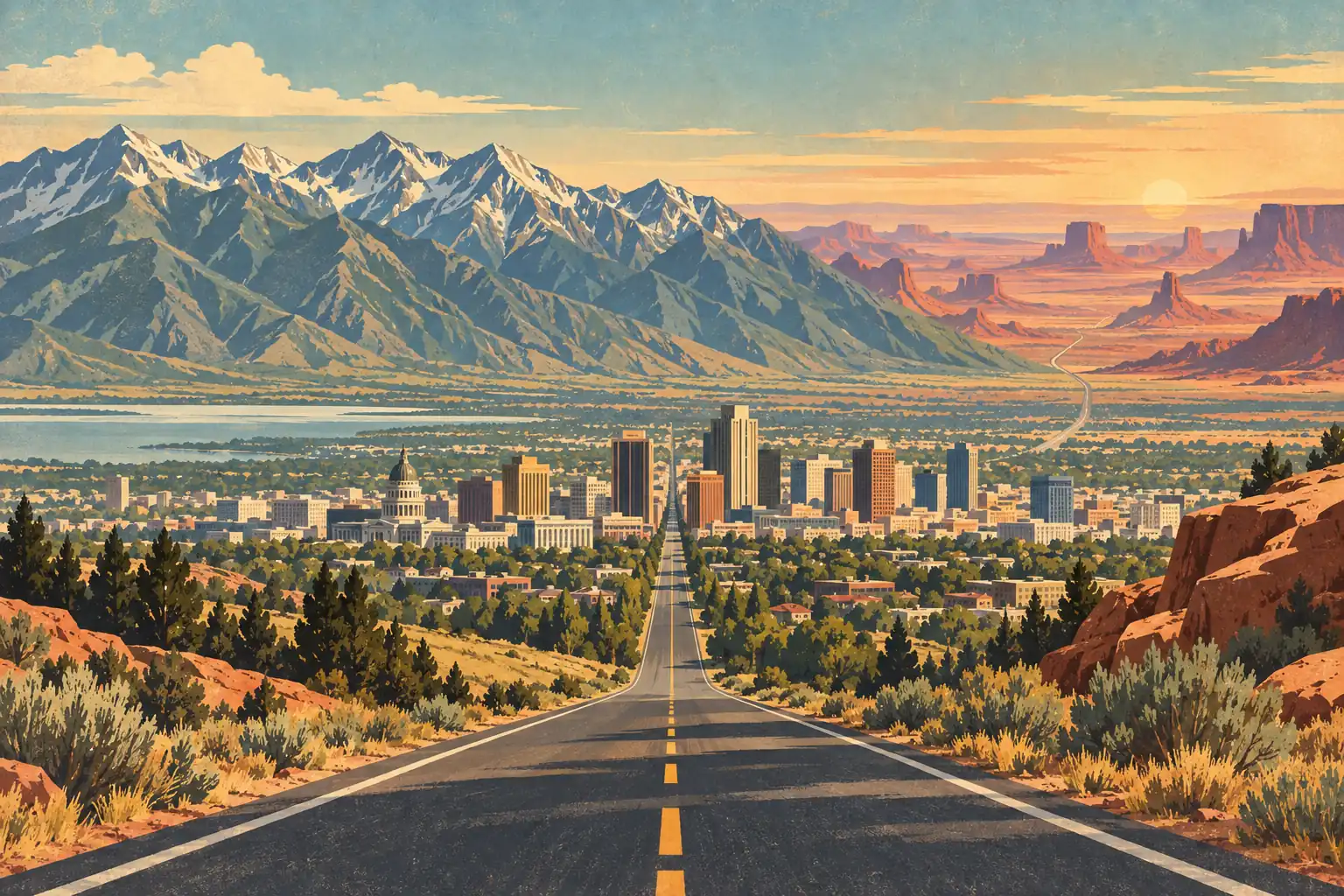
What to Do in Salt Lake City: The Gateway to Utah's Parks in One or Two Days
Salt Lake City is Utah's main air hub and an ideal base for exploring the Mighty Five. Here's what to do in one or two days before hitting the road.
By David Sanchez · · 5 min read
For most travelers heading to Zion or Arches, Salt Lake City is not a destination in its own right but a stopover. Still, the city deserves a full day, or even two, before you set out for the canyons. There's a convenient airport, affordable hotels, and a landscape with a few surprises.
Why Salt Lake City Is on the Way
Salt Lake City International Airport (IATA code: SLC) receives direct transatlantic flights from Paris, with a flight time of about 11 hours, operated by Delta and Air France depending on the season. It is the natural gateway to the Mighty Five, Utah's five national parks: Zion, Bryce Canyon, Capitol Reef, Canyonlands, and Arches. Renting a car at the airport is essential: none of these parks can be reached without your own vehicle. The city's elevation, around 4,265 feet, can come as a surprise when you arrive, especially in summer, when the dry heat is more intense than your body's humidity signals suggest.
Downtown in an Afternoon
Temple Square sits at the heart of downtown: a 10-acre enclosed complex and headquarters of The Church of Jesus Christ of Latter-day Saints. The six-spired white temple is reserved for members, but the adjacent visitor center is open to everyone and presents the history of the Mormon movement without glossing over it. A five-minute walk away, the Utah State Capitol overlooks the city from a hill. The free guided tour lasts about 45 minutes and offers a good introduction to the state's development.
The Downtown Farmers Market, held on Saturday mornings from June through October at Pioneer Park, brings together local farmers, street food vendors, and artisans. It is the least touristy spot downtown and often the liveliest. If you have an extra hour, Gilgal Sculpture Garden, a neighborhood park filled with Mormon statues with sphinx-like heads, makes for a strange and free detour east of downtown.
The Great Salt Lake and Antelope Island
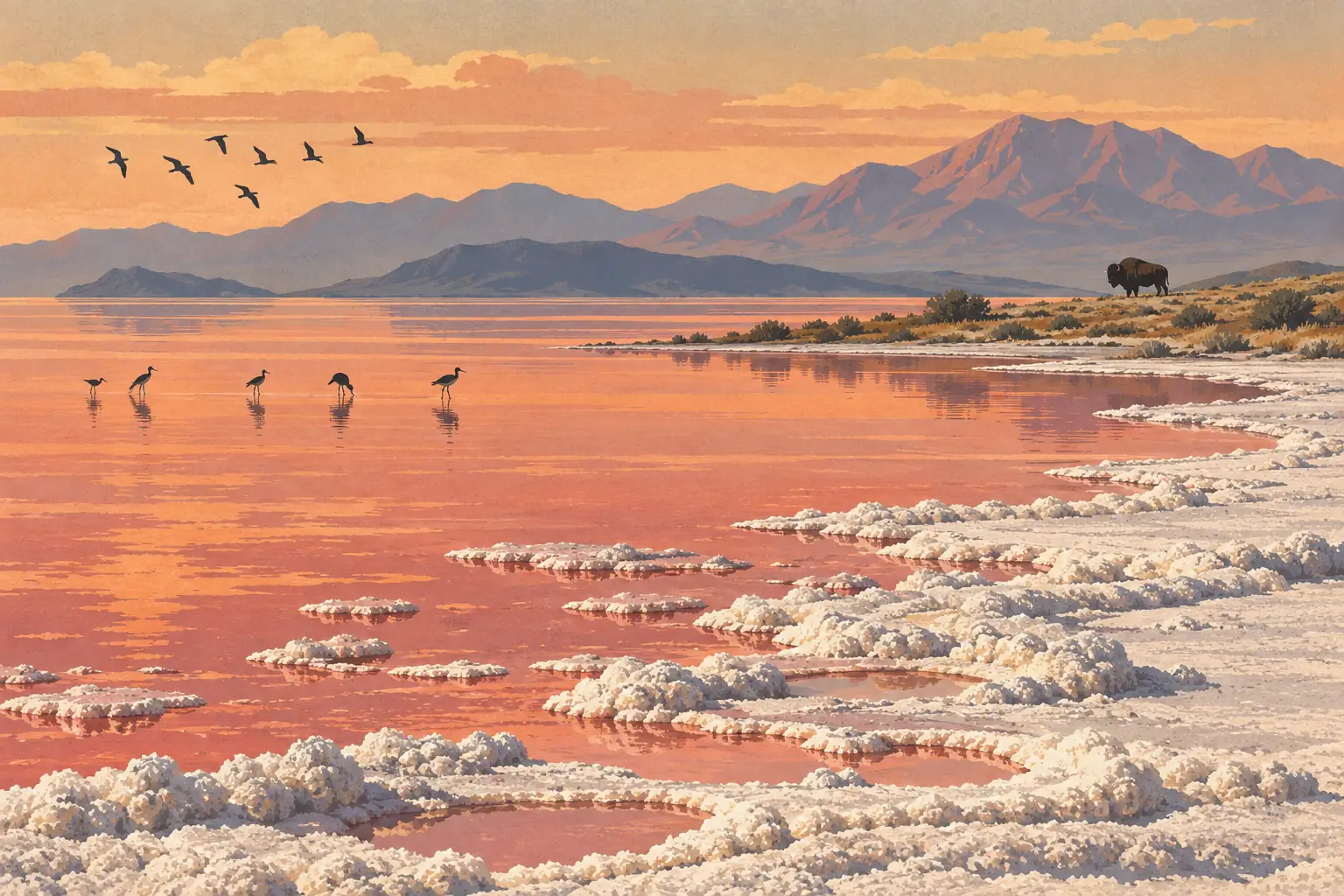
People come here to see something unique: an inland lake whose salinity can reach 25 to 27 percent depending on water levels, compared with 3.5 percent for the ocean. It has no fish, but thousands of migratory birds visit throughout the year. The most convenient access is through Antelope Island State Park, about 45 minutes north of downtown. The island is home to a herd of bison, around 700 animals, as well as pronghorn antelope. Sunrise from the Bridger Bay marina, with the lake turning orange or pink depending on the concentration of halophilic algae, is a sight that is hard to forget. Admission is about 15 dollars per vehicle.
Be careful during very hot weather and periods of low water: brine flies can make swimming unpleasant. Check conditions before planning a dip in the lake.
The Wasatch Canyons Thirty Minutes Away
The Wasatch Range borders Salt Lake City to the east and rises above 9,800 feet. In winter, the ski resorts in Big Cottonwood Canyon, Brighton and Solitude, and Little Cottonwood Canyon, Snowbird and Alta, are about 40 minutes from downtown, with snow known for being among the lightest on the continent. In summer, the same roads lead to uncrowded trails. Lake Blanche, in Big Cottonwood Canyon, is about a 5.6-mile round trip with 1,800 feet of elevation gain, taking around three hours for an average hiker.
If you only have half a day, the lower part of Millcreek Canyon is enough to escape the concrete and spot deer without leaving the city.
Eating and Drinking: Learn the Local Rules First
Utah has alcohol laws shaped by its Mormon heritage. Supermarkets sell beer up to 5% ABV. Spirits and wine can only be purchased at State Liquor Stores, which are closed on Sundays and have limited hours. Restaurants with a full-service liquor license serve everything, as long as you order food at the same time as your alcohol.
Two local breweries worth remembering are Squatters Pub Brewery downtown, with a varied food menu, and Kiitos Brewing in the Marmalade neighborhood, for a more garage-like atmosphere. For food, Red Iguana is a Mexican restaurant that has been open since 1965. There is almost always a weekend wait, but it is worth it. Meal budget: about 15 to 25 dollars per person, excluding alcohol.
Exploring the Parks: Distances and Route Planning
From Salt Lake City, all of Utah's national parks are less than five hours away by car:
| Park | Approximate distance | Approximate drive time |
|---|---|---|
| Arches | 236 miles | 4 hours |
| Canyonlands | 245 miles | 4 hours 15 minutes |
| Capitol Reef | 202 miles | 3 hours 30 minutes |
| Bryce Canyon | 267 miles | 4 hours 30 minutes |
| Zion | 270 miles | 4 hours 30 minutes |
A natural circuit runs south toward Capitol Reef via US-89, continues to Bryce Canyon and then Zion, and returns along I-15 to Salt Lake City. The reverse order works just as well and can be adjusted to lodging availability. An America the Beautiful Pass (about 80 dollars per vehicle, valid for 12 months) covers entrance fees for all federal national parks. With five parks on the itinerary, it pays for itself by the second stop.
Spending one night in Salt Lake City on the way out and another on the way back gives a 10- to 15-day Utah road trip a comfortable rhythm, lets you rest your legs, and avoids a 4 a.m. wake-up to catch a canyon sunrise after a four-hour drive from Las Vegas.